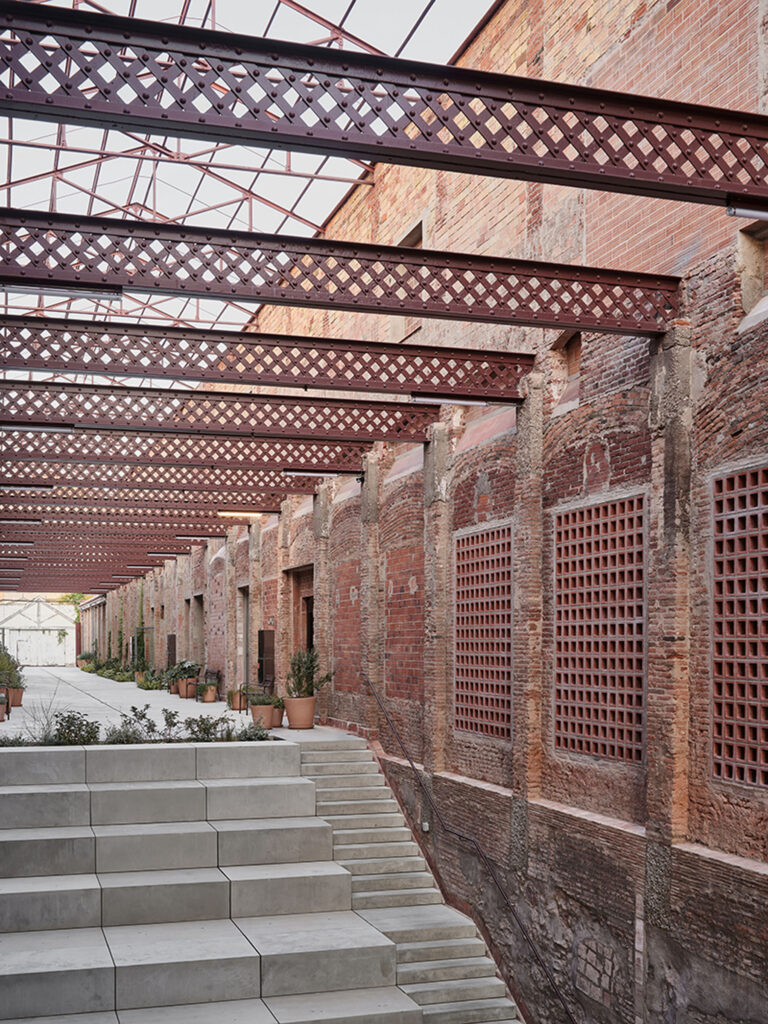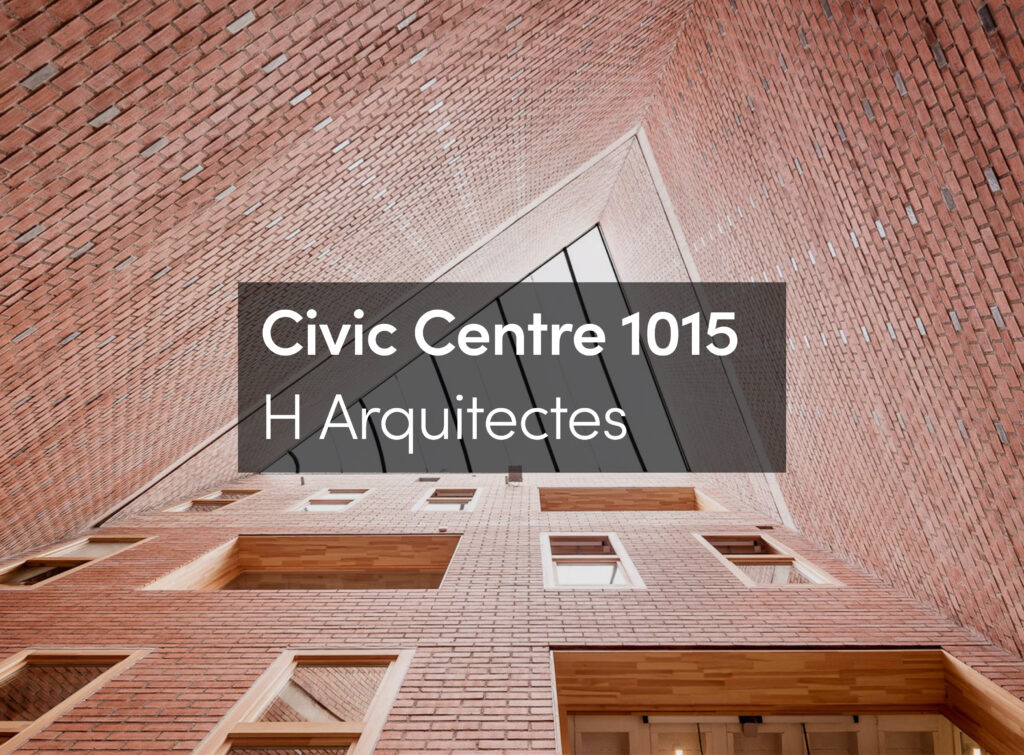




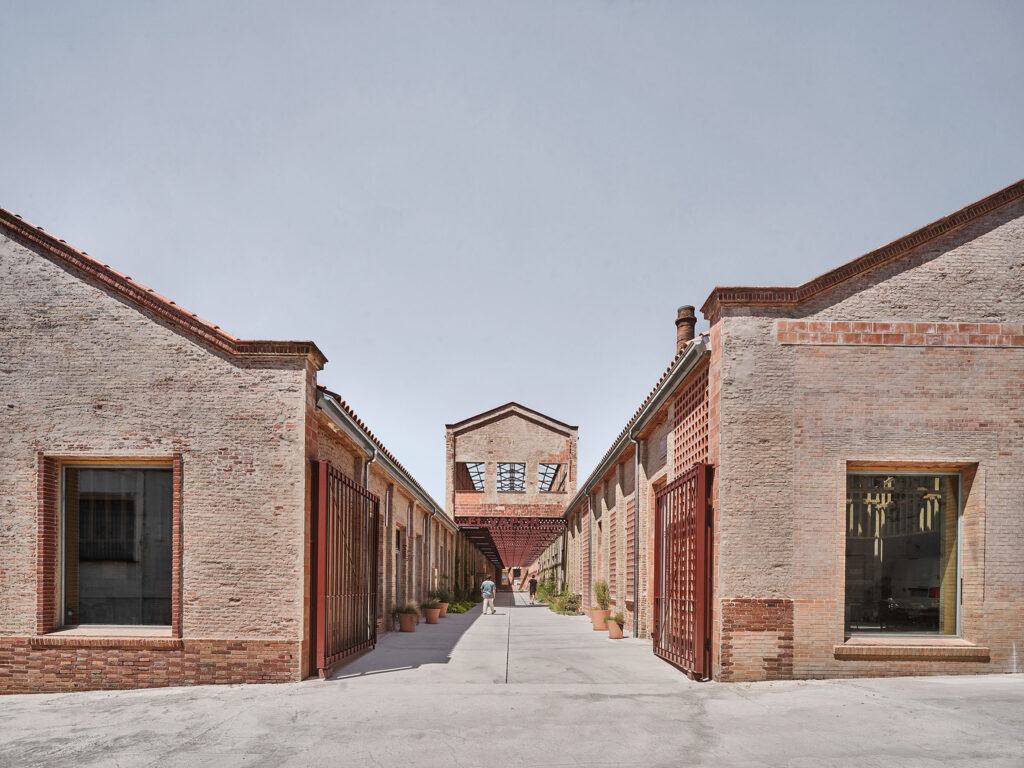
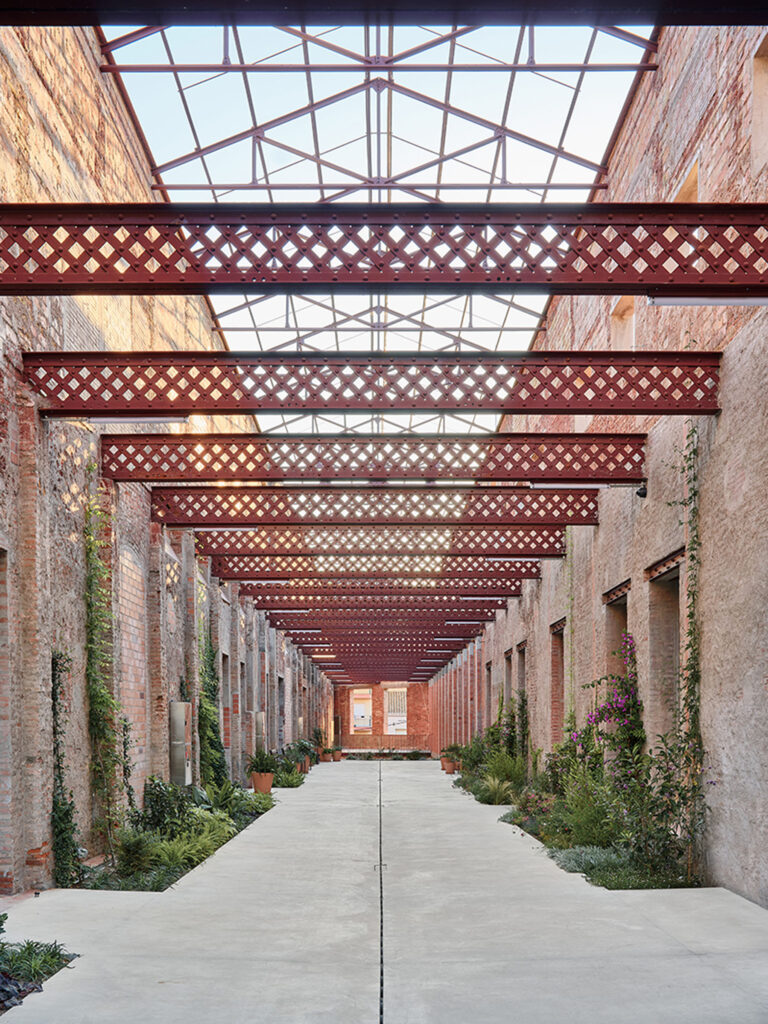
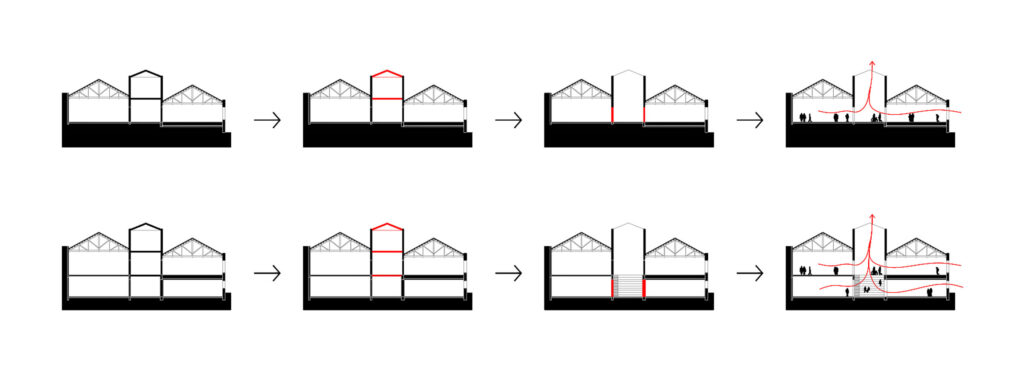
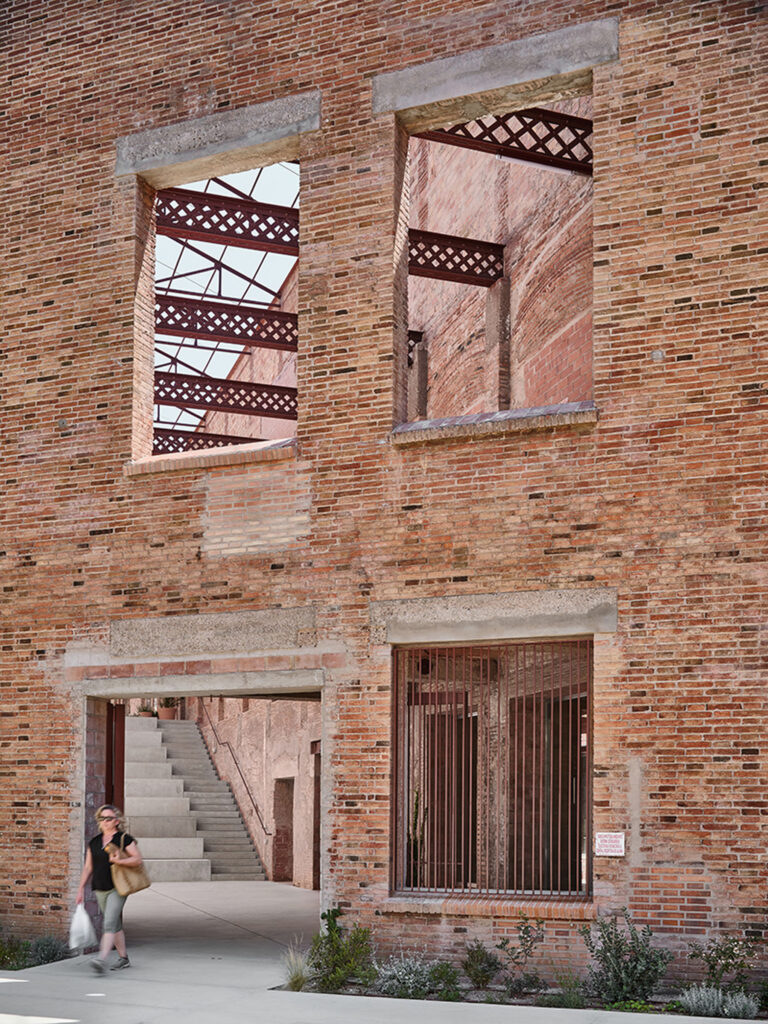
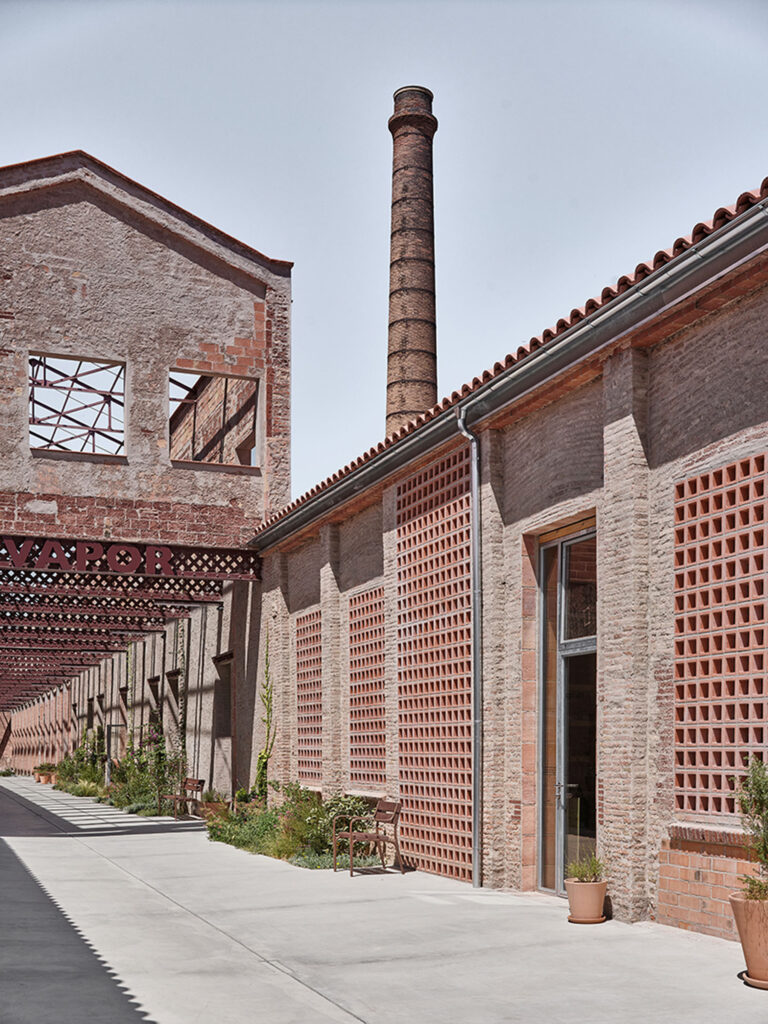
A central element of the proposal is the reactivation of the former service street between the two naves, redefined as a public interior passage.
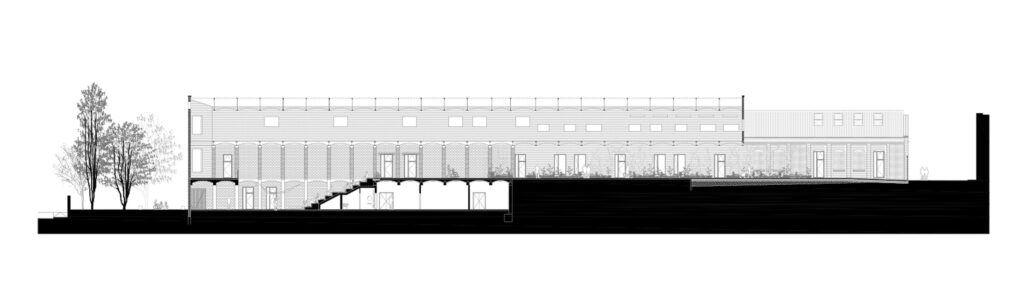
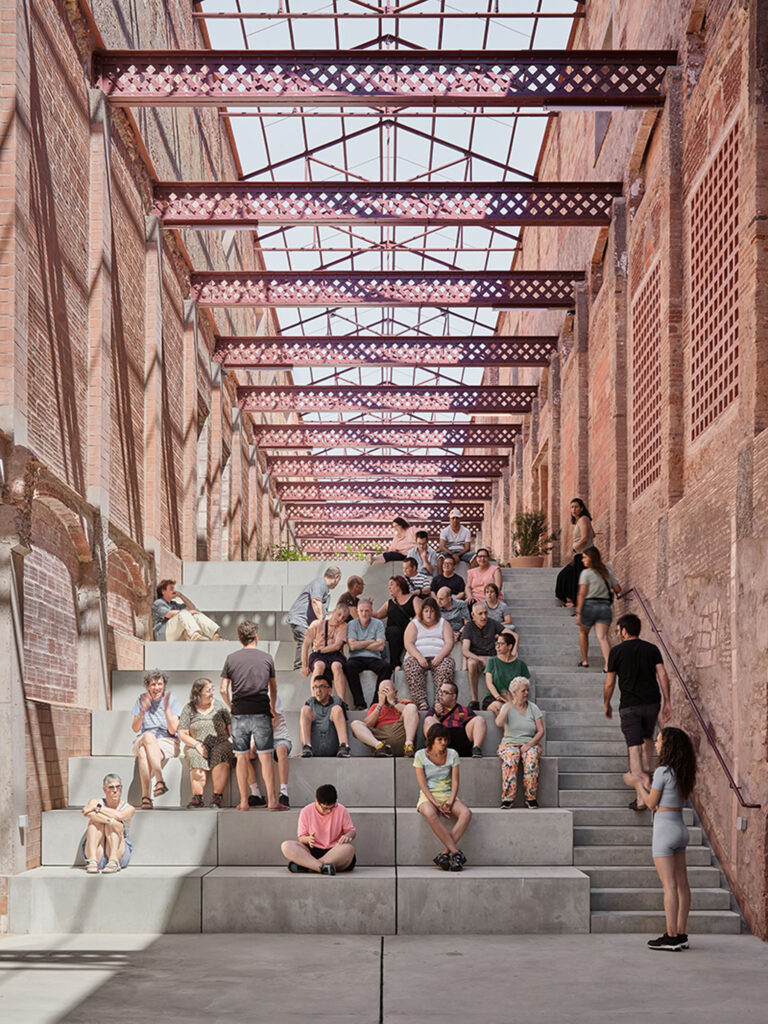
Through the selective removal of roofs and floors while retaining facades and structural frames, this space is transformed into an open, permeable corridor that extends the city into the building. It becomes a shared environment where users of the centre and citizens can interact directly, reinforcing the social role of the institution. At one end, a staircase resolves the level difference between urban thresholds and connects to lower-level programs, expanding its use from circulation to occupation and stay.
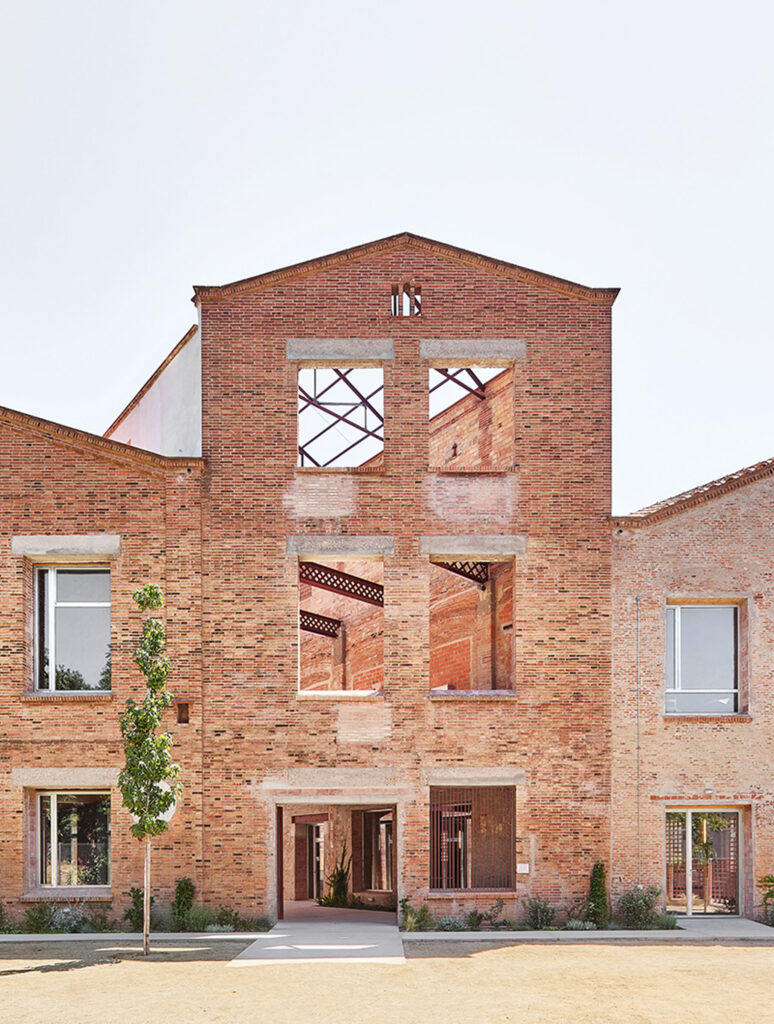
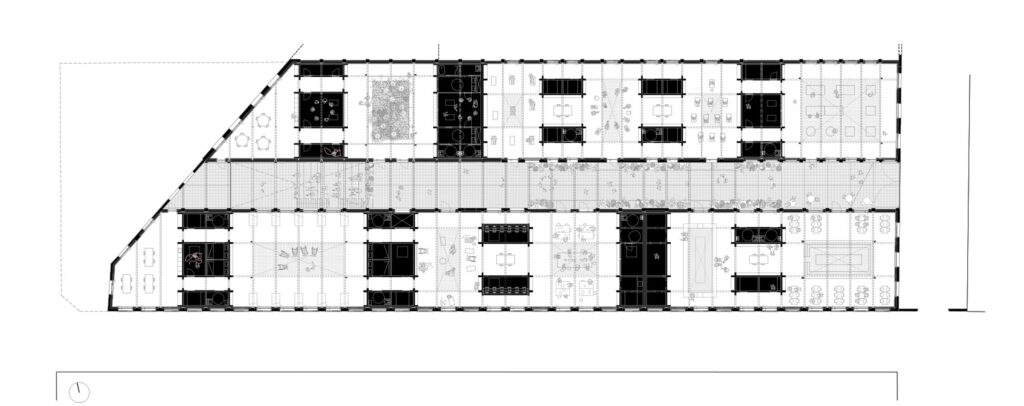
The programme is organized along the two main naves, where workshops, classrooms, kitchens, dining areas, and support spaces are distributed in a continuous but varied sequence. These spaces are designed to accommodate different degrees of ability, allowing users with disabilities to participate in both structured and more open, flexible activities. Direct access from the central street, combined with internal connectivity, supports autonomy, orientation, and gradual transitions between levels of assistance and independence.
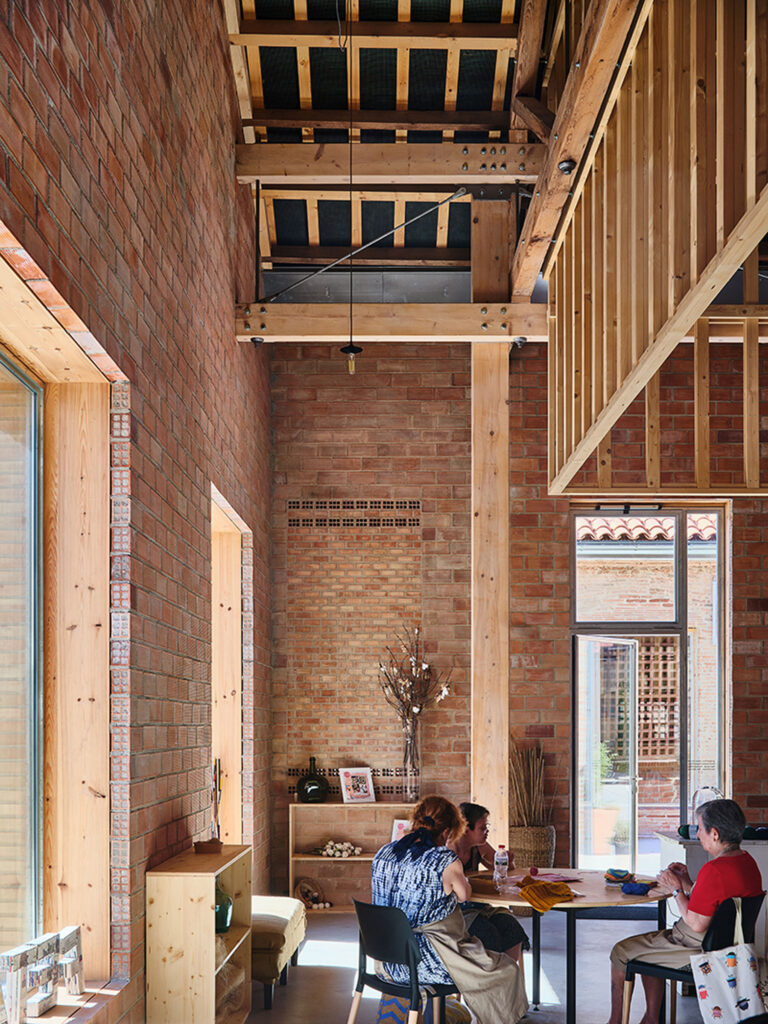
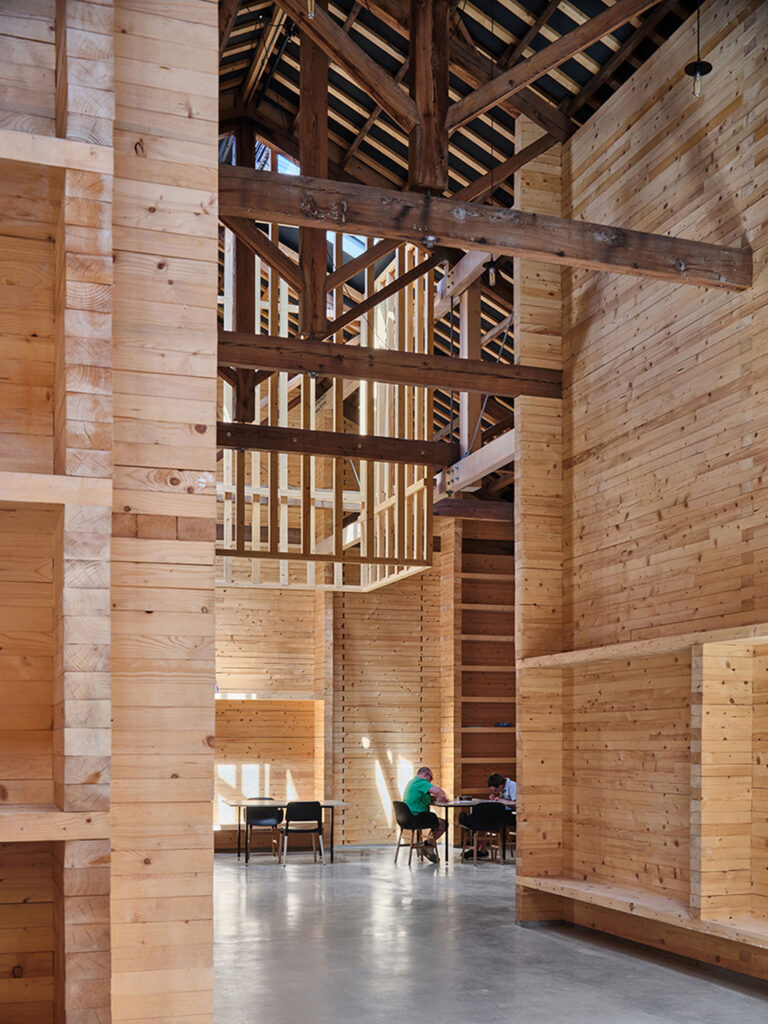
From a constructional point of view, the project works through reinforcement rather than replacement. New timber beams are introduced perpendicular to the existing trusses, transforming the original unidirectional system into a bidirectional structure. This reduces spans, stabilizes the existing roof system, and allows the original wooden elements to be preserved. The intersections between old and new create a precise structural order that simultaneously organizes space: enclosed programmatic elements are concentrated in solid volumes that act as load-bearing elements, while skylights appear at structural intersections, bringing controlled zenithal light into the main areas and improving legibility and orientation for users.
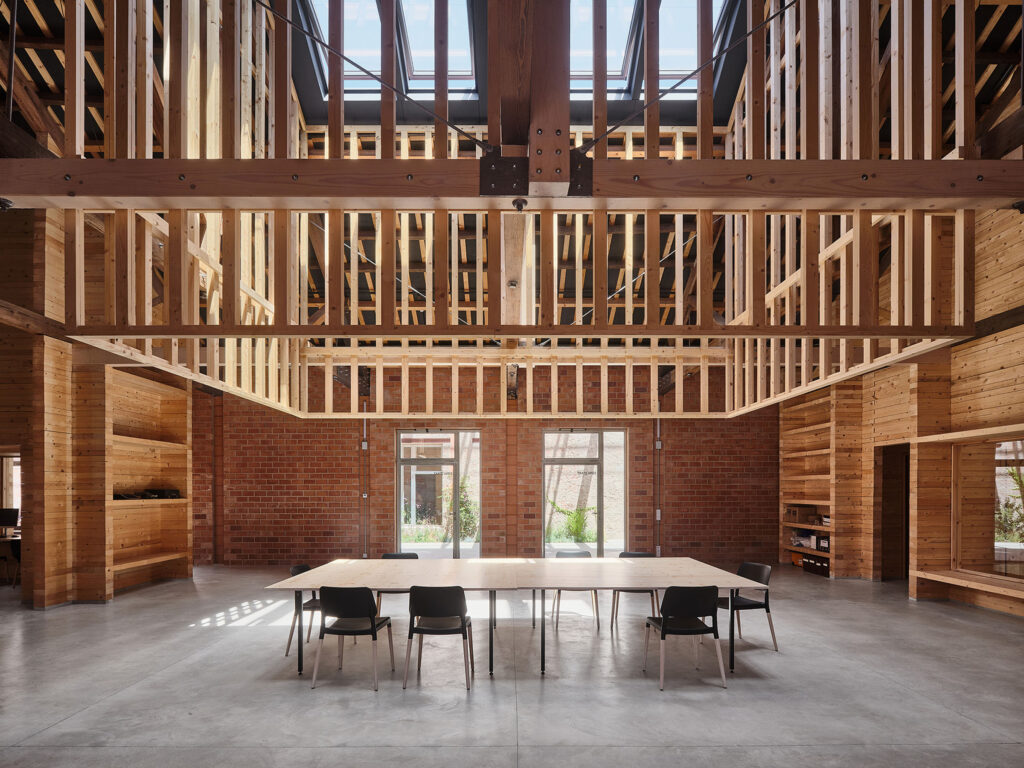
The project extends the original logic of wood-based construction, maintaining the expressive overlap of structural and finishing layers. The new roof system preserves the traditional timber structure and Arabic tile exterior, while introducing lighter insulated assemblies and acoustic layers that improve comfort and energy performance. The underside is treated as a porous surface that softens sound and filters light.

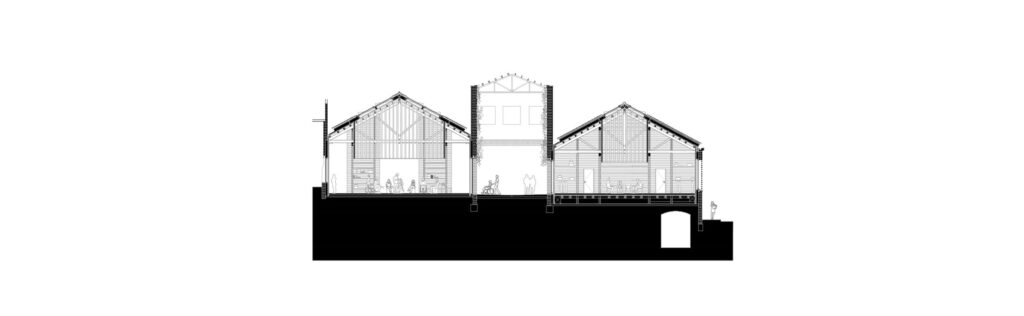

Facade interventions are deliberately restrained. Internal insulation is added without altering the exterior appearance, and original openings are preserved or carefully recovered. Where openings are no longer required, they are transformed into Trombe walls, contributing to passive ventilation and thermal regulation while maintaining visual continuity of the facade.
Throughout, the aim is to preserve the accumulated material history of the building while enabling a more inclusive and open institutional model. Light, structure, and spatial sequence are used to support orientation, autonomy, and comfort for users with disabilities, while reinforcing a continuous relationship between building, city, and climate.