

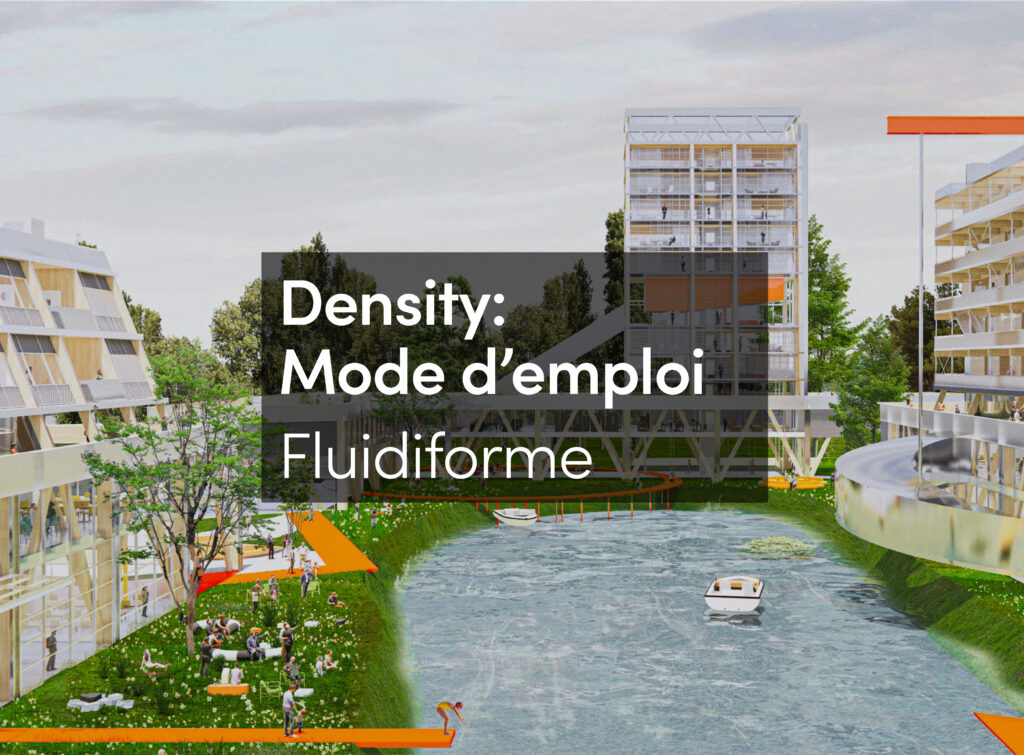
The Netherlands is today facing a serious housing crisis that will lead to the construction of 25,000 new housing units in the urban fabric of Tilburg by 2040. Faced with this extreme densification of the consolidated fabric of the city, a double question arises: how can density be formalized, and how will the future inhabitant of Tilburg live in a dense city?
From this question, the design research Density – Mode d’Emploi emerges, taking up the social-scientific approach of the novel by Georges Perec (La Vie Mode d’Emploi, 1978).
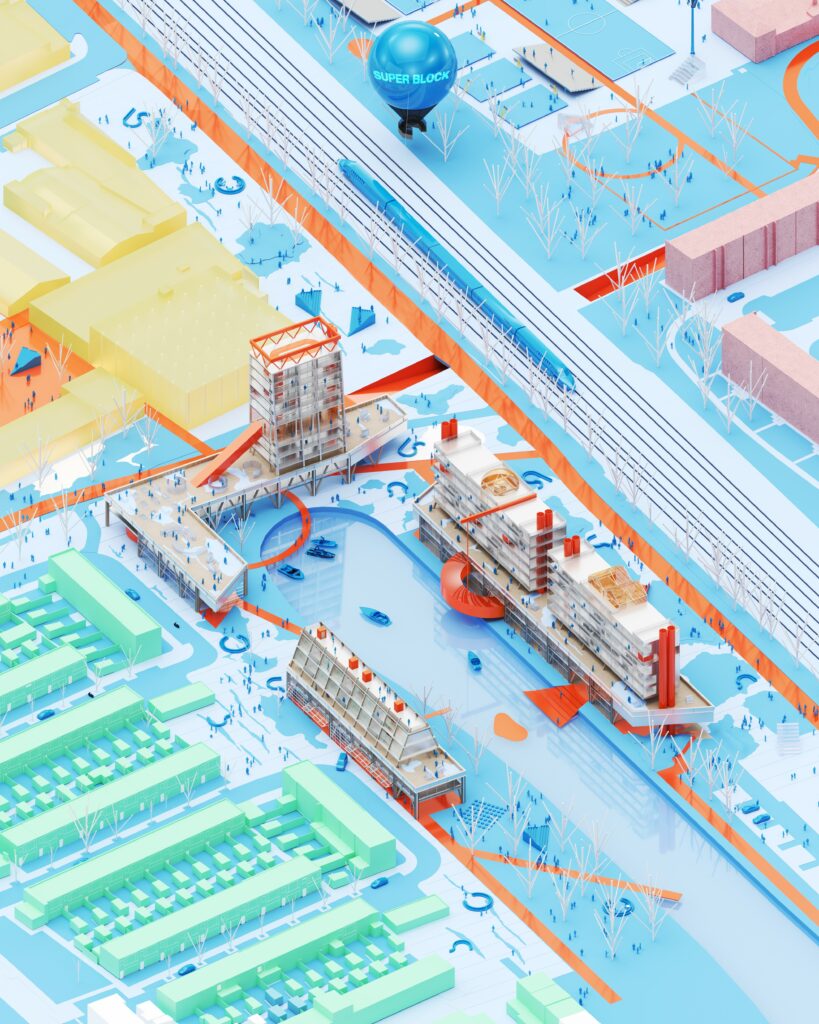
The project identifies shared spaces and social interaction as the most comprehensive response to this condition, challenging the postwar housing model that has prevailed until now.
Tilburg West is approached in the project as a site for experimentation. To date, it is a predominantly residential area of the city, with a low population density facing a complex green and blue network. The classic Tilburg block is a block of two or three storeys with a single functional use, inhabited during a specific time slot of the day, in which interaction between residents is often limited due to the absence of common amenities and the individualization of experience.
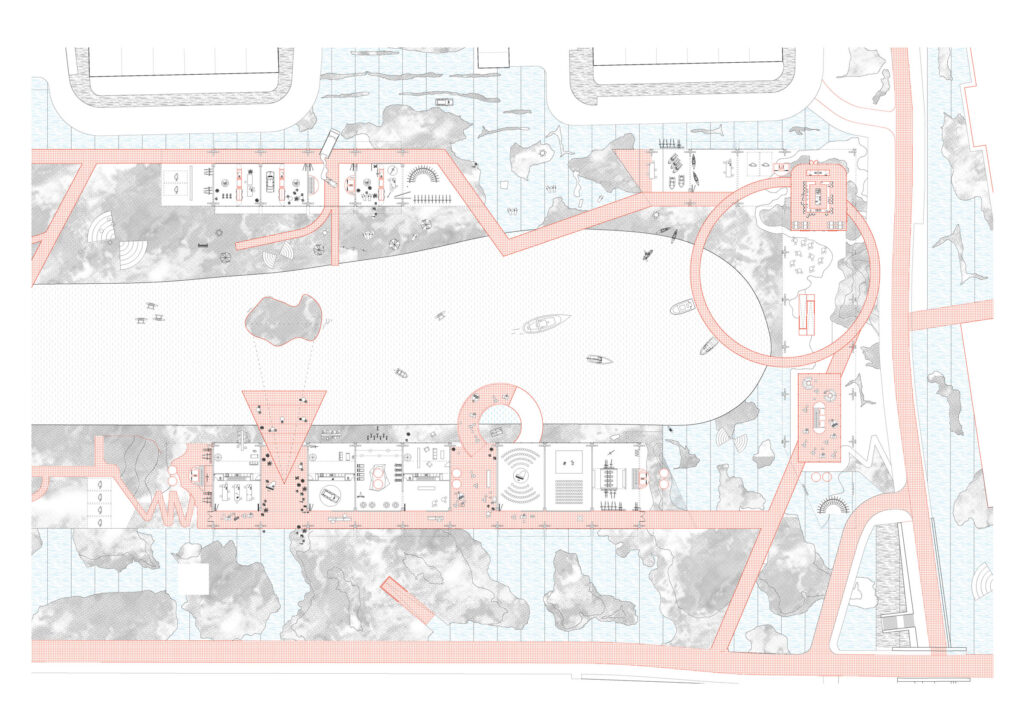
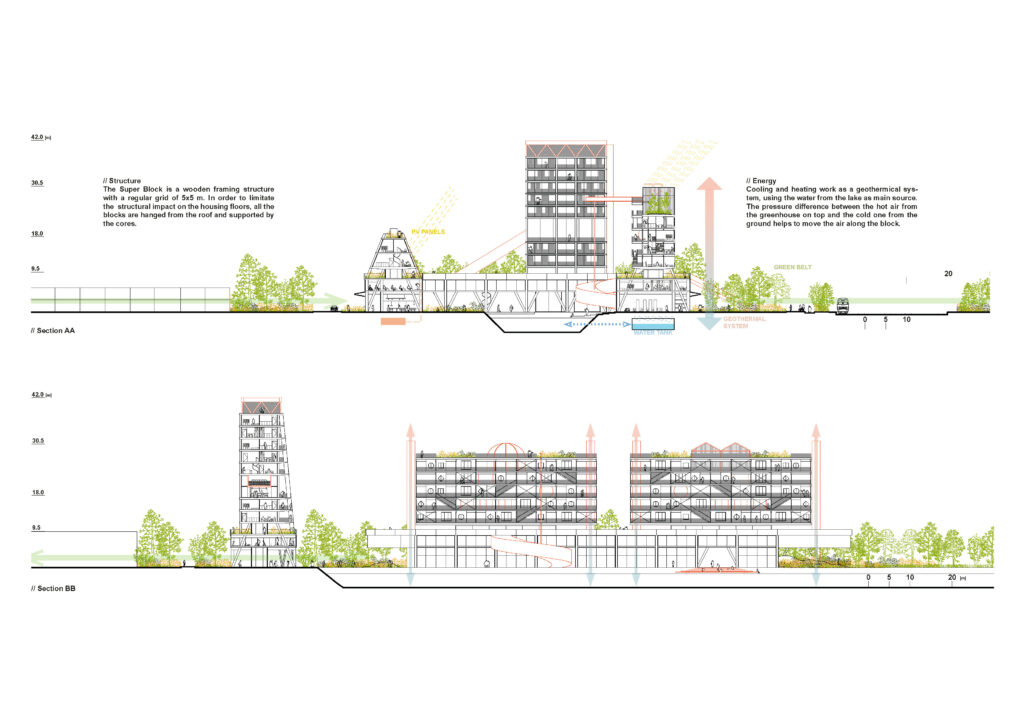
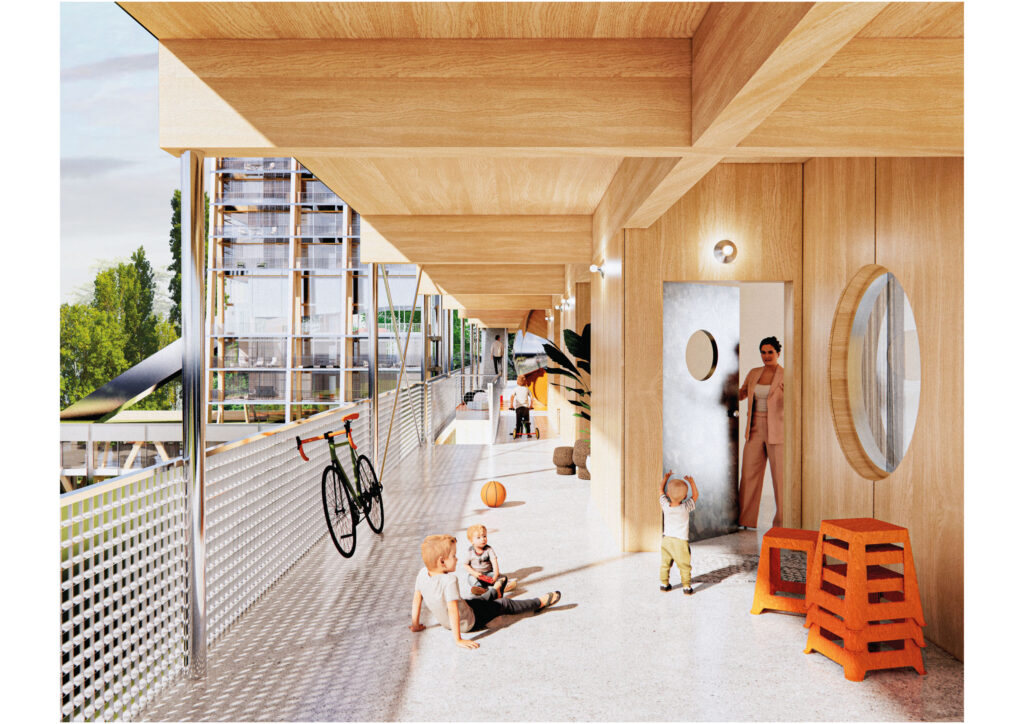
In the prototype for the new Tilburg Super Block, the introduction of shared and public spaces, both open and covered, is intended to blur the boundaries between the public and private spheres while creating the conditions for greater interaction among users, stimulating exchanges of knowledge and, consequently, ongoing enrichment and growth. Formally, the apartments could be smaller in size, also responding to the downsizing of families and the growth in the number of single-person households, and could be complemented by shared spaces.

Beyond functional mixité, the project also foregrounds social mixité. The proposal envisions the coexistence of different social classes and age groups as a way to generate new social dynamics and respond to a housing crisis that affects everyone. Formally, this means that multiple housing types would be provided, with different sizes and specifications.

The project therefore sees mixité as a tool for the dense development of the city: mixing functions is understood as a way to foster new vitality and dynamism in the Super Block, as well as a more extroverted character aimed at interaction between public and private, young and old, and different social groups.
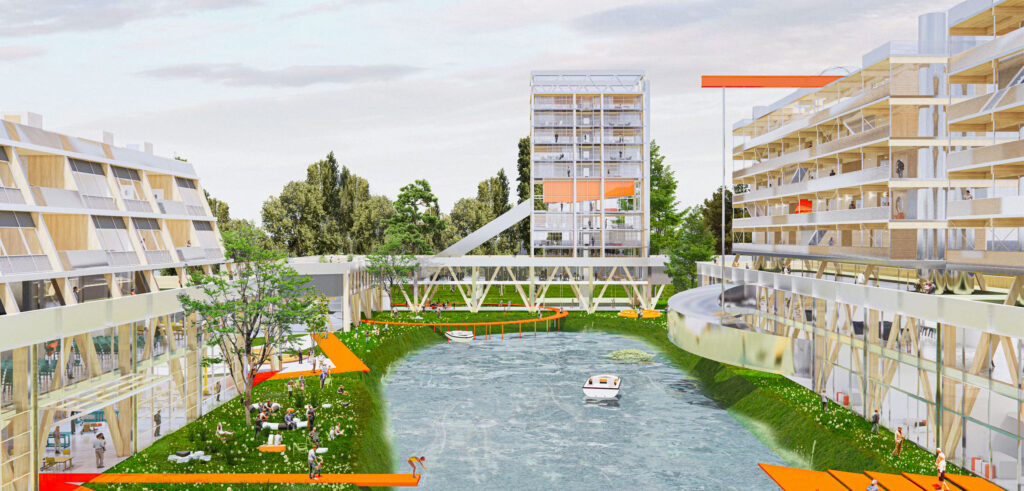
“Happy and healthy in Tilburg!”