


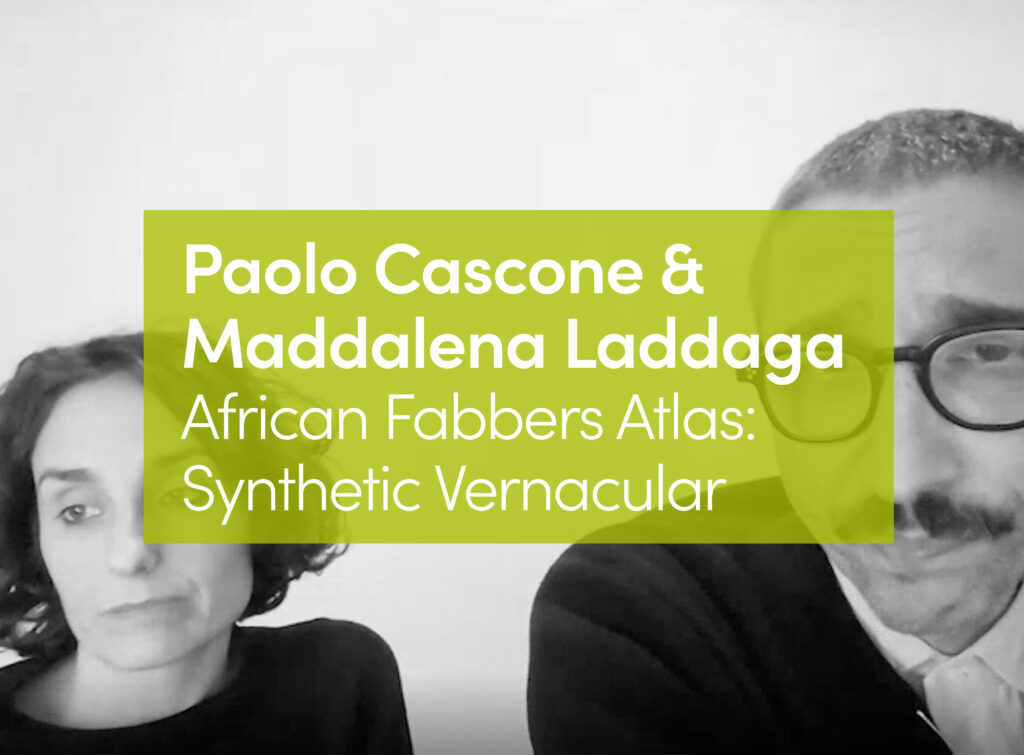
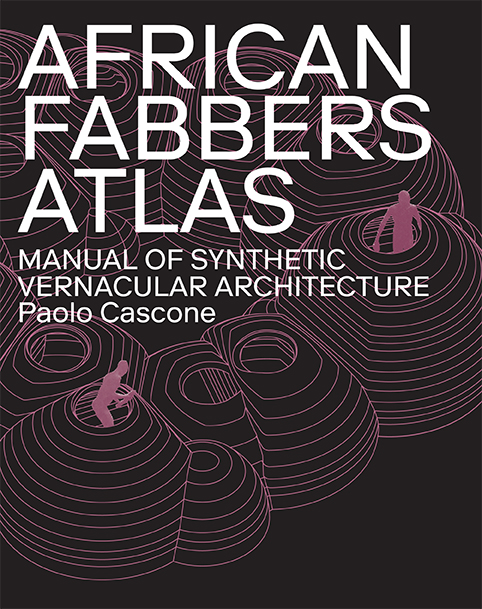
In this conversation, architect, researcher, and educator Paolo Cascone, and contributor Maddalena Laddaga reflects on the ideas and practices developed in his book African Fabbers Atlas: Manual of Synthetic Vernacular Architecture (Actar Publishers, 2025). Drawing from years of work with CODESIGNLAB and the African Fabbers School, Cascone presents Africa not as a peripheral testing ground, but as a generator of architectural knowledge capable of addressing global ecological and social challenges.
Drawing from conversations with students and local communities, they challenge the idea that computation belongs exclusively to Western architectural discourse, arguing instead that vernacular architecture already operates through implicit rules, optimization, and deeply embedded environmental knowledge.
The discussion explores how synthetic vernacular emerges through the transformation rather than the replacement of local traditions: combining bioclimatic principles, on-site materials, and digital fabrication into a new architectural language. In this framework, architecture is no longer understood as a top-down formal exercise, but as a collective, adaptive, and resource-conscious practice capable of rethinking modernity from the local outward.