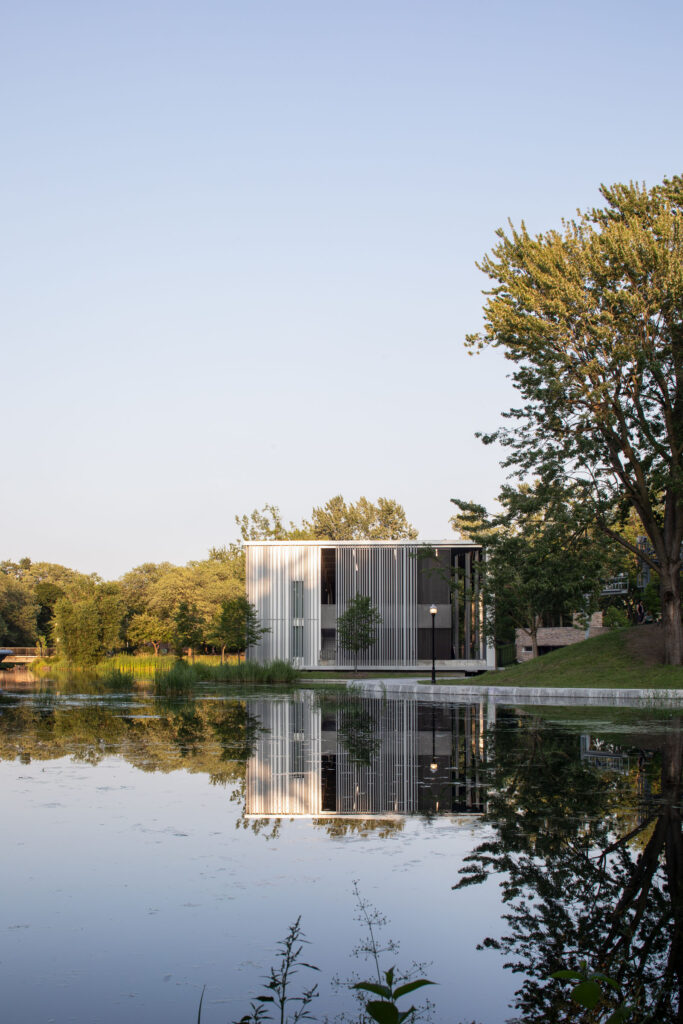



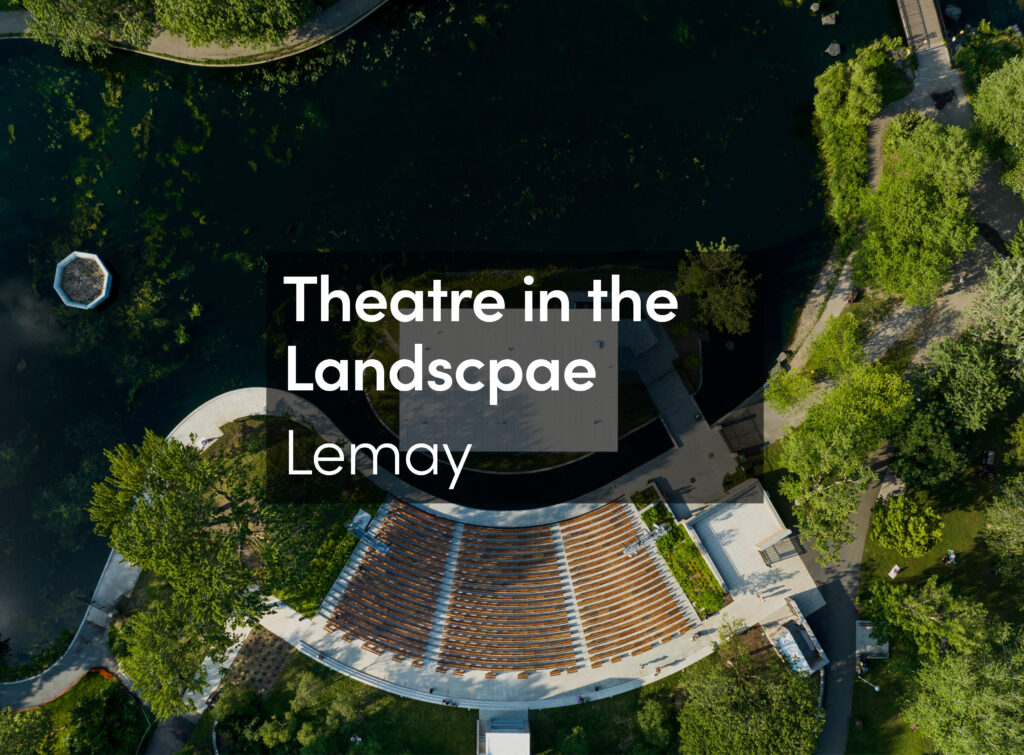
The redesign of Montréal’s Théâtre de Verdure transforms a historic open-air venue into a contemporary cultural infrastructure embedded within La Fontaine Park. First opened in 1956, the theatre has been reconfigured through a four-season strategy that strengthens the connection between performance space and landscape while preserving the site’s heritage character.
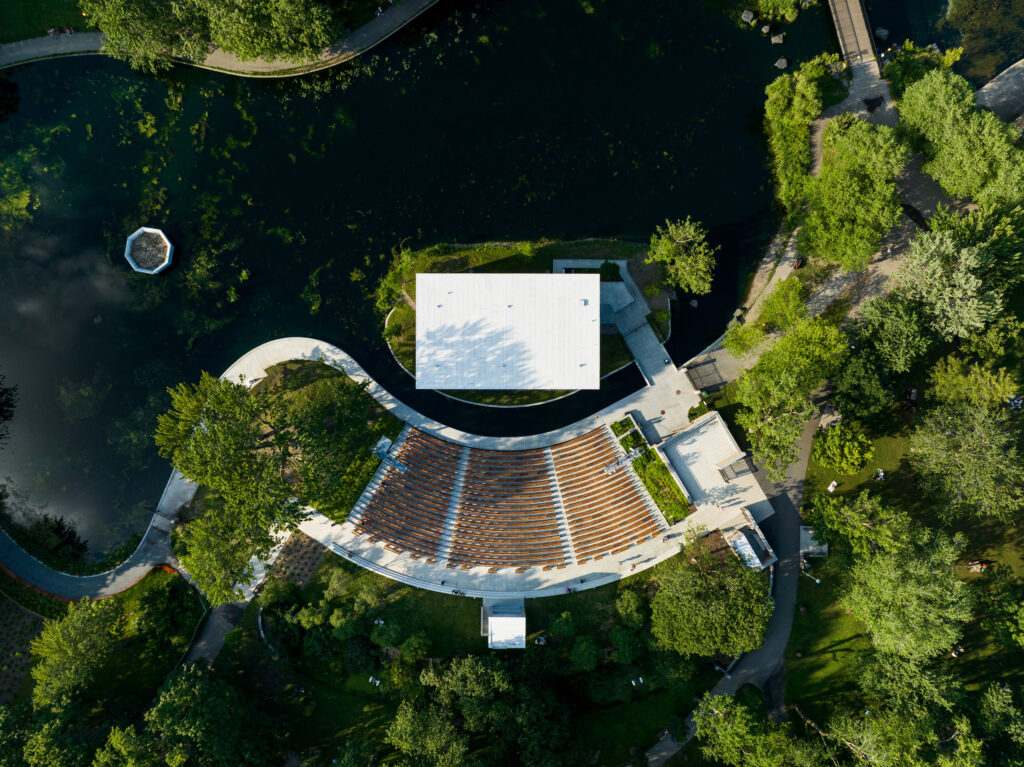
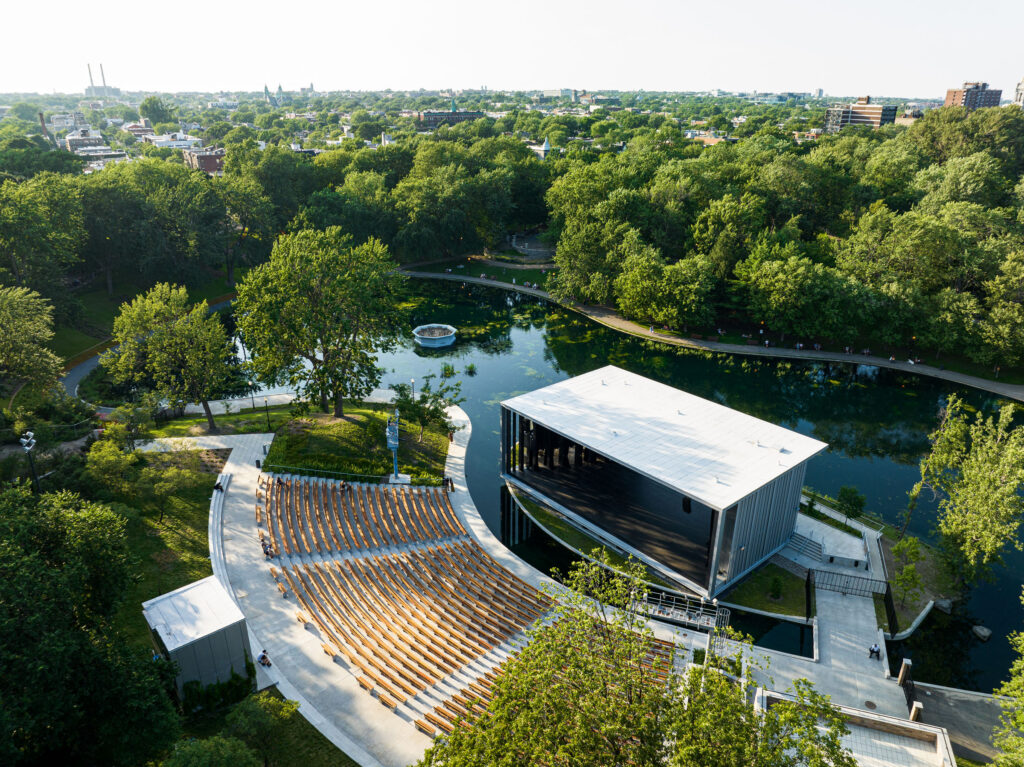 The intervention expands the theatre’s role beyond that of a seasonal stage. Open views toward the park and the water basin reposition the venue as part of a larger public landscape, where architecture, vegetation, circulation, and gathering space operate together. New entrances and an extended pedestrian route improve access to the site, while landscape operations—including low planting and the preservation of the existing canopy—clarify its presence within the park.
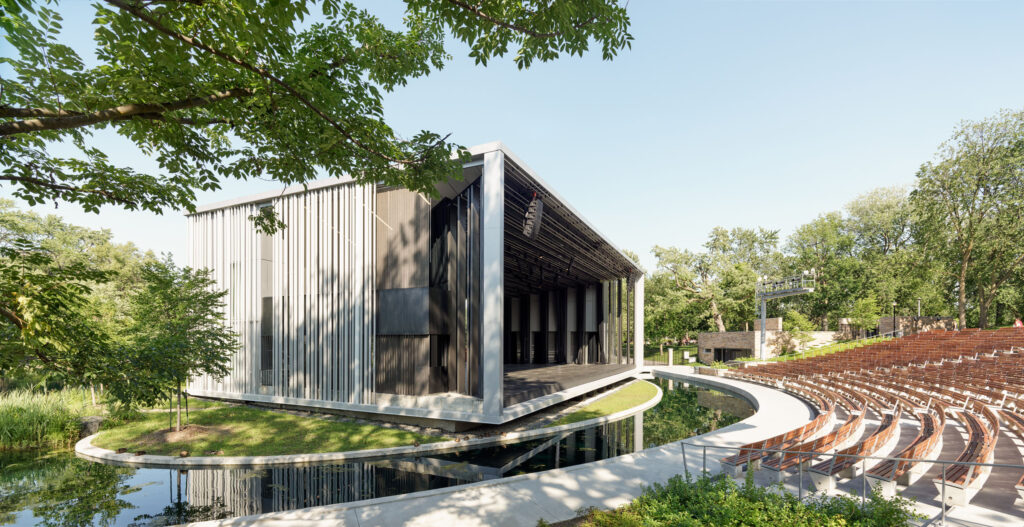
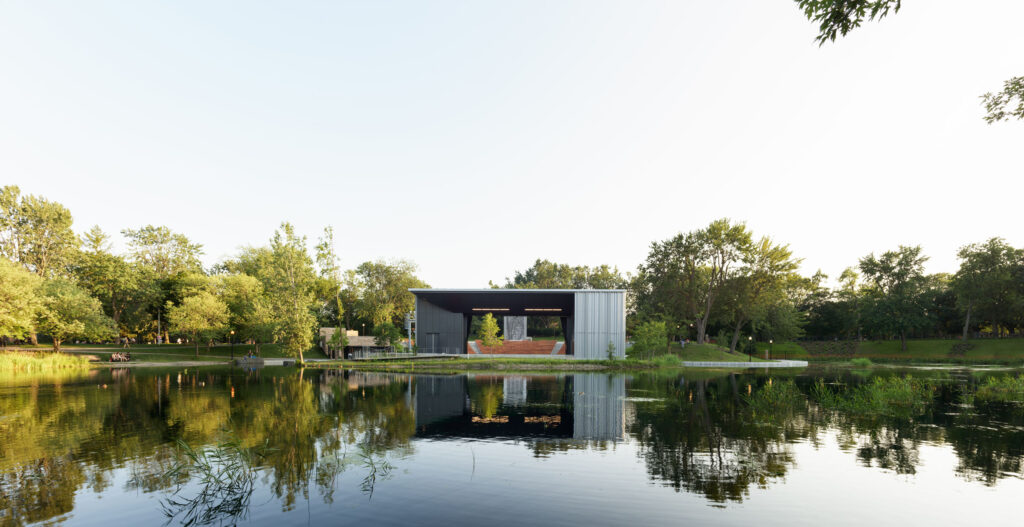
The project establishes a more permeable and inclusive setting for public use, both during performances and outside scheduled events. The upgraded venue can host large-scale outdoor productions for up to 2,500 spectators, with audiences occupying both fixed seating and the adjoining green areas.
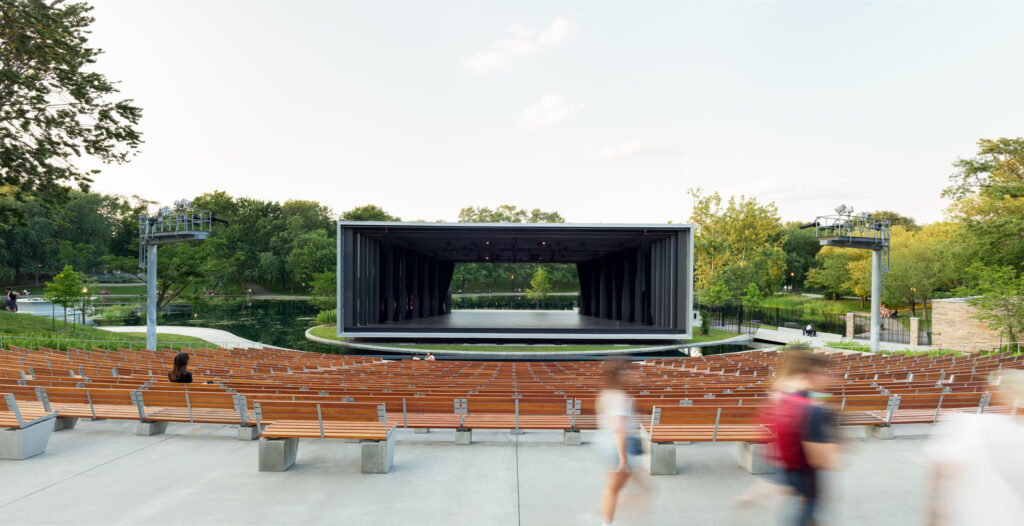
Environmental impact was reduced through restrained intervention and the use of locally sourced materials. Much of the program remains open to the exterior, including a green room designed as a balcony overlooking the pond. By limiting built intrusion and reinforcing vegetative cover, the project integrates the theatre more closely into its natural context.
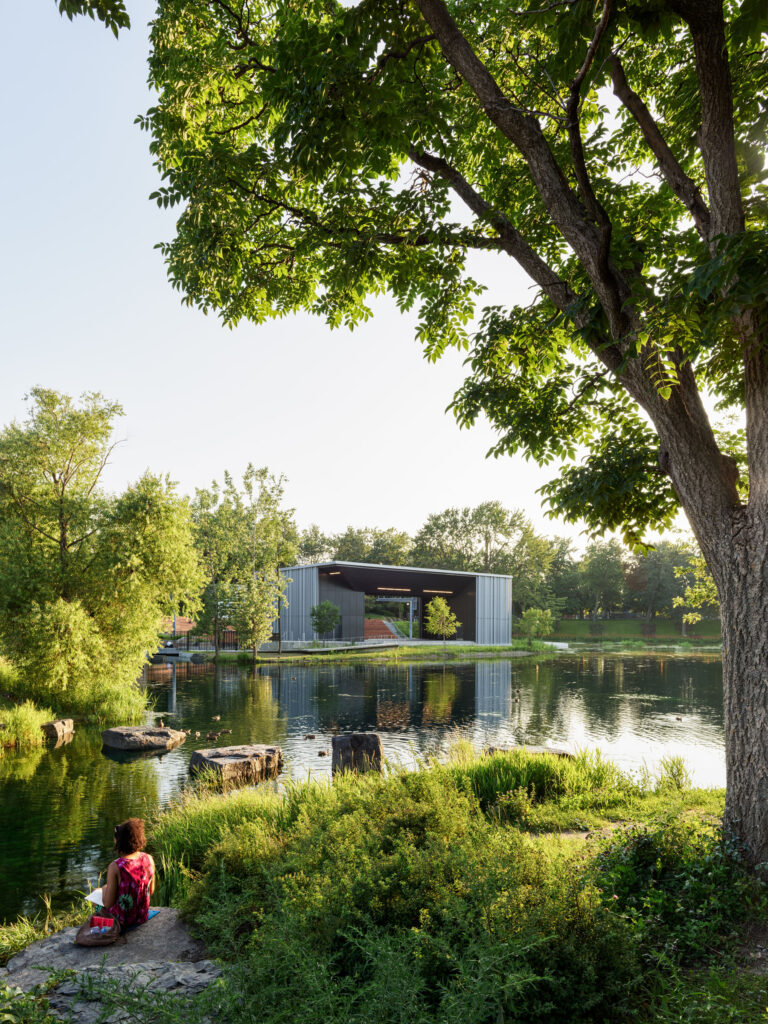
The result is a renewed civic and cultural destination in which architecture acts less as an isolated object than as a framework for landscape, performance, and public life.