


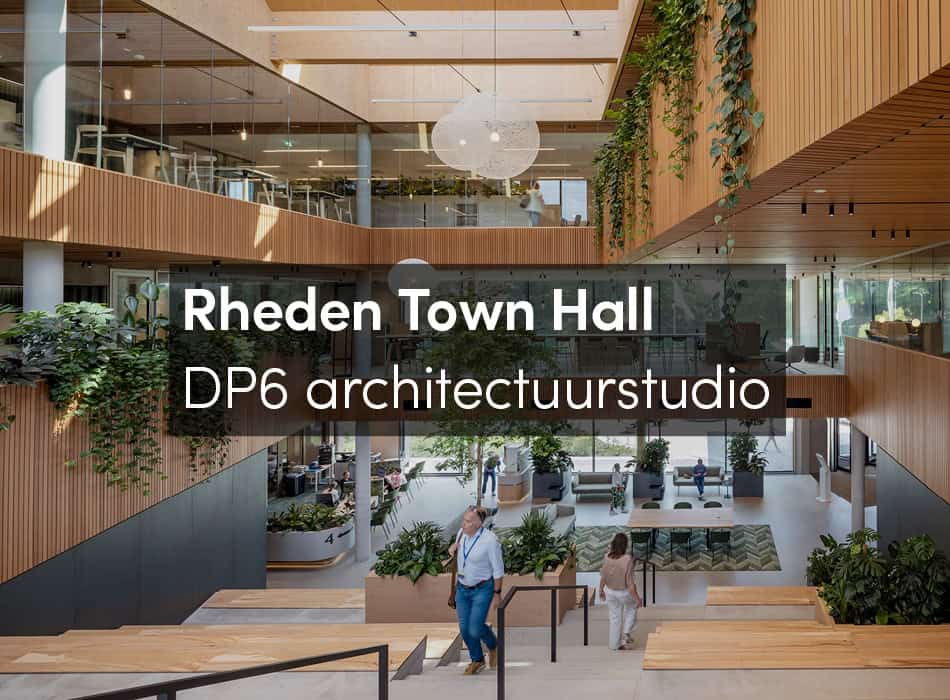
Nestled between the Veluwezoom National Park and the IJssel Valley, the new town hall of Rheden embodies ambitious circular principles while responding sensitively to its historical and ecological context. Designed as a compact and sustainable civic building, it reflects the distinctive character of the Gelderland landscape through its organic form and material palette.
Strategically located at the foot of the Rhederoord estate—between the seven villages that make up the municipality—the building sits on a historically rich site once home to a 17th-century inn and, later, the renowned Hotel De Engel, frequented by artists such as Louis Couperus and Simon Carmiggelt. The town hall was envisioned as a welcoming, transparent, and collaborative environment—open to citizens while providing a healthy and safe workplace.
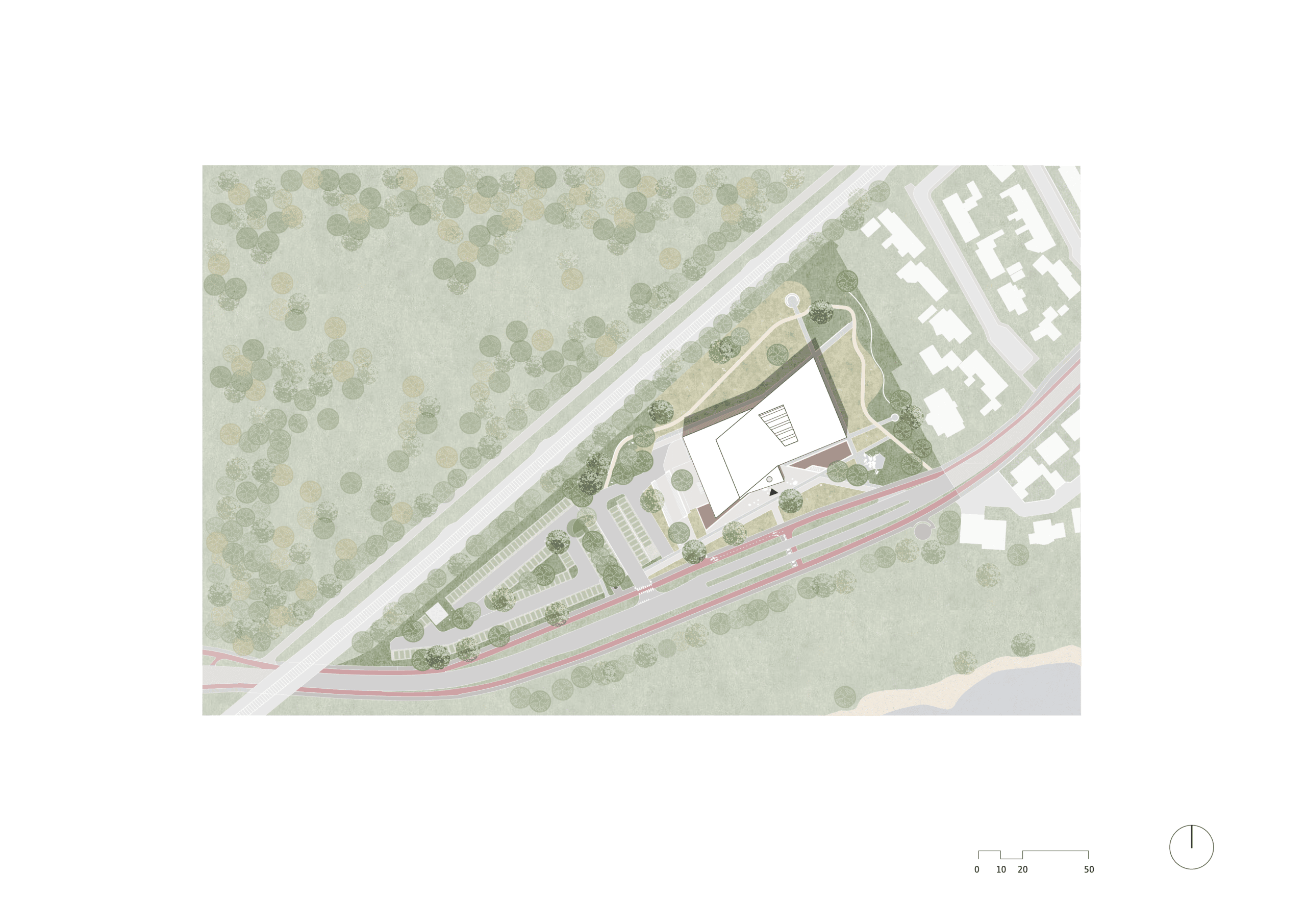
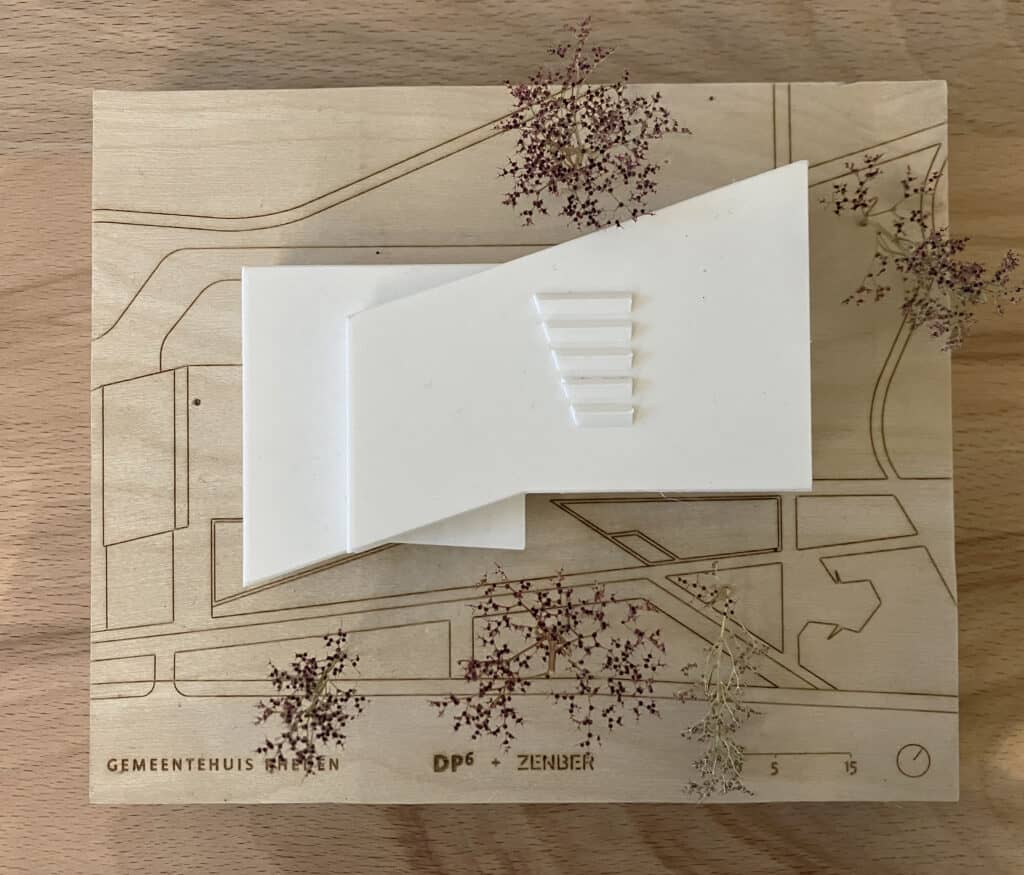
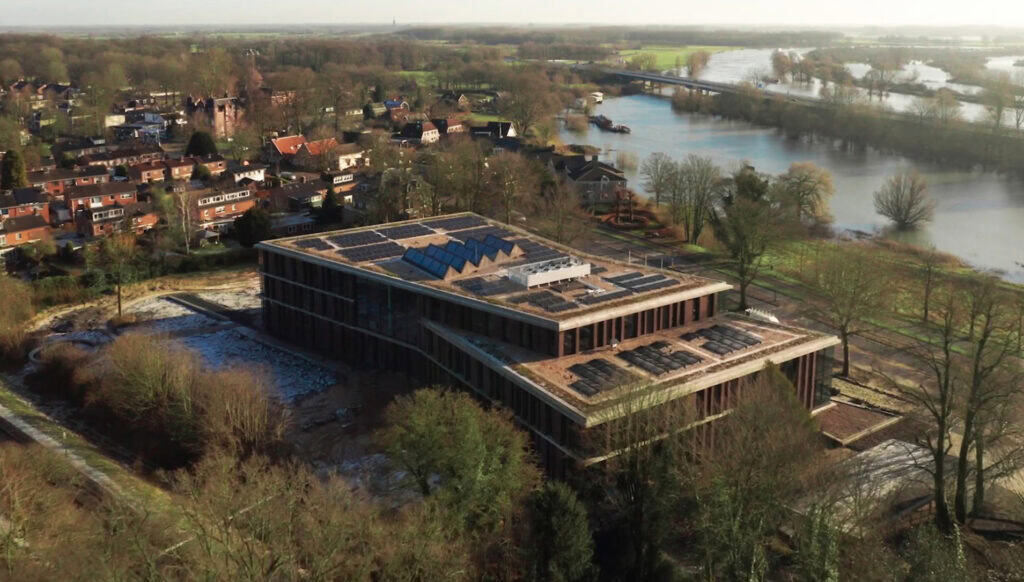
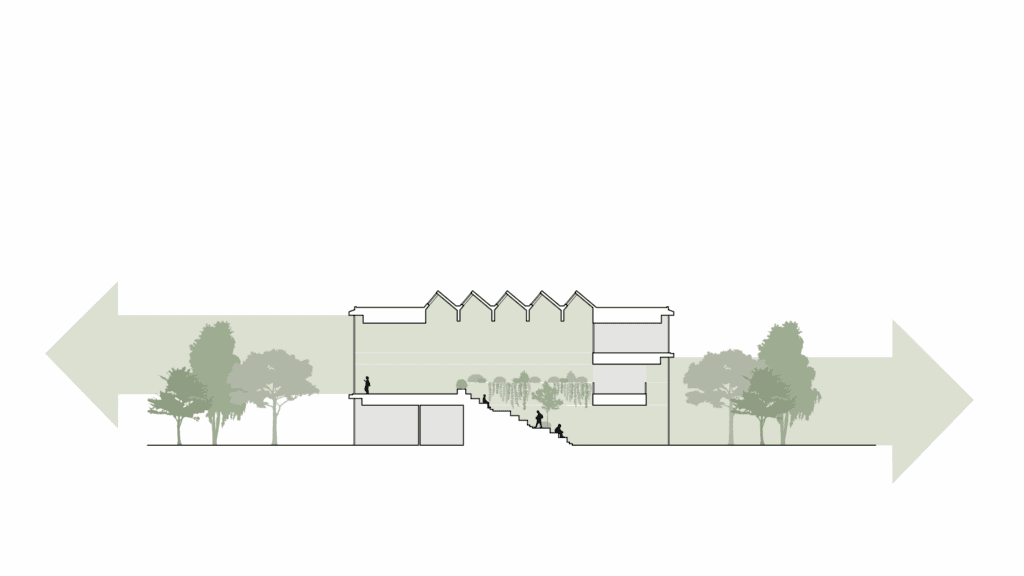
The new structure is 2,000 m² smaller than its predecessor, allowing for more generous spatial positioning on the site and an optimal orientation toward both surrounding landscapes. This downsizing has also made room for a spacious entrance area and a landscaped garden that integrates the building into its natural setting.
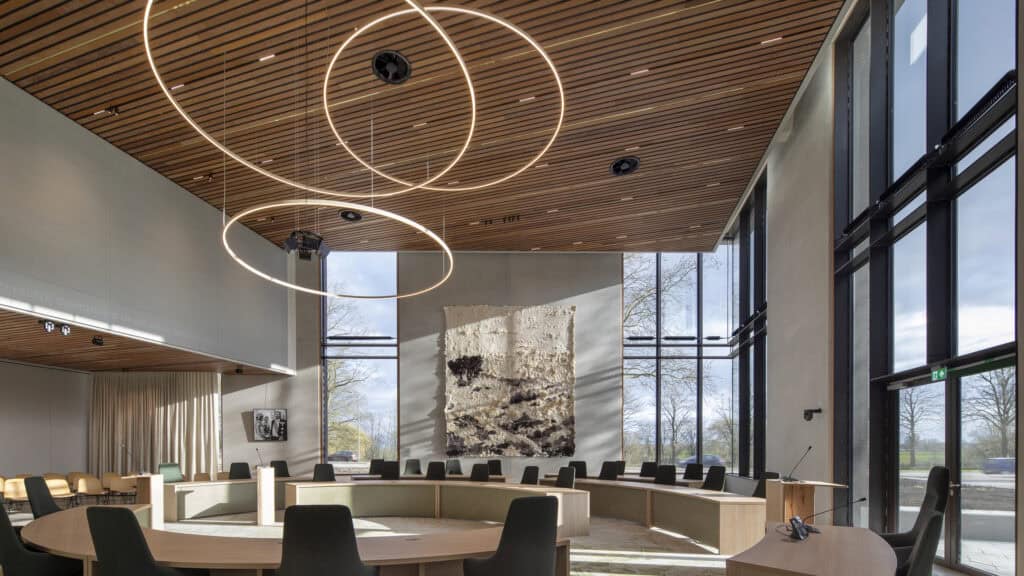
The design reuses the existing basement beneath the left wing, where the council chamber is prominently and transparently located on the corner. A light-filled atrium at the building’s junction serves as its social and public heart, inviting interaction among staff, residents, and visitors. A welcoming canopy guides visitors into this communal core.
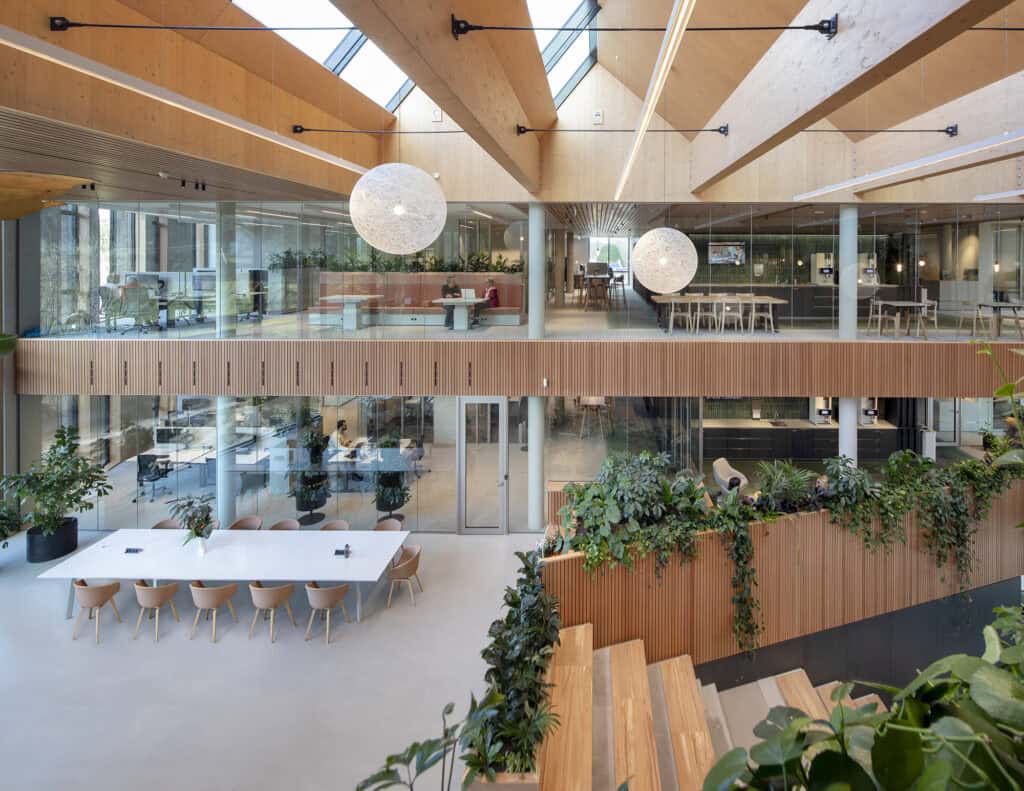
Inside, a sculptural wooden staircase ascends from the atrium, offering views of the IJssel Valley at the front and the Veluwezoom hills and Rhederoord estate from the upper levels. Around the atrium, public functions—including service counters, consultation rooms, the wedding hall, and the council chamber—are arranged. Semi-public spaces like the workplace café and meeting rooms are positioned further back, while flexible workspaces occupy the upper floors.
The interior expresses the identity of the region through materials sourced locally. Beechwood from the nearby Middachten estate is used for wall paneling, custom furniture, and the stair cladding. A tapestry in the council chamber, woven from wool of local Rheden sheep, features imagery inspired by works of the local painter Theo Goedvriend—who spent his youth in Hotel De Engel. Above, an angel figure from the former hotel symbolically hovers beneath the building’s shed roof.

Designed with a clear separation between structure and interior, the building uses a modular grid and generous ceiling heights to ensure adaptability to future needs. Components have been constructed for easy disassembly and reuse, including dry-stacked, grouted brick façades. Integrated ecological elements—such as bee bricks and nesting boxes for swifts and bats—support local biodiversity.
Sustainable technologies include an ice buffer system for thermal energy storage and rooftop solar panels for renewable energy generation. The atrium acts as a “green lung,” featuring vegetation that climbs with the staircase, contributing to indoor air quality and wellbeing.
The surrounding grounds have been extensively greened to enhance climate resilience. Native plantings replicate the local ecologies of the Veluwezoom and IJssel Valley—forest edges, rolling meadows, and native flower fields—encouraging biodiversity, ecological connectivity, and natural rainwater infiltration.