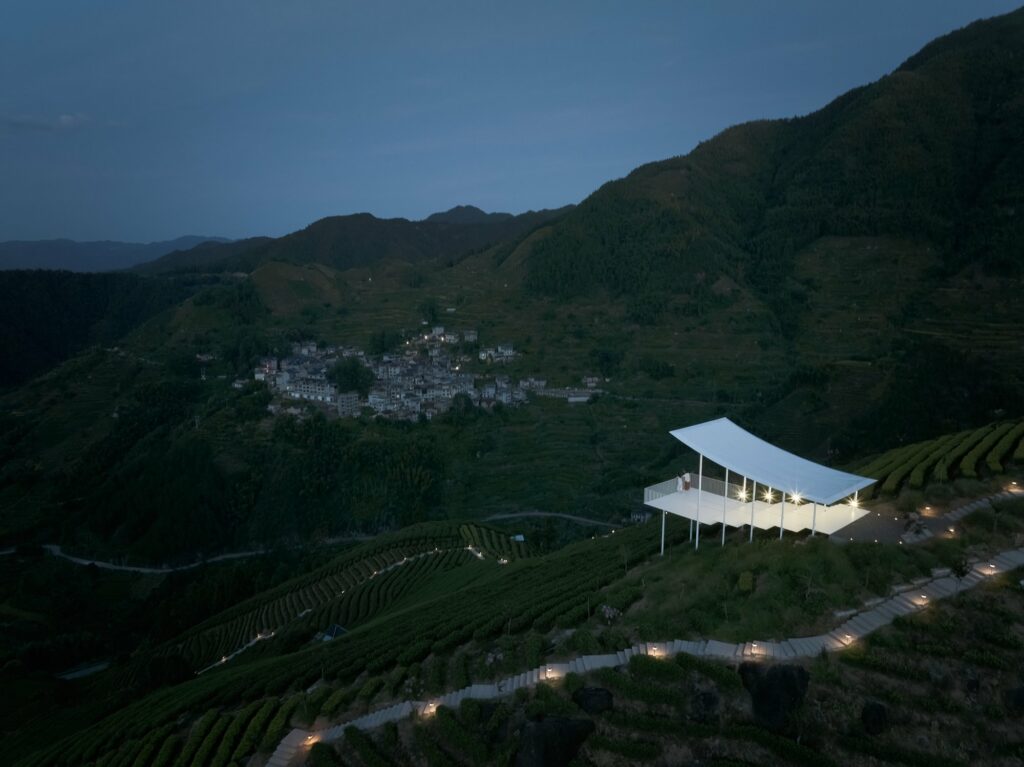




The Floating Pavilion is a small public structure embedded in the terraced tea landscapes of Songyang County, Zhejiang Province. Positioned within an active agricultural terrain, it is conceived as both a viewing device and an infrastructural extension of existing tea-picking routes.
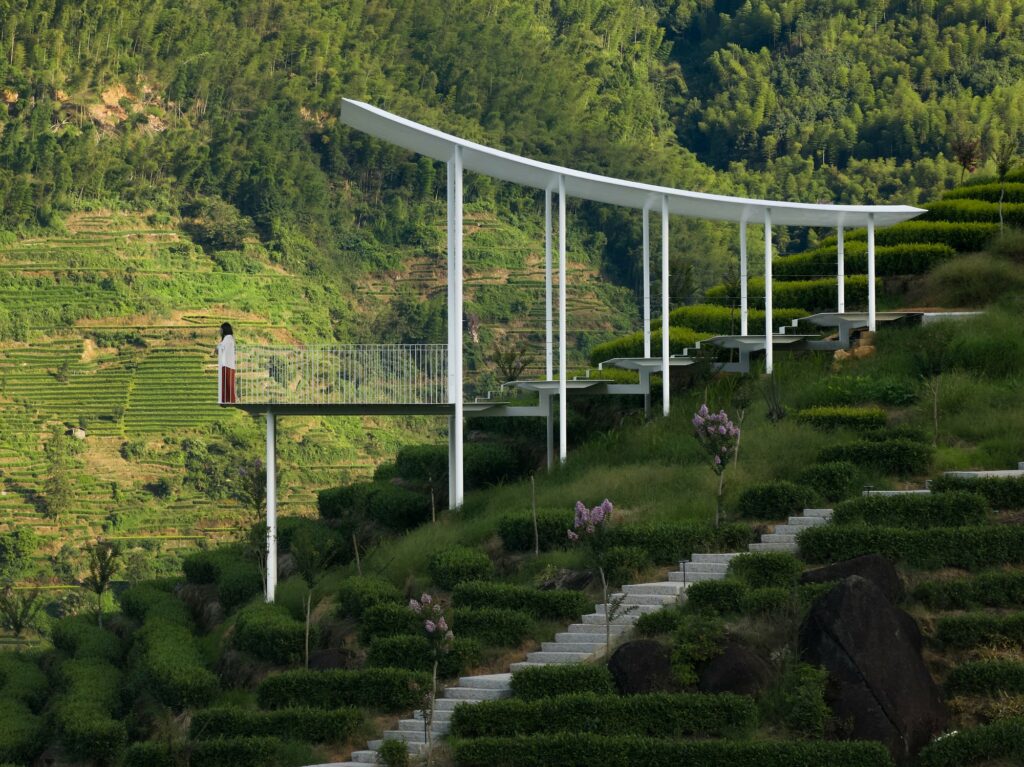
The Floating Pavilion is situated at the summit of a terraced tea landscape in the Organic Tea Valley of Xinxing Town, Songyang County, Zhejiang Province, around thirty kilometres from the urban centre and five hundred metres above sea level. Commissioned by the local government, the 85-square-metre open-air structure operates as both a viewing platform and a resting point within an active agricultural terrain.
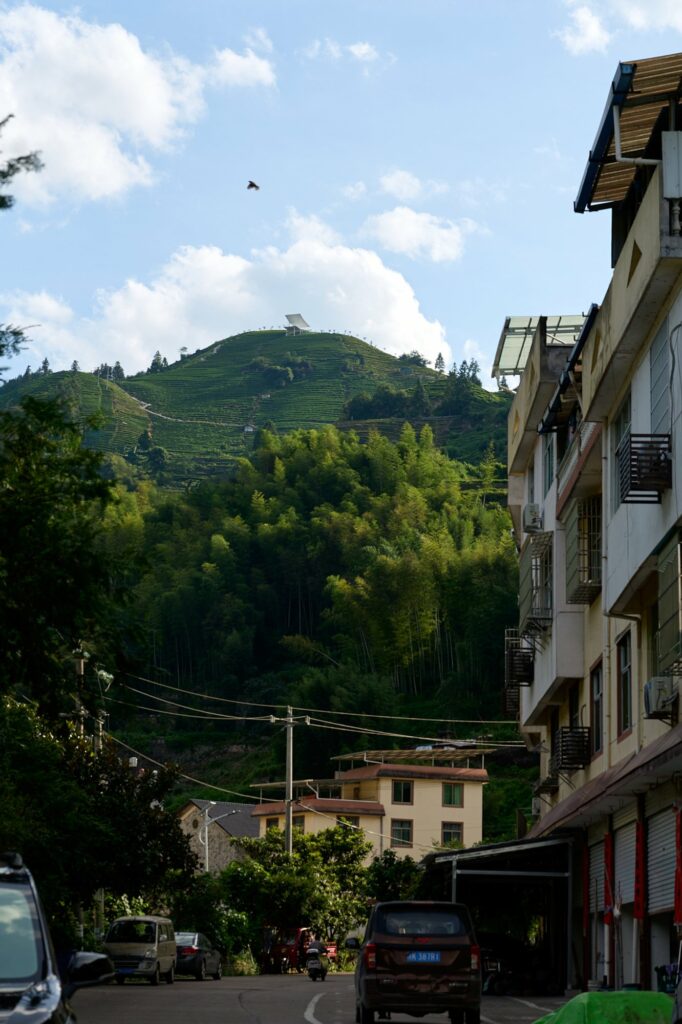
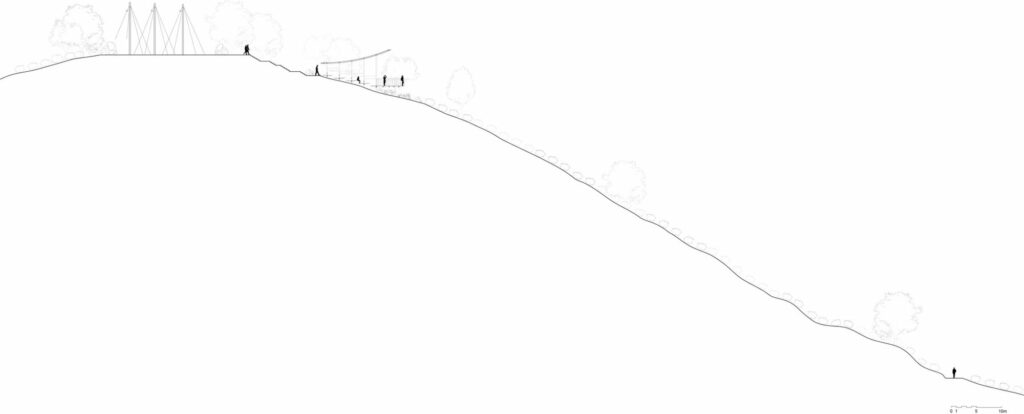
The site is defined by expansive views across layered tea hills, with seasonal mist rising from the valley floor. Before intervention, the steep topography was accessible only through narrow agricultural paths, and no constructed elements existed on site. Any architectural addition therefore had to respond to three inseparable conditions: extreme slope preventing the use of heavy machinery, uninterrupted tea cultivation, and the need to preserve the landscape as the primary spatial experience rather than replace it with an object.
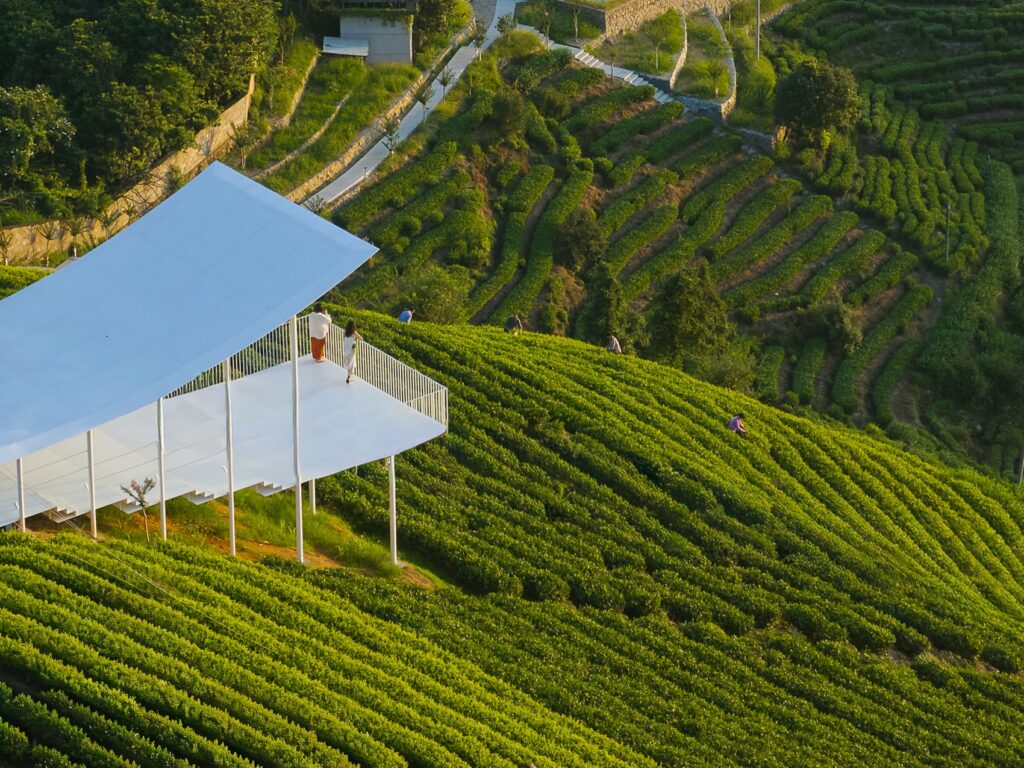
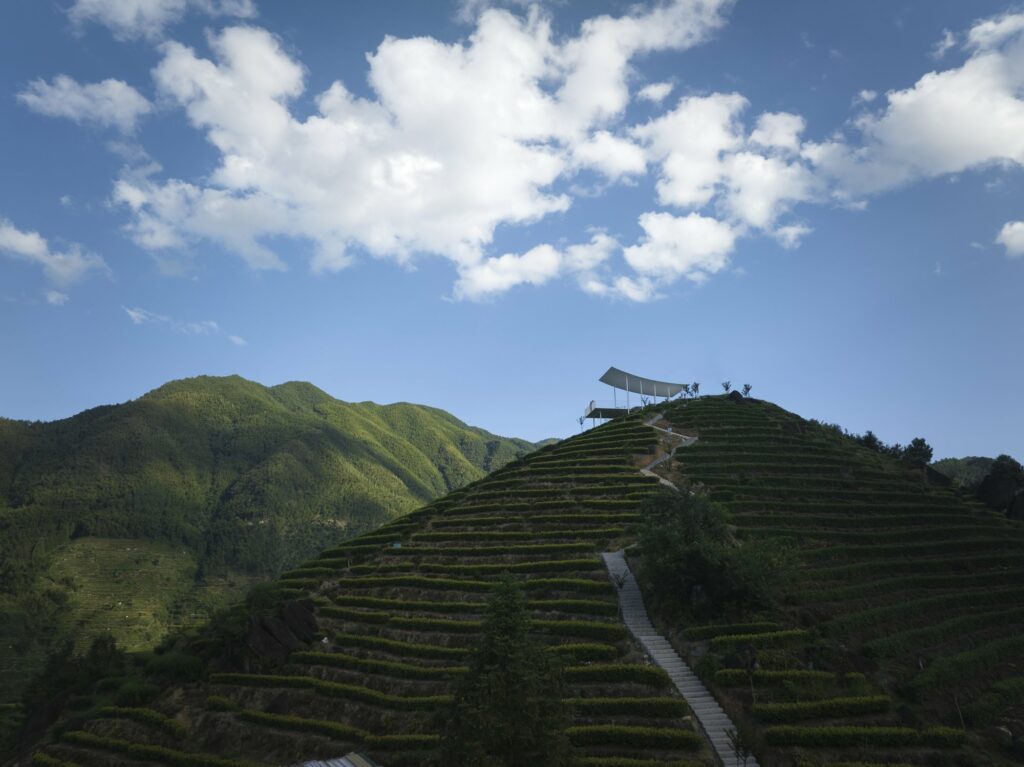
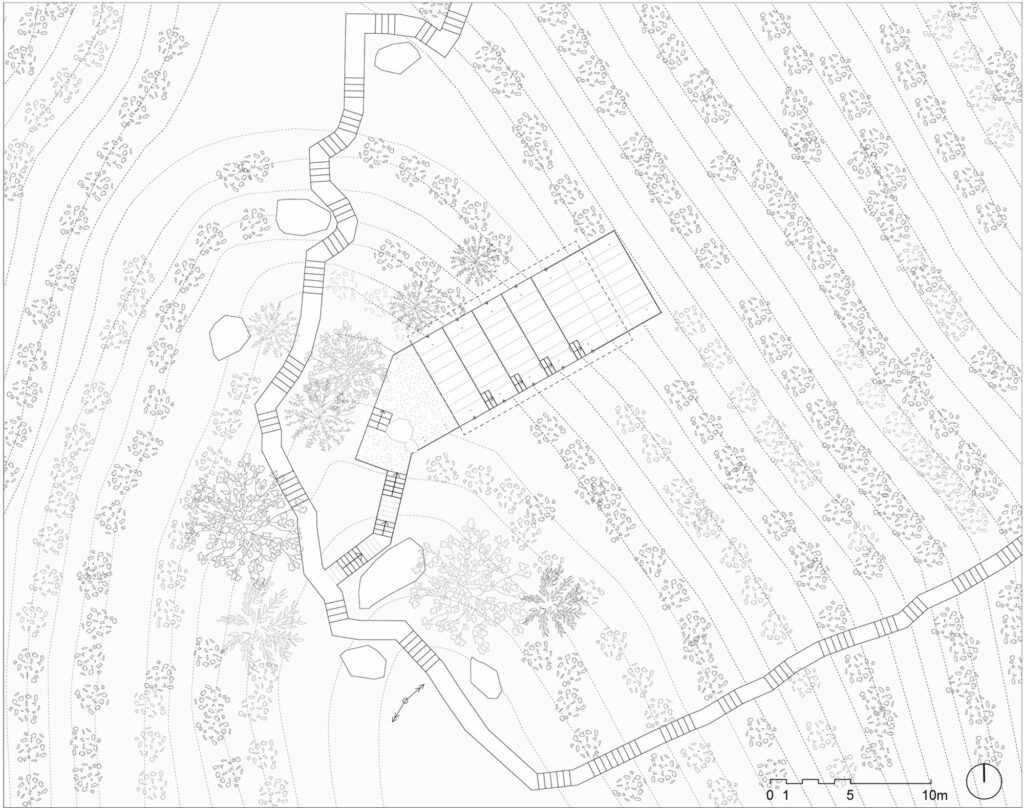
To address these constraints, the pavilion is conceived as a continuous spatial sequence embedded into an existing tea-picking route. A granite stair path, aligned with harvesting circulation, ascends through the terraces in a zigzag motion that mirrors the inclination of the roof. This route later becomes both the construction access and the visitor approach, ensuring that logistics, agriculture, and public use share a single infrastructural logic. All structural components were prefabricated off-site, segmented for manual transport, and carried uphill via wheeled carts and cable systems due to the inaccessibility of construction machinery. Post-construction, minimal excavation and vegetation disturbance were maintained, followed by ecological restoration.
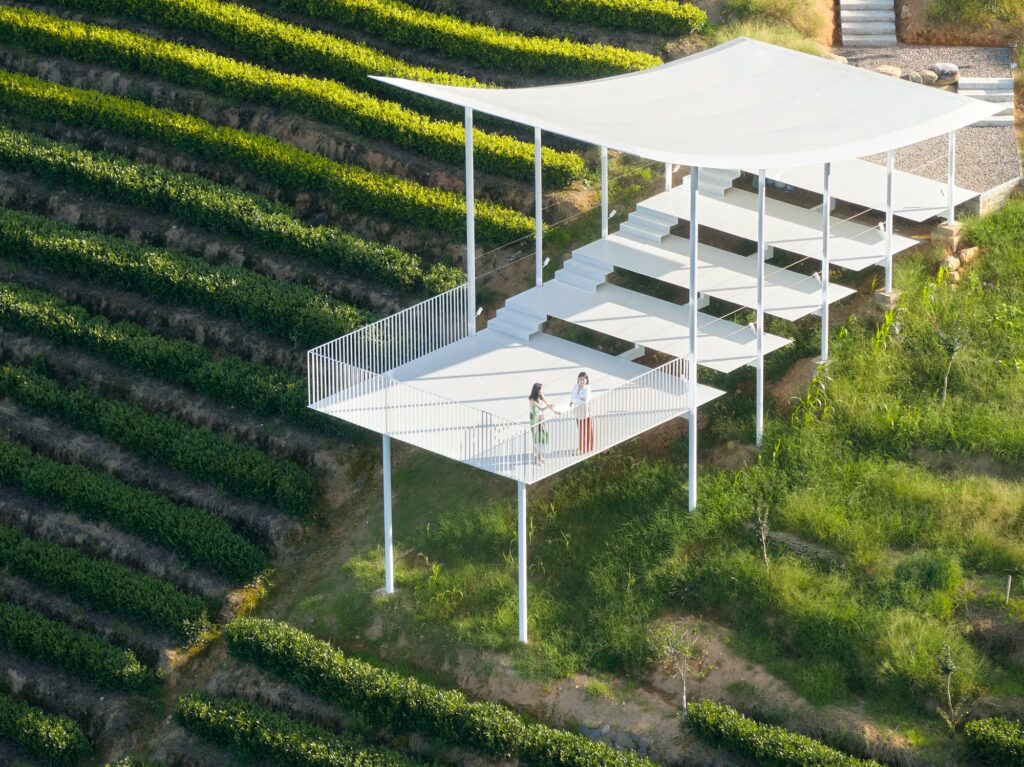
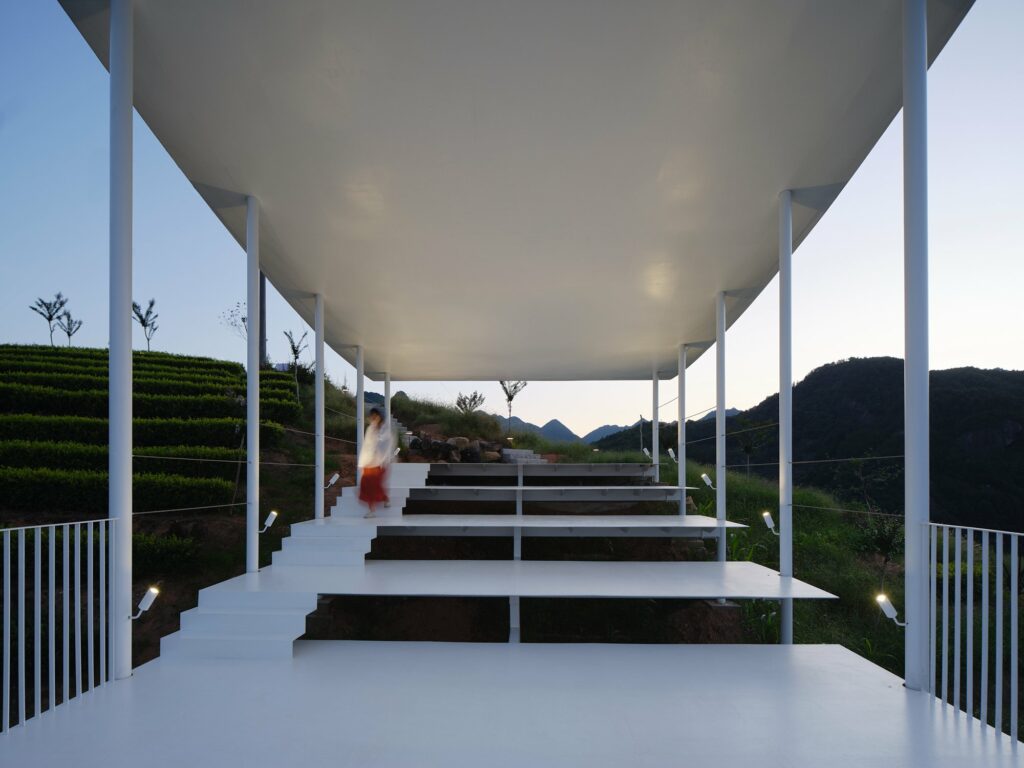
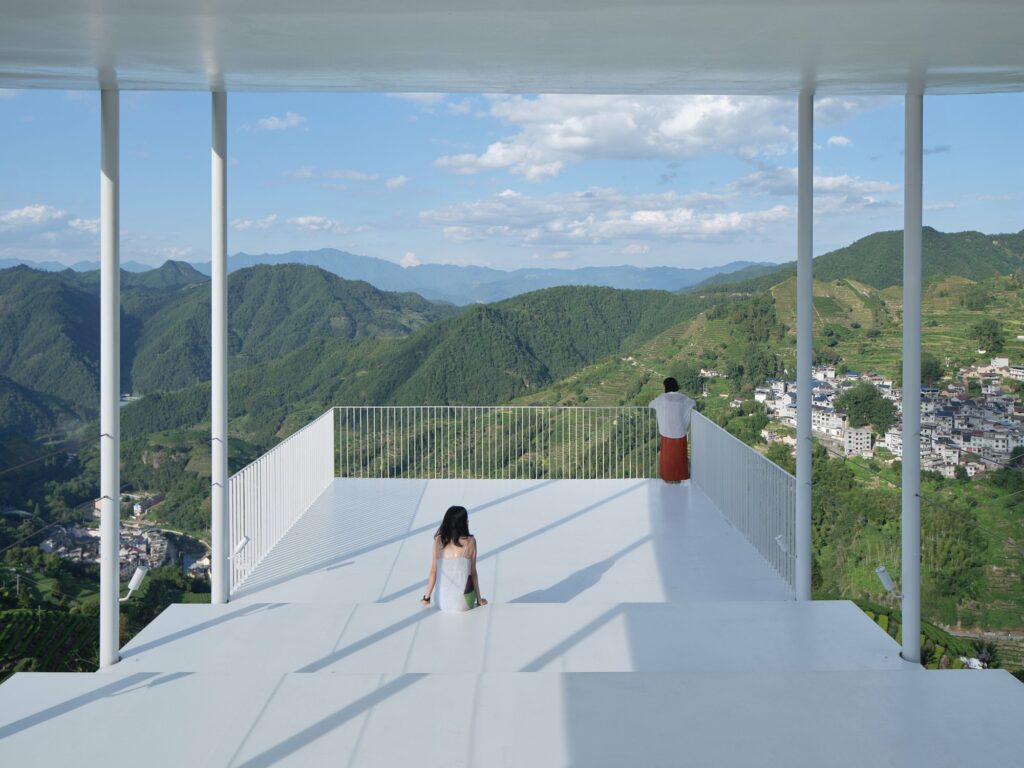
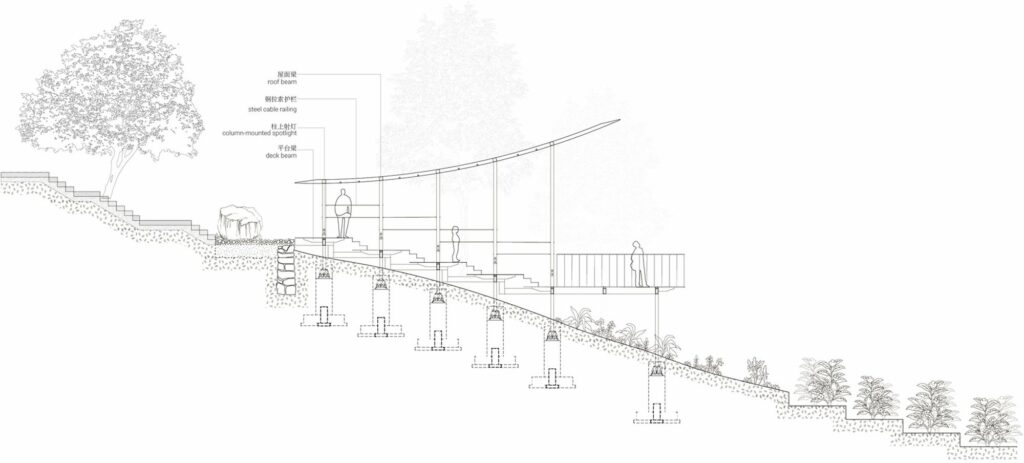
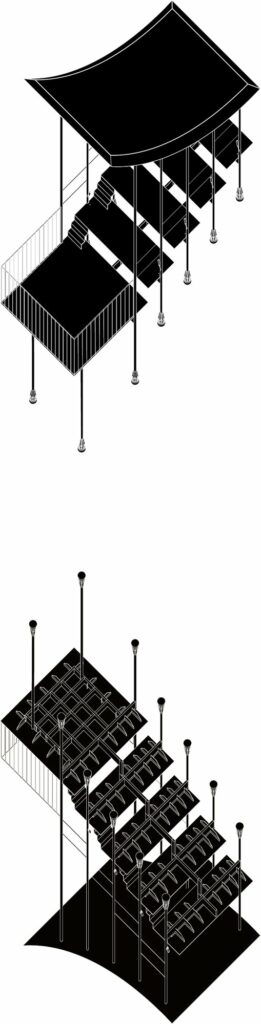
At the summit, visitors encounter a curved steel roof that appears as a thin hovering plane above a sequence of stepped platforms descending the slope. Spatial perception is controlled through the gradual modulation of section: at the entry, the roof compresses the view; as one descends, it progressively lifts, revealing the landscape; at the lowest point, the full panorama of the tea valley is revealed. Rather than formal expression, the geometry is calibrated directly from topography, making the act of viewing inseparable from movement.
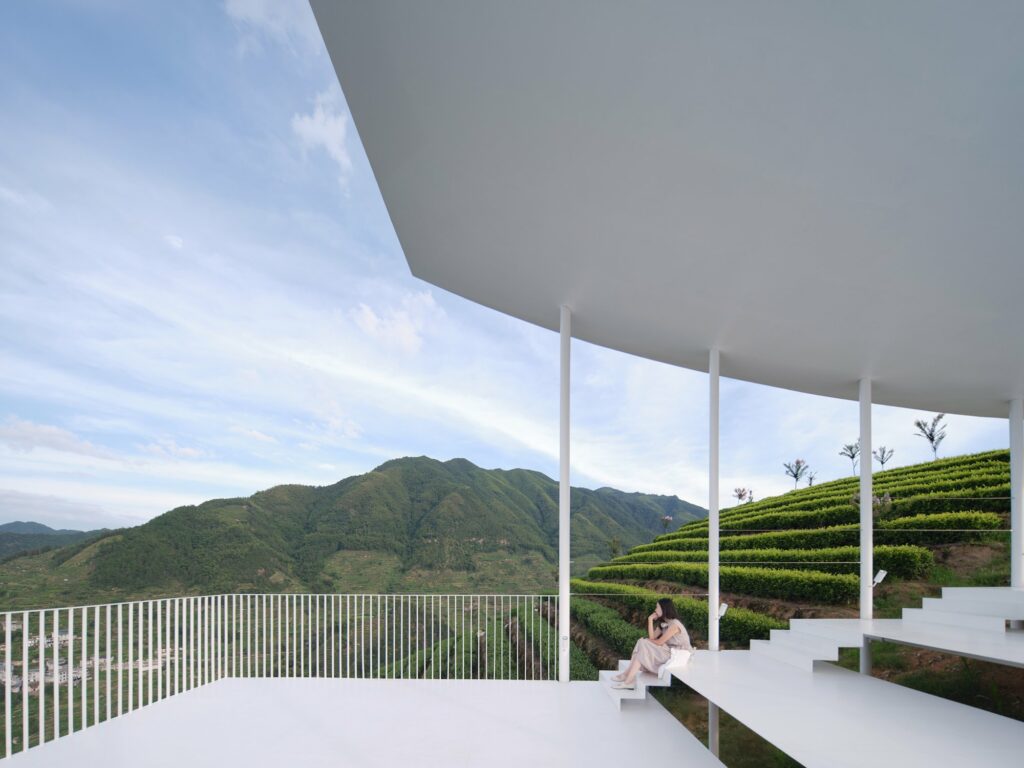
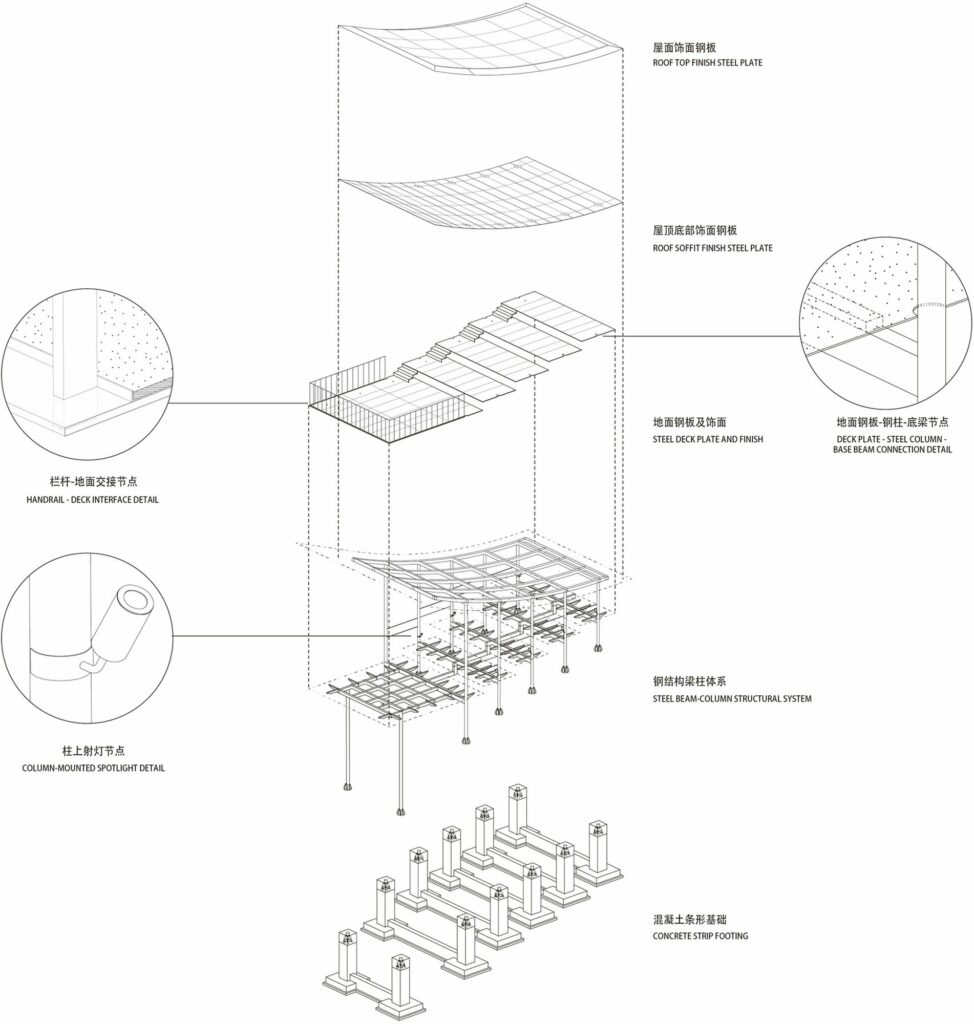
Structurally, the roof is a composite steel sandwich system with upper and lower plates framing an internal steel grid. Tapered edges unify structure, drainage, and silhouette into a single blade-like profile. A single transverse beam carries the deck, while cantilevering is achieved through wedge-shaped stiffeners. The separation between platforms and columns generates semicircular voids that admit light from below, while tension cables maintain safety without obstructing visual continuity. Cylindrical luminaires positioned at column bases project light upward, accentuating the curvature of the soffit.
Following completion, the pavilion has been absorbed into daily use, serving both visitors and local farmers. It functions as a resting point, a viewpoint for atmospheric conditions such as sunrise and sunset, and a practical infrastructural extension of agricultural access routes during harvest.