Project team Tao Shuting, Liu Yang, Xian Haohui, Xue Jun, Xiao Xinyu, Qian Jia, Li Lanruo, Guo Zhenghao, Liu Jinghuan, Huang Fanlang, Xie Rugui, Li Yunhong
Landscape architect Chen Xi
Site architects Wang Shiyu, Chen Xi, Qian Jia, Chi Zenglei, Qu Hao
Photo credits Su Shengliang, Chen Hao, genarchitects
Year
2021
Location Dingshu Town, Yixing City, Jiangsu Province, China
Architecture for Ancient Craftsmanship: Dingshu School of Pottery
genarchitects
In the context of industrialization, “handmade pottery” still has an irreplaceable appeal. “Craftsmanship” is at the heart of this school’s teaching, and “craftsmen’s workshop” is at the center of the campus. We have found a form for each function and let them in their place. The different forms of buildings create a rich outdoor space that distinguishes the campus from the school typology that is dominated by massive buildings. People can easily meander between the buildings and feel the change of phenology.
—genarchitects
A low-density campus where people can meander
Dingshu, Pottery Culture, Vocational School
Dingshu, located in Yixing, Jiangsu Province, 200 kilometers away from Shanghai. This small town on the shore of Taihu Lake has a history of pottery making for thousands of years. All kinds of pottery produced are famous, among which the most well-known is the Zisha teapot made of Zisha clay. For centuries, possessing an elegant Zisha teapot has been a lifelong pursuit of Chinese literati and tea drinkers. With the increase of demand and development of the pottery culture, Dingshu, the birthplace of Zisha teapot, has gradually developed into the center for the production and trading of Zisha teapot. Therefore, the life of local community residents is also closely related to pottery culture.
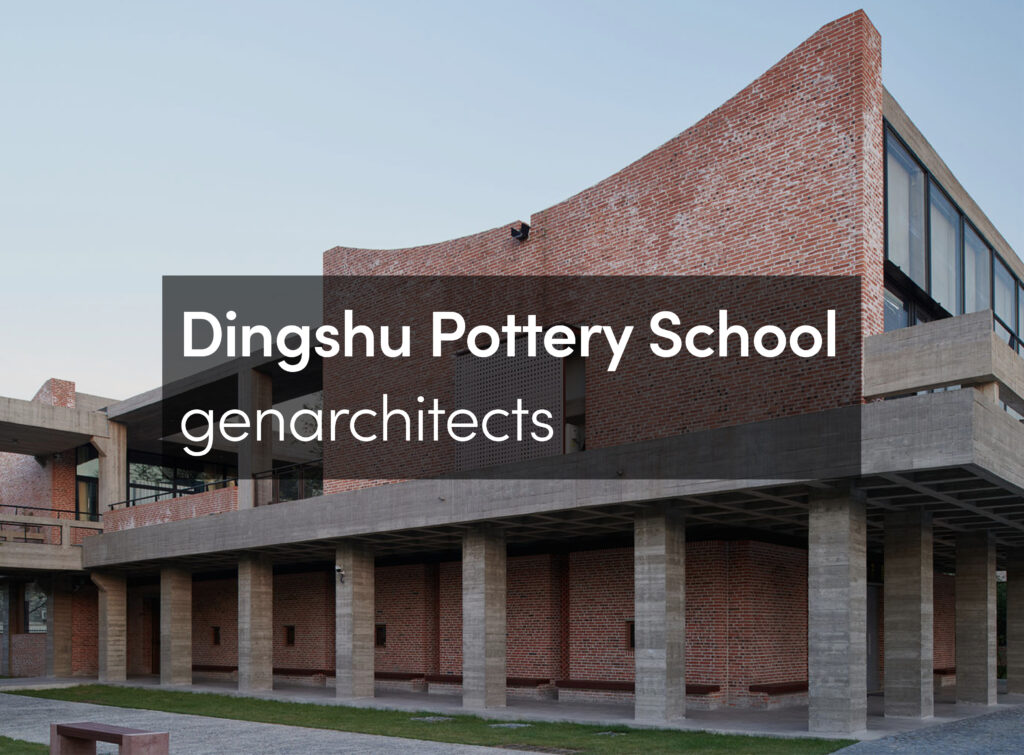
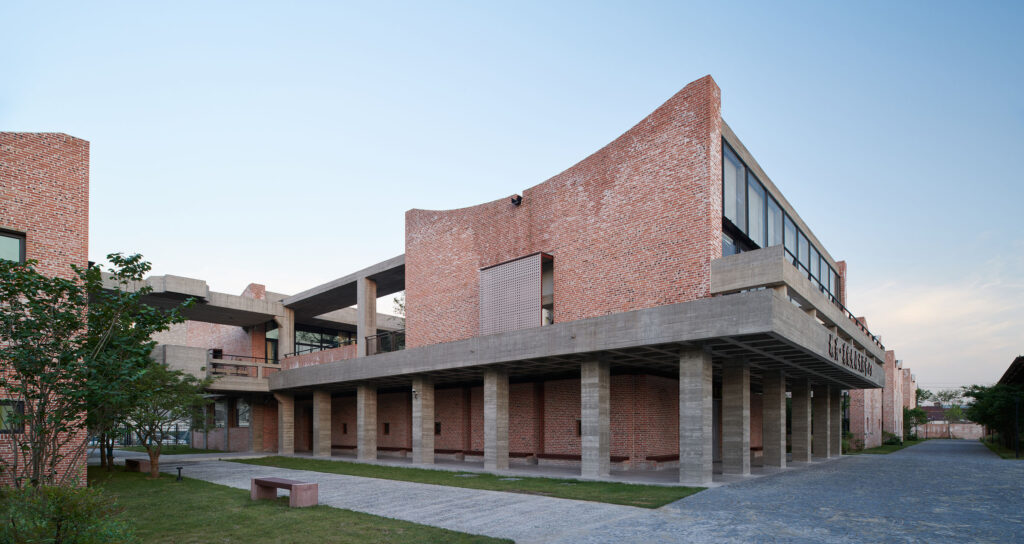
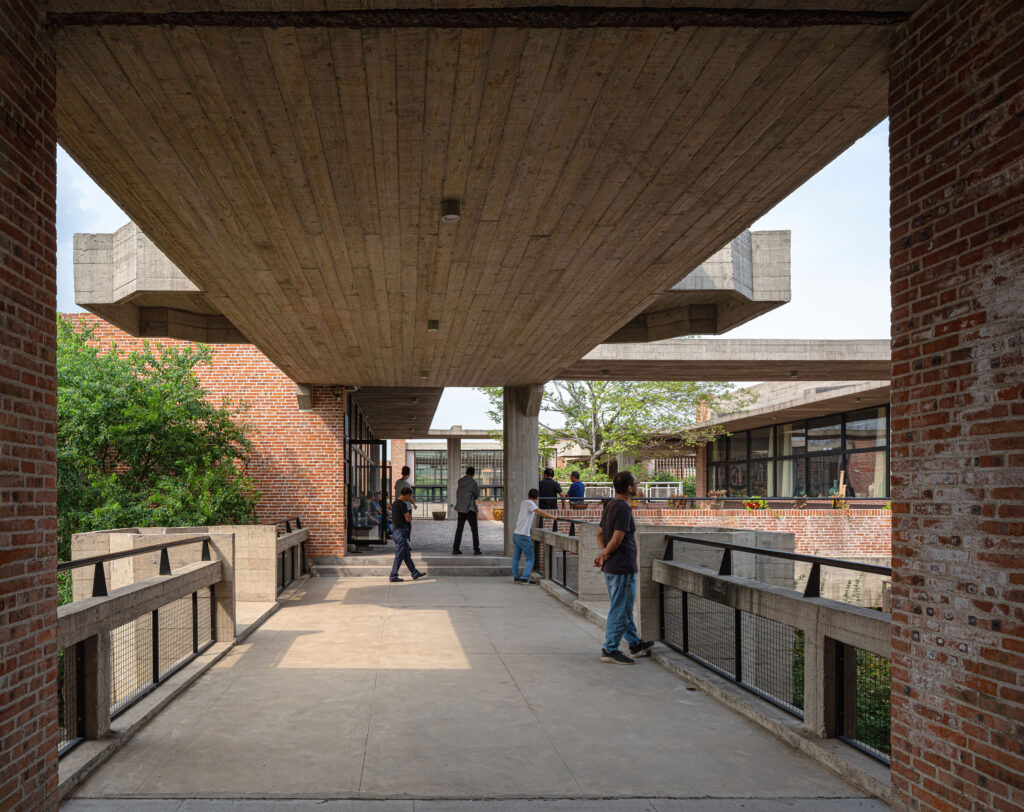
The exhibition building and the classroom units on the south sideThe exhibition building is connected to the classroom units on the north and south sides by corridors
As one of the few schools specialized in pottery training in the national rural adult education system, Dingshu Vocational School of Pottery aims to increase the income level and improve the local livelihood by offering academic education and skills training, and is supposed to open up to rural communities that lack public facilities after school hours as a venue for public education and activities.
Continuous classroom units
Workshop, Campus
Through the study of local pottery history, genarchitects learned about the tradition of pottery making being passed down from master to apprentice within workshops. Based on seminars conducted with local community members, practitioners, teachers, and craftsmen, the concept of an “artisan school” was derived, and the design goal of a low-density campus centered on a “pottery workshop” was gradually established.
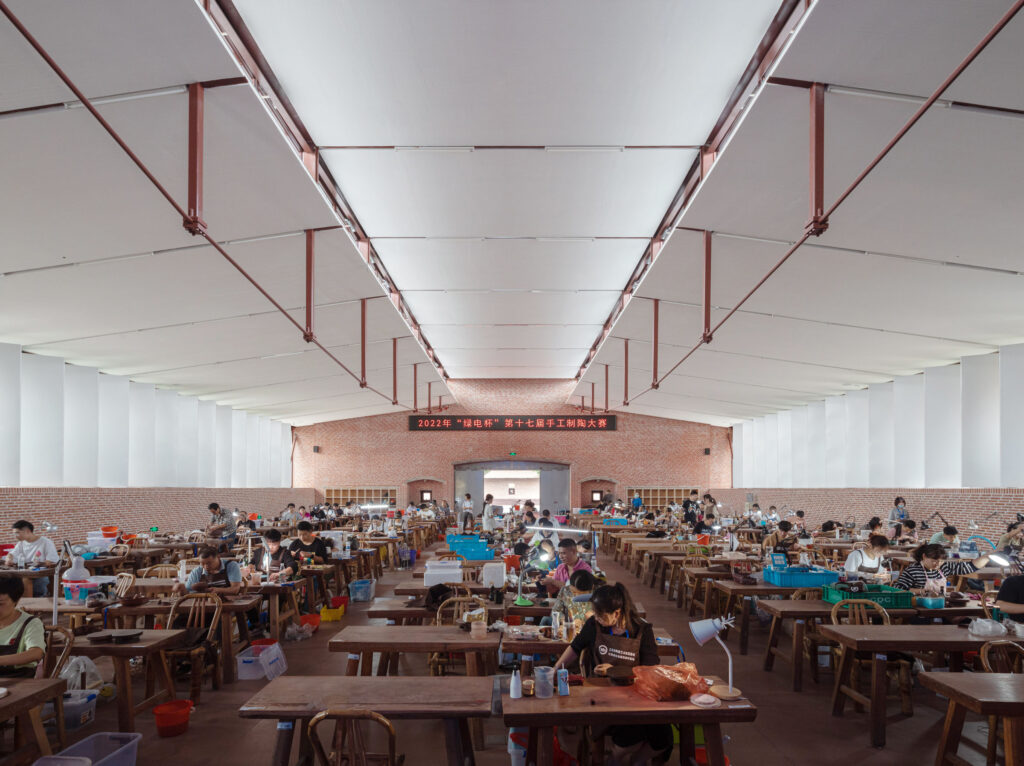
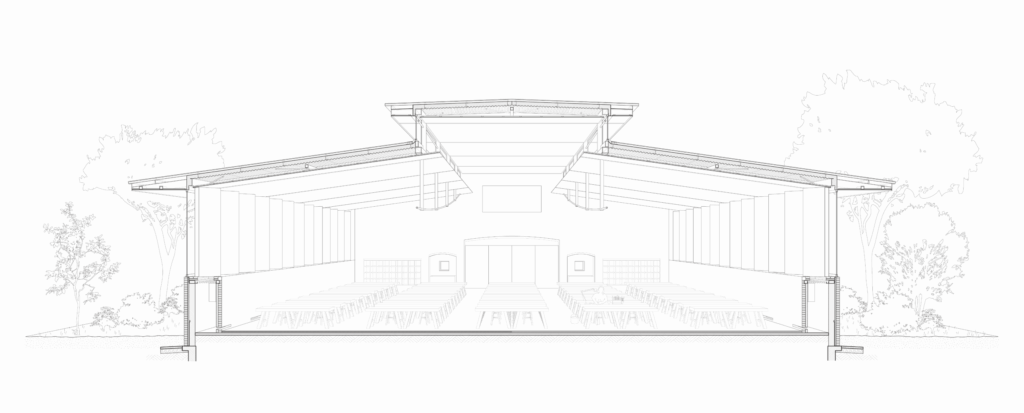
The annual pottery competition in the major workshop
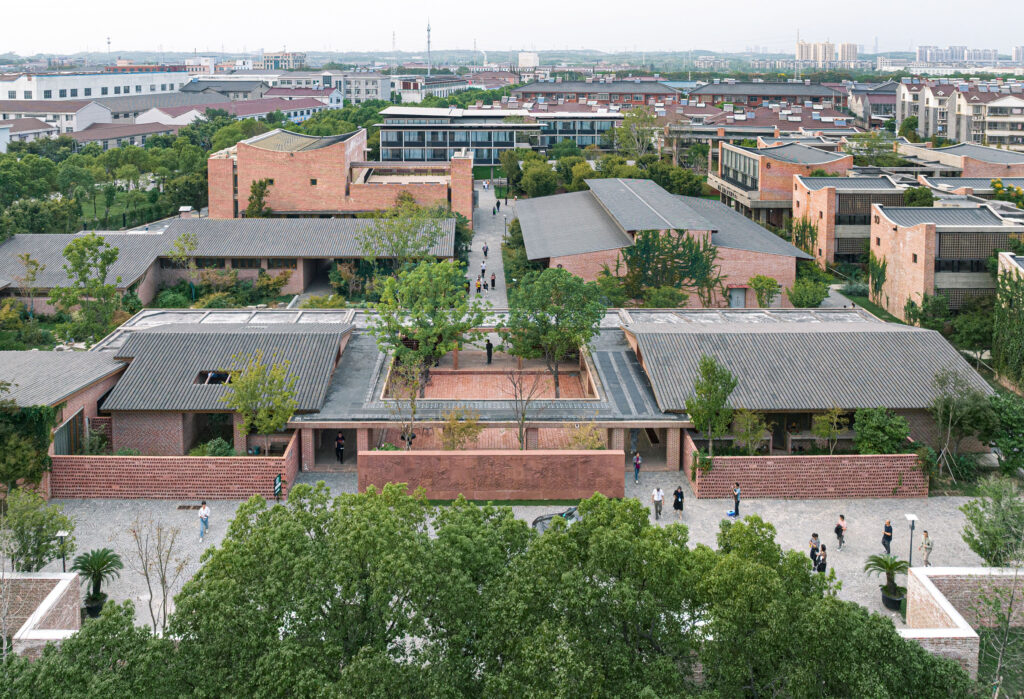
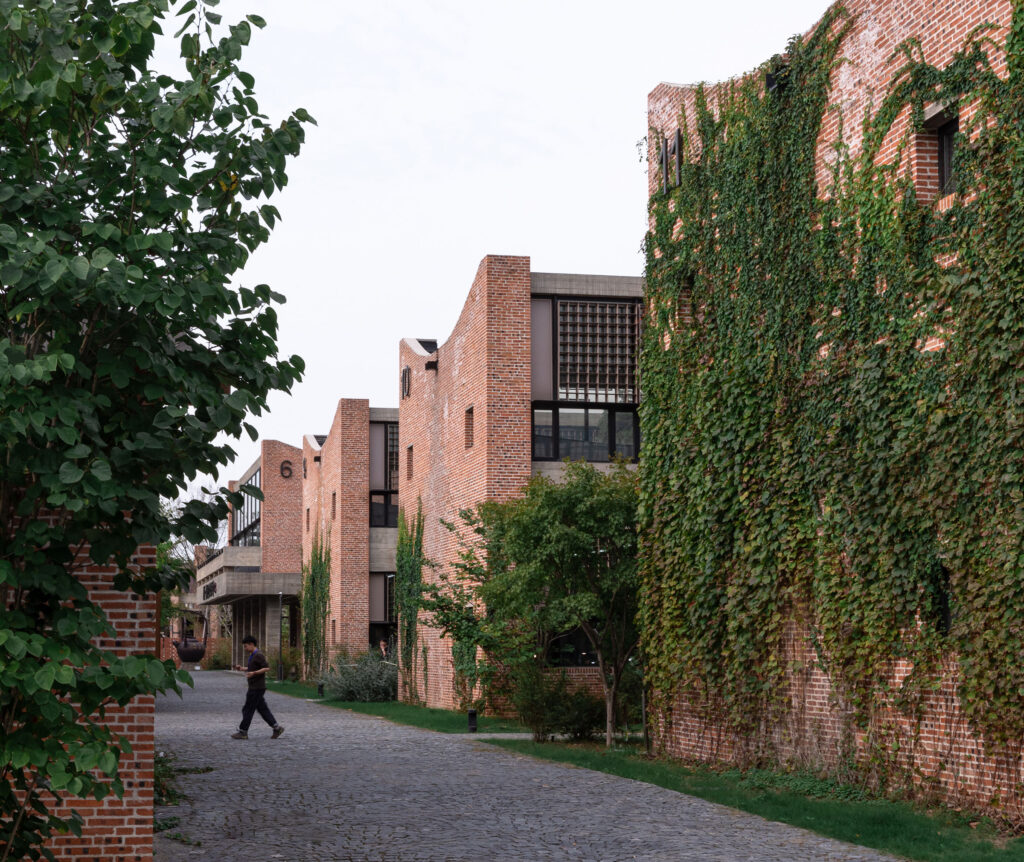
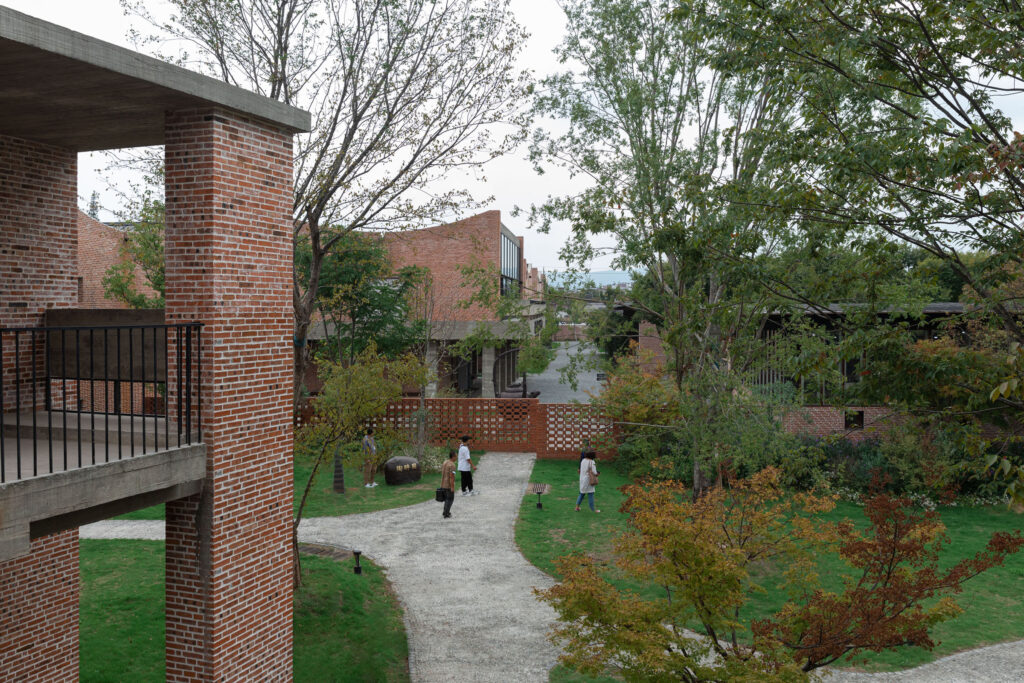
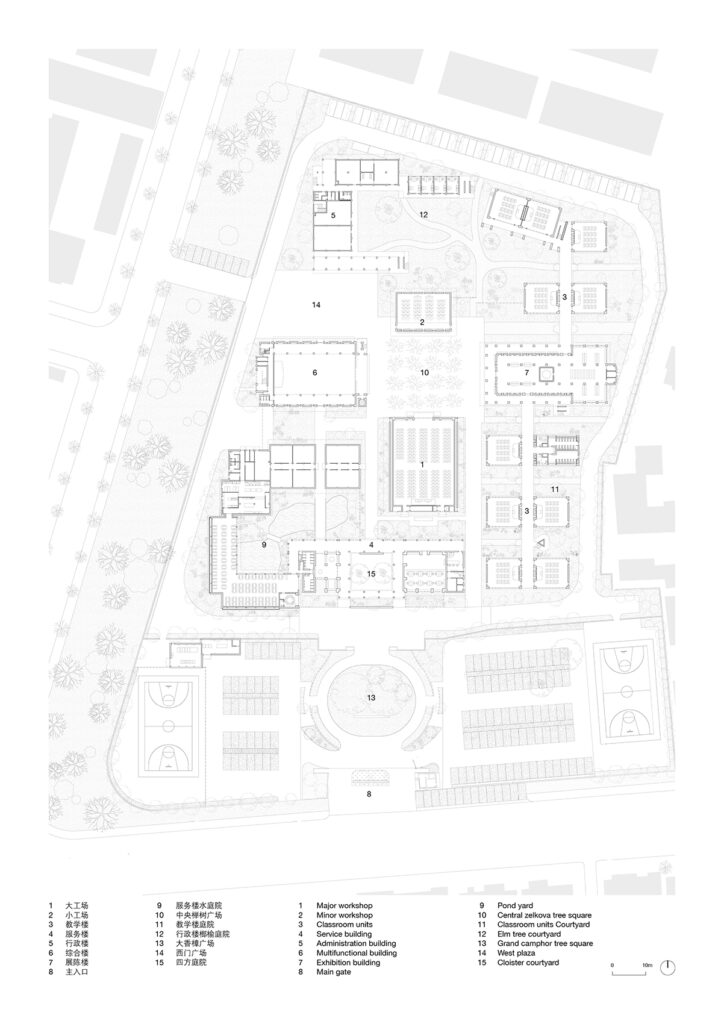
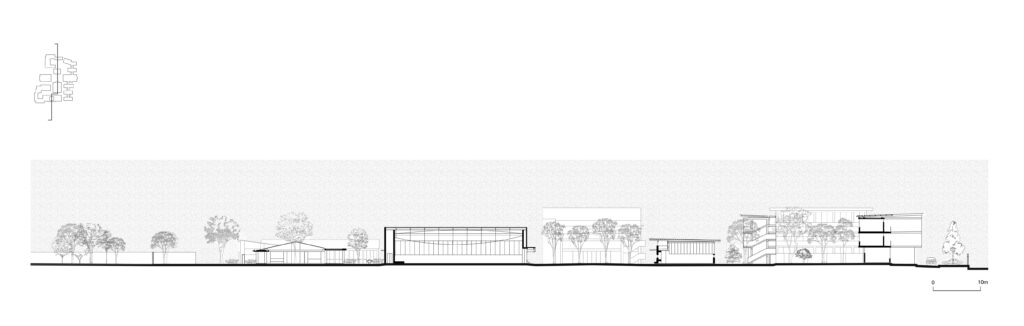
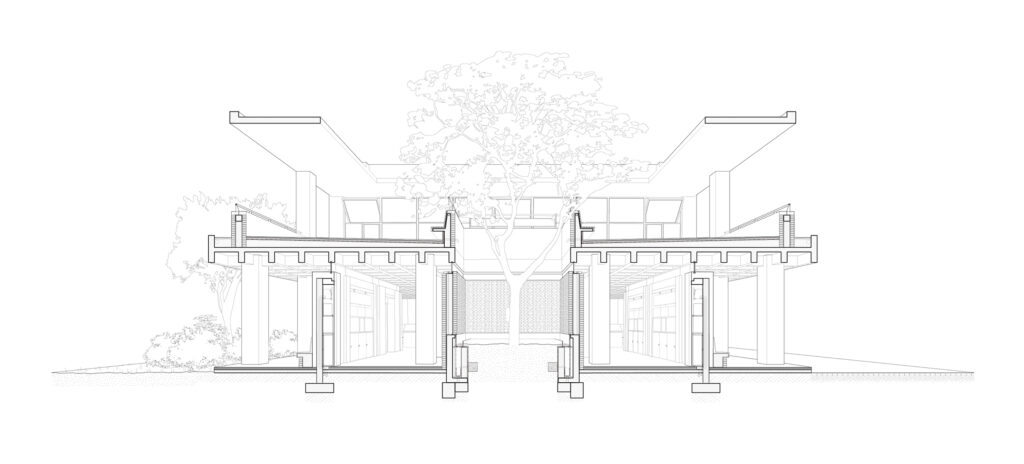
Instead of designing a common campus with massive buildings and extensive squares, Dingshu Vocational School of Pottery is a low-density cluster of buildings that adopted the meandering spatial layout of traditional artisan workshops. The four essential buildings, i.e. two workshops, a multifunctional hall, and an exhibition hall, are placed at the center of the campus, and the Beech Tree Plaza enclosed by them serves as a central stage for outdoor events.
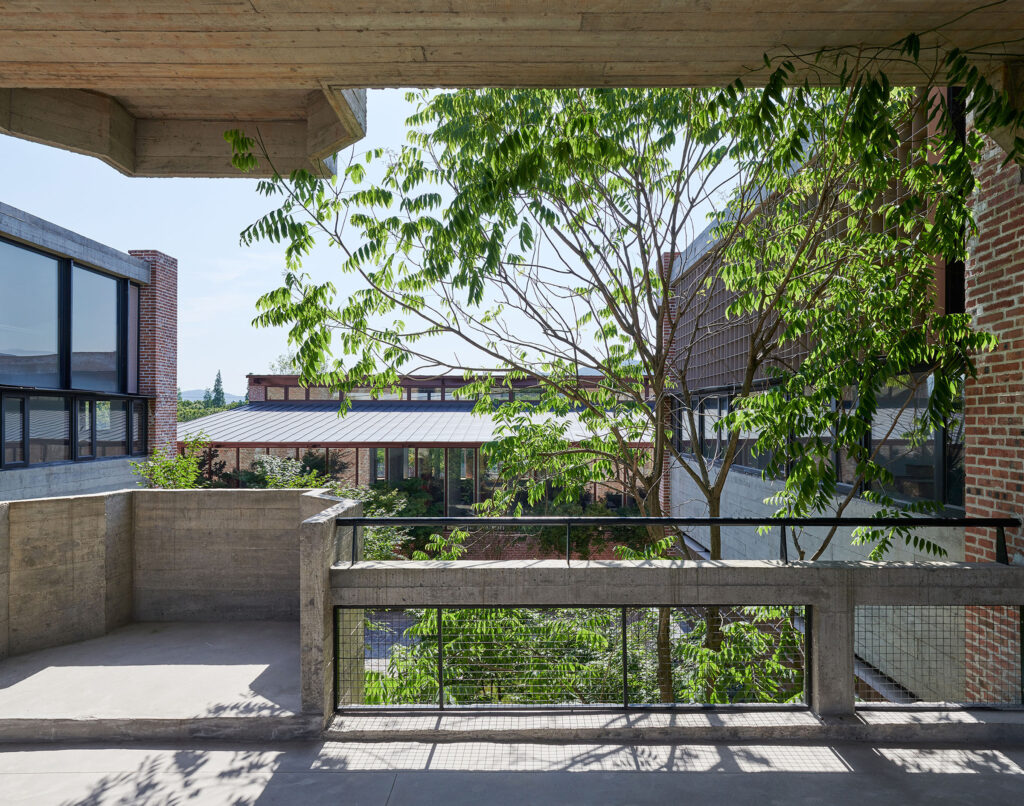
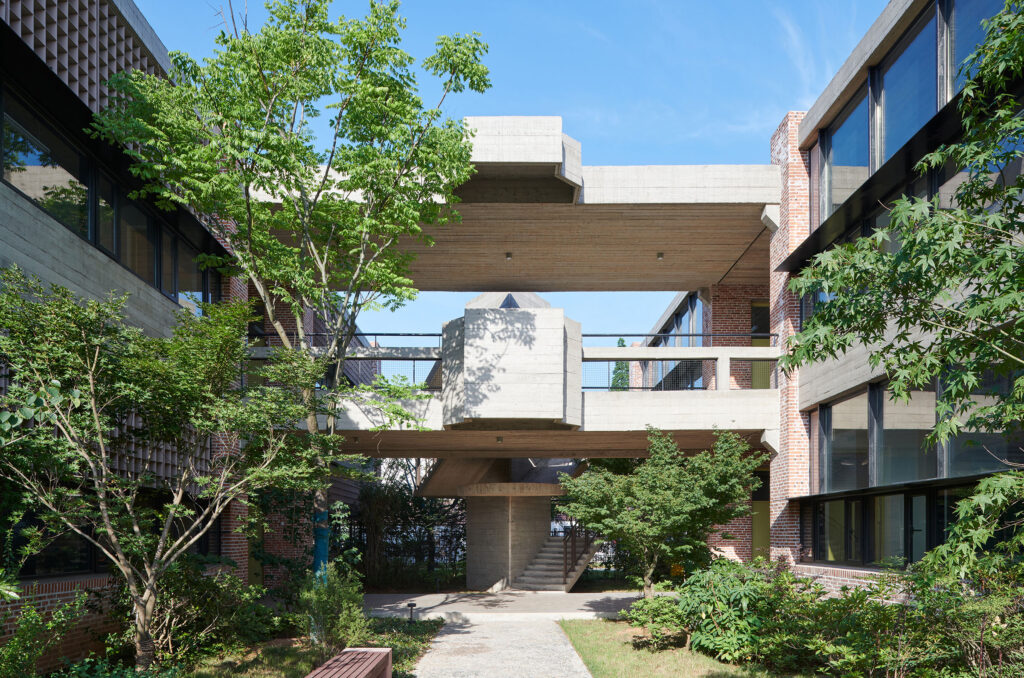
Corridor on the second floor of the classroom units
Single and Whole
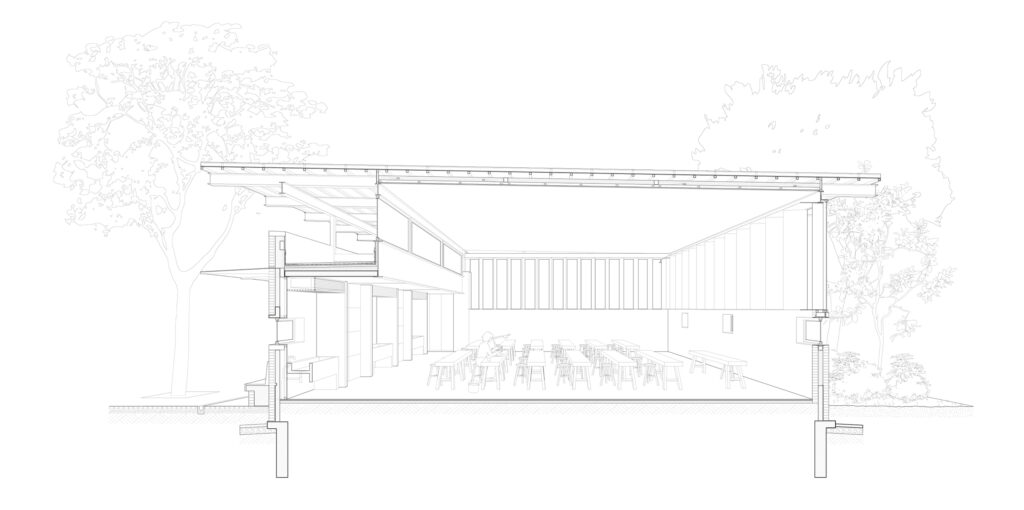
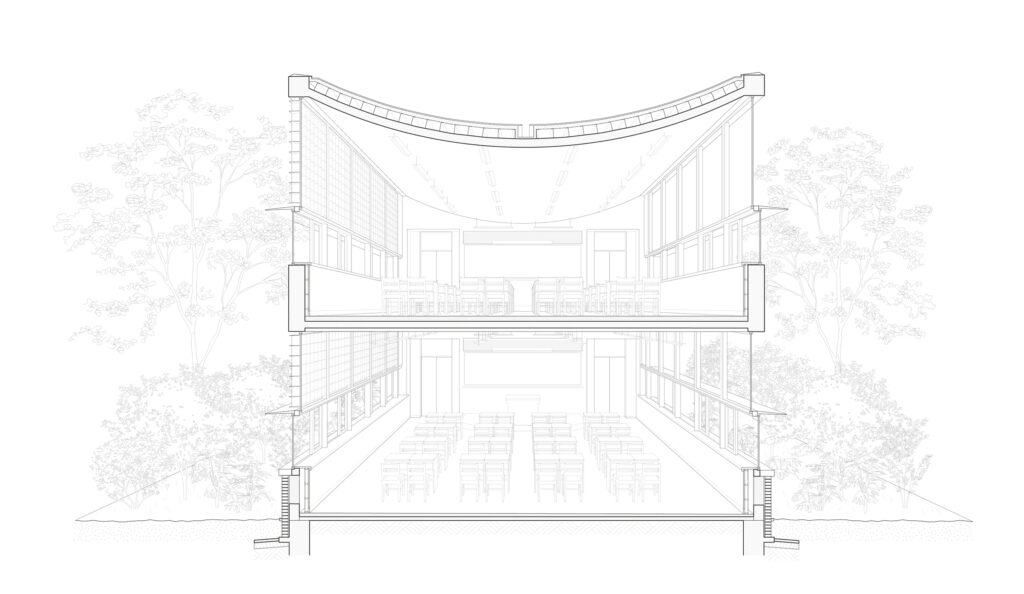
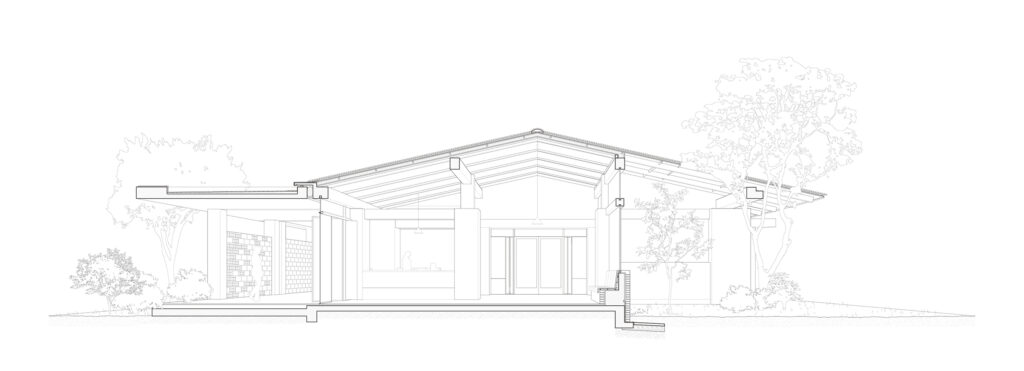
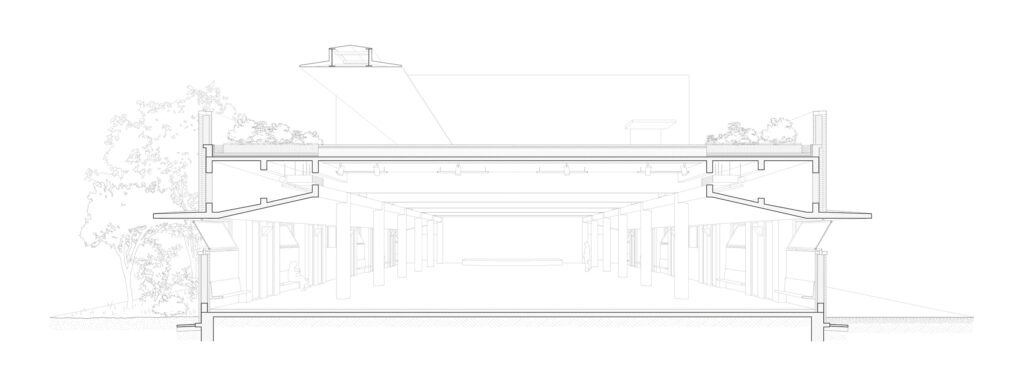
The architects prioritized the unique spatial requirements for each step in the process of pottery making, and arrived at a variety of unique spaces, including classrooms with open views and even light for reading and drawing, introverted and quiet workshops for sculpturing and embossing, and a exhibition hall with a tranquil atmosphere surrounded by large beams and columns for exhibiting the outstanding pottery works. Each function acquires its corresponding space, structure, and equipments, resulting in a series of single buildings on their own.
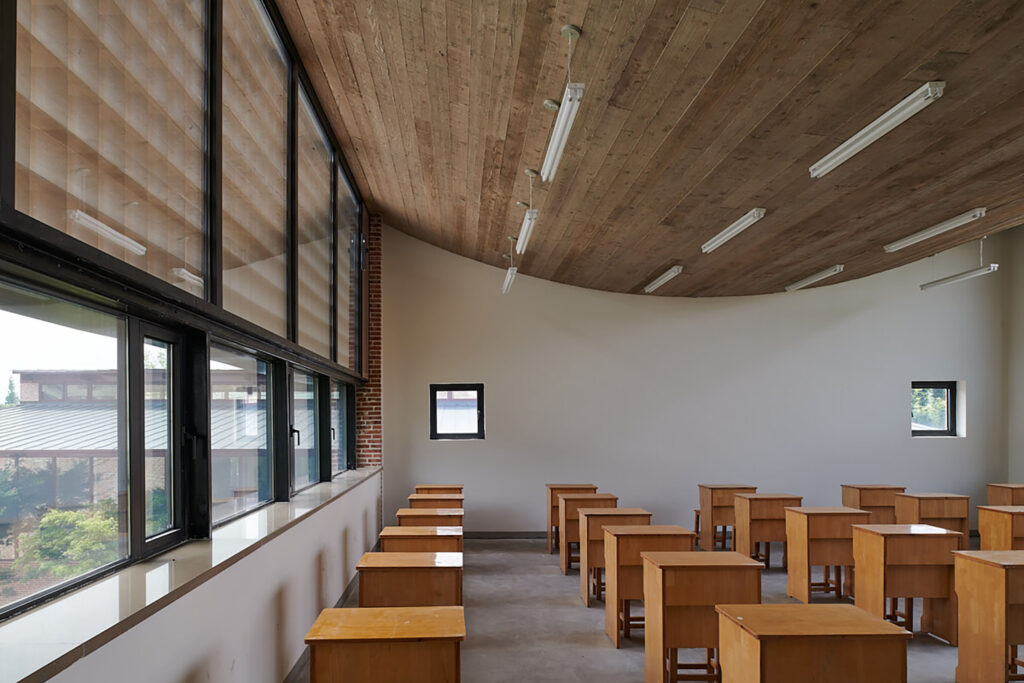
Typical classroom on the second floor of the classroom units
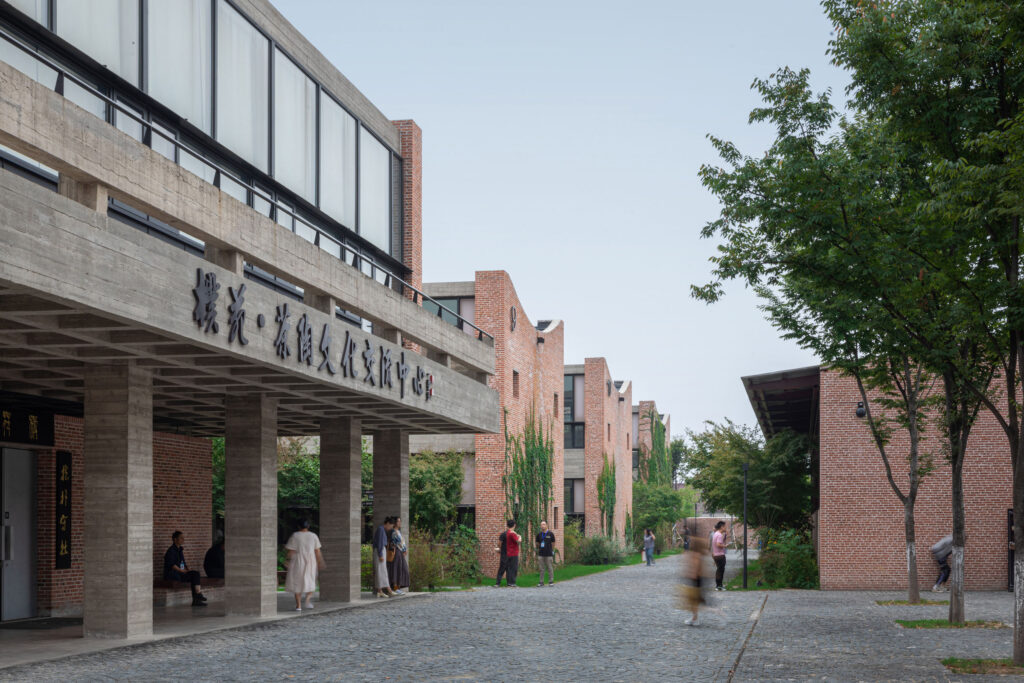
A dozen of scattered, low-rise “small buildings” are thus improvised, with different types of exterior spaces exist between them, all having good natural lighting and ventilation. These juxtaposed various internal and external spaces are linked by canopied semi-outdoor porches and form a rich, diverse environment. The pleasant landscape and the atmosphere of free communication serves as a source of inspiration for pottery creation.
The wide corridor not only provides the connection between classroom units, but also is a place for people to stop and restCourtyard and corridor between classroom units
Material, Localization
Brick, concrete, and sandstone are the main materials for this campus. Brick firing, wall masonry, and concrete casting are similar to pottery making and convenient for local builders to take on. The use of ordinary materials combined with new construction techniques allow the campus to easily merge into the existing context of the town. Upon completion, the builders and local residents immediately feel so close to the new campus.
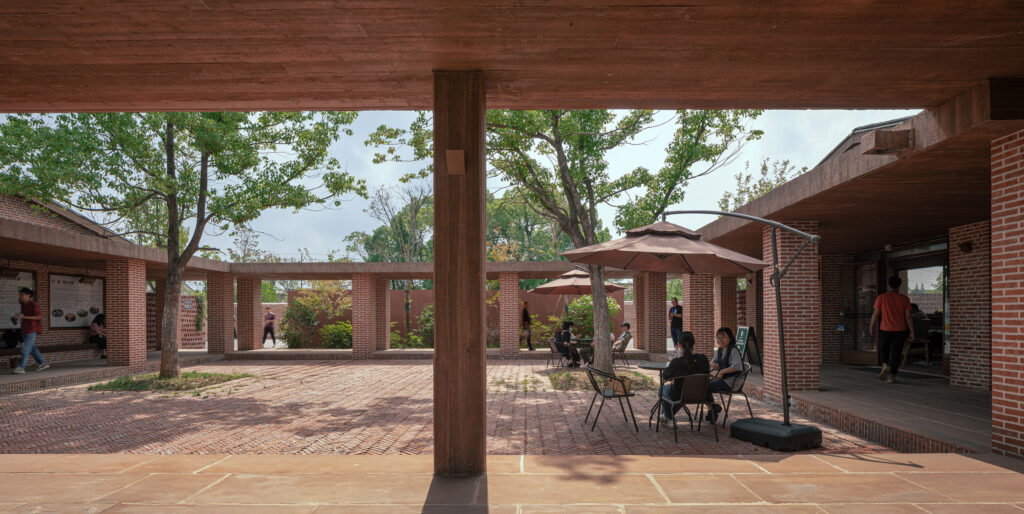
Looking through the elm tree courtyard towards the minor workshop and exhibition buildingPottery trainees resting in the cloister courtyard
Born from the development of pottery, this school now provides high-quality pottery training every year for thousands of local residents, improving their professional skills as well as living standards. Meanwhile, the ongoing cultural demonstration and exchange activities taking place at the school also benefit the local community and keep the long tradition of pottery making alive in this small town.
Project team Tao Shuting, Liu Yang, Xian Haohui, Xue Jun, Xiao Xinyu, Qian Jia, Li Lanruo, Guo Zhenghao, Liu Jinghuan, Huang Fanlang, Xie Rugui, Li Yunhong
Landscape architect Chen Xi
Site architects Wang Shiyu, Chen Xi, Qian Jia, Chi Zenglei, Qu Hao
Photo credits Su Shengliang, Chen Hao, genarchitects
Year
2021
Location Dingshu Town, Yixing City, Jiangsu Province, China