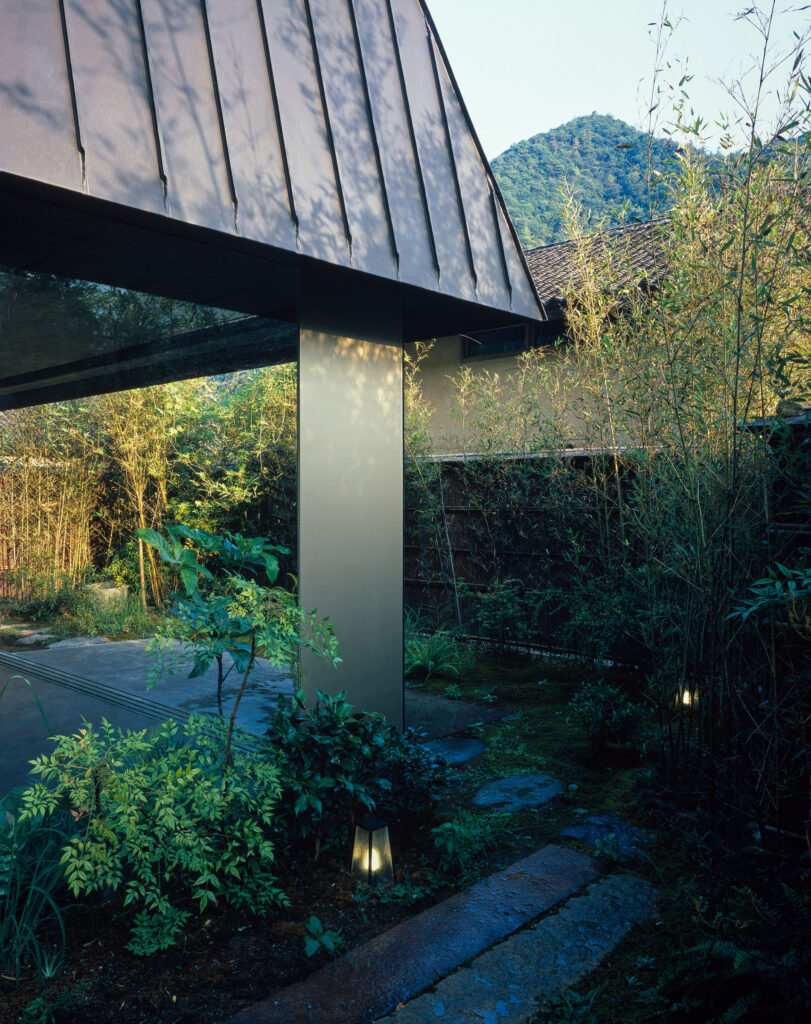



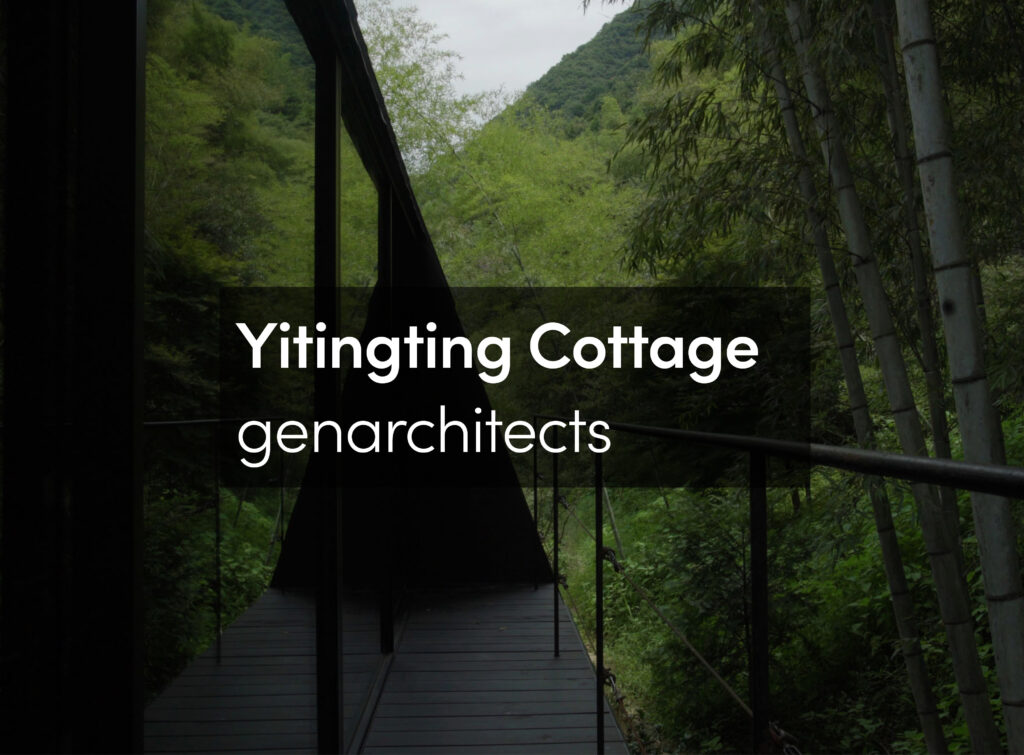
Situated in Tonglu, Zhejiang, Yitingting Cottage was initiated in 2019 as a compact drawing room and dining pavilion within a rural compound. The site was previously occupied by a two-story vernacular dwelling constructed in rammed earth. Strict limitations tied to the original footprint and building height governed the new intervention, fixing its volume to that of a modest living room. Enclosed on all sides and largely disconnected from long-distance views, the project initially appeared spatially constrained and formally unrewarding.
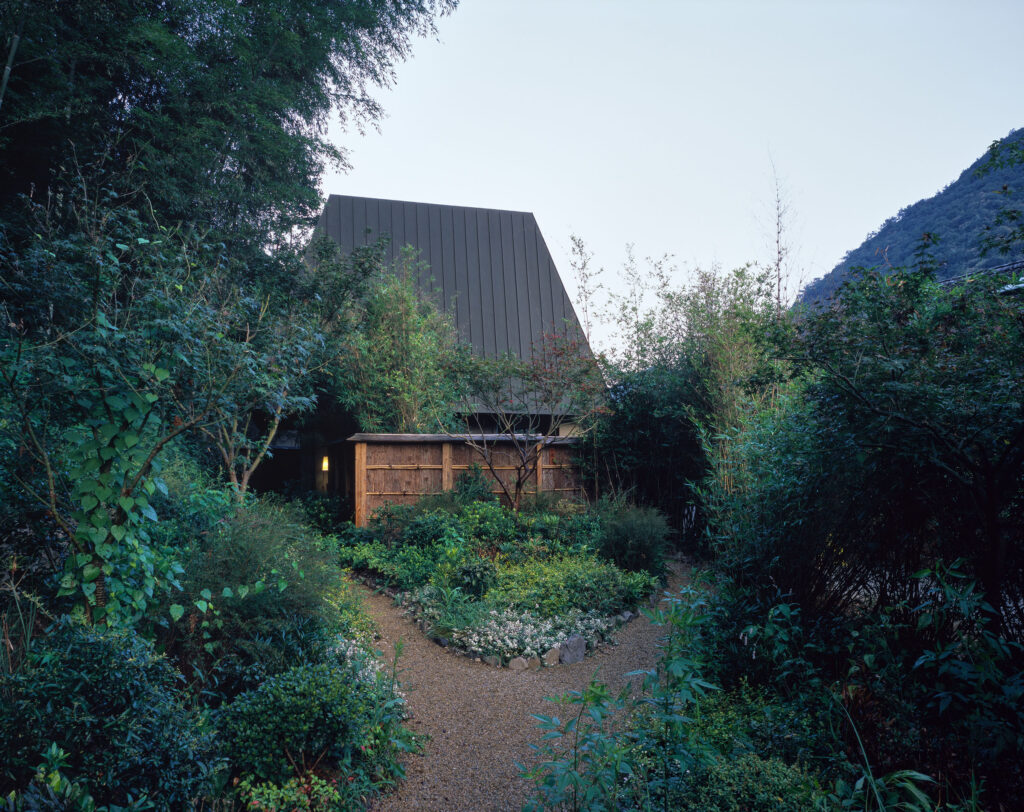
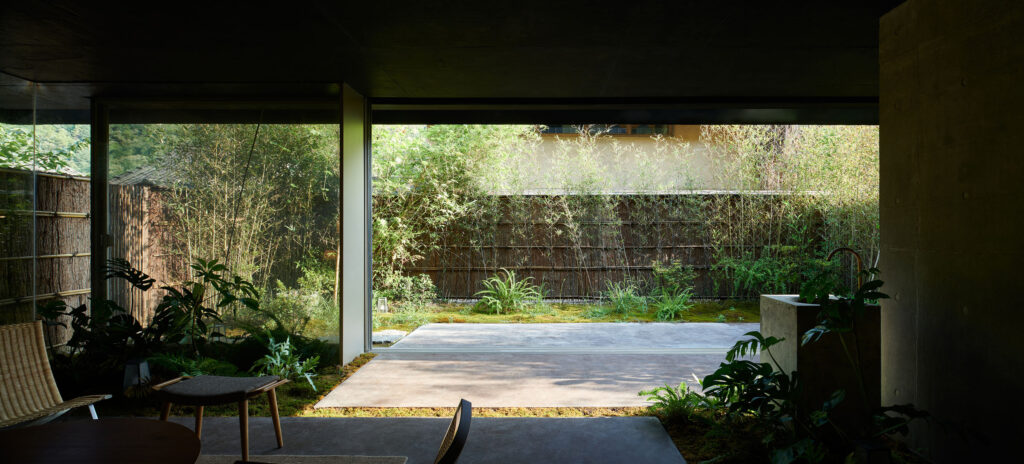
Rather than pursuing established architectural responses—such as stylistic references to rural imagery, expressive structural gestures, or façade-driven design—the project gradually shifted its focus inward. It was ultimately the courtyard wall, not the building envelope, that emerged as the true spatial and perceptual boundary. The design therefore moved beyond a simple orientation toward the courtyard: the garden itself was conceptually absorbed into the interior, becoming a constitutive spatial element of the drawing room rather than its backdrop.
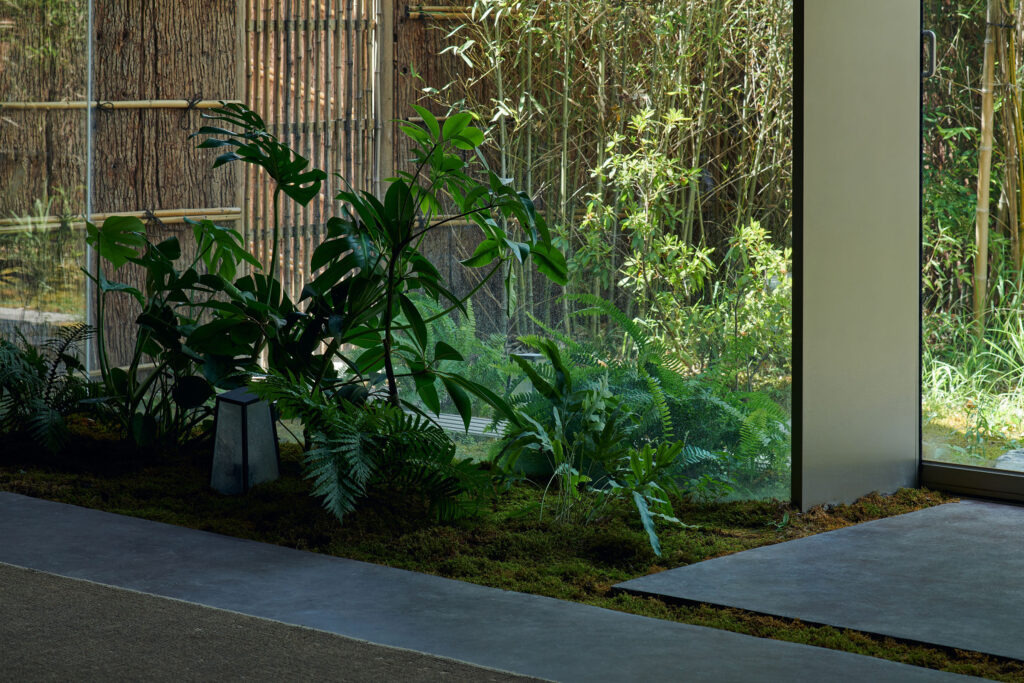
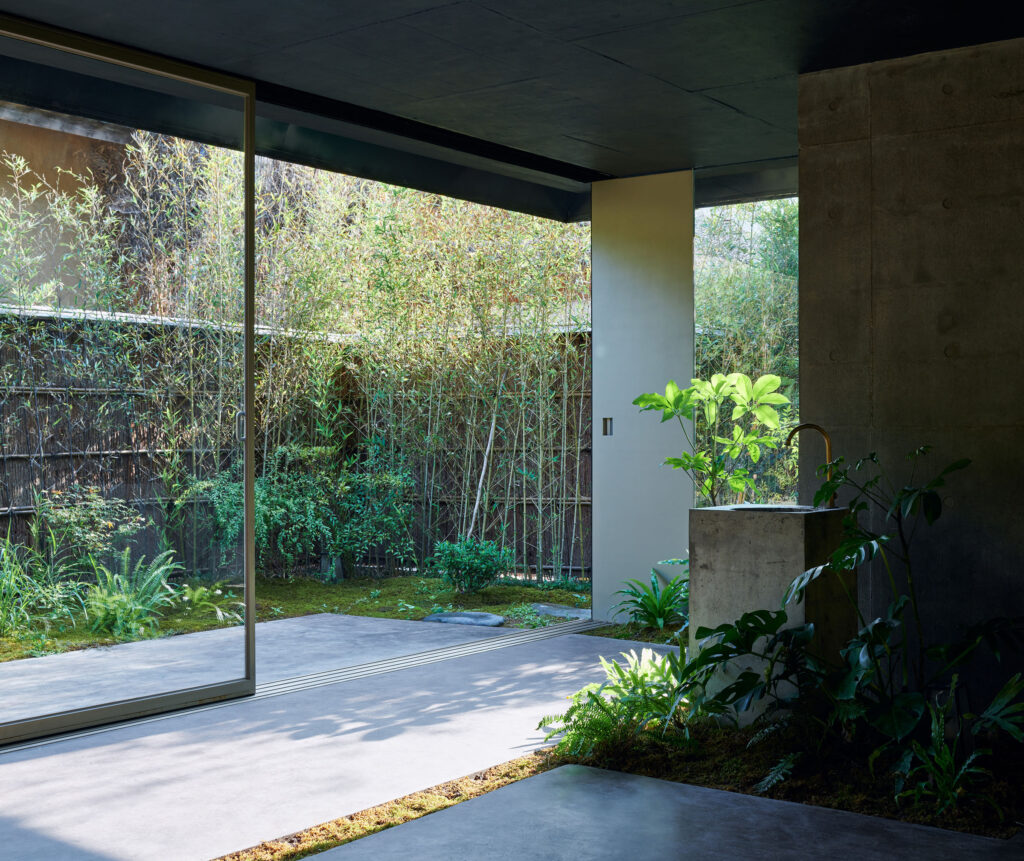
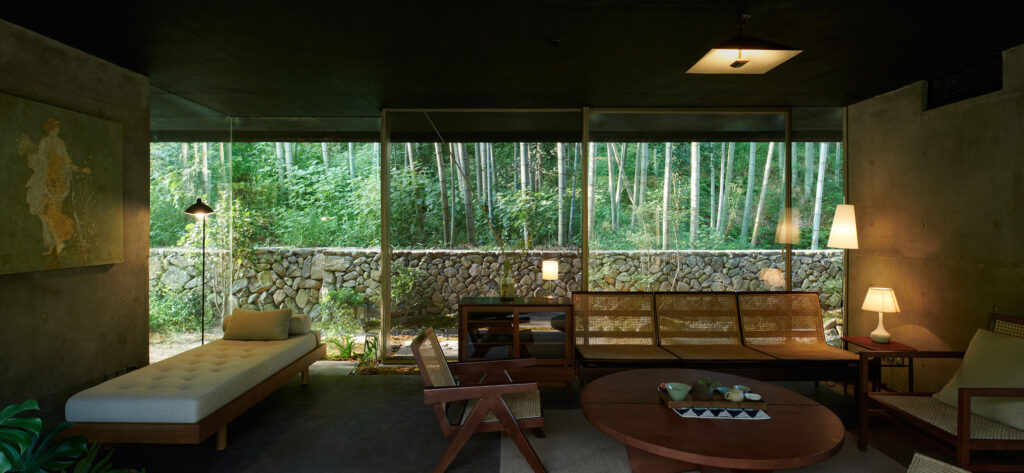
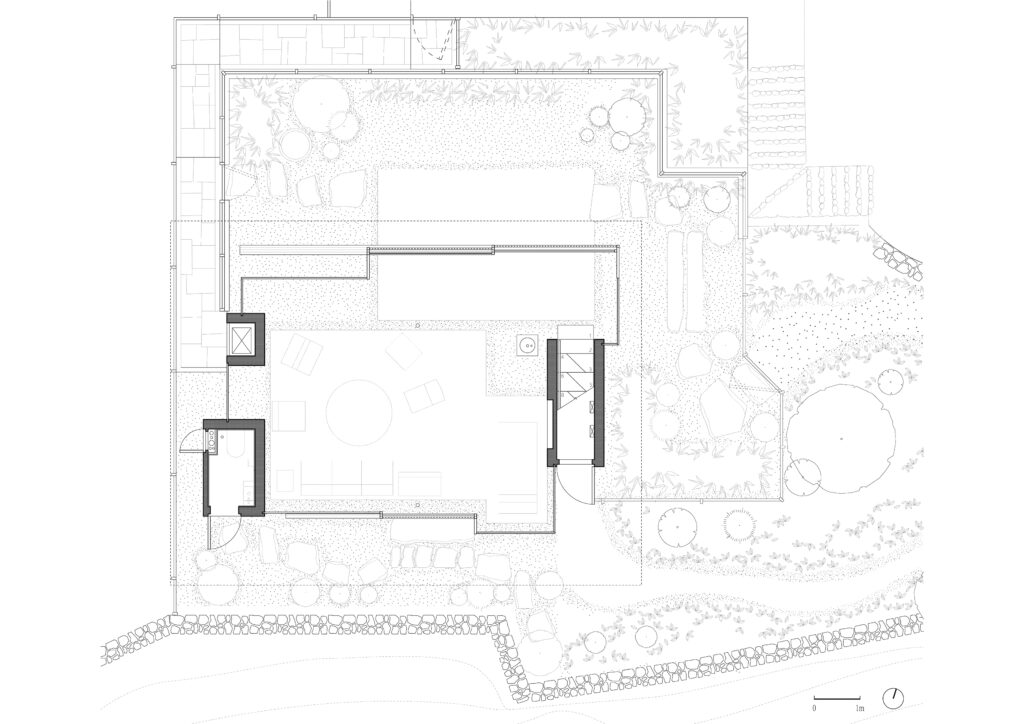
At ground level, architectural hierarchy was deliberately dissolved. The building was conceived as a field of equal components, where staircase, washroom, dumbwaiter, basin, furniture, vegetation, soil, flooring, and doors coexist without prioritization. Their distribution was carefully choreographed to appear dispersed yet cohesive, resulting in a spatial condition that is fragmented while remaining legible as a whole. Sliding doors along the front façade allow the interior to open almost entirely to the courtyard, with enclosure provided only by a screen layer when required. Production limits on screen dimensions—smaller than the glazing span—led to the coupling of two screens, subtly articulated by a curved, reed-like metal bar that acts as both joint and partition.
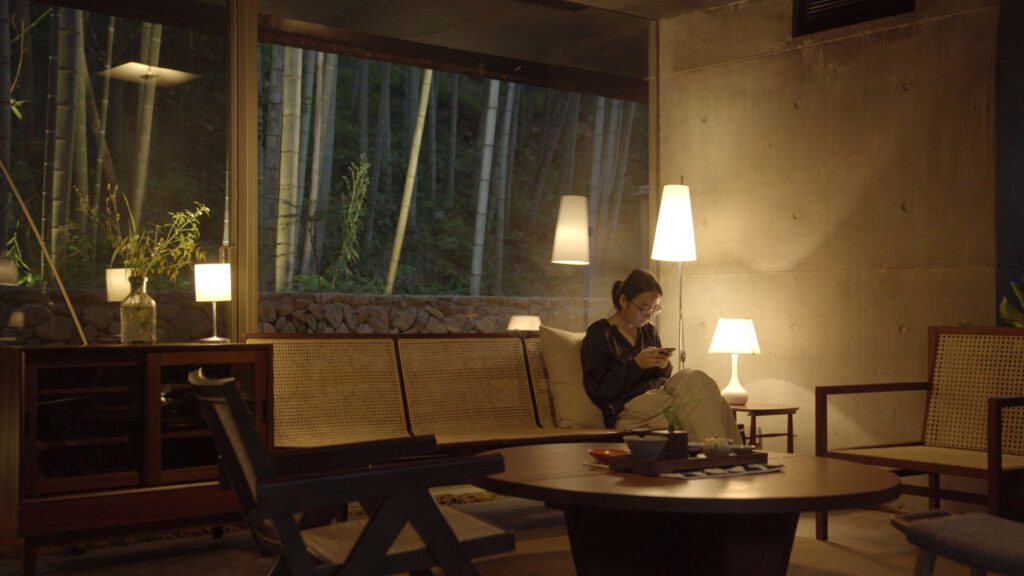
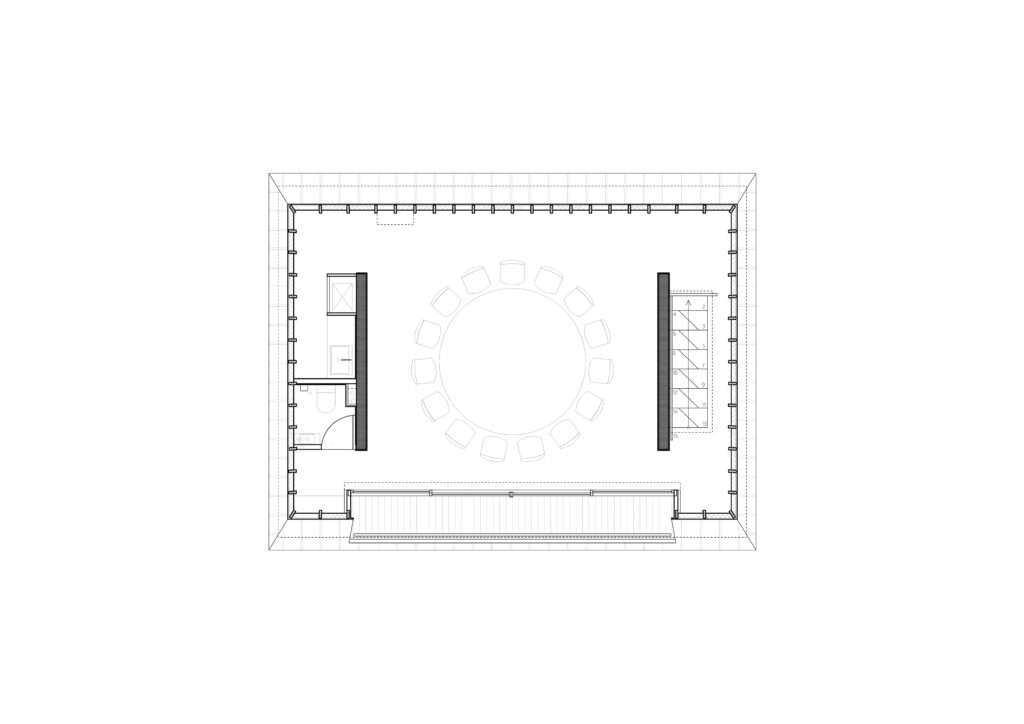
The transition to the second floor introduces a markedly different atmosphere. Upon ascending, visitors are enclosed by a clearly defined form, perceived under dim, controlled lighting. During meals, illumination is restricted to the dining table alone, isolating the act of dining from its surroundings. Through the window frame, only a fragment of the adjacent bamboo grove is visible—cropped in such a way that it loses scale and continuity, transforming into an abstract, almost pictorial element.
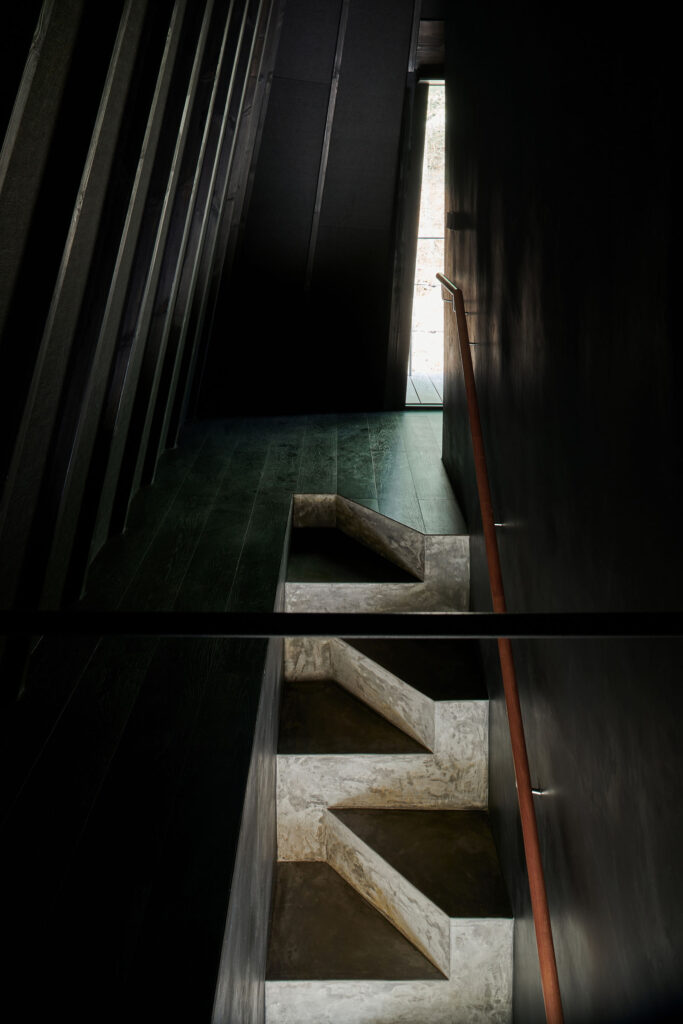
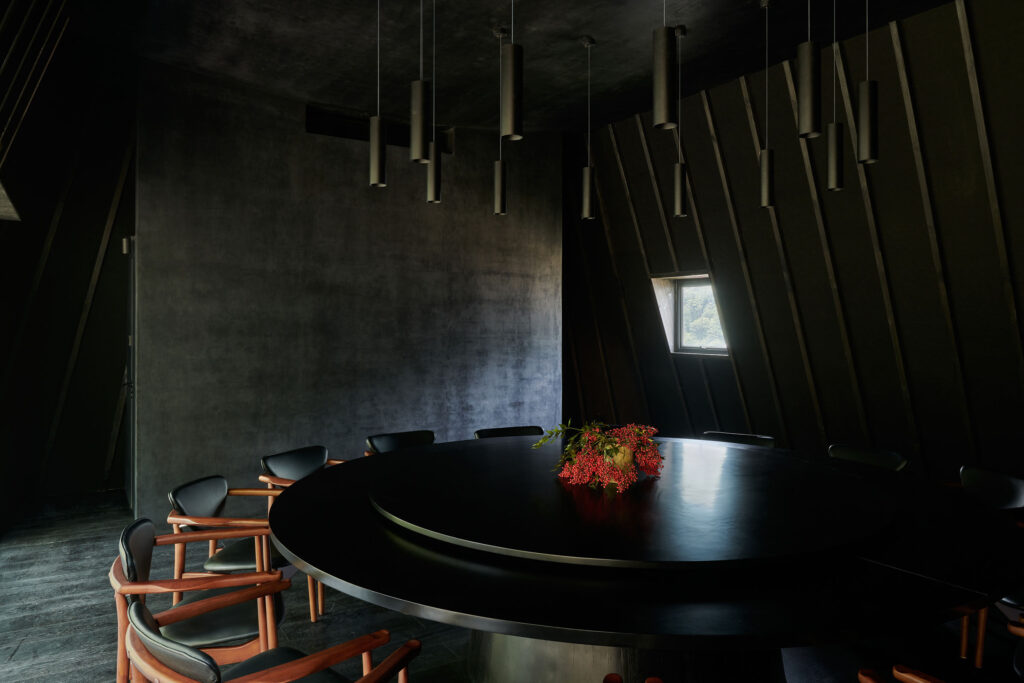
Structurally, the upper level adopts a lantern-like configuration. A series of secondary wooden battens is arranged in a circular formation and fixed to central wooden keels. These keels are anchored to the concrete slabs above and below, while insulation and sound-absorbing layers are embedded within the assembly, reinforcing the enclosure both thermally and acoustically.
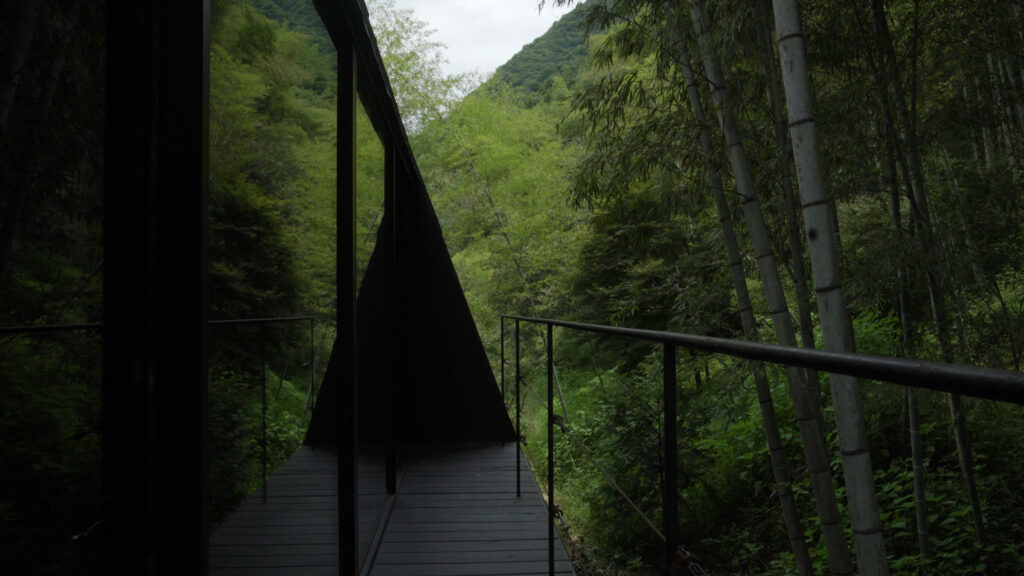
On the ground floor, two distinct courtyards are articulated. The outer courtyard is bright and extroverted, shaped by a winding path that moves through dense, saturated planting toward the pavilion’s entrance. The inner courtyard at the rear is shaded and introspective, offering a quieter spatial counterpoint. The lounge itself is enveloped by vegetation, with plants carefully calibrated in scale and composition alongside architectural elements. Together, landscape and building components are perceived as a single, uniform entity.
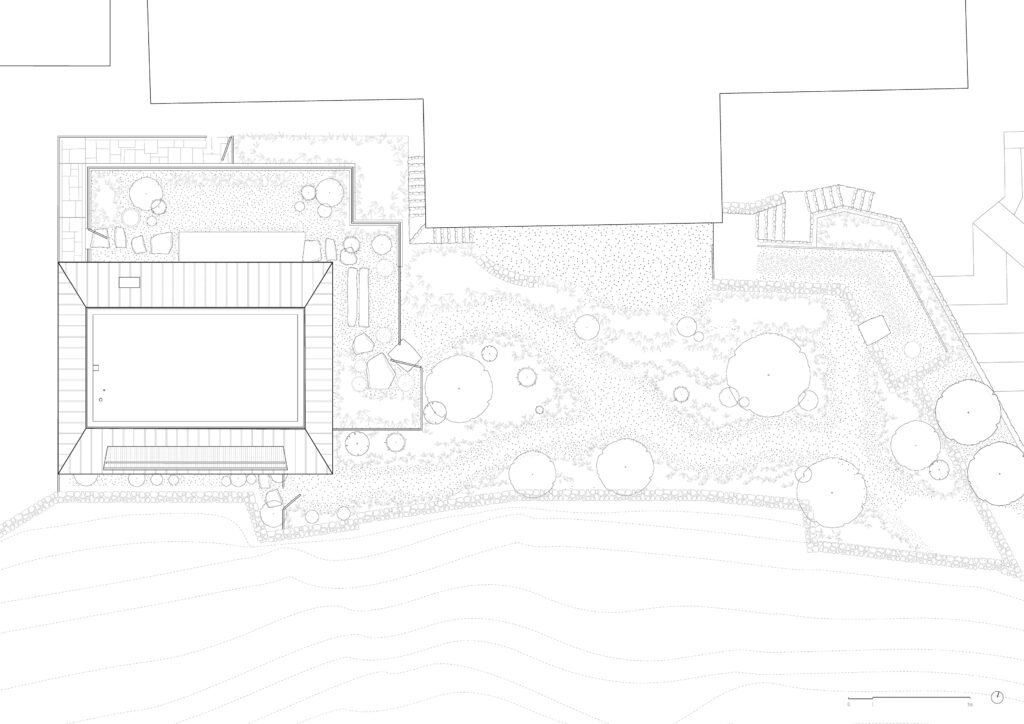
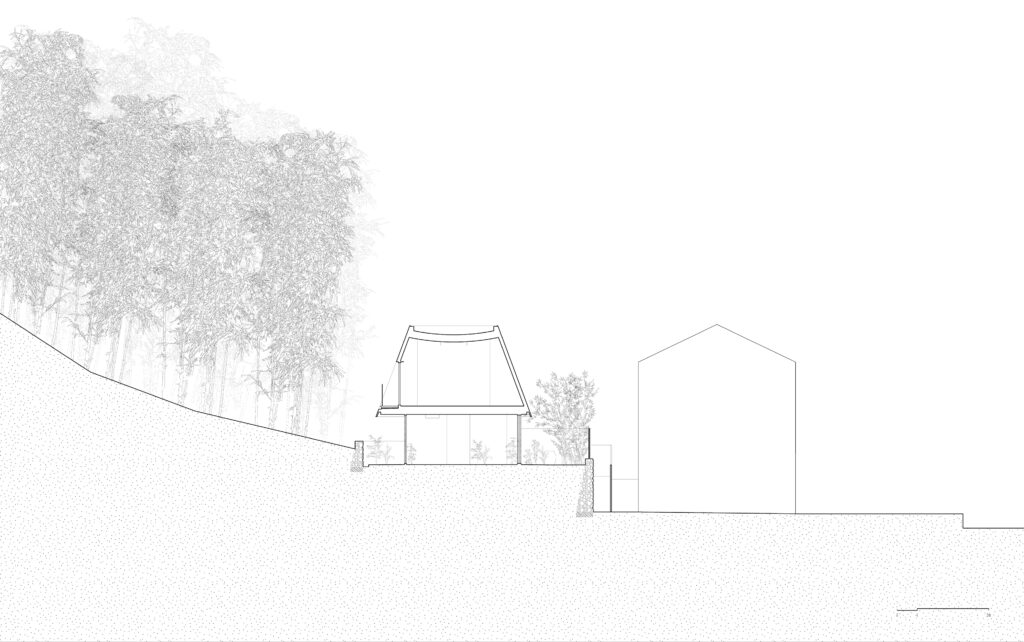
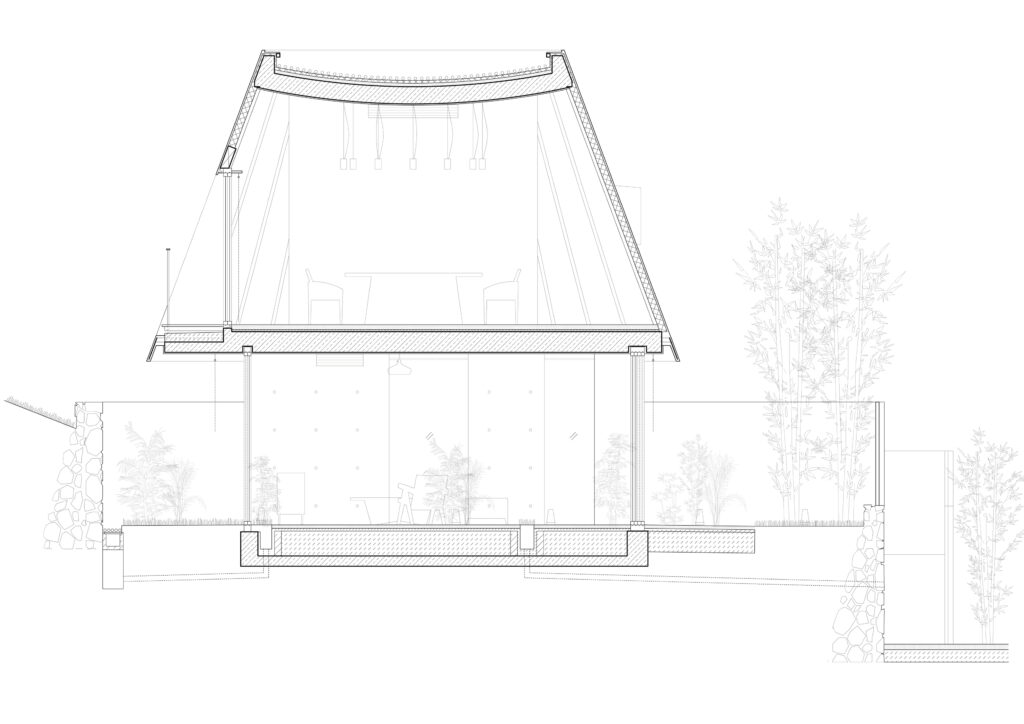
The project is structured around the coexistence of these two contrasting atmospheres. This spatial duality stems from a precise architectural image: at the end of a secluded courtyard stands a seemingly modest, one-story building, opaque to outside observers and withdrawn from its context. Although its volume rises visibly above the enclosure, it refrains from surveying its surroundings. Instead, the architecture remains deliberately inward-looking—contained, self-referential, and quietly detached from the rural panorama beyond.