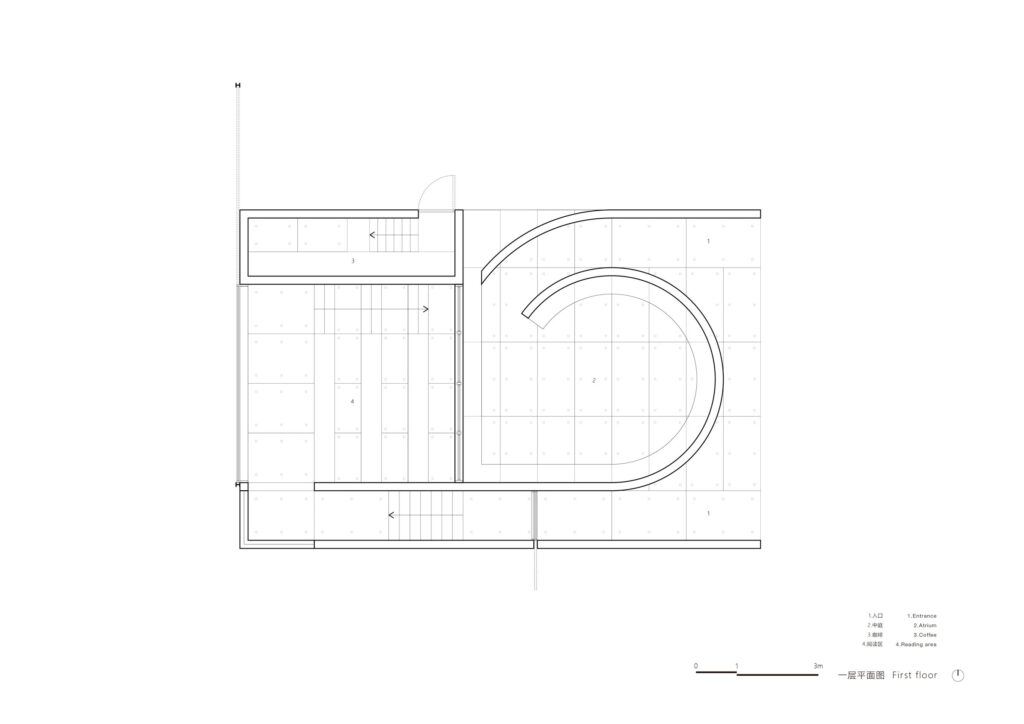




Located on the site of a former village refuse station, rendered obsolete by updated waste management systems, this project reclaims residual infrastructure to address shifting social conditions. Ongoing urban migration has left the village populated primarily by elderly residents and children, creating the need for shared civic spaces that extend beyond seasonal tourism.
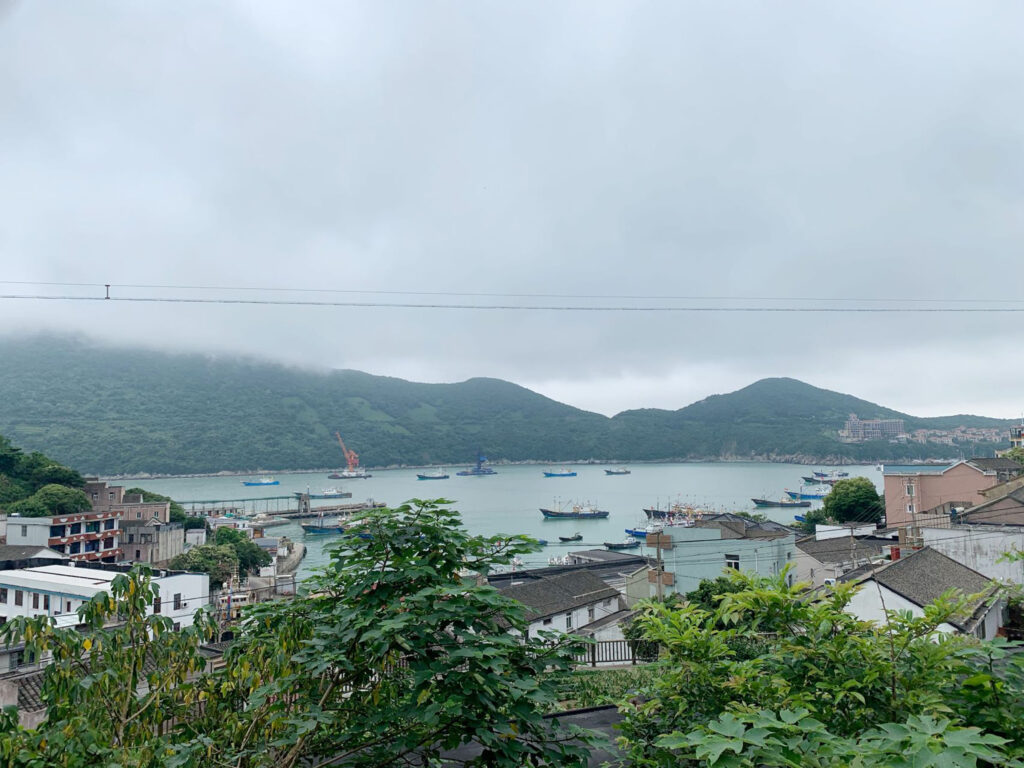
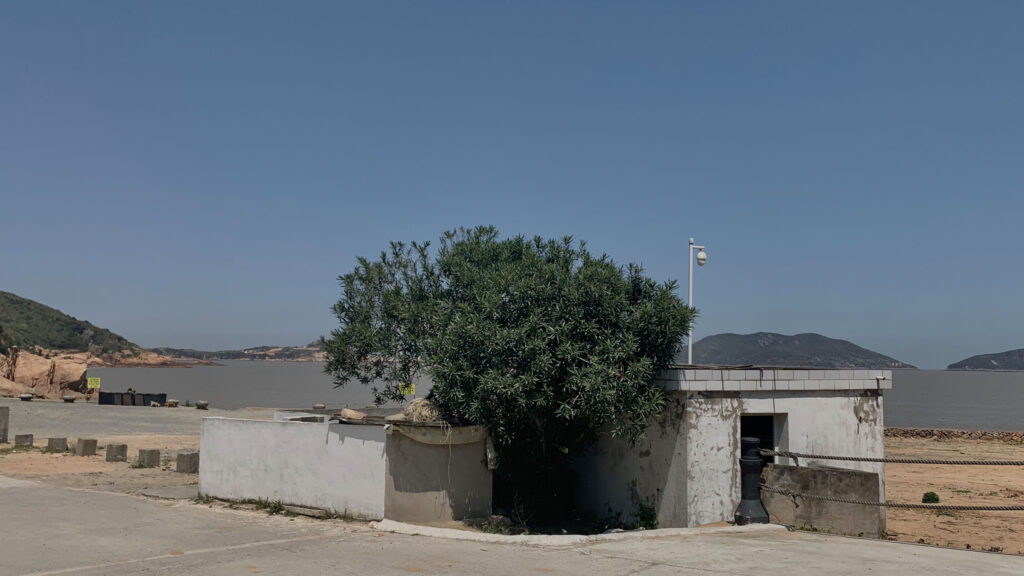
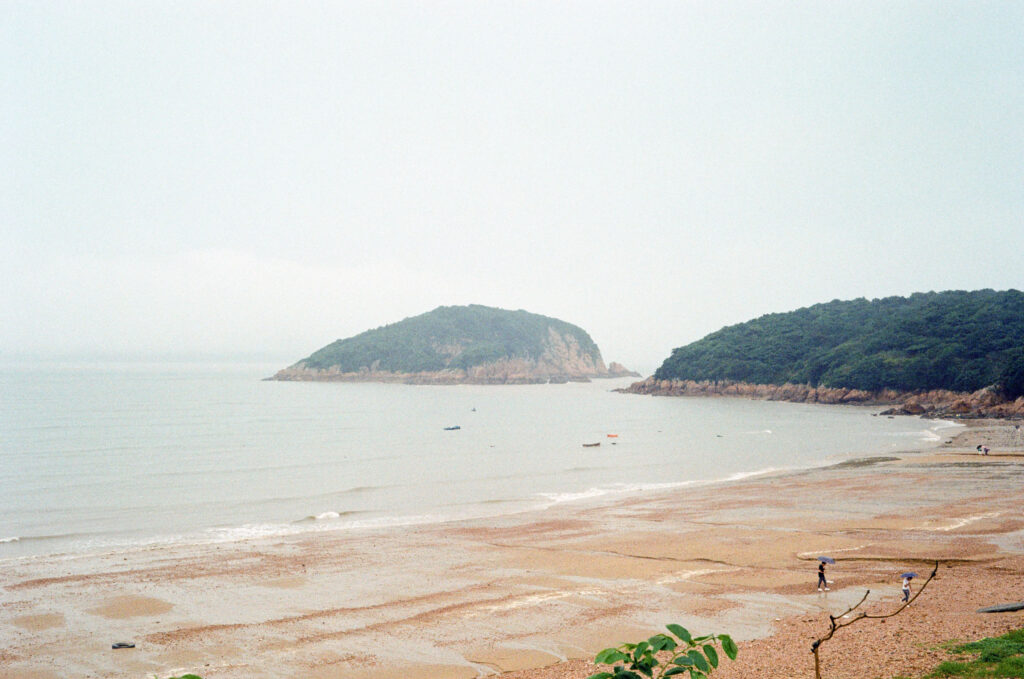
The project responds to a dual condition: the tension between local life and external visitors, and the physical and symbolic proximity of the sea. The central challenge is resolved through a spatial strategy that negotiates coexistence—offering both collective and distinct experiences within a compact architectural footprint.
The building is conceived as an interface between village, visitor, and coastline. Its form is defined by a bifurcated entrance system embedded within a continuous curved façade. This dual access introduces spatial ambiguity for newcomers while reinforcing familiarity for local users, subtly structuring patterns of occupation.
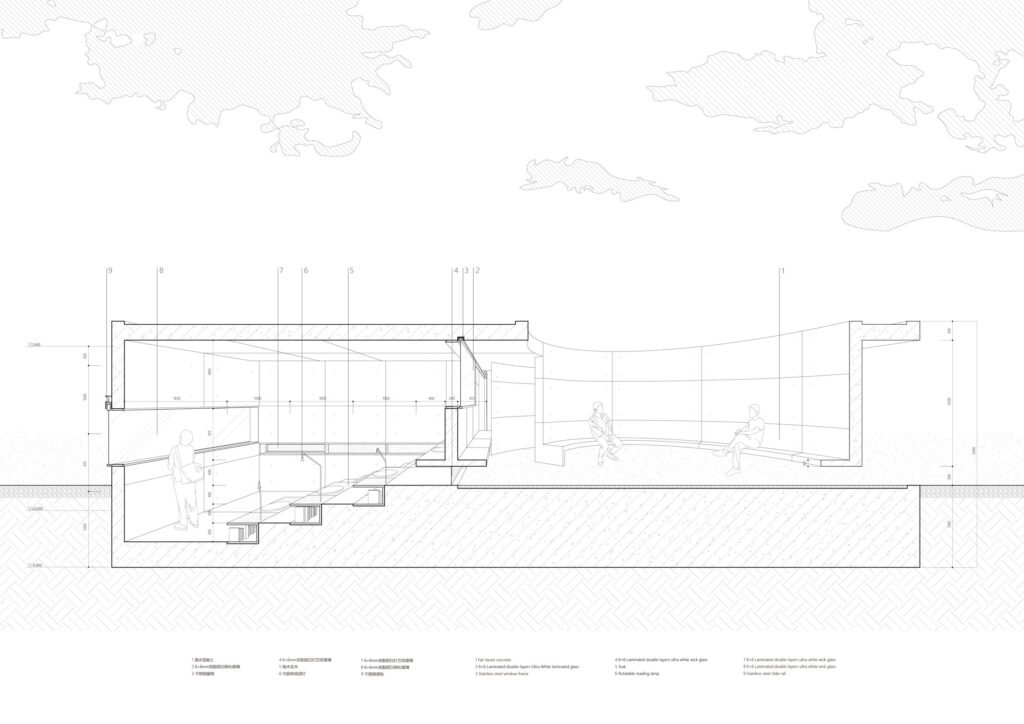
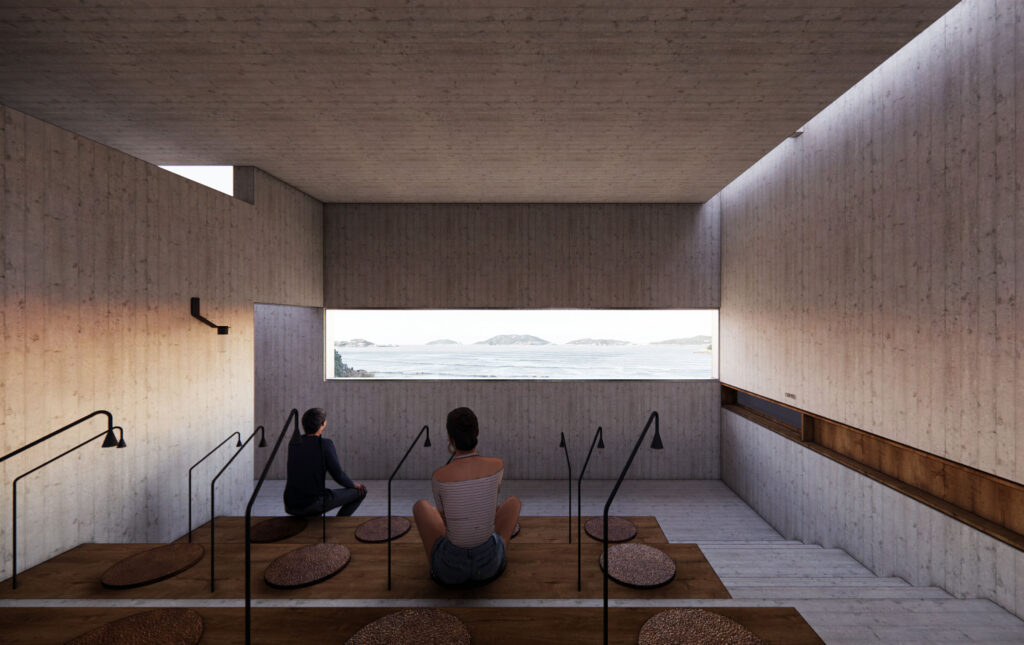
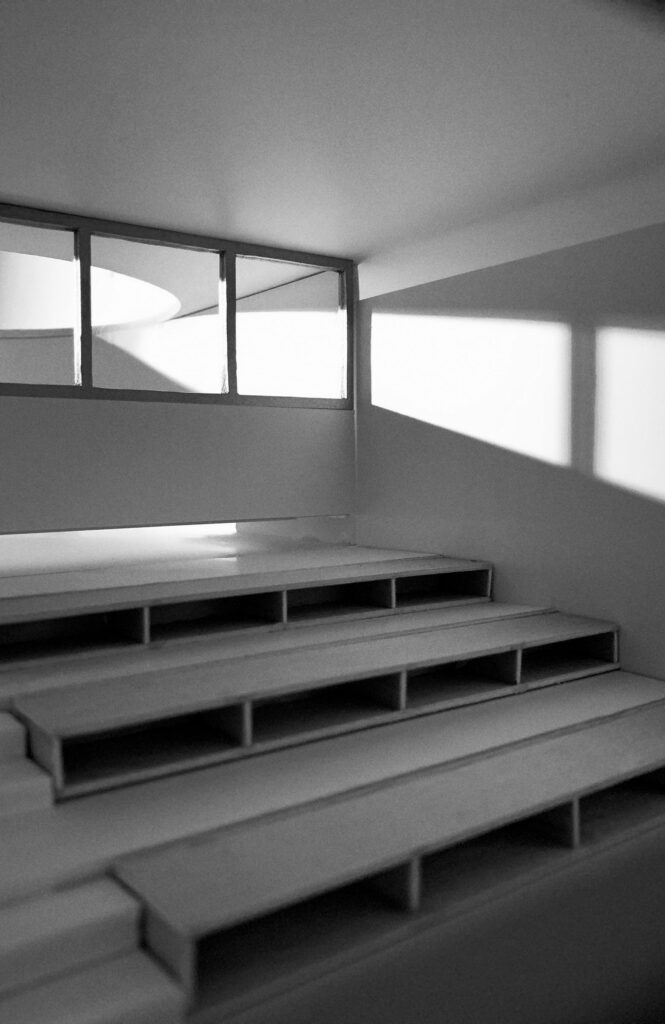
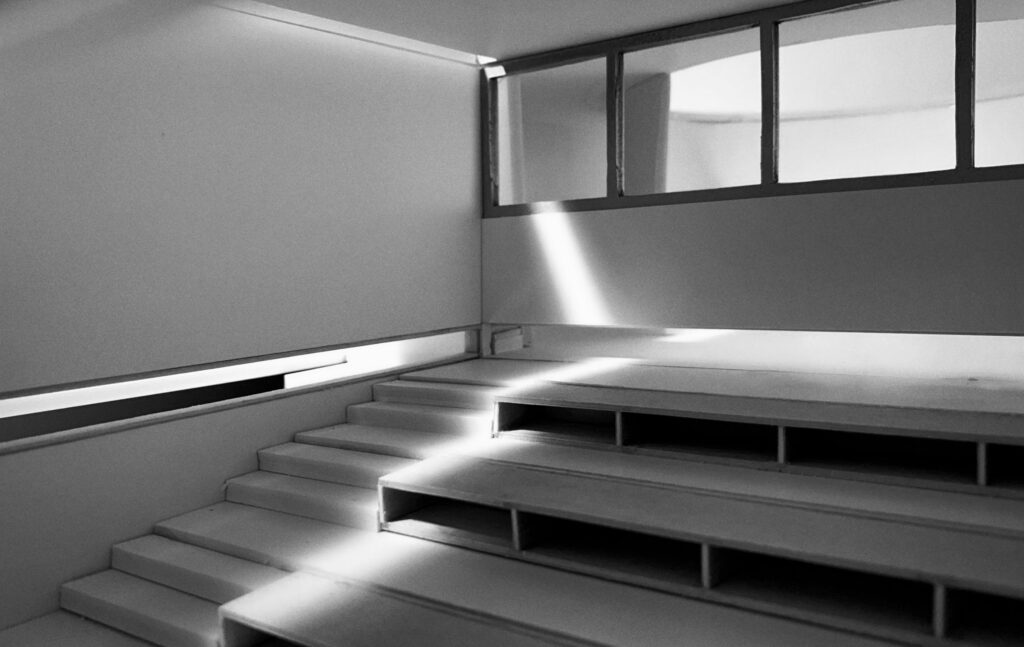
One sequence leads to a partially subterranean reading room, accessed through a compressed and dimly lit corridor. The descent modulates perception and emphasizes the role of light as a guiding element, culminating in a contemplative interior that accommodates both tourism-oriented leisure and everyday educational use.
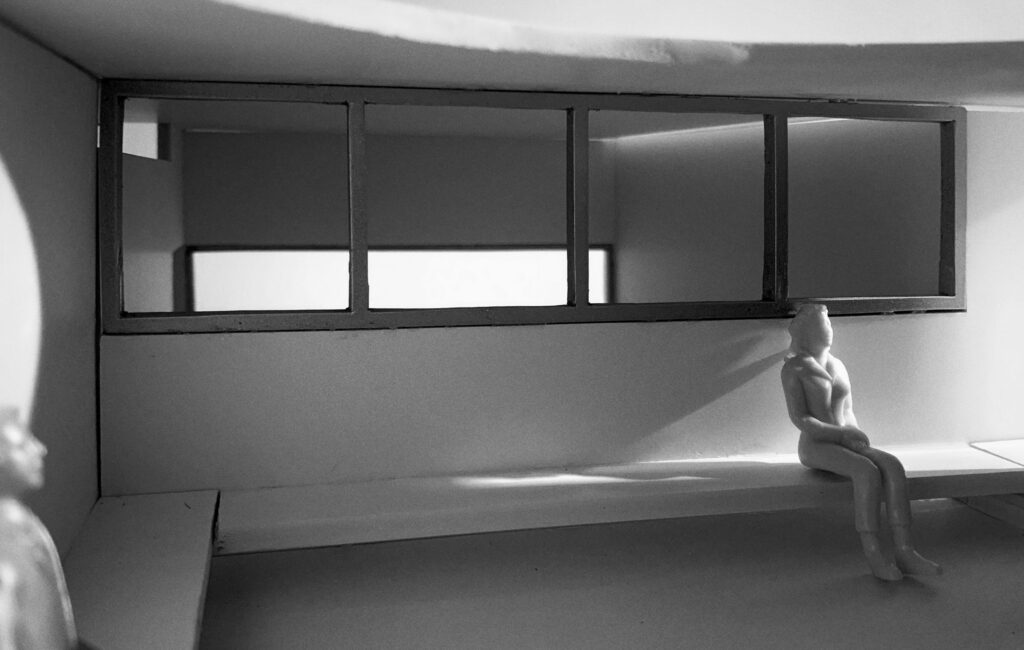
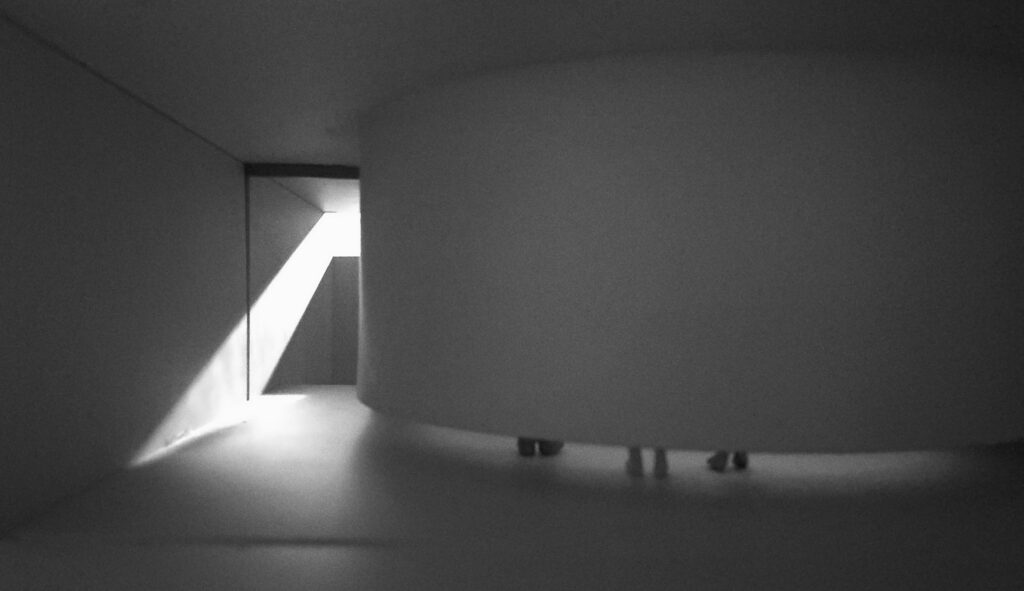
The alternative route opens onto an enclosed courtyard defined by circular concrete walls. Here, the sea is deliberately concealed, yet sensorially present through sound and atmosphere. This controlled absence amplifies non-visual perception, transforming the courtyard into an experiential landscape that supports informal gatherings and play.
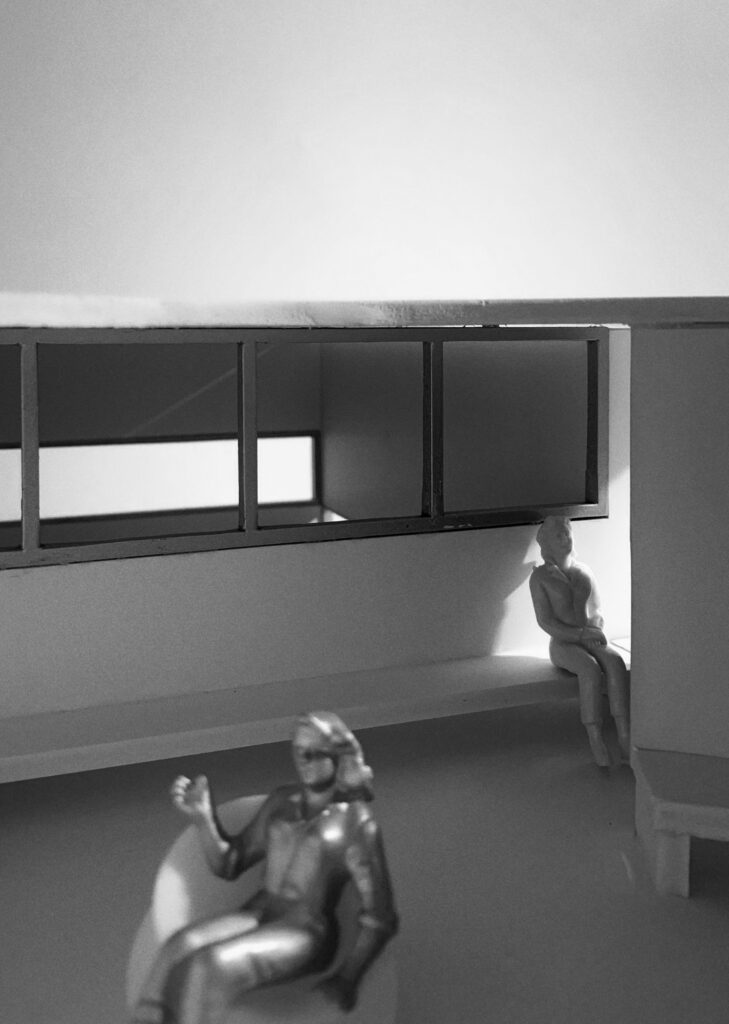
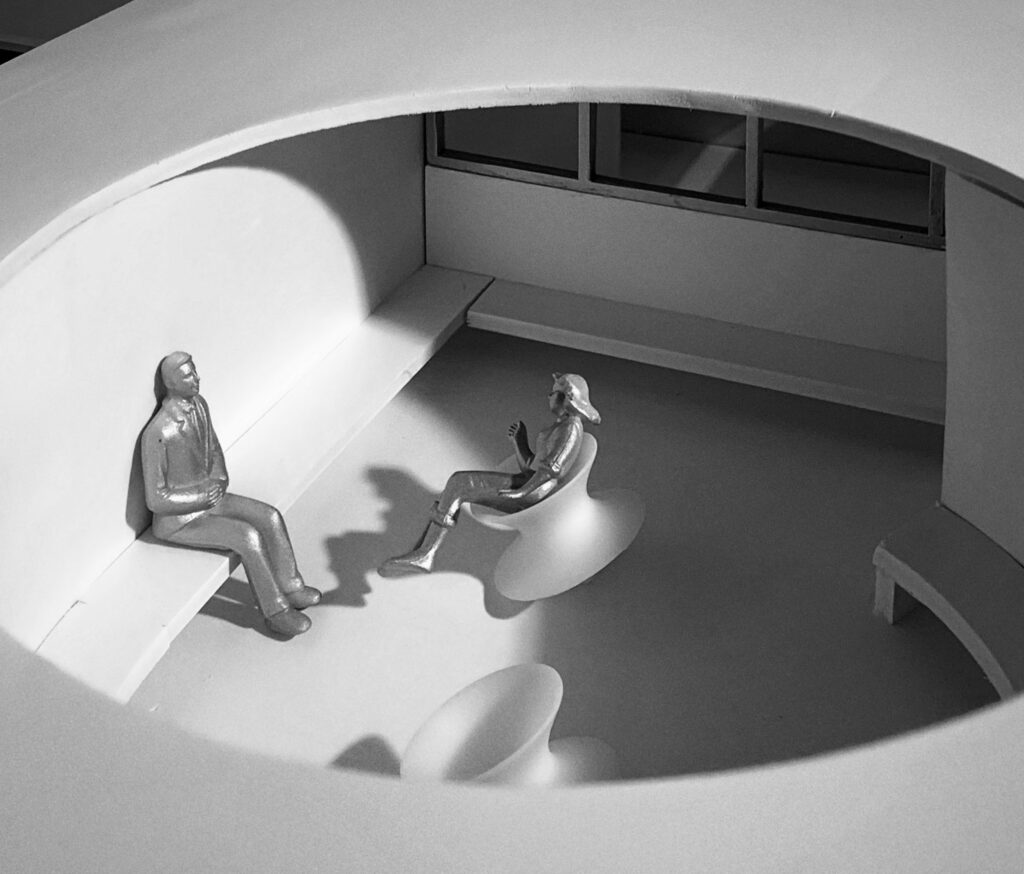
Through these spatial strategies, the project reconciles the presence of tourists with the needs of local residents while foregrounding the environmental identity of the site. The intervention ultimately operates as both social infrastructure and spatial narrative, embedding the spirit of the place within a minimal architectural gesture.