


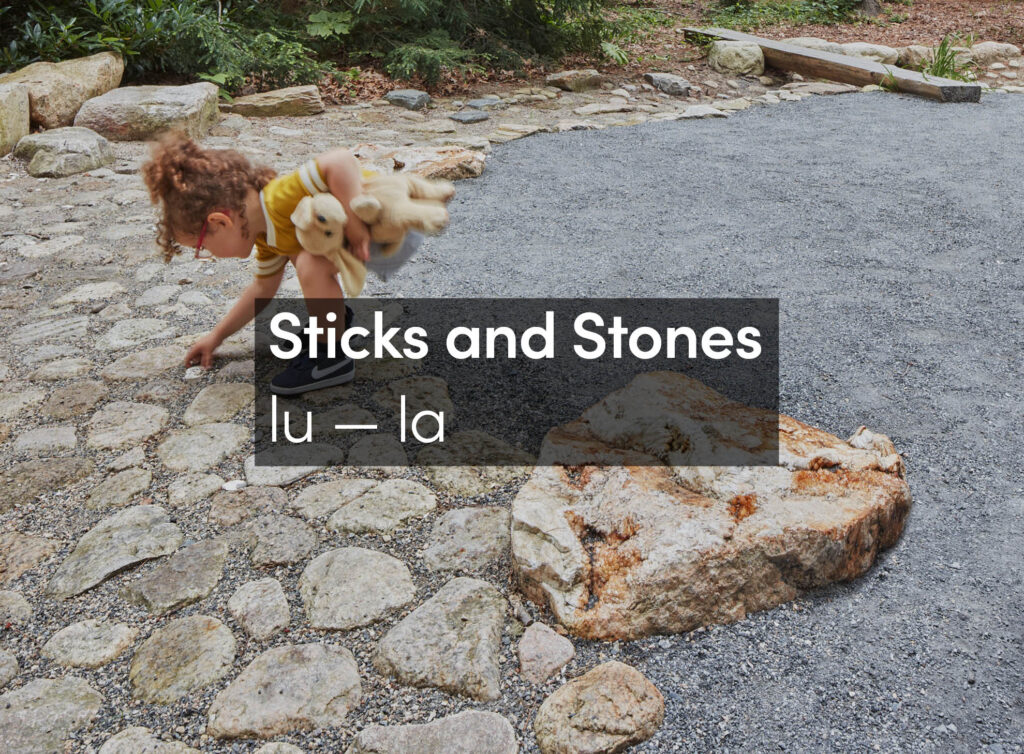
At the edge of the sea, Armstrong-Kelley Park occupies a particular position within Osterville: a public garden connected to the town’s central green and, beyond it, to a network of woodland trails leading toward the coast. Sticks and Stones Play Garden sits at this threshold. Rather than introducing a conventional playground, the project transforms a former memorial into a landscape that extends the character of the woods into a space for play.
The intervention is structured around a series of strategies that work with the site’s existing conditions rather than replacing them.
Working with what is already there
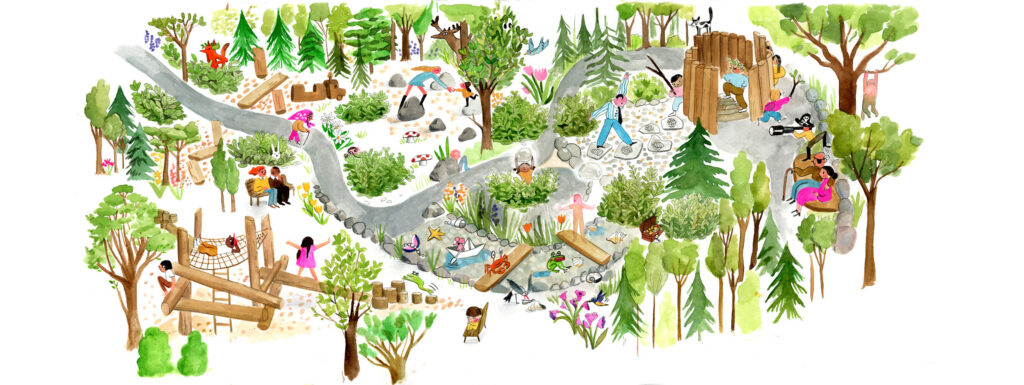
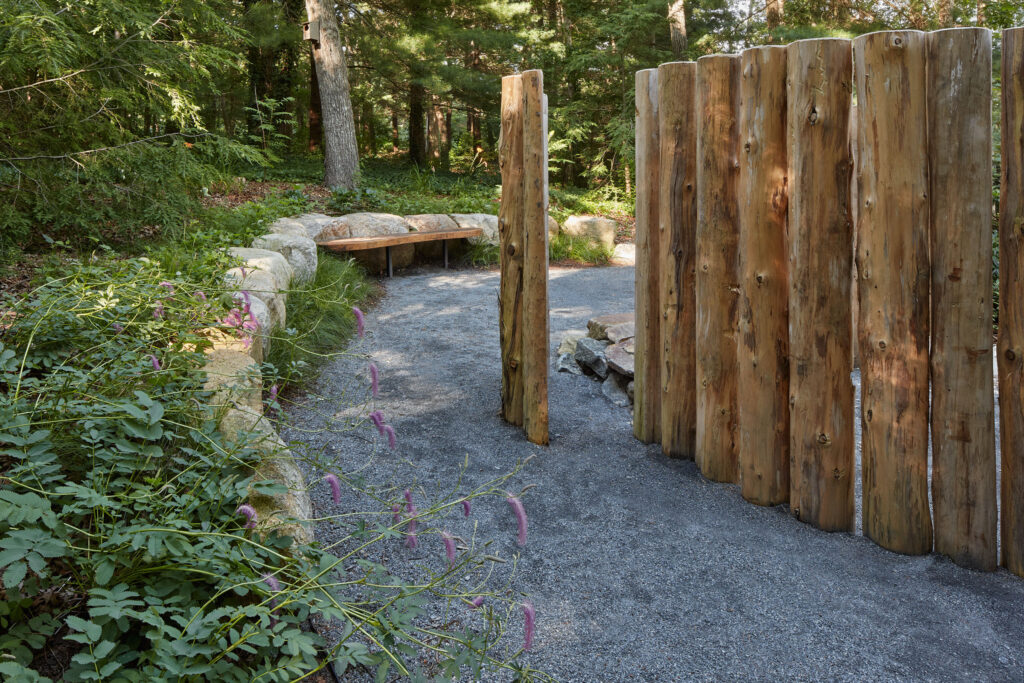
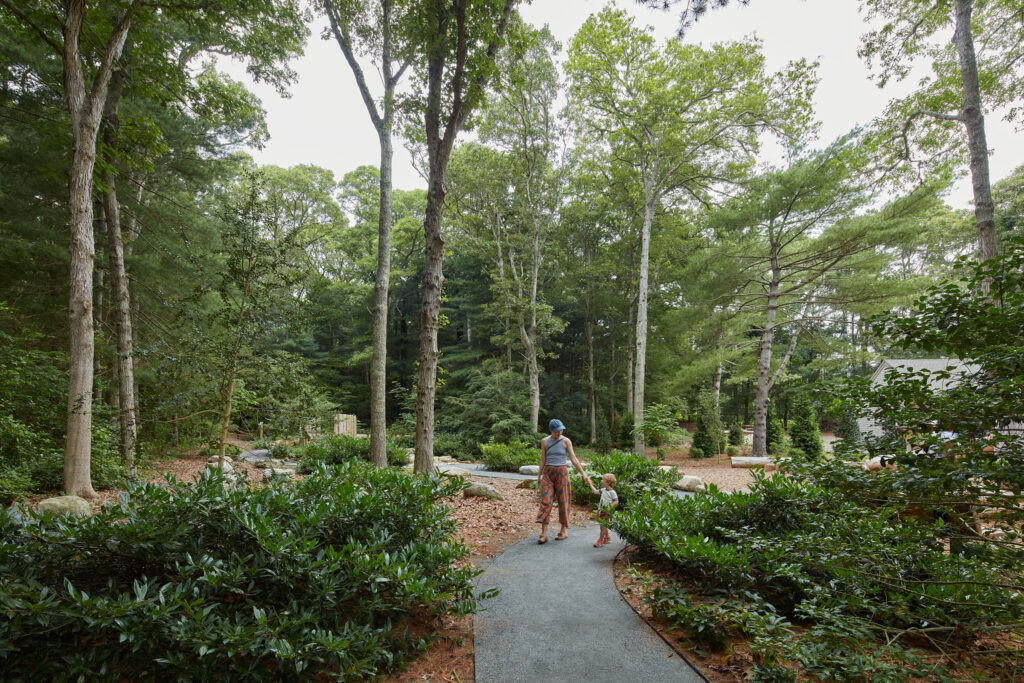
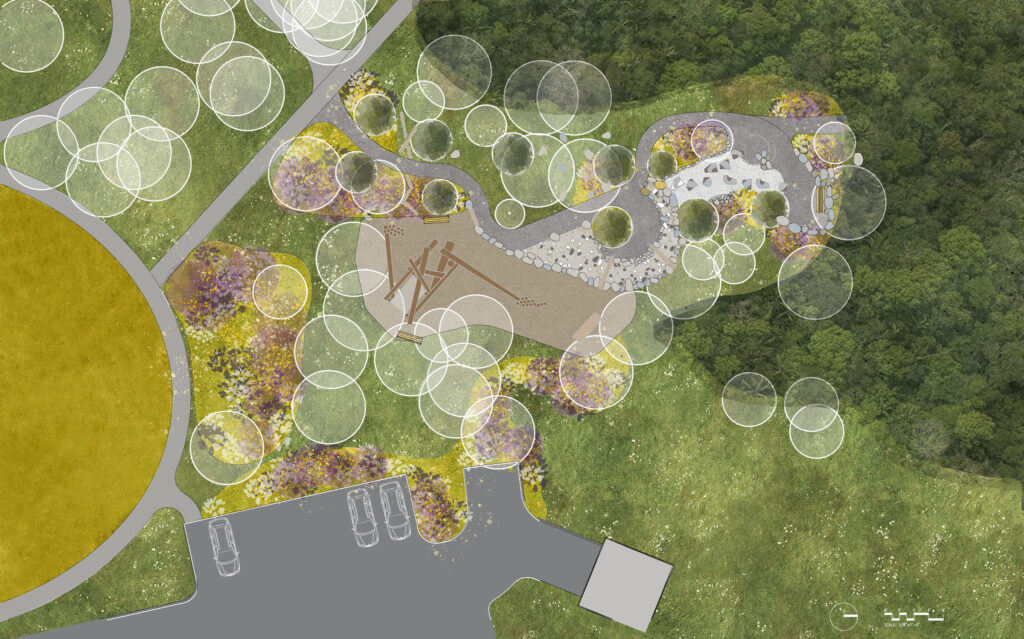
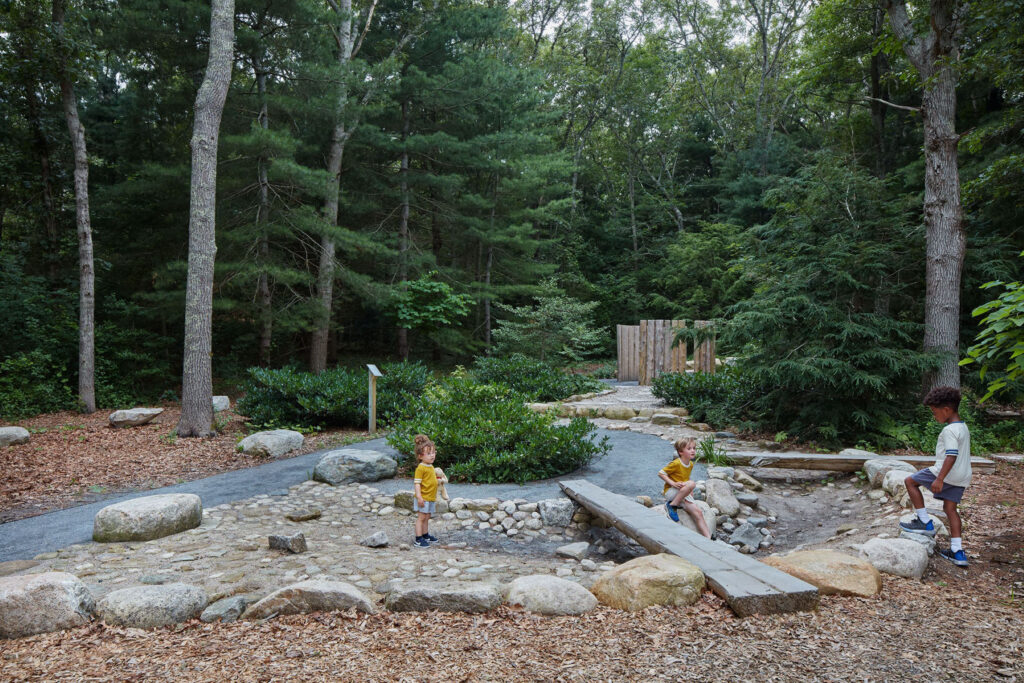
The former memorial was organized around a strong central axis, with a long bridge flanked by mature laurels leading to a train sculpture. The project deliberately loosens this geometry. Eleven mature laurels, together with existing oak, maple, pine, and hemlock trees, are retained as the primary structure of the garden. An accessible stone-dust path weaves between them, transforming the former axis into a more porous circulation system and establishing a direct connection between the park’s central green and the forest trails.
The vegetation is treated similarly. Rather than clearing the understory to create a defined playground, the design works within the existing canopy and introduces hardy planting among it. Mayapples, sweet fern, amsonia, pink burnets, Pennsylvania sedge, sumacs, and resilient groundcovers extend beyond conventional planting boundaries. The resulting landscape is intentionally less controlled, allowing plants, stones, paths, and play areas to overlap.
Turning site conditions into play
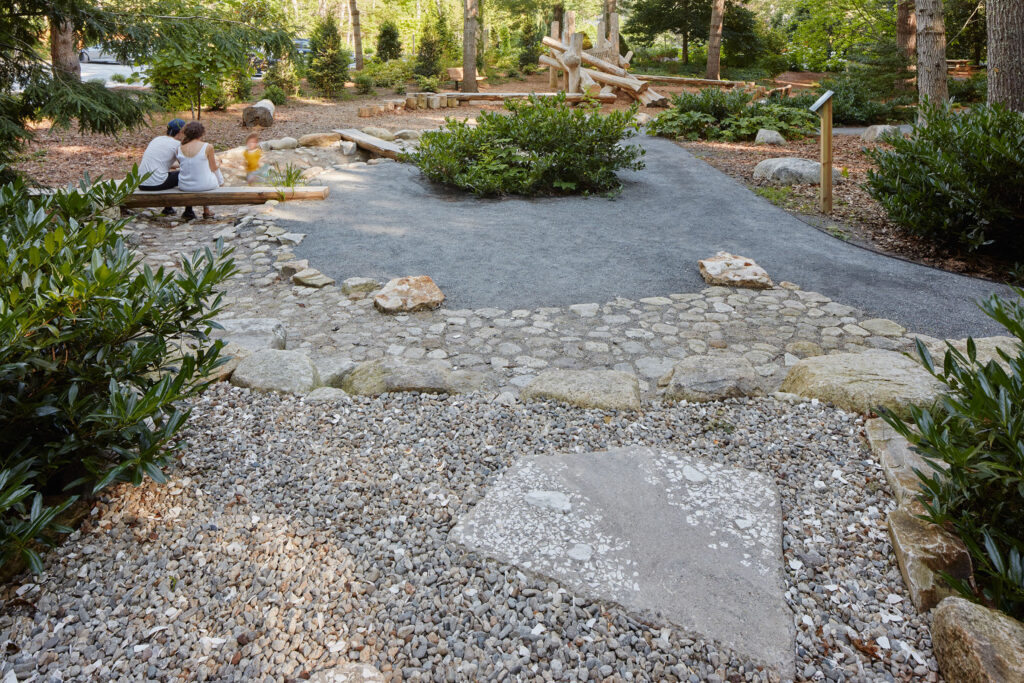
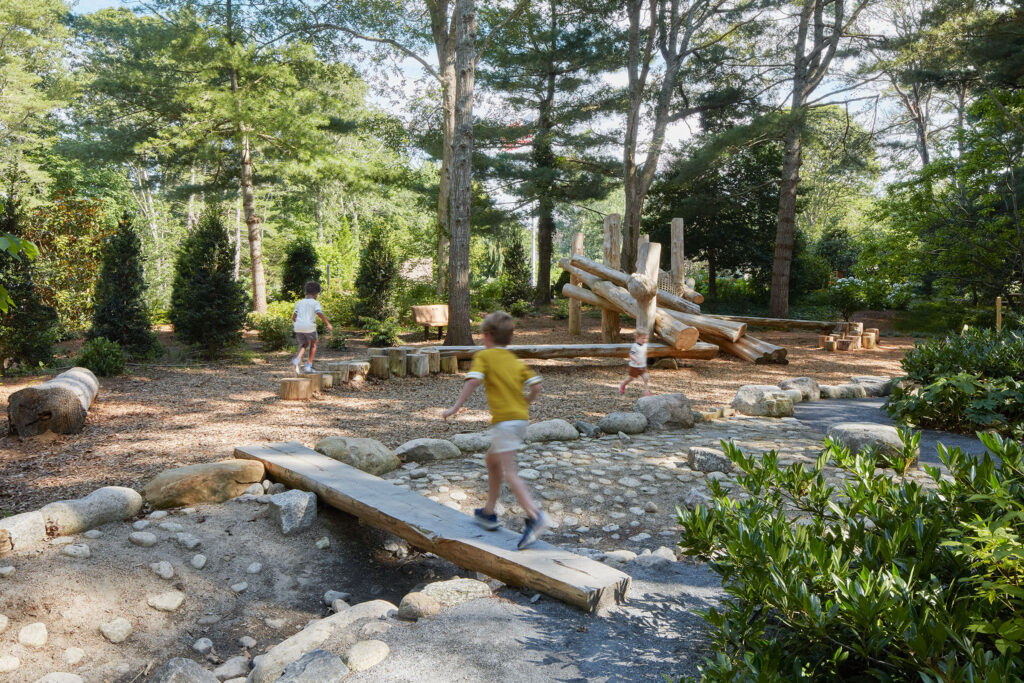
The six-foot change in grade across the site and an existing drainage channel presented practical constraints, but also offered a way to structure the garden. A dry stream bed follows the forest edge and connects to the existing drainage system, becoming both infrastructure and play landscape. Its rough edges, boulders, stepping stones, and half-sawn log bridges create changing levels and routes through the garden.
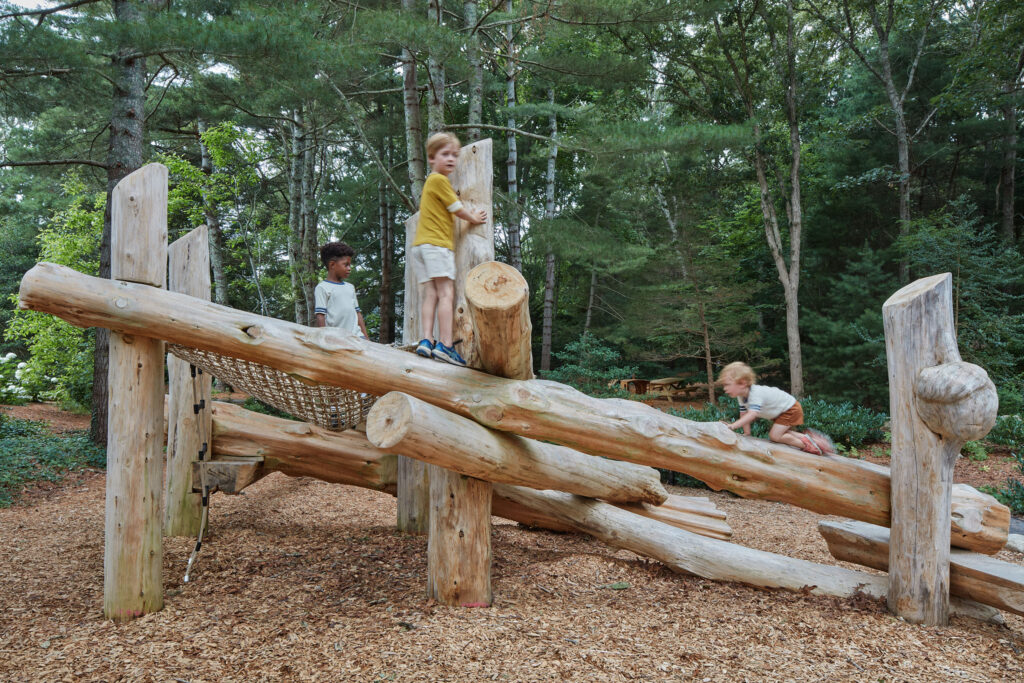
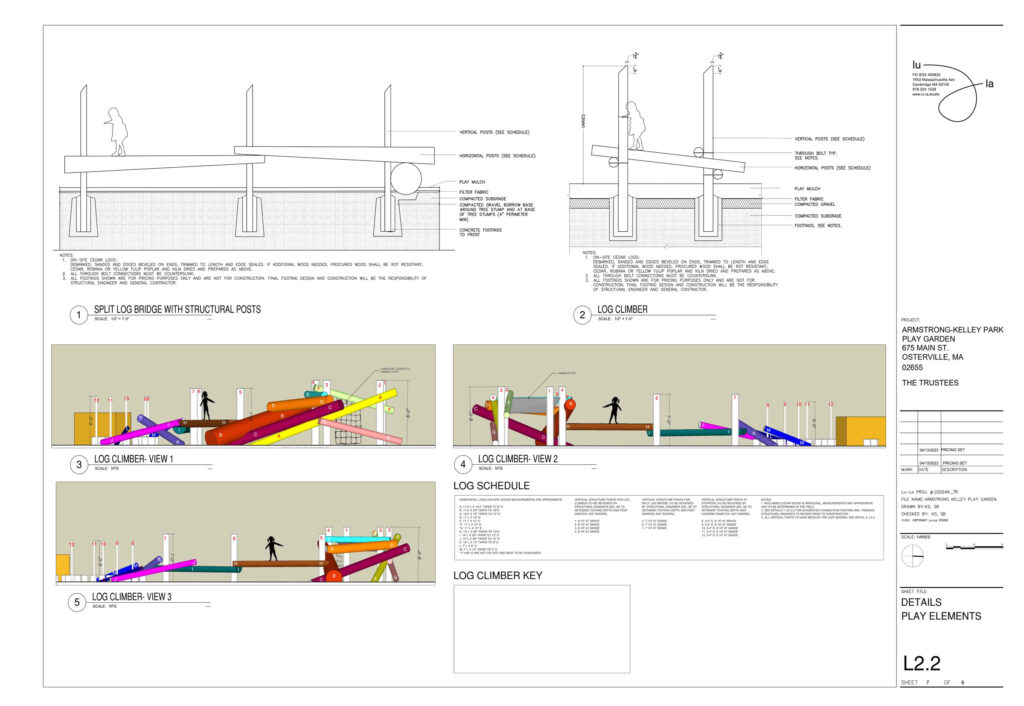
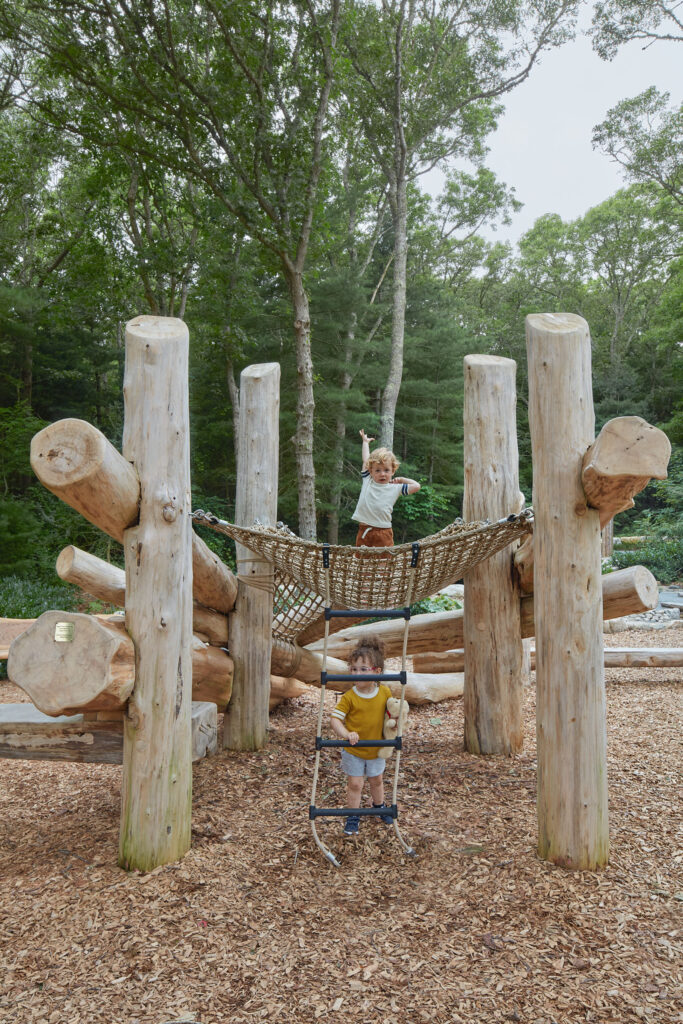
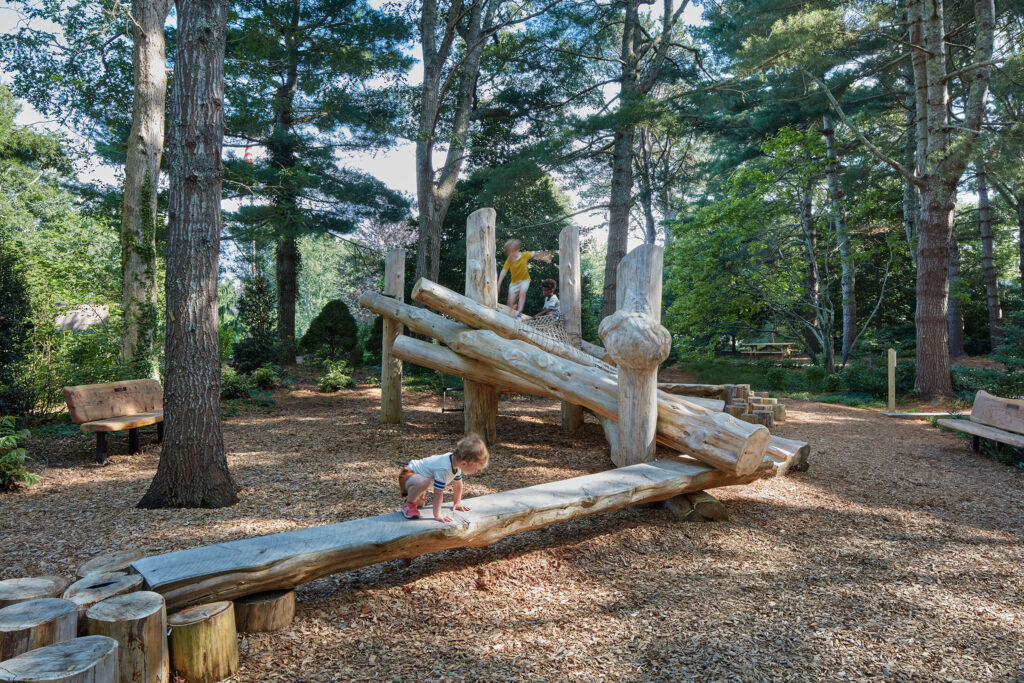
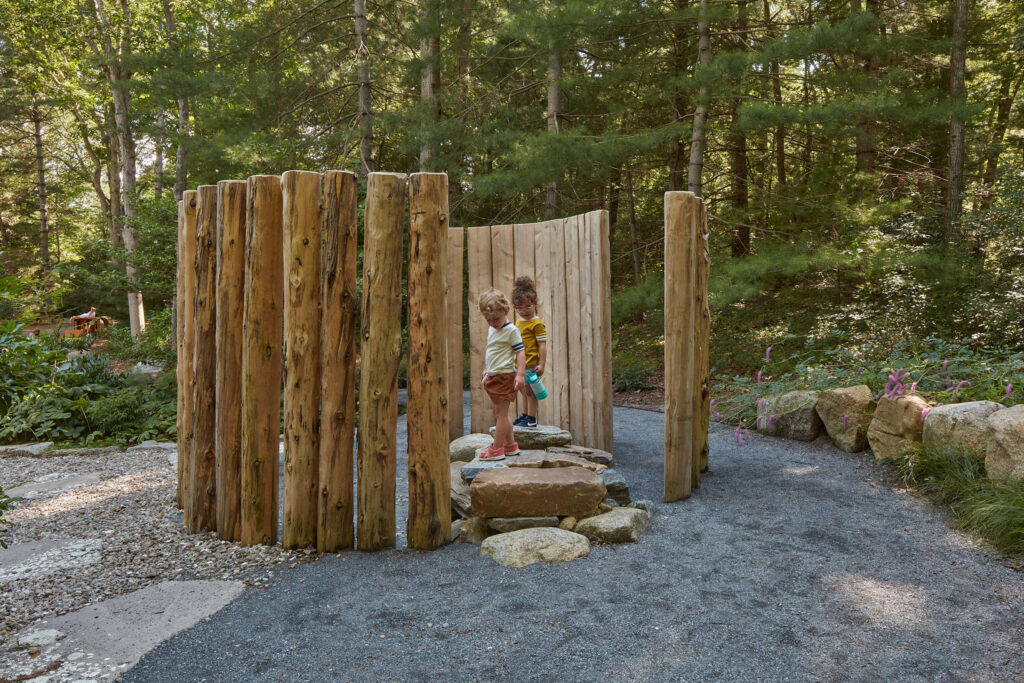
This approach extends to the site’s materials and construction. Cedar trees felled on site are reused to form a climbing structure within an existing oak grove. Angled logs create bridges, steppers, and different levels of difficulty, while a hammock beneath the canopy provides a quieter place within the same structure. Elsewhere, boulders form retaining edges and climbing surfaces, while a simple split-log lookout takes advantage of the site’s changing elevation.
The project therefore does not separate technical requirements from the experience of the garden. Drainage becomes a stream, topography becomes movement, and material recovered from the site becomes play infrastructure.
Constructing a sense of geological time
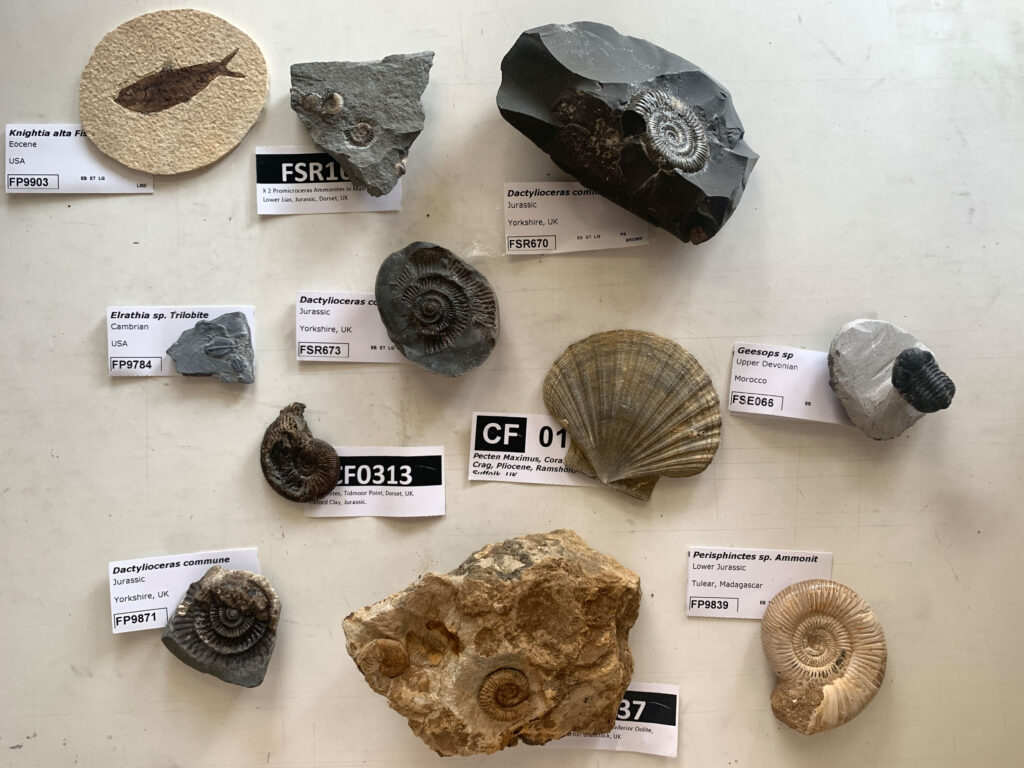
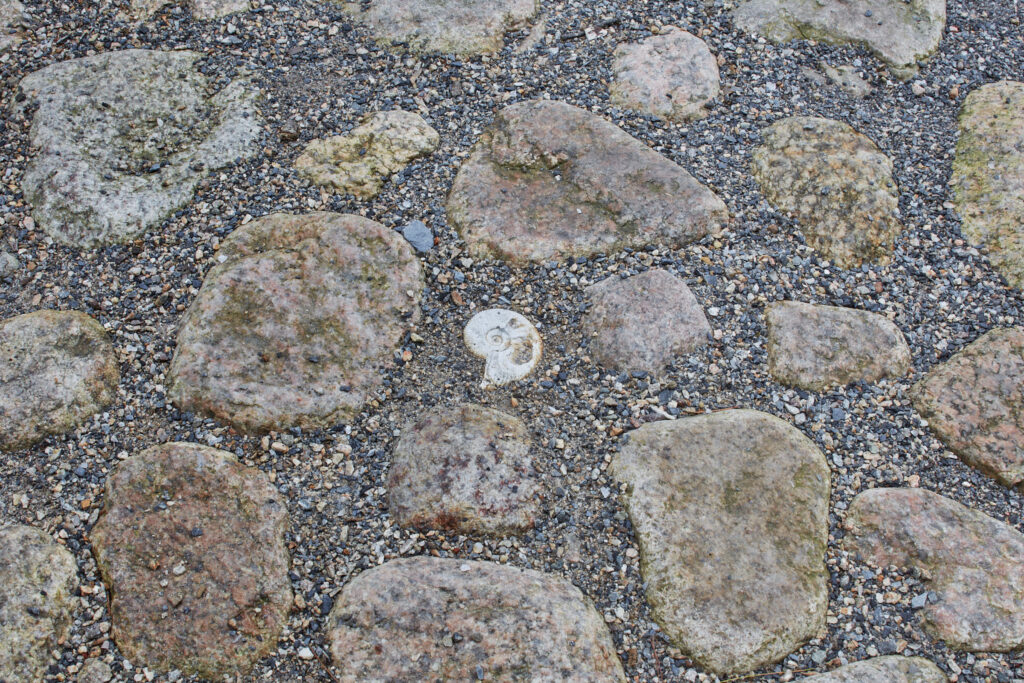
The material palette establishes another layer of the project. Weathered boulders, river stone, granite, shells, pea gravel, wood, and stone dust are combined with twelve varieties of cast sea fossils and a geode lined with crystals. These materials evoke the geological history of the region without attempting to reproduce it literally.
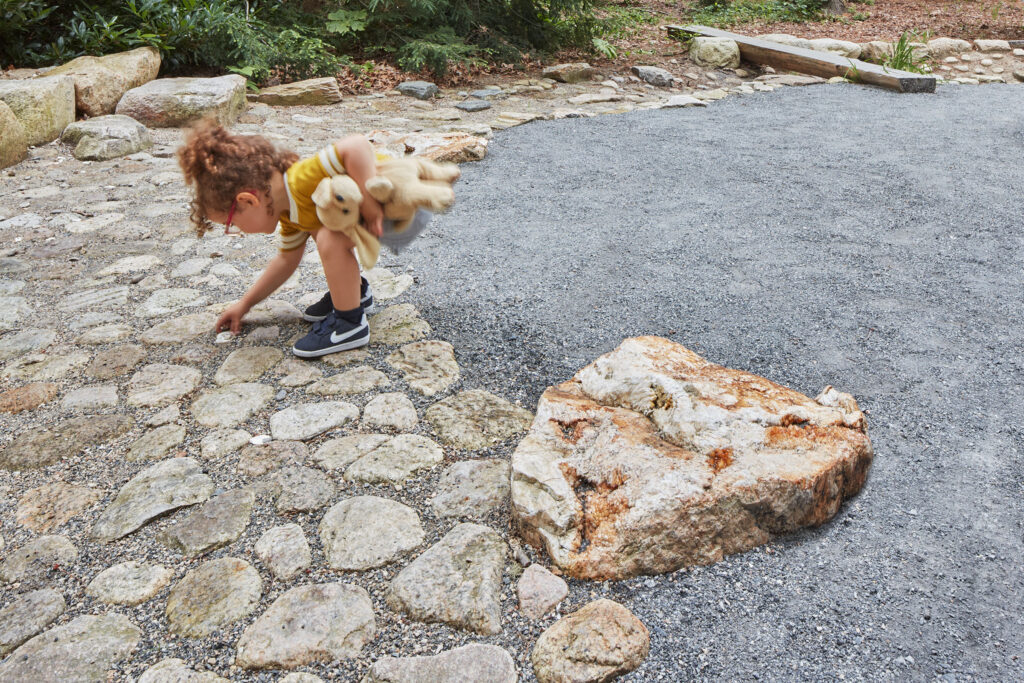
The fossils are embedded in the stream bed and extended into a series of stepping stones, turning the material narrative into a physical game. The geode, meanwhile, creates a small interior within the larger landscape. Together, these elements introduce traces of deep time into a garden located only a short walk from the sea.
The palette also provides a continuity between the constructed and natural parts of the site. Leaf litter, mulch, gravel, shells, and stone dust form a shifting ground plane beneath the forest canopy, while the irregular placement of rocks and planting prevents the garden from reading as a collection of discrete play zones.
From playground to landscape
The individual play elements—stream bed, boulder field, fossil steppers, lookout, and fallen-tree climber—are therefore not conceived as separate pieces of equipment. They operate as points within a larger landscape circuit. Some invite climbing and physical challenge; others encourage searching, hiding, sitting, or simply observing.
This distinction is particularly important for a project intended for multiple ages. Seating is distributed throughout the garden, allowing adults to occupy the landscape alongside children rather than remaining outside the play environment. The garden becomes a shared space in which movement, observation, and play can happen simultaneously.
Sticks and Stones ultimately uses the landscape itself as the medium of play. Its narrative is deliberately incomplete: fossils, boulders, fallen trees, vegetation, and changes in level offer clues without prescribing how they should be interpreted. The project suggests that a garden can create opportunities for discovery without relying on a fixed program, allowing curiosity to emerge from the particular qualities of a place.