


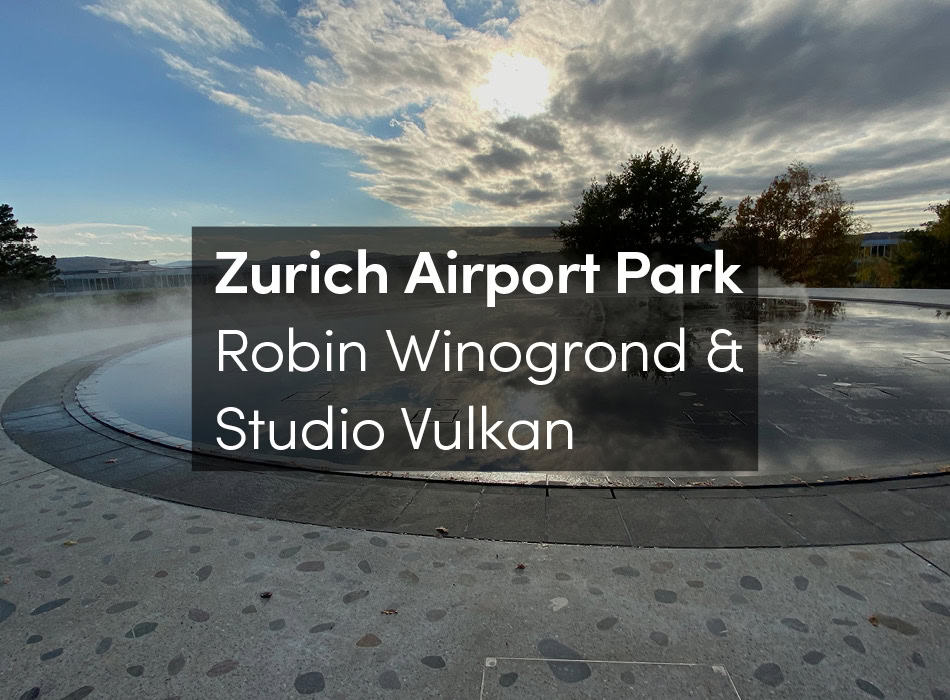
Zurich Airport Park reimagines an infrastructural edge as a high-intensity public landscape that also strengthens ecological systems. The commission called for a park capable of absorbing thousands of daily users without compromising protected habitats or forestry regulations. The design positions the periphery as a new kind of urban nature—simultaneously global in outlook and local in structure—by converting apparent conflicts among conservation, recreation, and timber management into complementary objectives. Across scales, the project amplifies a latent poetics in an otherwise routine suburban setting, drawing on atmosphere, phenomenology, environmental psychology, and social activation.
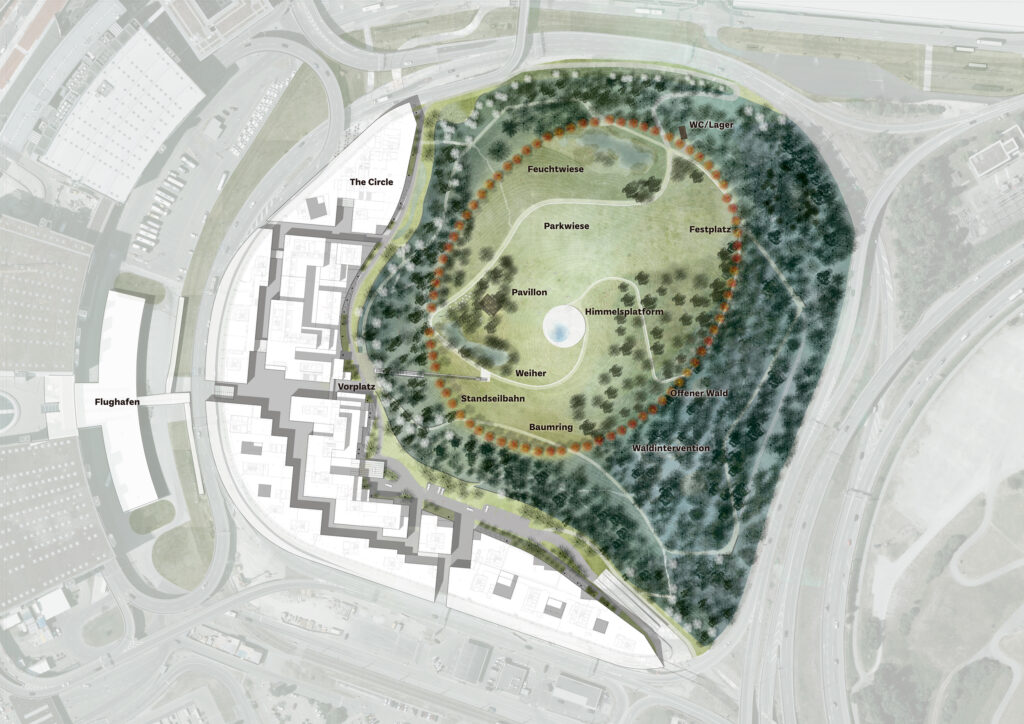
Set on a glacier-moraine hill beside the airport, the park opened in 2020 and is encircled by Riken Yamamoto’s megastructure, The Circle. Here, tranquility persists within a ring of movement. Over time, distinct layers accumulated: primordial moraine gravel; 1960s highway spoil heaped into abstract forms; and compensatory plantings—forests, meadows, wetlands—subsequently protected. The plan uses existing ecological mapping as a framework.
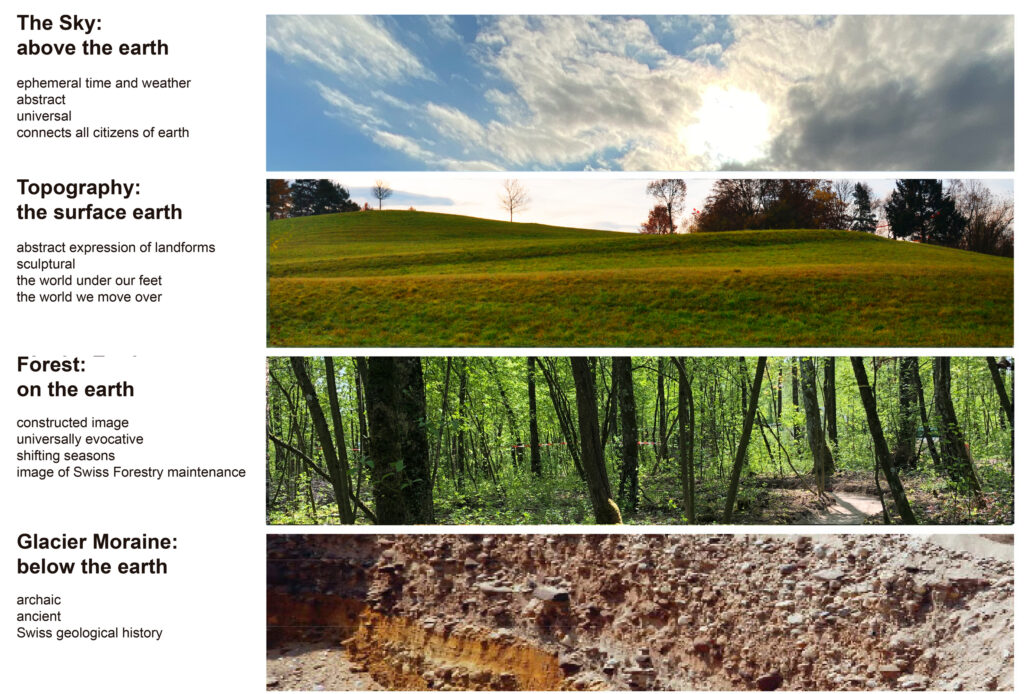
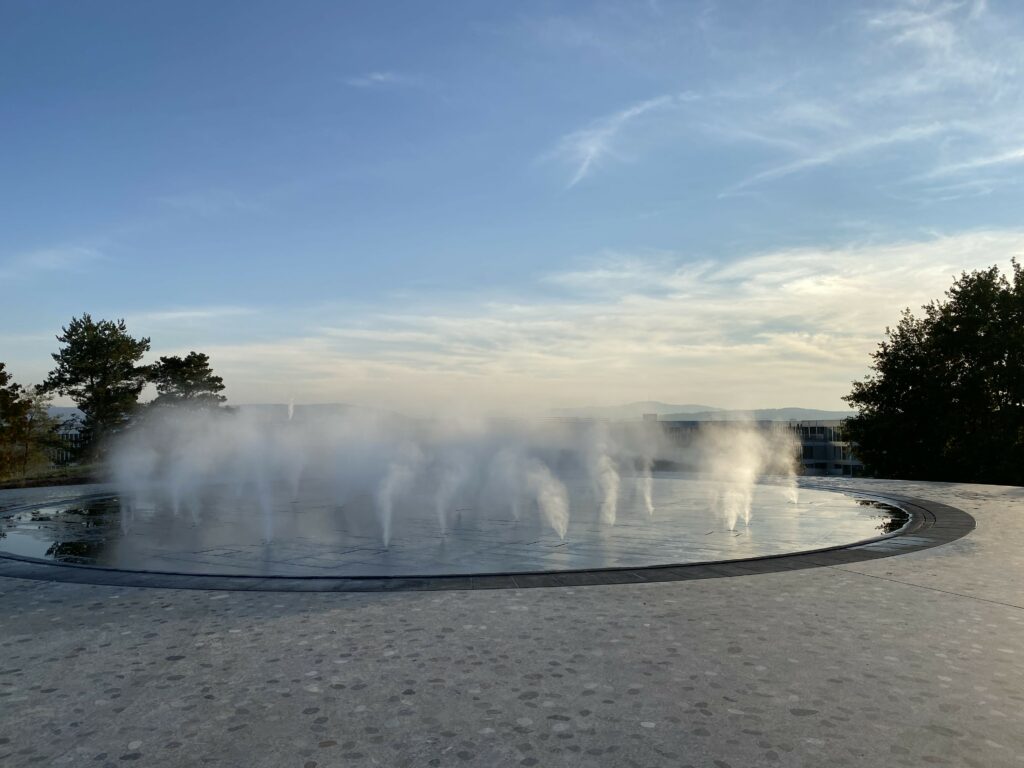
Two statements anchor the concept by Robin Winogrond. First, the site’s vertical stratigraphy is turned into a spatial sequence perceived along the slope, from moraine to forest to wetland to surreal topography, ending at a 30-meter Sky Platform where water cycles between mirror and fog, rendering the sky as walkable, inhabitable weather. Second, a 200-meter tree ring crowns the hill, lending the landform a clear figure legible at the territorial scale, including from the air.
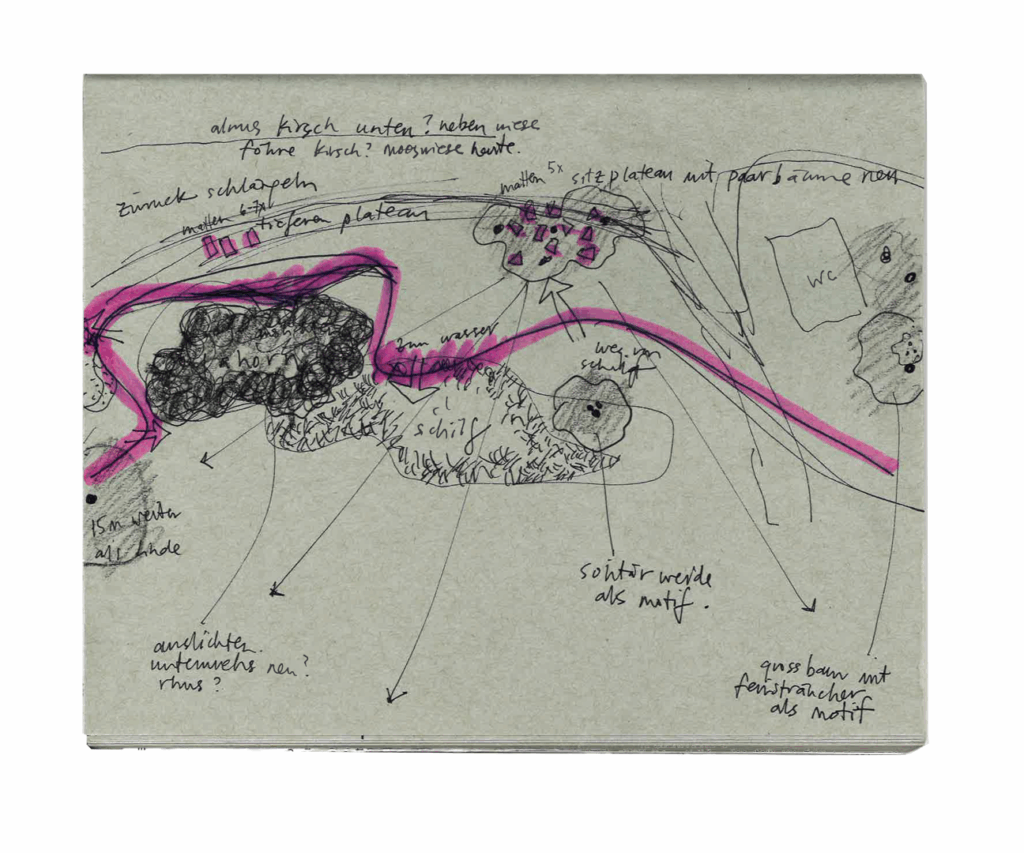
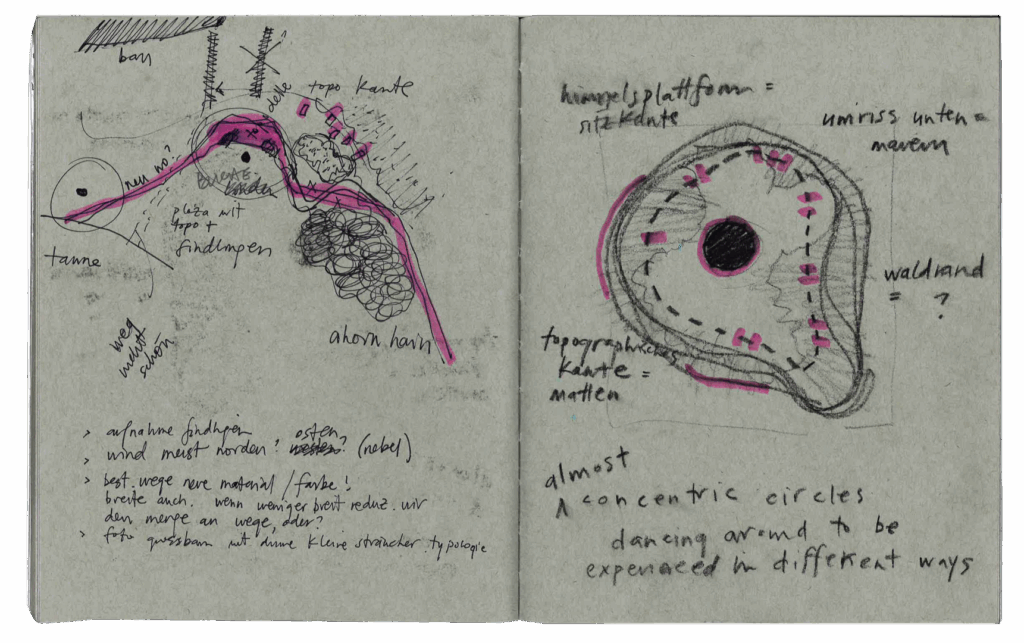
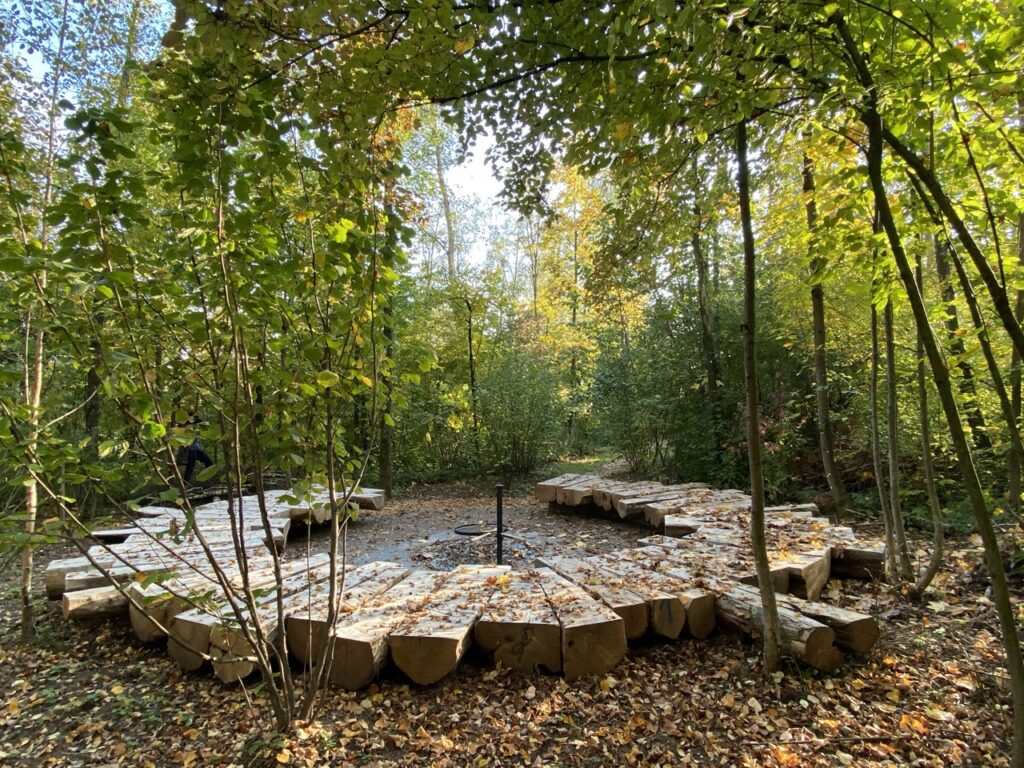
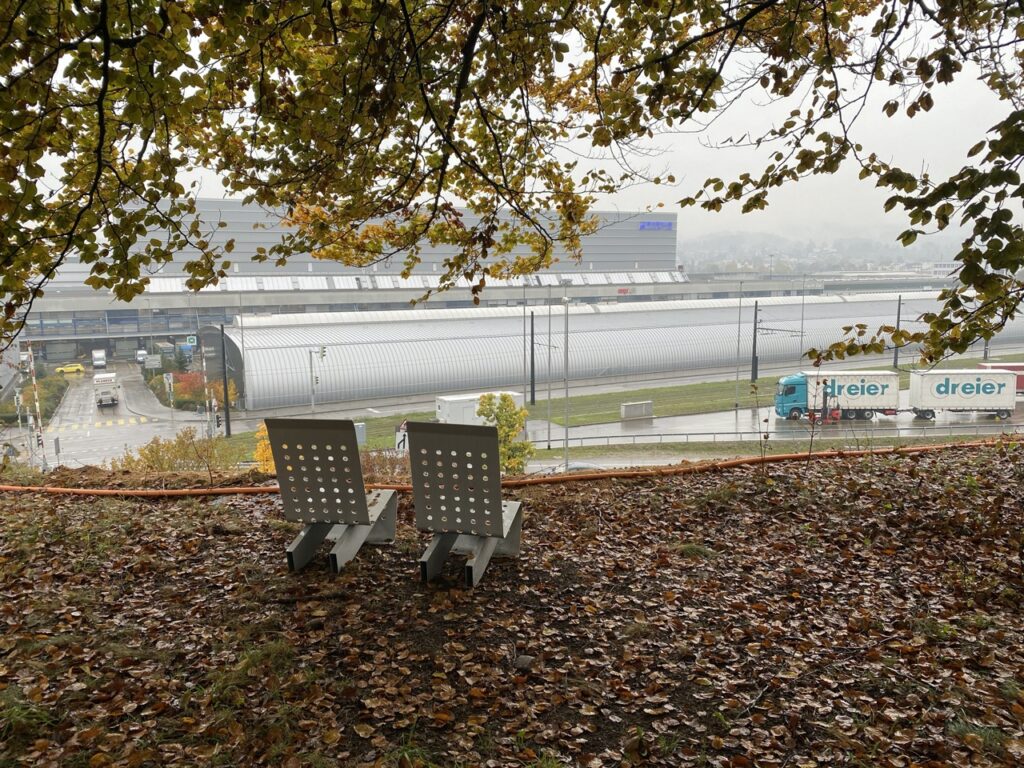
Circulation is clarified by the Woodland Loop and Sky Loop, while planting strategies key to the site’s erratic soils, alternating between poorly draining clays, fast-draining gravels, and uneven organics, compose distinct atmospheres every hundred meters. Programmed “micro-rooms” offer brief yet immersive pauses: Woodland Pavilion, Fire Ring, Yoga Mats, Wildwood Plaza, and a Sky-Gazing Chair: a contemporary aluminum take on the 1903 Adirondack. Biodiversity targets were developed with ecological and forestry specialists, prompting a broader shift in management values from commodity production toward multi-benefit forests that balance habitat and leisure.