


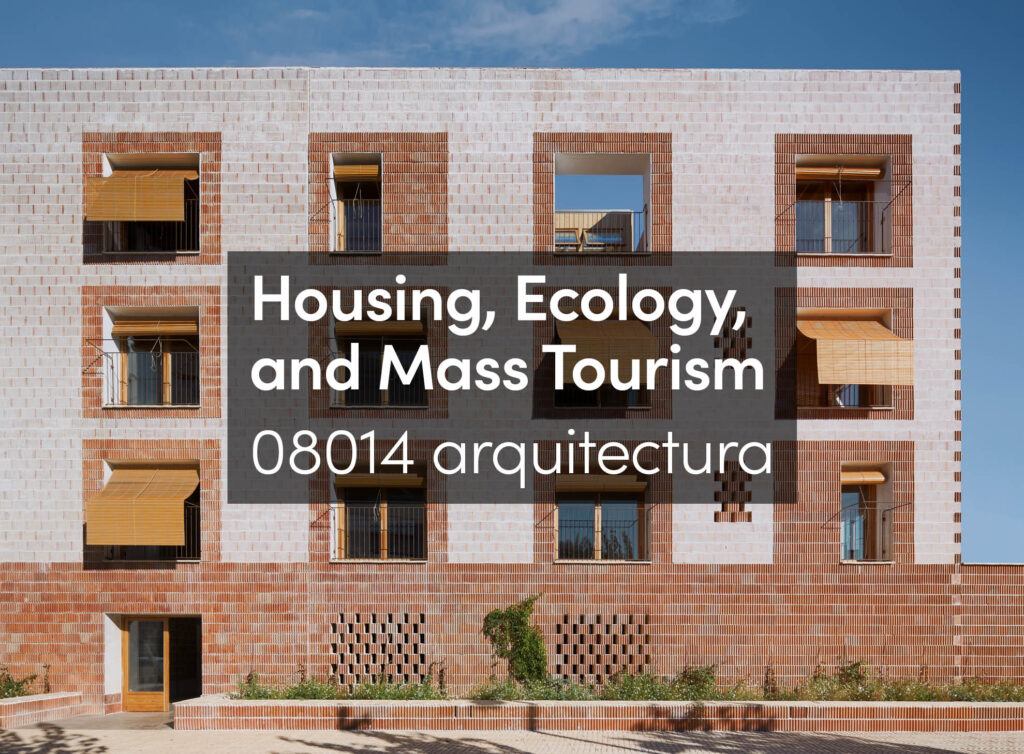
Ibiza. Platja d’en Bossa. An urban fabric shaped by mass tourism. And, in its midst, a public housing project. Here, the question of domesticity is inseparable from another: how can architecture sustain everyday life in a territory organized around temporary occupation, while responding to the environmental constraints of an island? Designed by 08014 arquitectura, the 24 dwellings address these questions through a reinterpretation of mediterranean domestic traditions, placing four courtyards at the center of the building’s spatial organization and climatic performance. The project extends this environmental approach to construction itself, combining locally rooted material knowledge with strategies to reduce embodied carbon and operational energy demand.
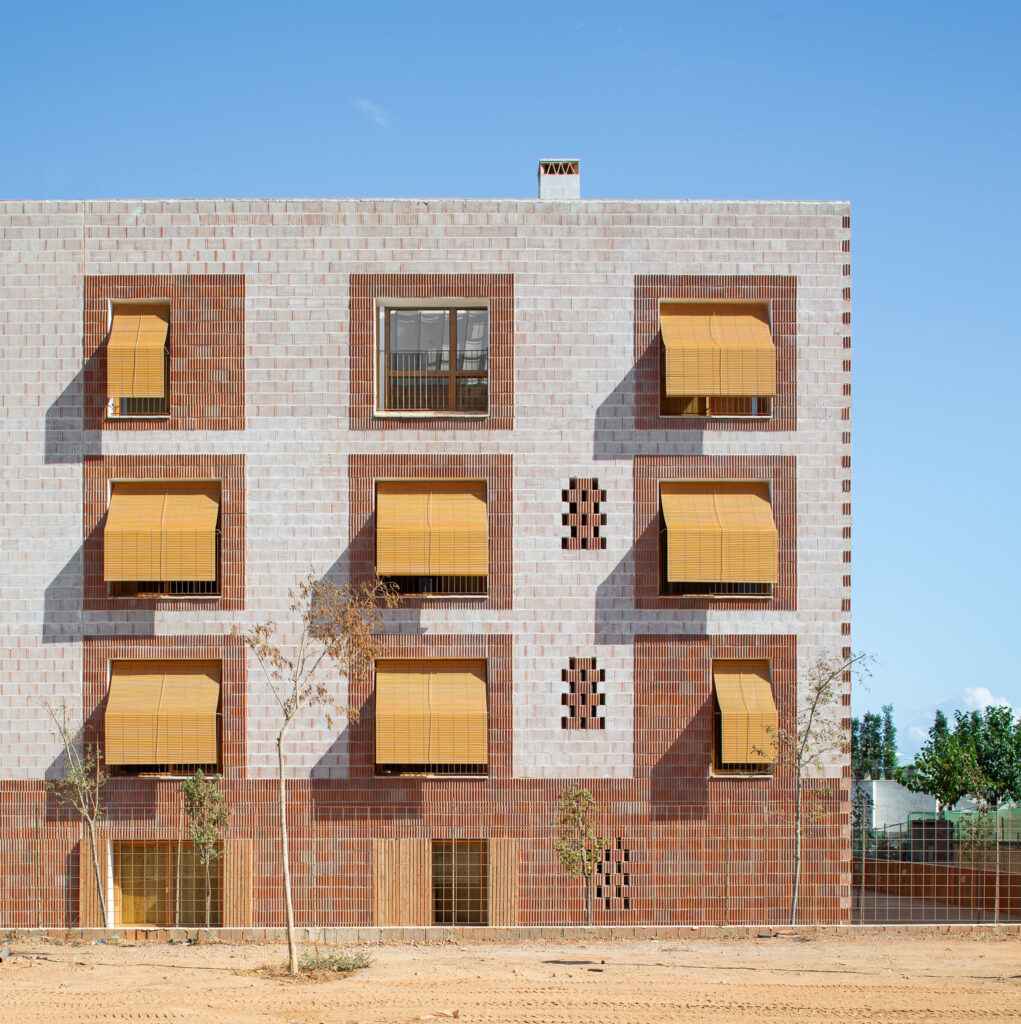
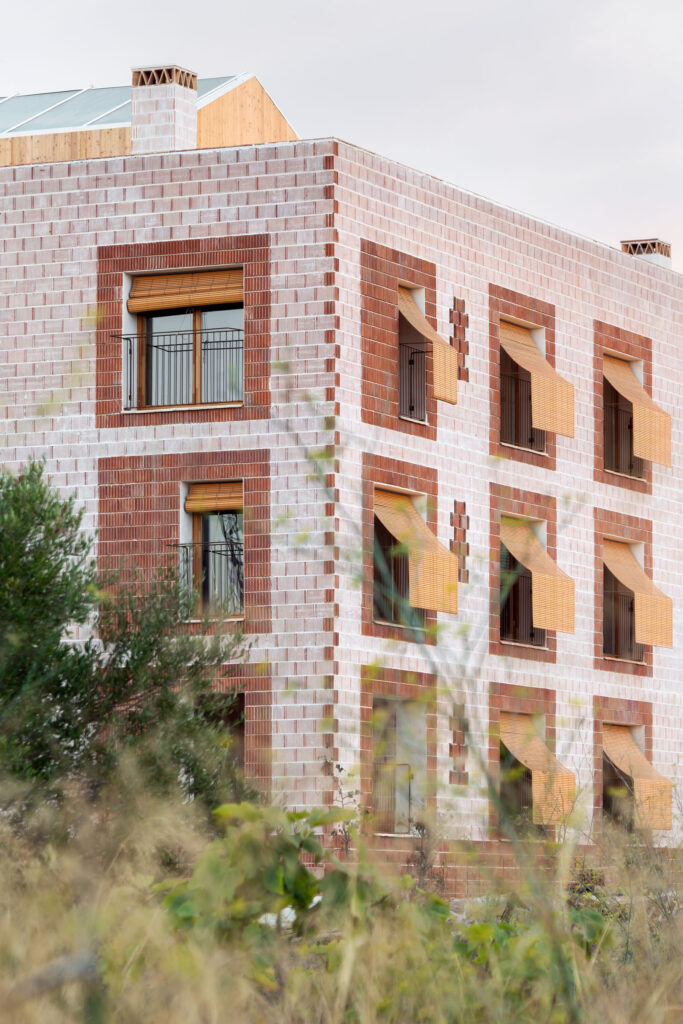
Spatial Organization
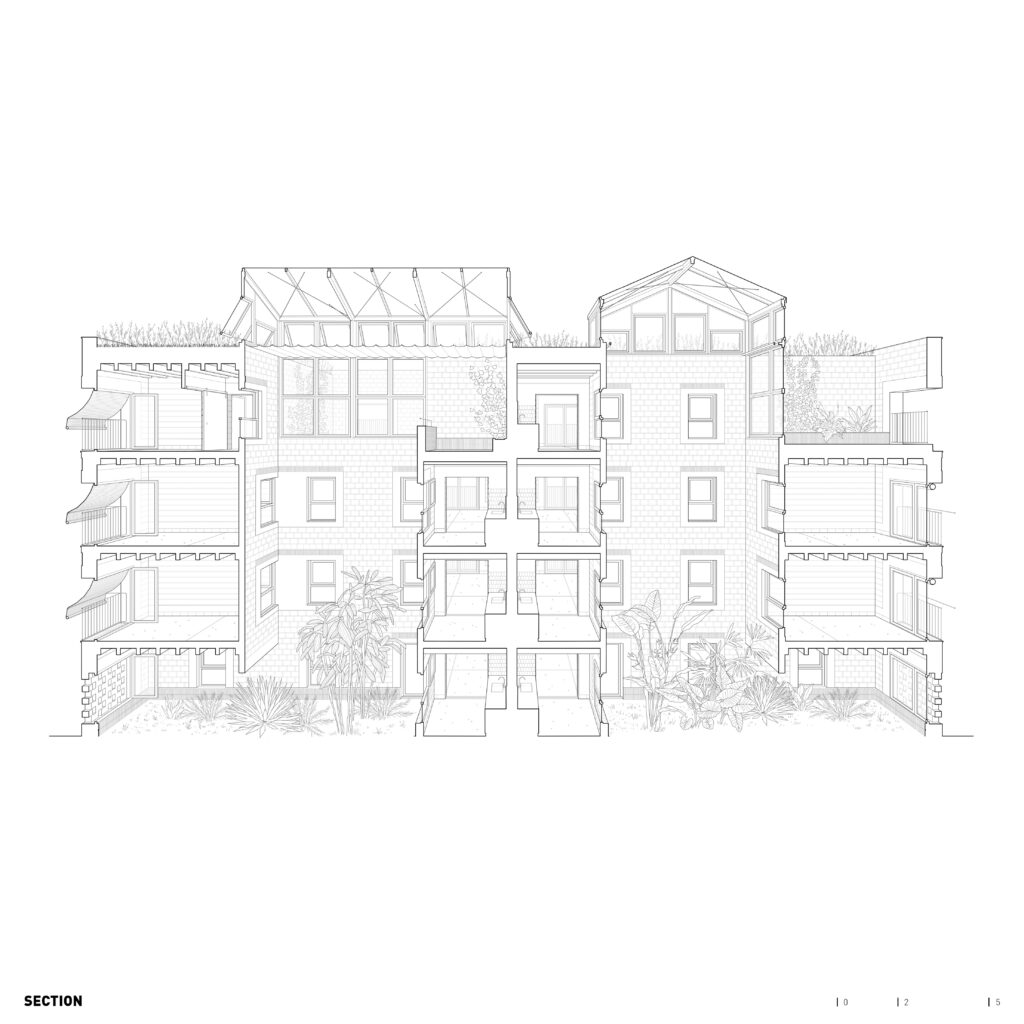
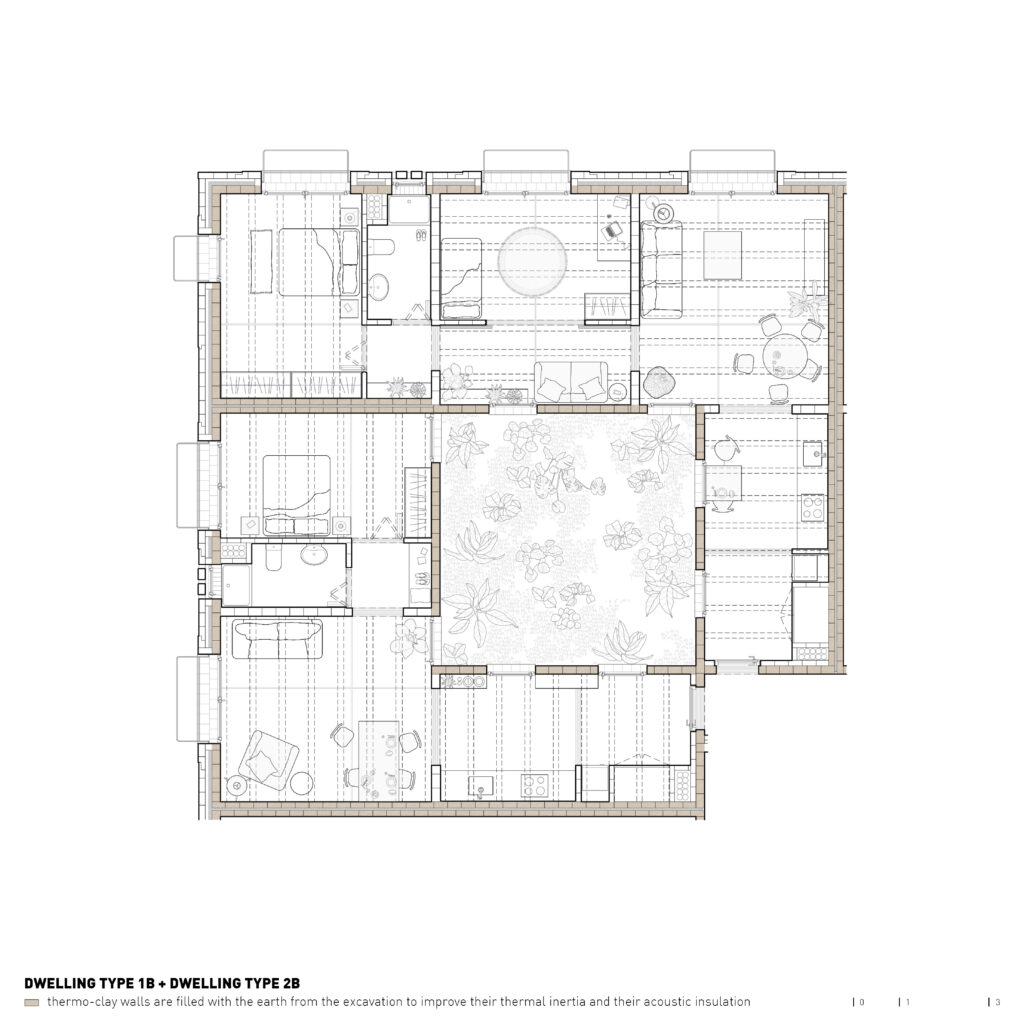
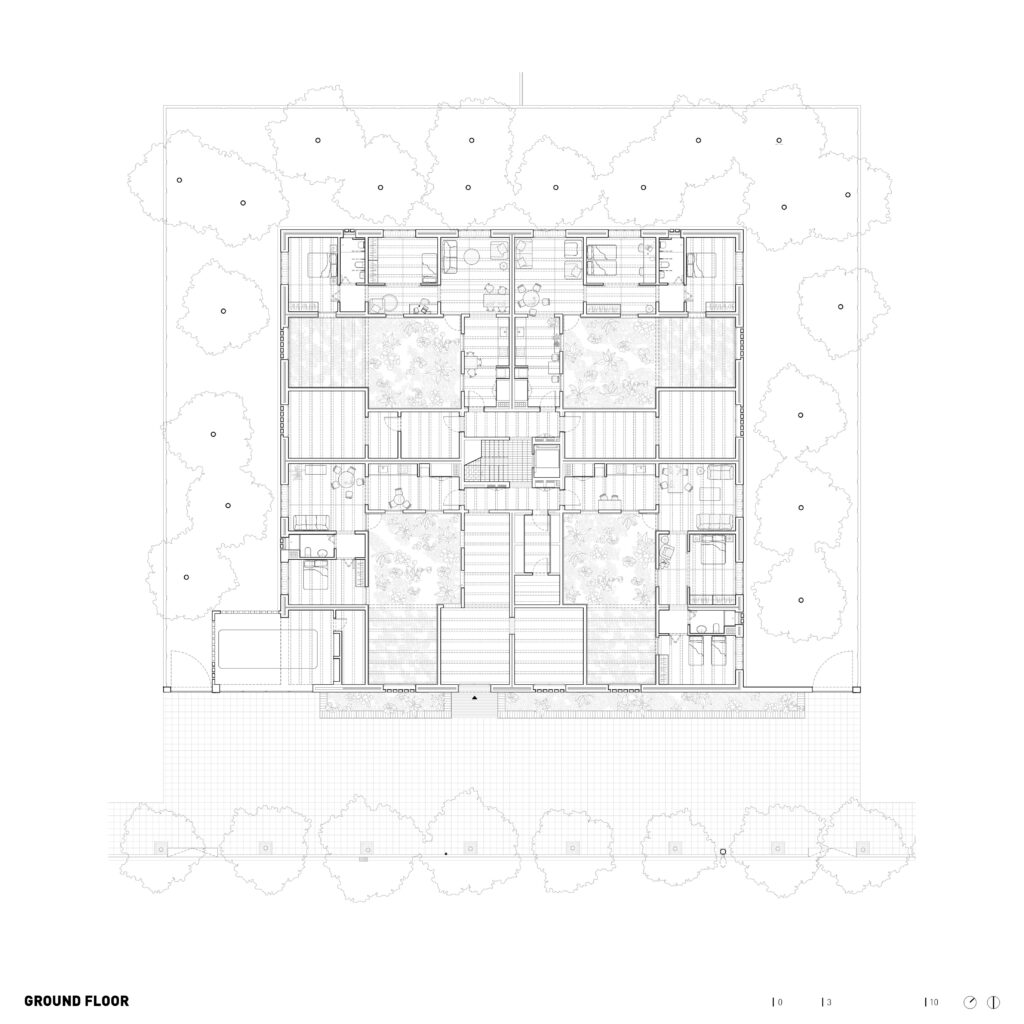
The four-storey building occupies a 43 × 43-meter plot, approaching its maximum permitted occupancy and buildable area. Drawing on the classical domus, the Islamic house, and traditional Ibizan architecture, it turns inward, organizing 24 apartments around four courtyards.
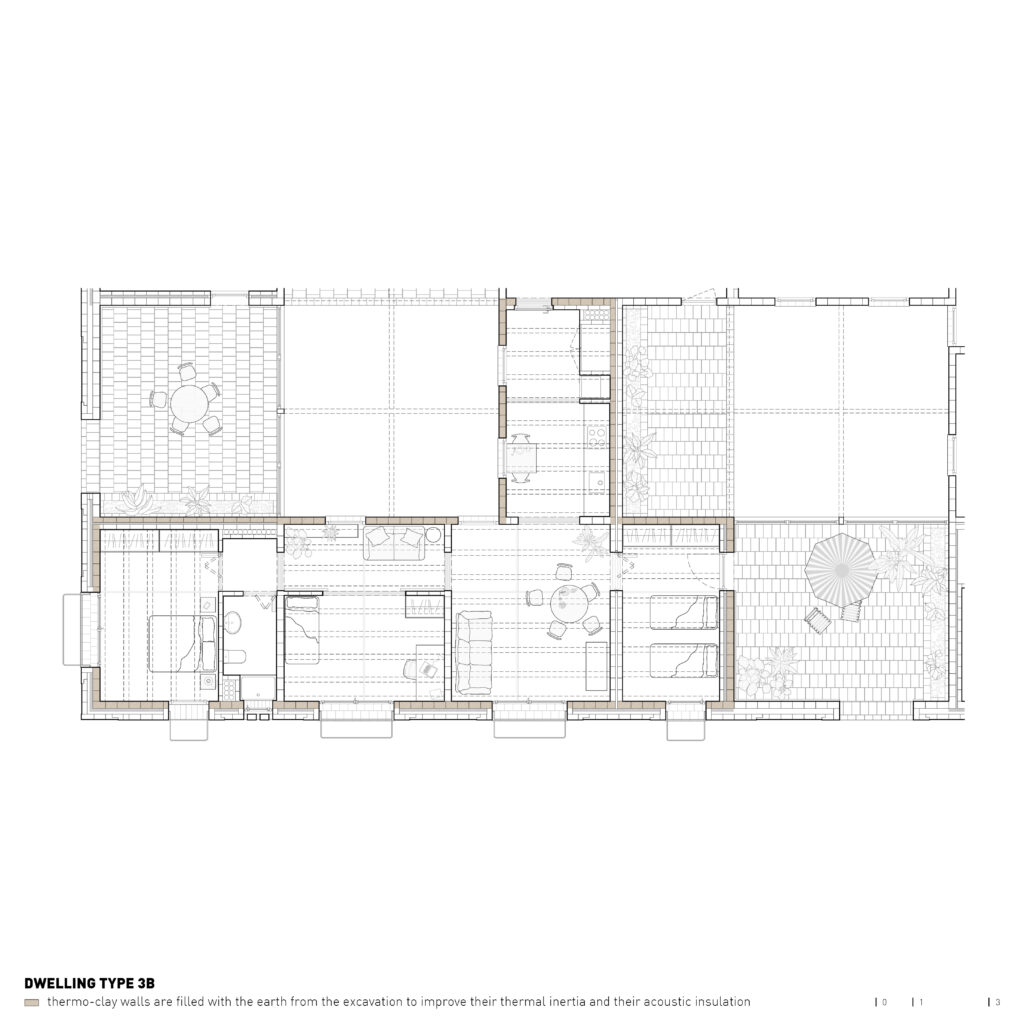
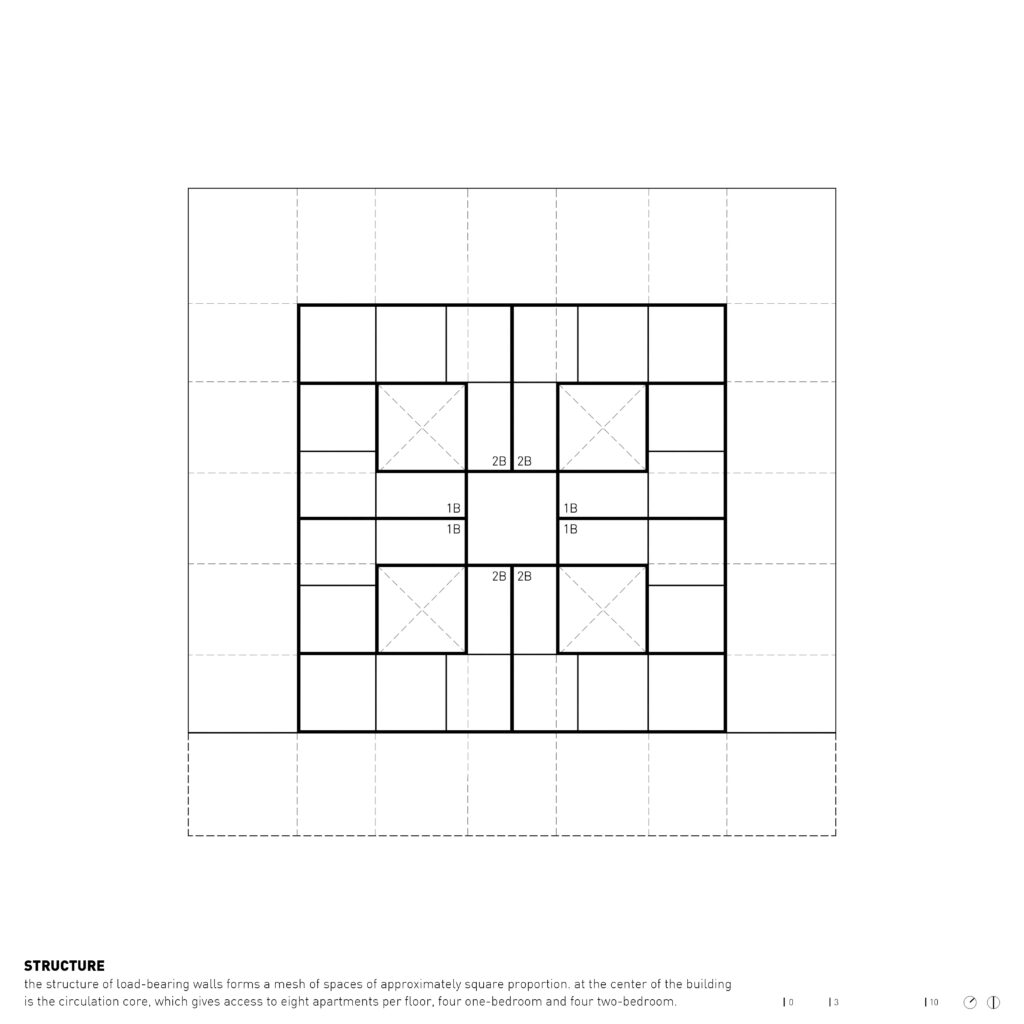
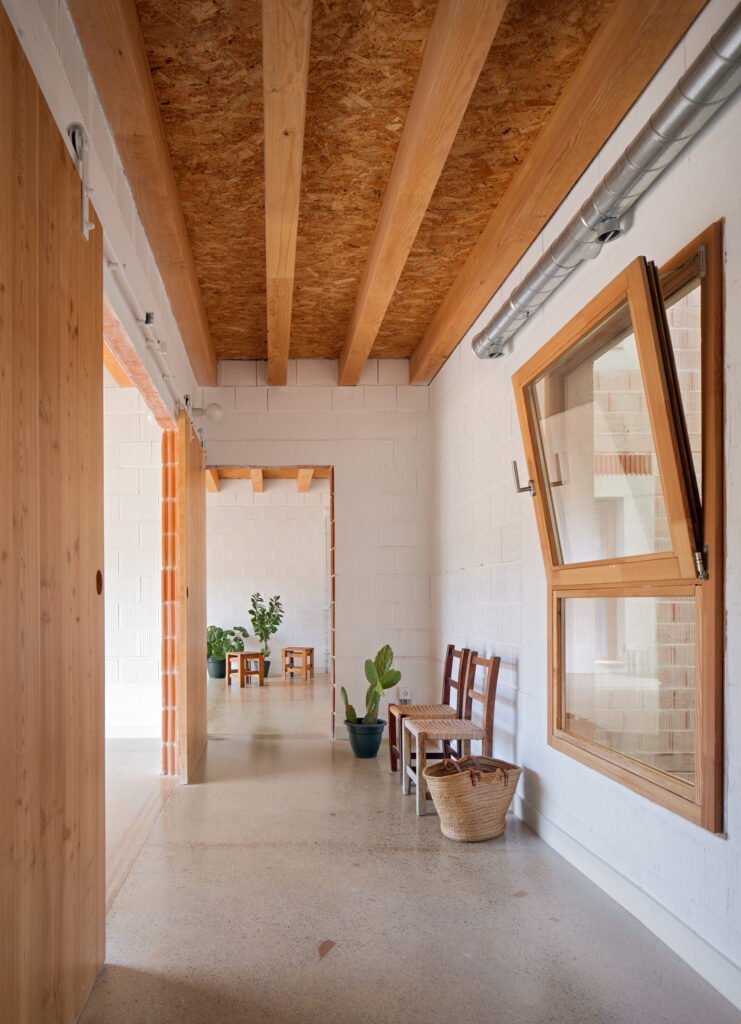
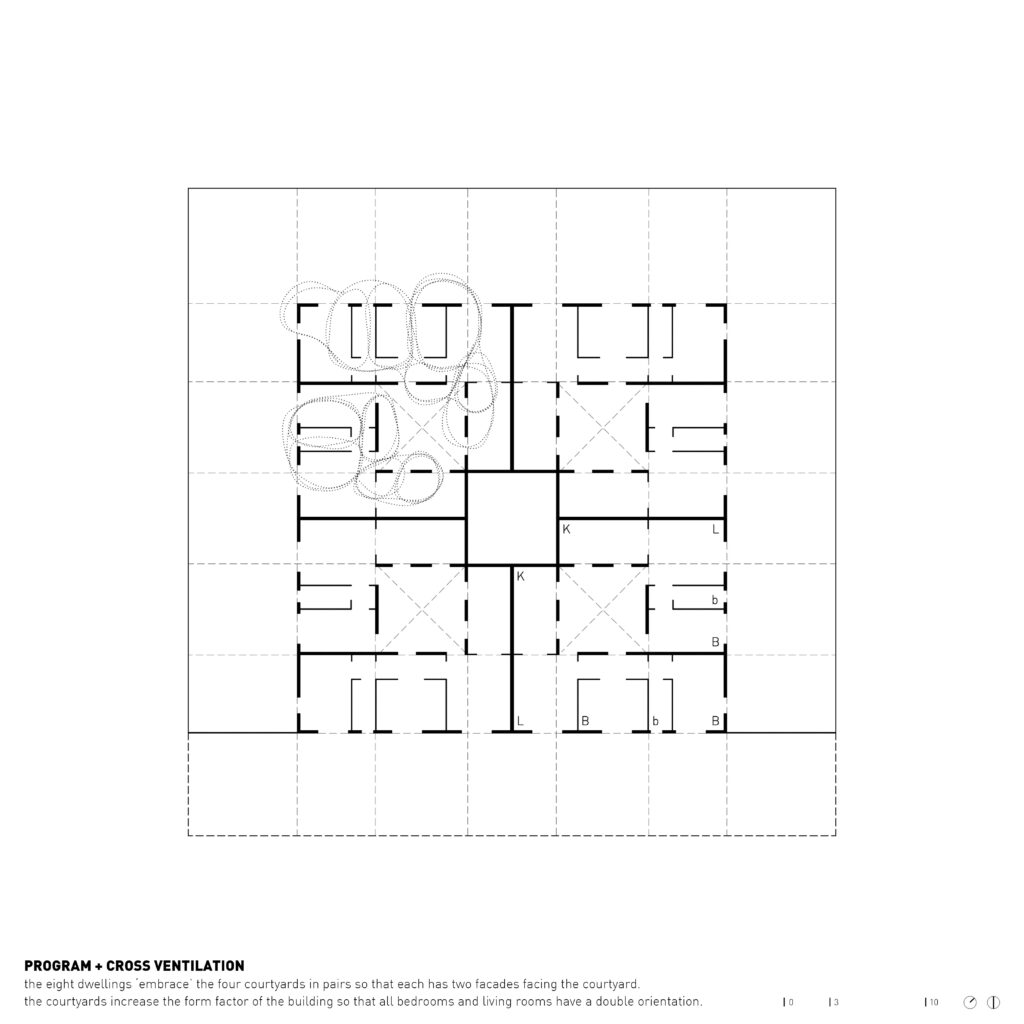
A grid of load-bearing walls structures the plan, with a central circulation core connecting eight dwellings per floor. The apartments are arranged in two concentric bands: living rooms, bedrooms, and bathrooms occupy the outer band, while kitchens and courtyards form the inner one. Grouped in pairs around the courtyards, the dwellings benefit from dual orientation and cross-ventilation. Their elongated layouts also generate generous, naturally lit transitional spaces that can accommodate uses beyond circulation, extending the range of activities within the home.
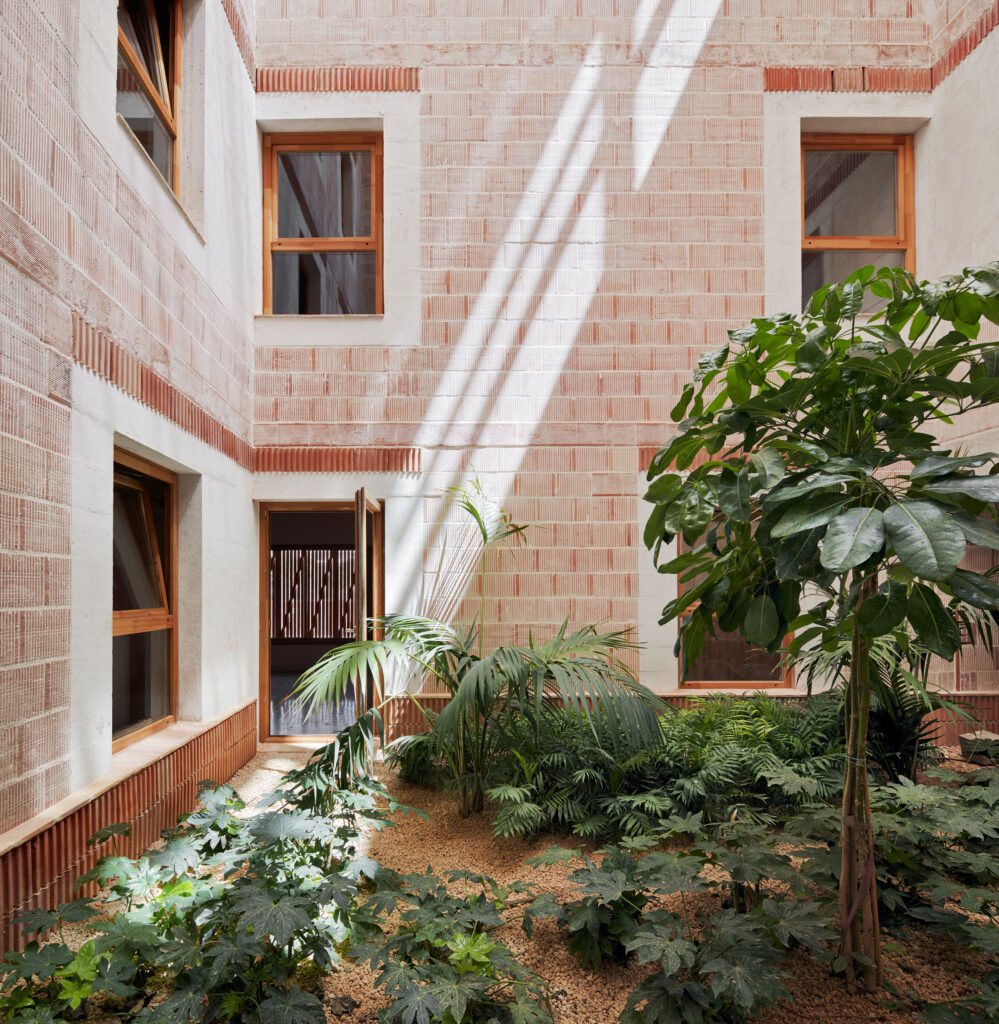
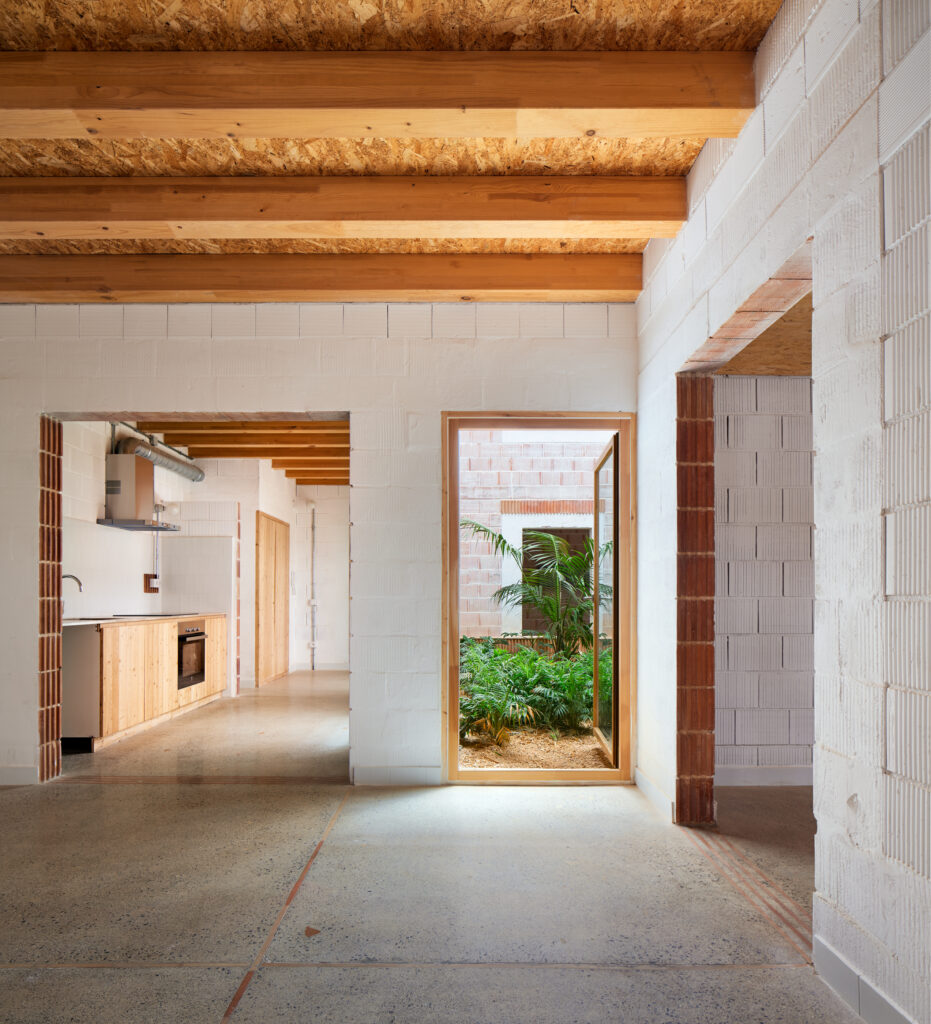
The courtyards thus connect interior and exterior, bringing daylight and air into the dwellings while providing a shared spatial framework for domestic life.
Energy and Climate
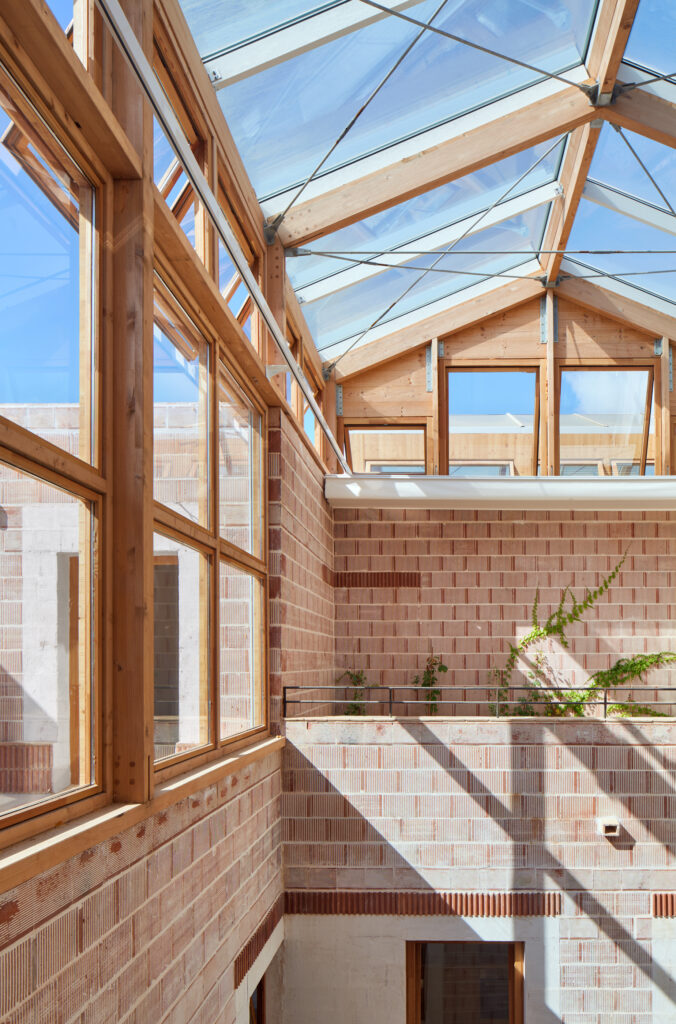
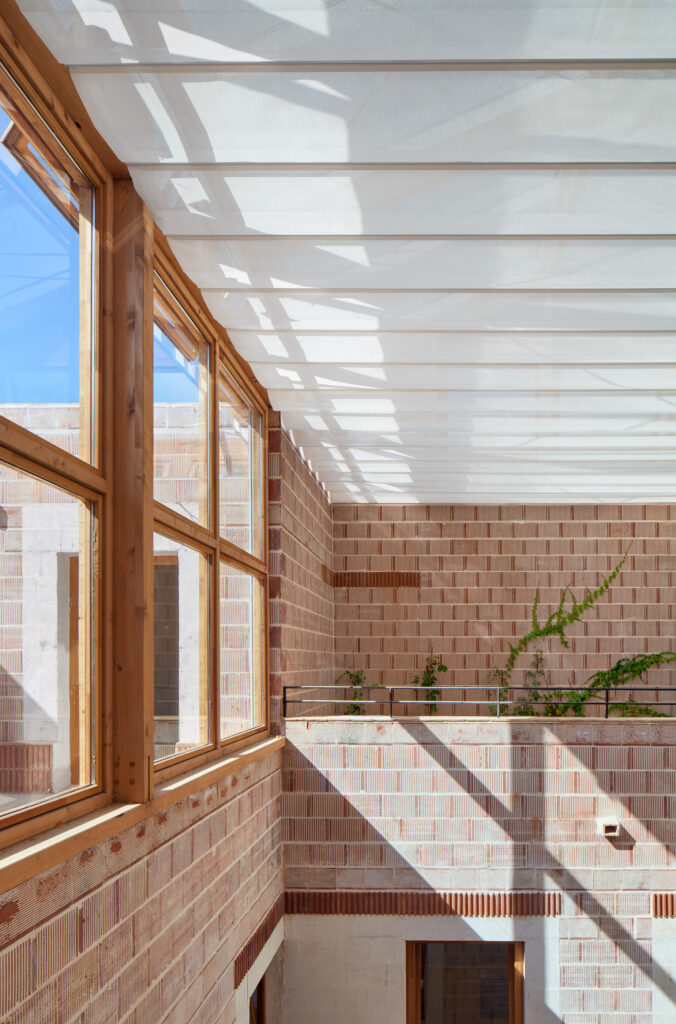
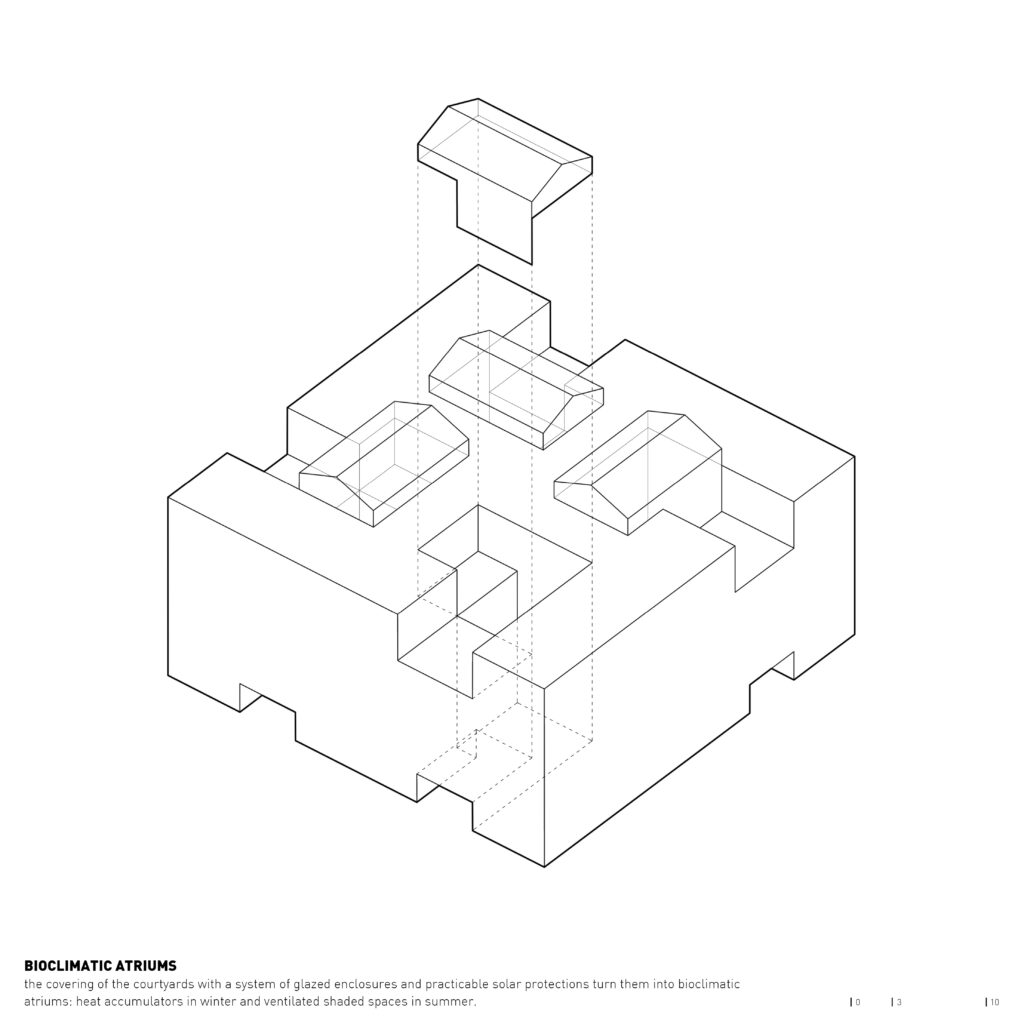
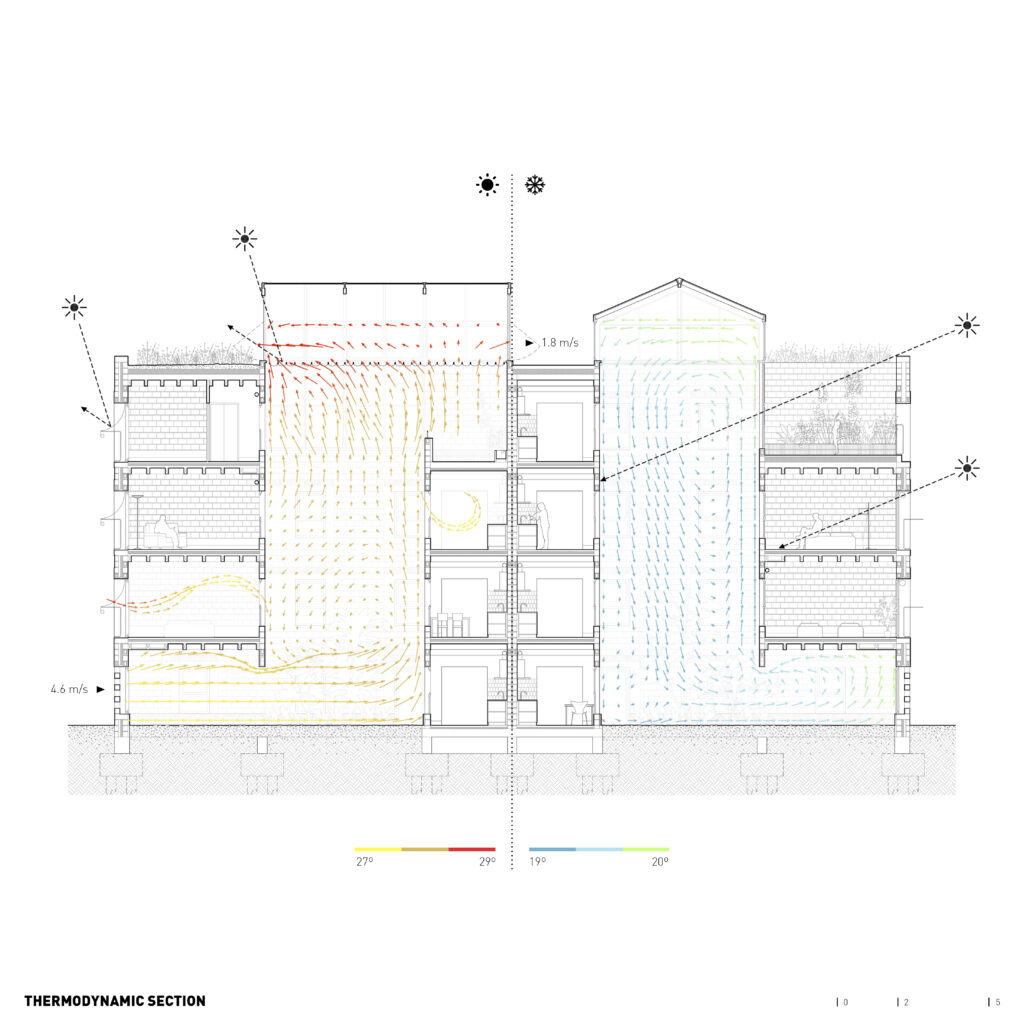
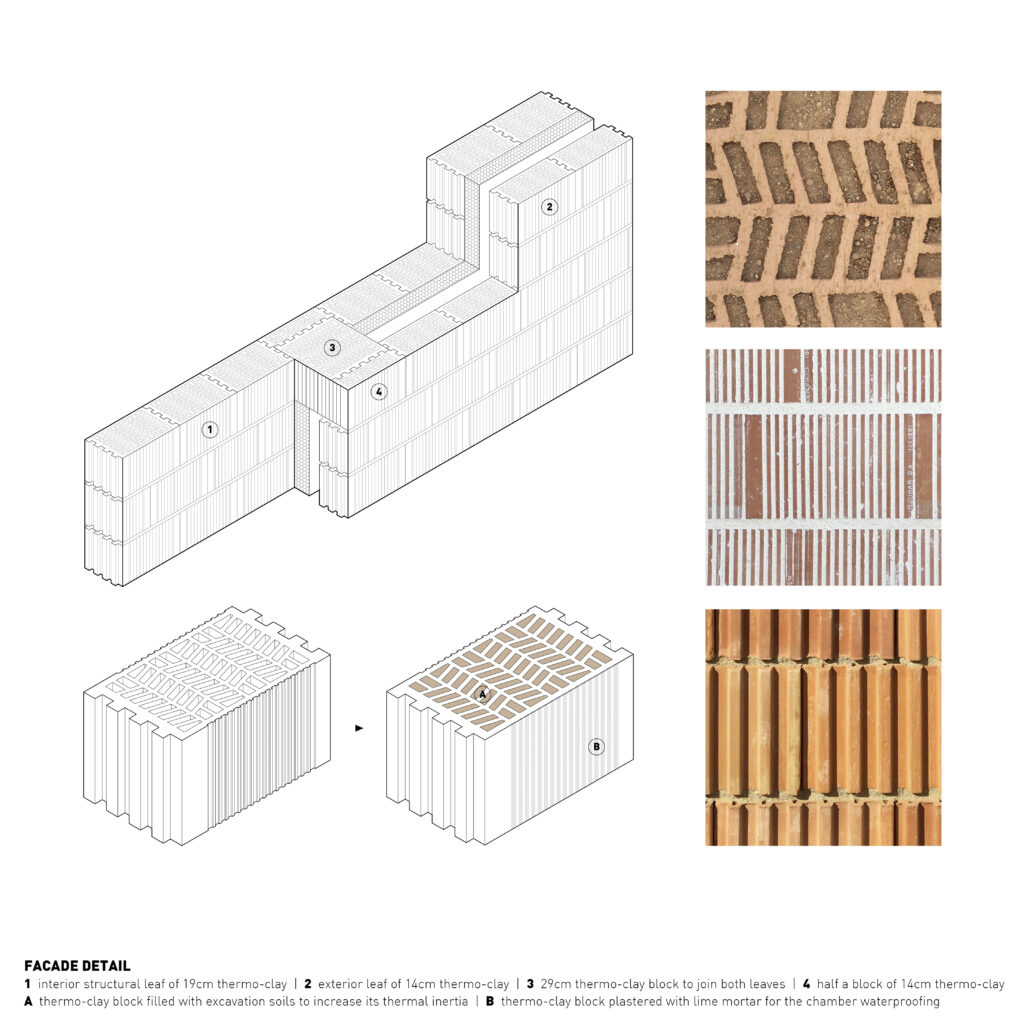
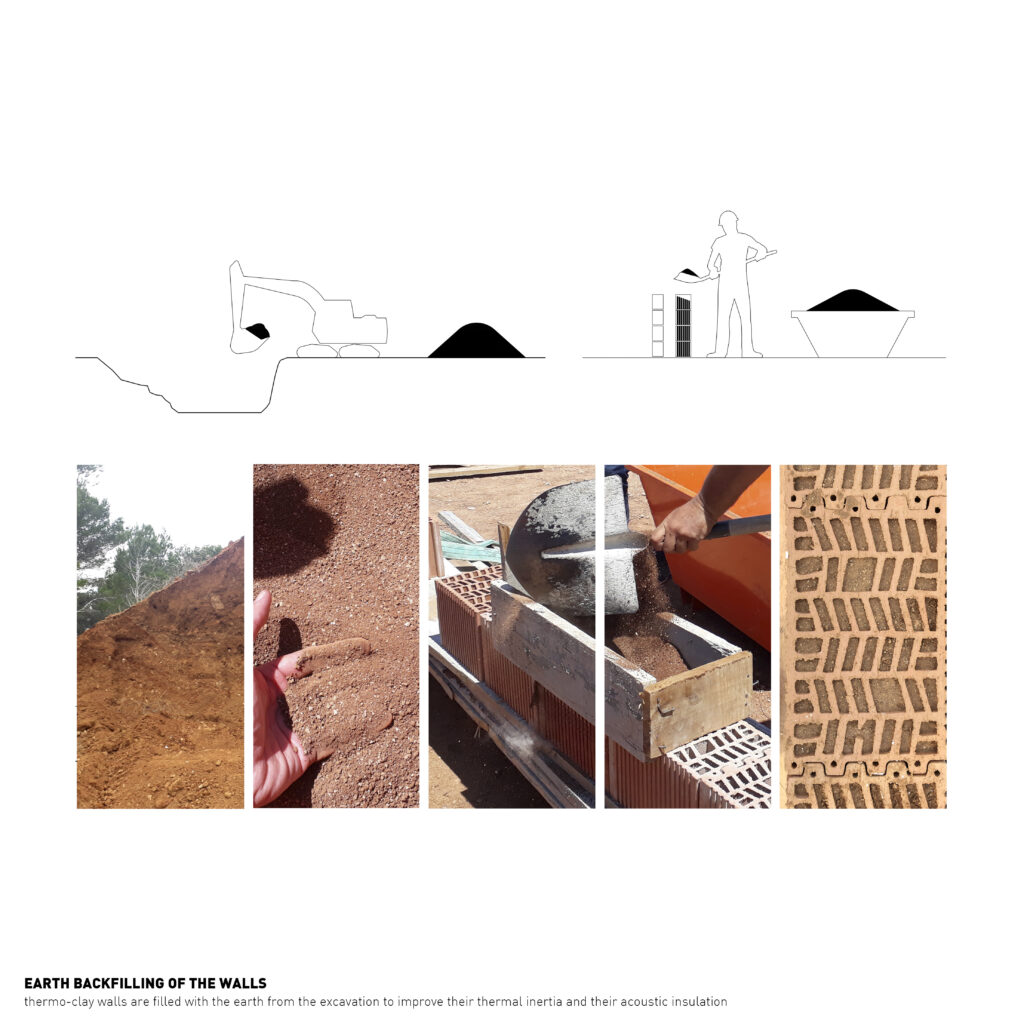
The courtyards also play a central role in the building’s environmental performance. Glazed enclosures and operable solar protections transform them into bioclimatic atriums that accumulate heat in winter and provide shaded, ventilated spaces in summer. Combined with high-thermal-inertia thermo-clay walls filled with earth from the excavation, these passive strategies reduce non-renewable primary energy consumption to 10.7 kWh/m² per year. They also enable comfortable indoor temperature and humidity conditions without a centralized heating system, reducing energy demand and household bills.
Vegetation across the courtyards, landscaped areas, roofs, and planters helps mitigate the urban heat island effect. In response to Ibiza’s arid climate, drought-tolerant species are combined with rainwater harvesting. Water collected from the roof is stored in an underground cistern in front of the building and reused for irrigation.
Materials and Construction
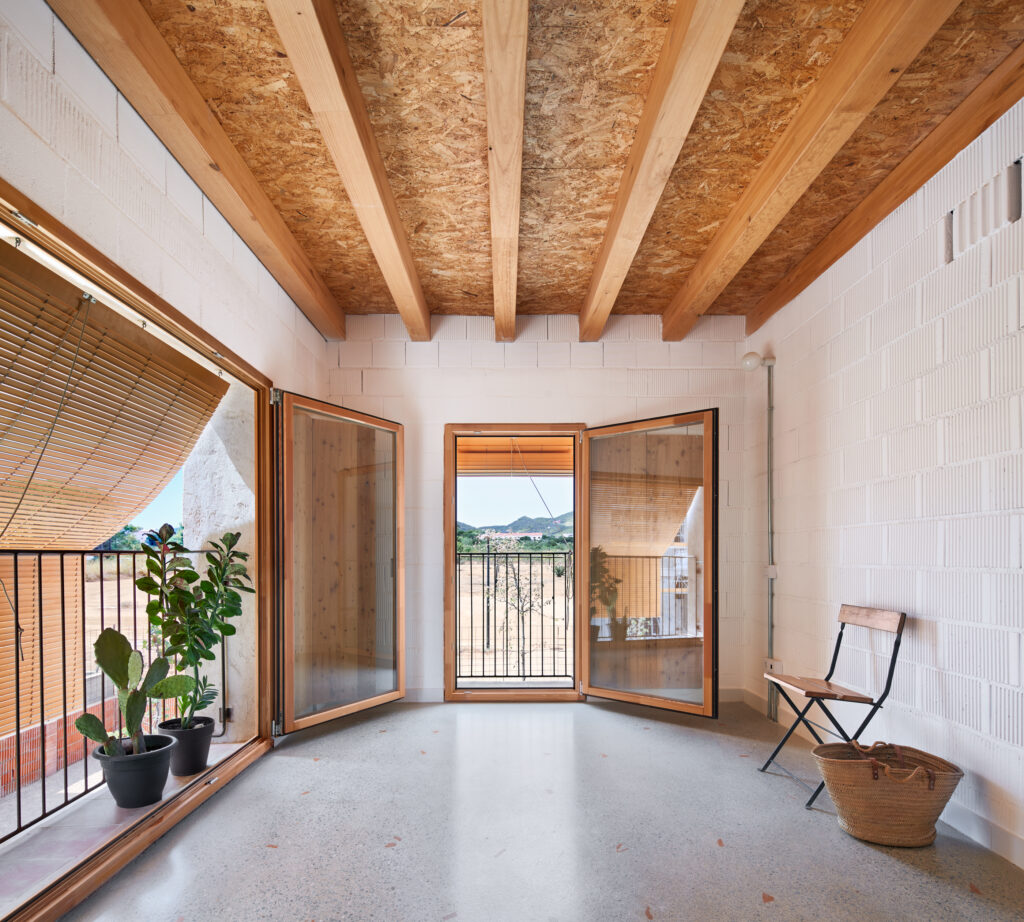
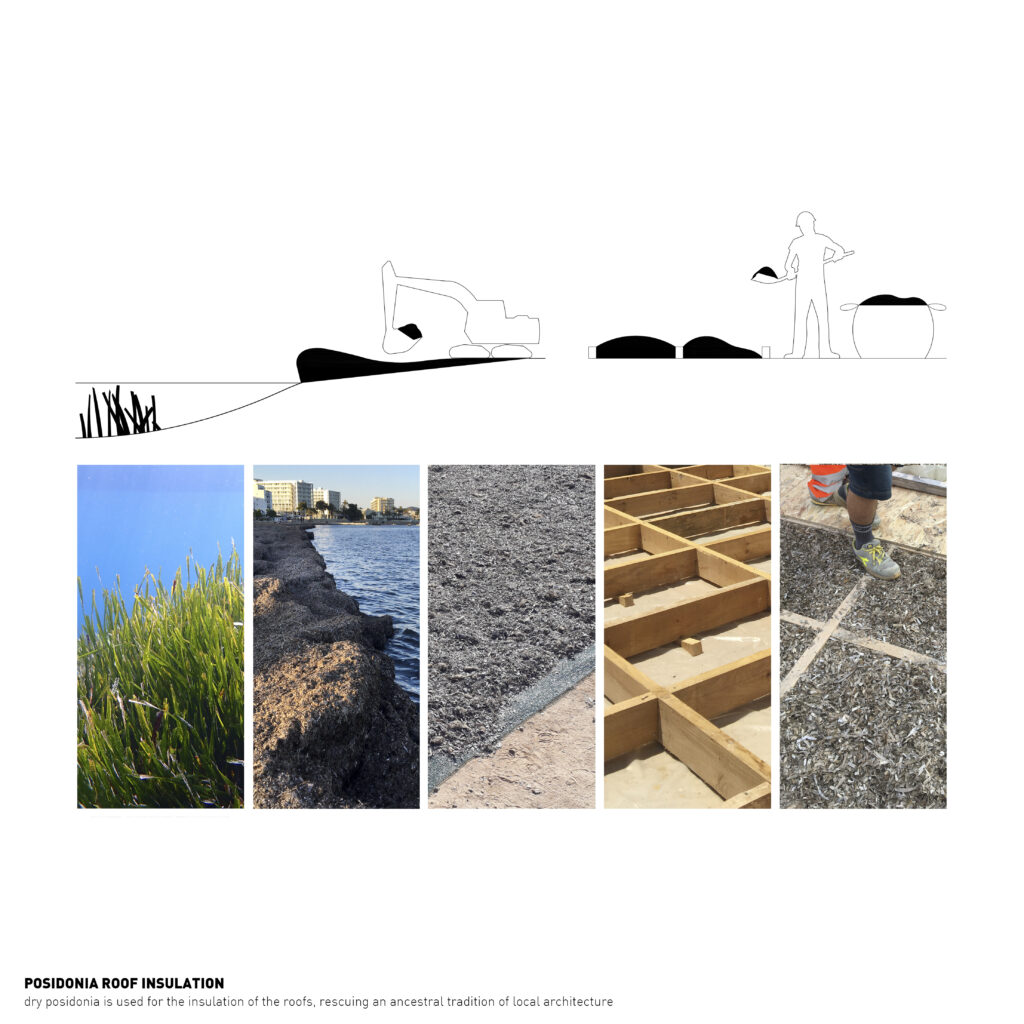
The project’s environmental approach extends to the materials used in construction. Reported embodied carbon emissions amount to 438.91 kgCO₂/m², approximately 30 percent below those associated with conventional construction methods. The strategy combines ceramics fired using biomass, timber for beams, carpentry, and atrium structures, and recycled cotton for façade insulation.
For the roof, the project uses dried Posidonia oceanica, reviving an ancestral practice of local architecture. Its inclusion connects contemporary environmental objectives with the island’s building traditions, while the use of excavated earth in the walls further integrates construction materials into the project’s specific context.
Domestic Life in a Touristified Territory
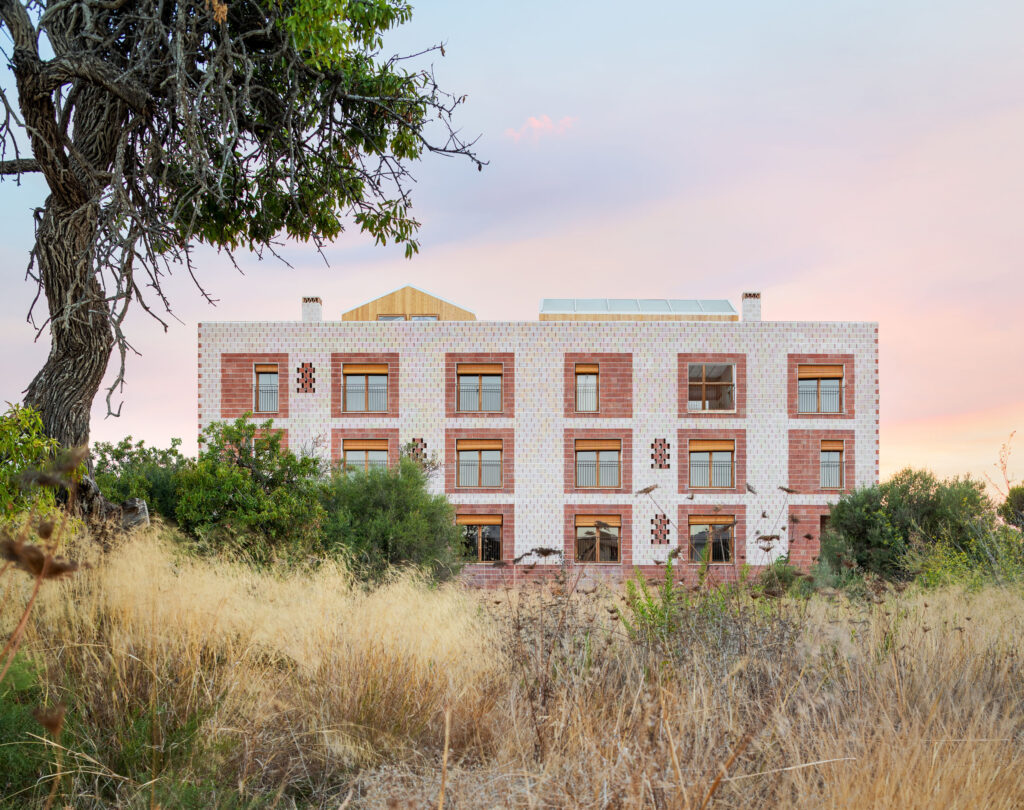
The project’s significance lies in how these spatial and environmental strategies converge around the question of dwelling. In a touristified urban environment, the courtyards establish an inward-facing domestic realm while regulating the building’s climate and extending the usable space of each home. By adapting mediterranean architectural precedents to contemporary public housing, 08014 arquitectura makes the conditions of permanent residence central to the project, linking the quality of domestic life to the environmental performance of the building.