


The family house has long been a phenomenon of polarized society. It is often condemned because of the relatively large amount of land it consumes and the amount of traffic it requires.
Climate change also calls into question the sustainability of the family home. However, although repeatedly pronounced dead, the family home, along with a shadow of the paradise garden, remains a lifelong dream for most people. Without family homes, the history of architecture would shrink to a very thin book. Pandemics and wars also testify to the vitality of the home. Good housing proved to be the savior of the working world in the last pandemic. The term “family” could also be understood much more broadly today: Neighborhoods, co-living, and working groups have taken on much of the characteristics of a close-knit, jointly socialized group.
The three presented projects reflect three different rhythms of life for three families, between their privacy and the public. Three different ambiances, open and closed spaces, offer various uses lived through self-determination.
A palimpsest of situations transcribed in space.
II – The Nomad in Us
Architecture uses ideals to create permanence. It is about reliable places that promote creative potential with their unshakable tranquility. In secret, this creative eureka moment waits for an opportunity. While the built environment stands still, everything else is in motion.
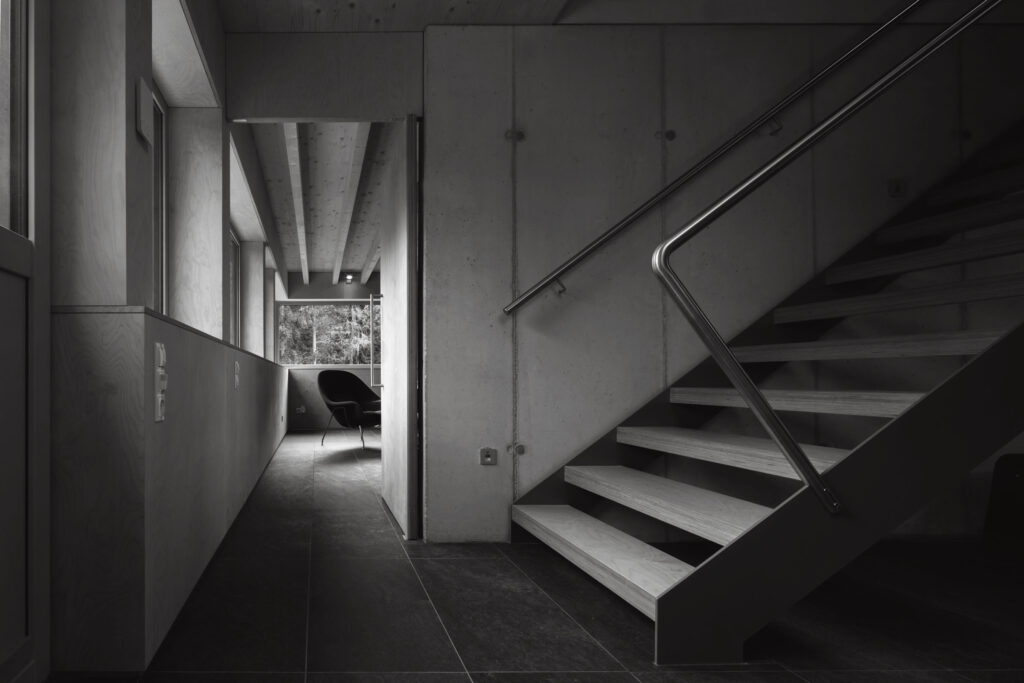
The interplay of day and night, the influences of the weather, the demands of the seasons, and the challenges of the global climate all affect the building. However, even those in the building, looking out and seeking a connection between themselves and their surroundings, remain in motion.
For example, those who think nothing happens during sleep underestimate metabolism and the fabulous world of REM phases.
The thought that wants to come next, what does it do to us? Where and to what does it tempt us? What must the space be like to allow and support this flexibility?
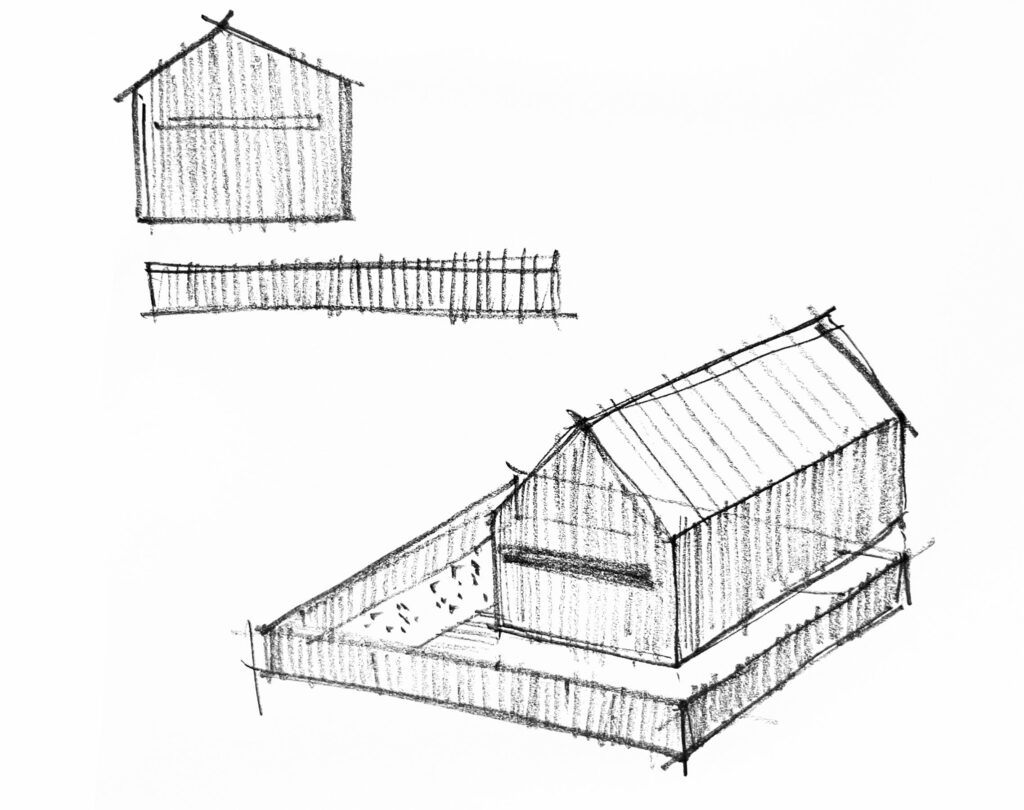
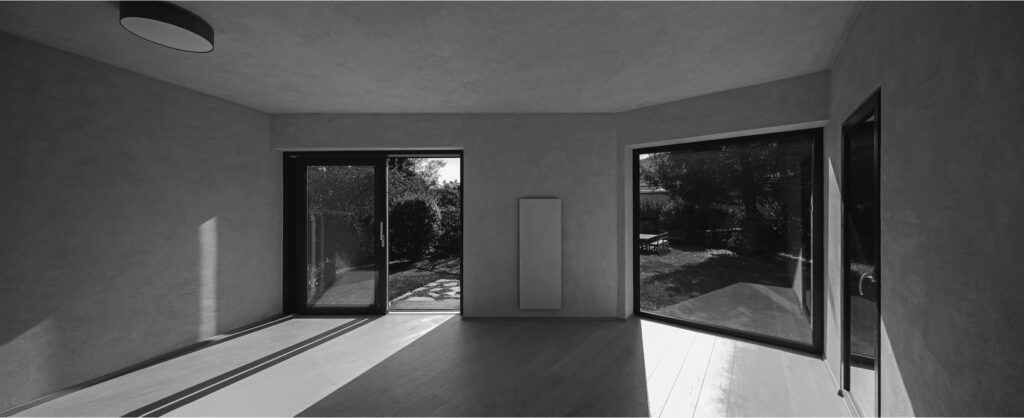
The House of Possibilities needs a significant size to facilitate this elastic use. The kitchen is a place of culinary diversity, but not only. Sometimes, it is a place for conversation, reading, note-taking, or pausing to warm oneself over tea. Alternatively, it could be the view of the garden that stuns. It can be both familiar and surprising. Sometimes, the view is surrounded by music, and the sounds continue in what is seen. Just as the glimpses go out into the garden, they return to the viewers and stay with them wherever they go. Consciousness is filled with incessant noise, and the rooms dim or amplify it.
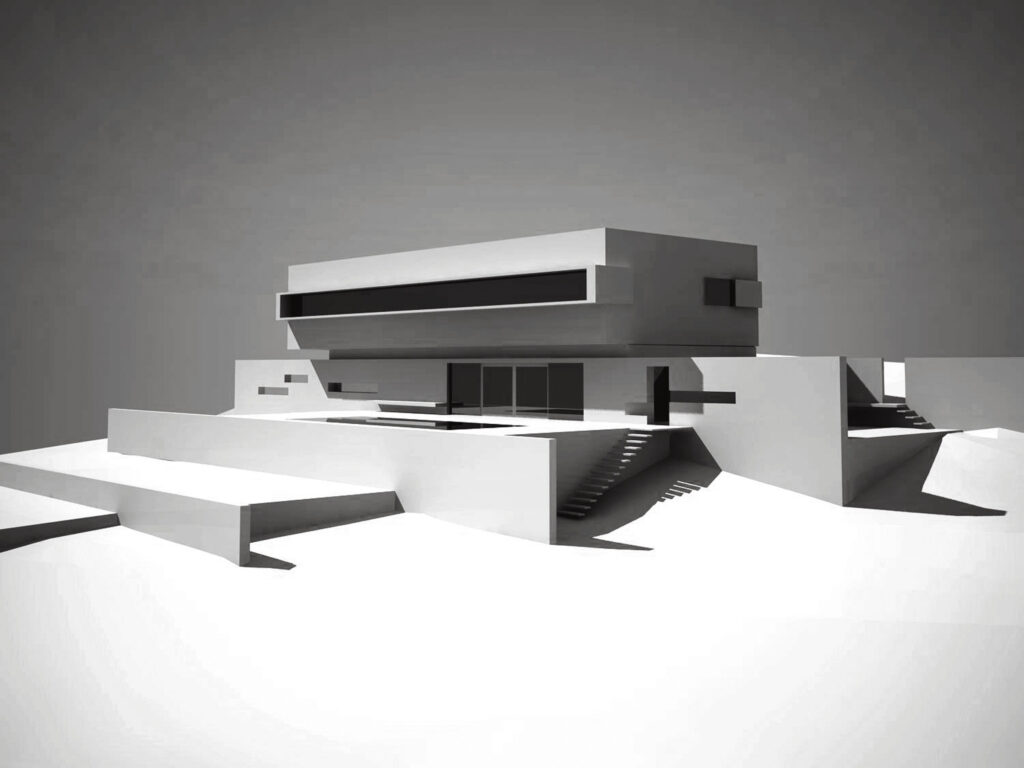
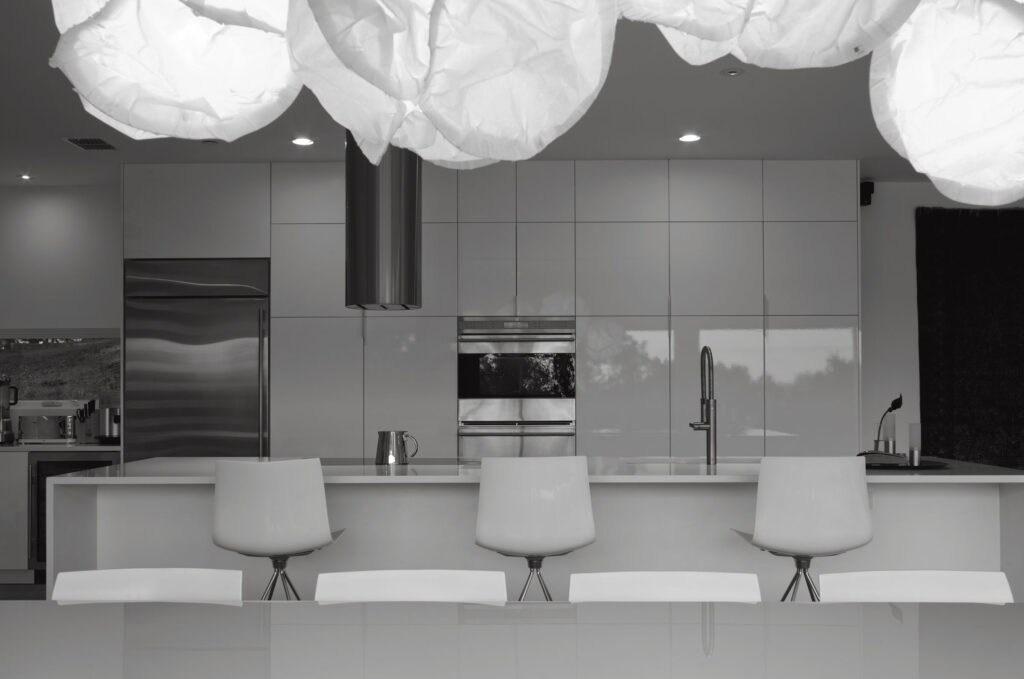
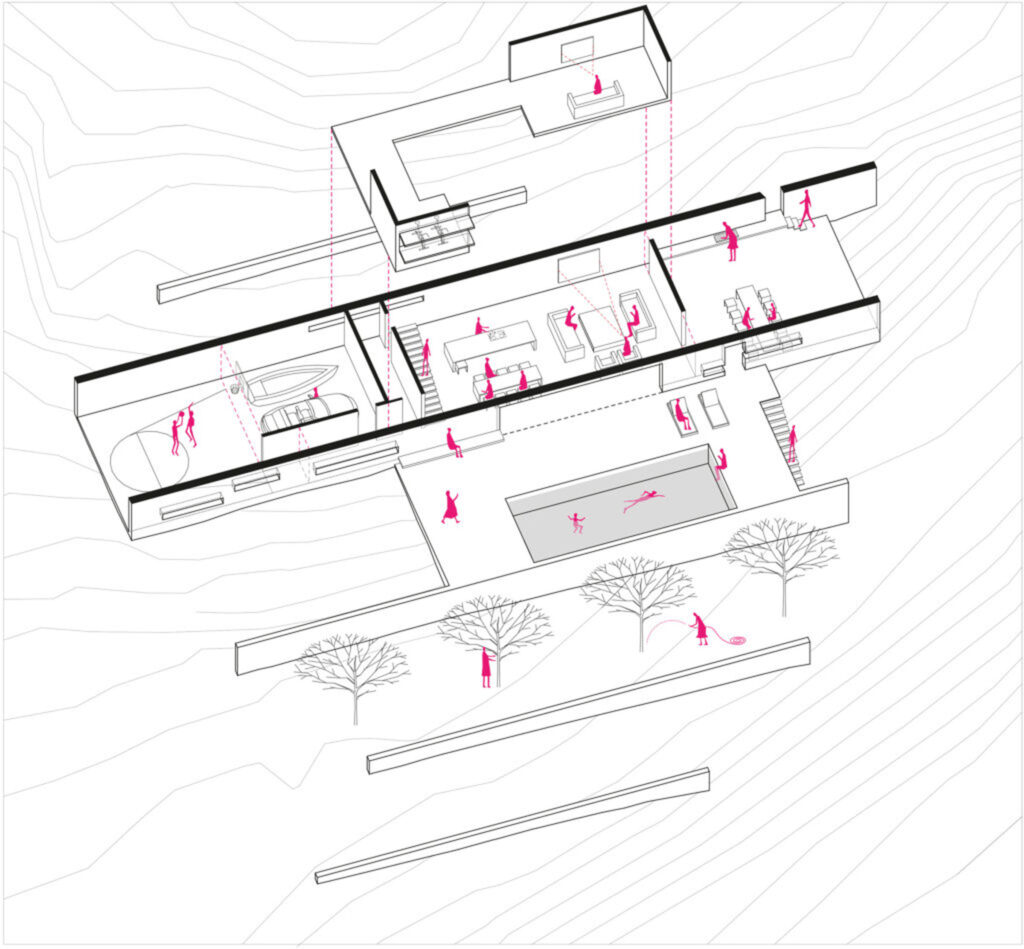
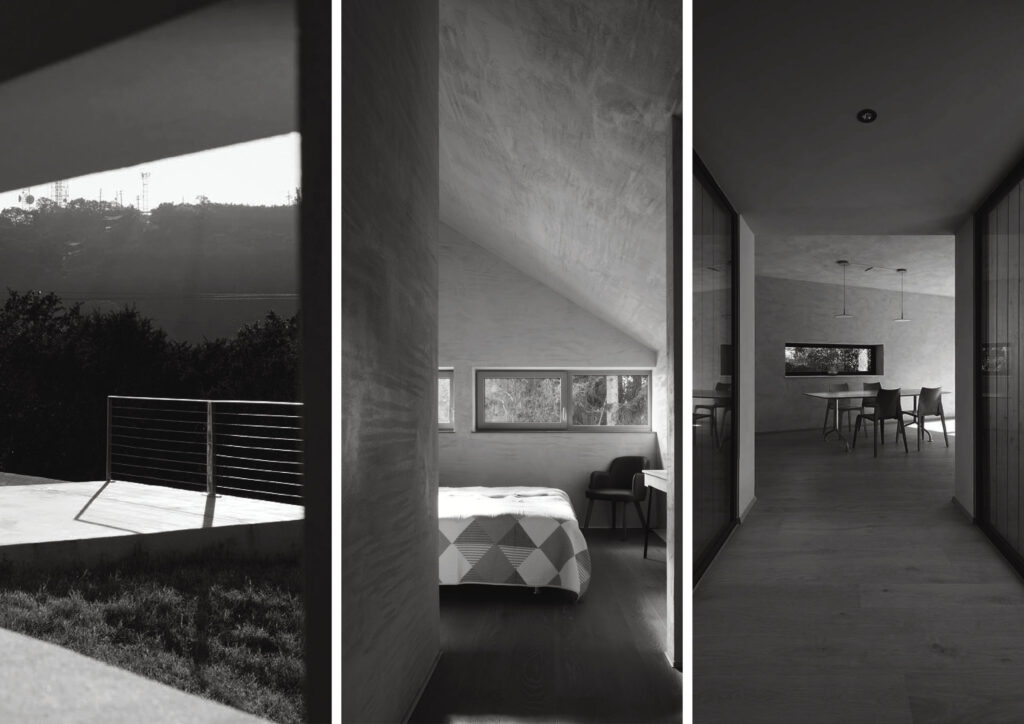
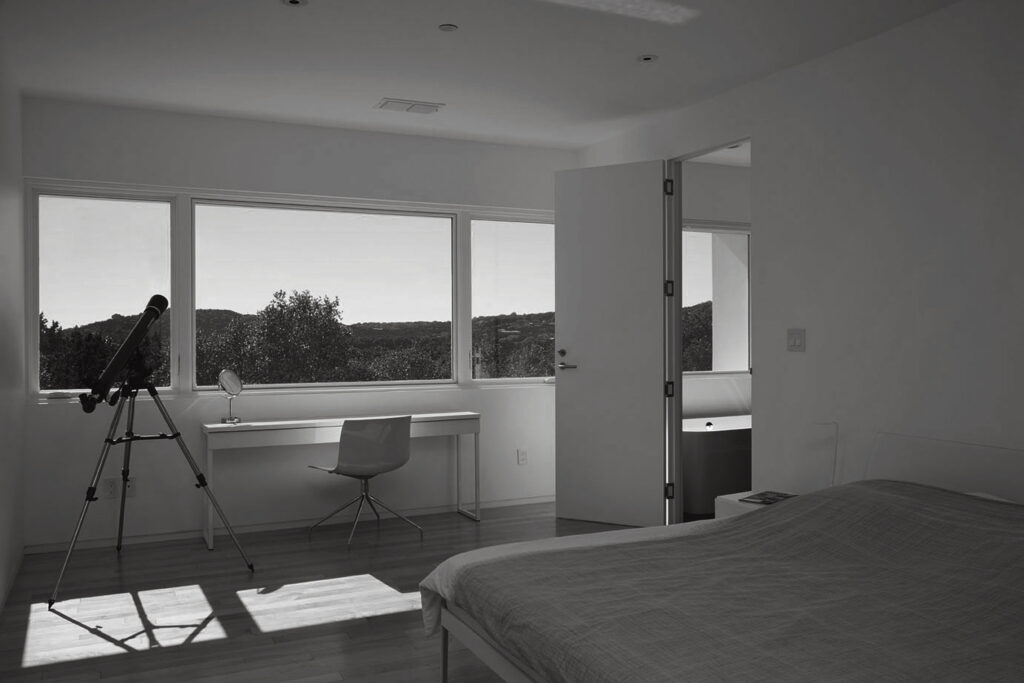
“Room with a View” is the insight that underlies all three objects. At all times, guests and residents find plenty of visual space. The Green House in Austin (USA) features continuous glazing on the upper floor. The discreet cantilever prevents a burdensome influx of heat and creates the conditions for comfortable brightness inside. It is as if a pair of glasses had been placed on the building, thus visualizing how strongly the house tempts one to look out. At the same time, the generous incidence of light reveals the landscape in which the building is anchored.
This architecture supports contrasting and variable views of nature in several ways.
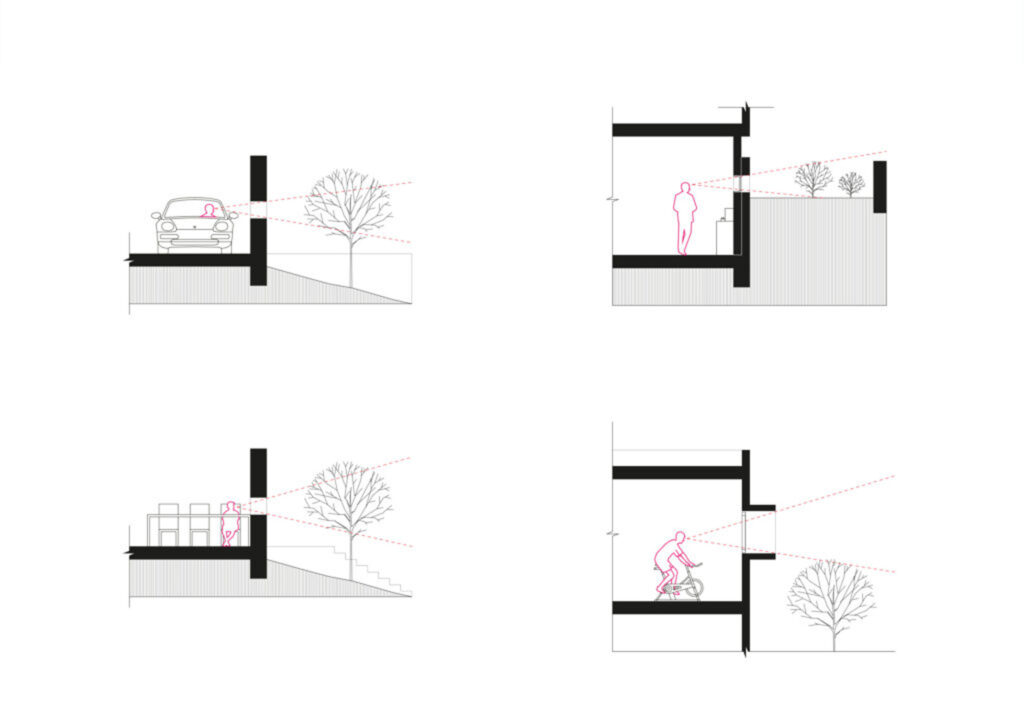
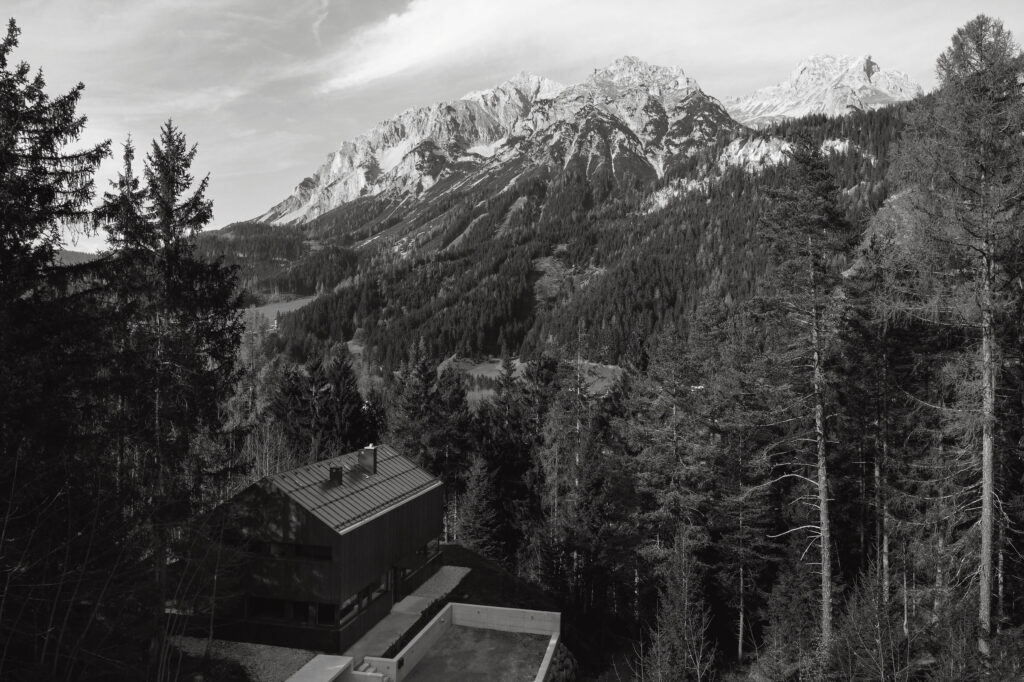
In the case “At home in the Alps” in Ramsau (AUT), the surrounding view on the first floor is directed toward the immediate presence of the forest and the mountains.
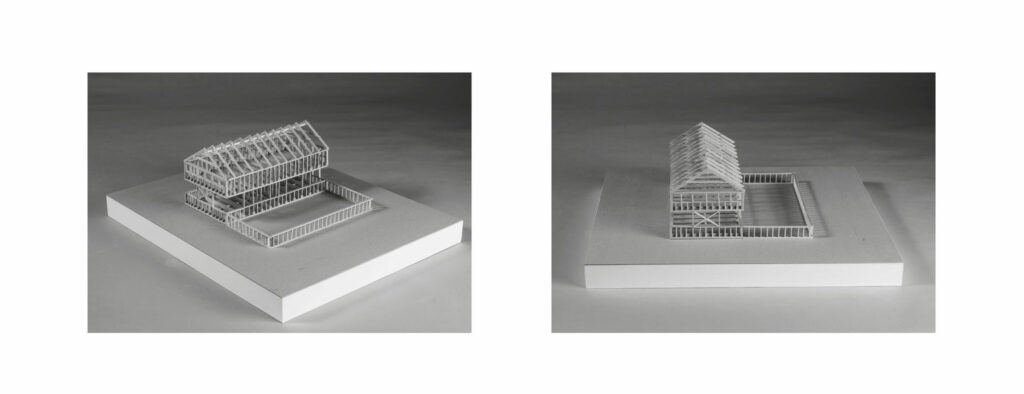
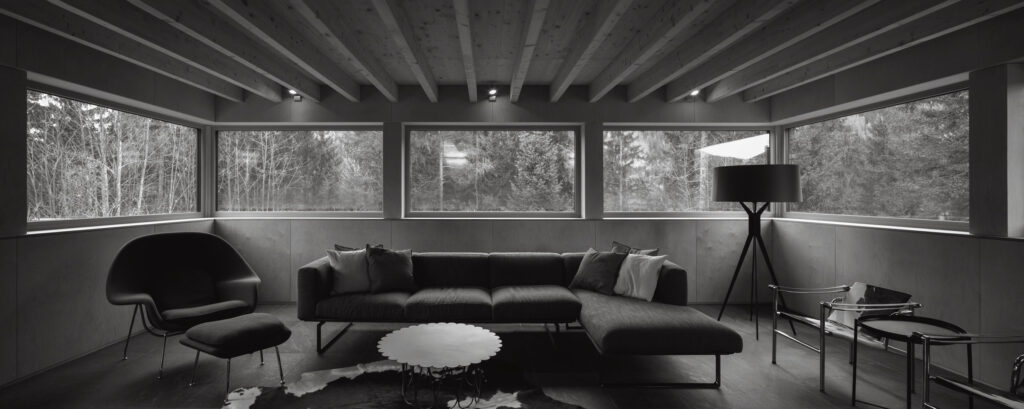
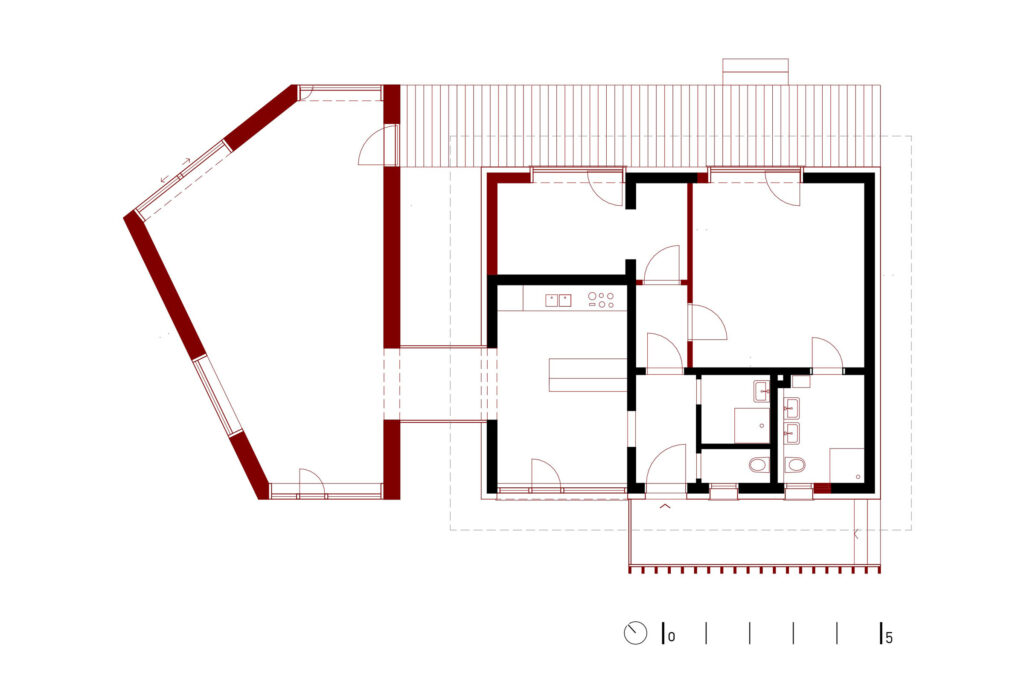
With the conversion of the Grill-Reichenauer house in the Viennese Alps (AUT), the extension in the form of a pentagon reorganizes the garden area. Through the corresponding panoramas and variable architectures of light, which emerge from the new concept, the view is directed toward five garden sections. These five gardens allow for very different relationships and play. Thanks to the nomad in us, a variety of perspectives can be achieved here with just a few steps. Through the glazed passageway that connects the existing garden with the annex, one sees the inner garden and Mt. Schneeberg towering on the horizon.