



Since antiquity, we have been domesticated to accept the idea of the house as the private sphere and thus independent from the public realm, which is the sphere of state governance. This dualism intensified in modernity, when the distinction of the “private” and the “public” transformed each into powerful administrative categories. Within neoliberalism —or free market capitalism— during the second half of the twentieth century, the private reached its apotheosis as an independent mechanism of housing provision. By claiming the neoliberal idea of a social order generated by the market [1], it has evolved into an institutional process of subsuming social and spatial relations under its own governance [2]: privatization.
At the same time, this process has been identified as being at the core of the neoliberal reforms that led to the 2008 global mortgage crisis, making it impossible to address the issue of housing or the housing crisis without interrogating this concept. The conceptualization of the private as the counterpart of the public fails to acknowledge that the template of this opposition has always been the state. Further, the neoliberal promotion of the market as a self-regulating provider of private goods, such as housing, fails to acknowledge that the risks of this process remain the responsibility of the state, which provides the regulatory framework.
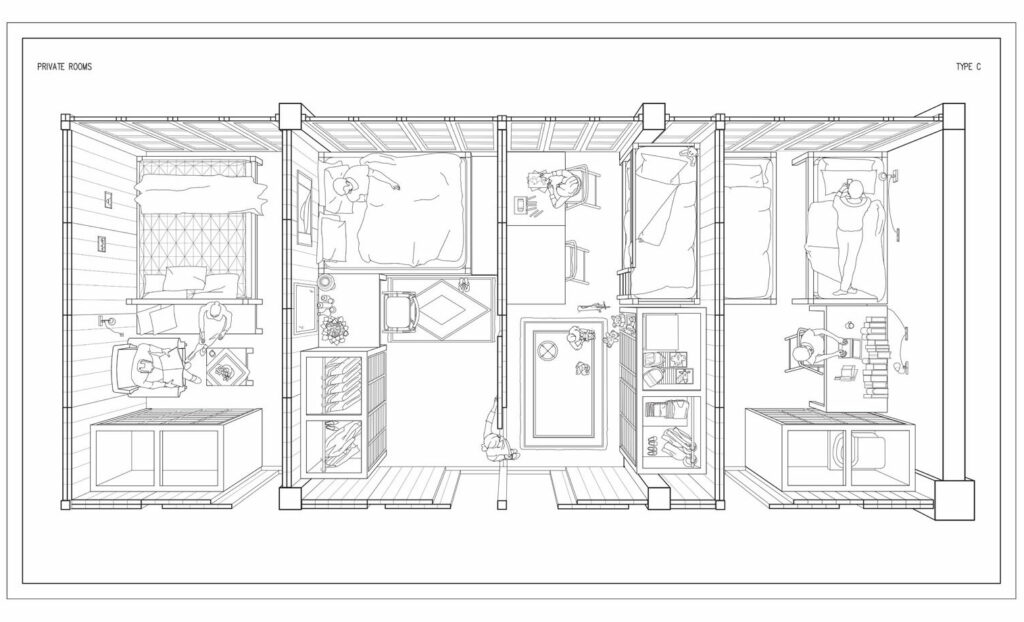
The research objective is to demonstrate how the private, as a concept for the control of domesticity, has been at the service of the orderly function of the state, and therefore, has hardly existed as such in the neoliberal era. What is at stake with privatization as the key process of neoliberalism is a carefully designed pedagogy of domestic privacy that administers social relations and sets urban housing at the epicenter of social and economic antagonism. The foundation of this dissertation is an attempt to disentangle privacy, as a physical experience, from the social, economic and spatial construct of the private realm. The book begins by diving deeper into the phenomenology of the private as a fundamental concept for delineating both an institutional and spatial boundary between the home and the city.
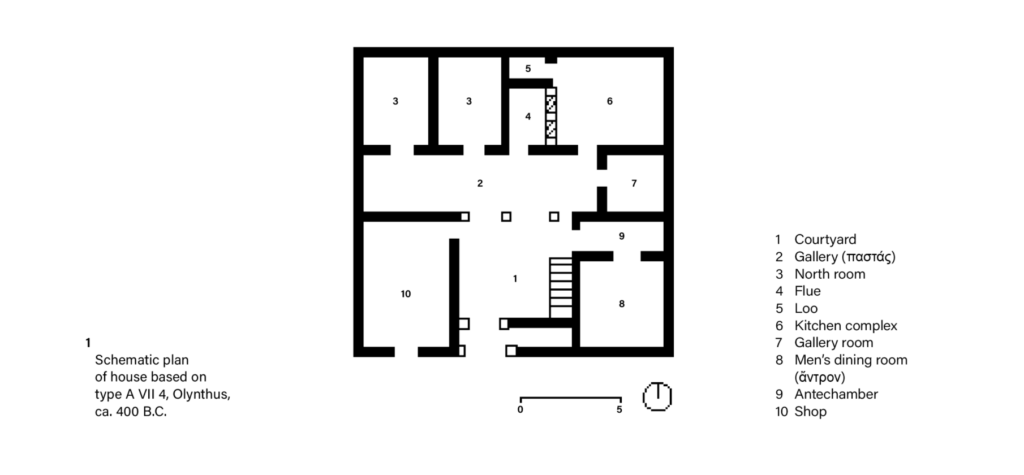
Since antiquity, the private has been spatially determined by the domestic realm, governed by private property and administered by the family, while the public has been identified with the urban realm and the political governance administered by the state [3]. In ancient thought, the private was defined as the deprivation of any public —political or military—status [4]. However, Arendt, in her reading of Aristotle, positions privacy among the various biological needs that are to be satisfied in the private realm in order for political freedom to be acquired in the public realm. Arendt portrays the private as a prerequisite for sound citizenship based on Aristotle’s idea of the household community as the primary unit constituting the broader community of the city [5]. Engels further elucidates the instrumentality of private property in the division of labor that served the administration of the state since its origin [6]. Household administration in the Middle Ages is classified within “late antiquity” [7] based on the two main characteristics —one social and one economic— that differentiate it from the modern conception of the “home.” The notion of greatness permeating the late-medieval royal household —which still required a degree of public spectacle in order to ritualize the expression of hierarchies within the extended family [8]— was far from the “intimate sphere” established in the modern conjugal (or nuclear) family [9]. Additionally, the medieval household remained the primary place of production, a quality lost during the early modern capitalist revolution, which increasingly separated the workplace from the “private” household [10]. However, this period became the incubator for a social class that would “create a new urban civilization” through a novel idea of citizenship and freedom linked to domestic comfort: the bourgeois [11].

The formulation of the private as a distinct category marked a defining shift in the transition from antiquity to modernity [12]. The abstraction involved in the modern separation of the private from the public established the rhetorical alienation of their respective spheres: domesticity and state governance. The signification of the private “as such” became subject to the values of the Enlightenment and modern capitalism, meaning “belonging to oneself (not to the state), not shared, individual.” [13] This created a new cultural and social role for privacy as the desire and the privilege to isolate, to withdraw from the fuss of the city [14]. The nature of this transformation is a subject of explicit enquiry within the epistemological framework of the liberal philosophy, consolidated between the seventeenth and nineteenth centuries, advocating for the restraint of governmental intervention in the economic regulation of social life. According to Arendt and Habermas, the establishment of the liberal regime triggered a radical reconceptualization of freedom, removing it from the public, as the place of participation in state governance, and instead locating in the private, as an independent sphere [15]. By the nineteenth century, the demarcation of private space was bound to the idea of the domestic interior [16], which reinforced the role of the outer shell of the house as as a mediator between two clashing realms. It also encouraged the rise of the urban apartment type, an even further subdivision into interiors for isolation [17]. Liberalism equated individual autonomy —the right to privacy— with economic freedom —the right to property,— attributed to the social status of the bourgeois subject as the “private” individual. What is not acknowledged, however, is that the reduction of the private into an economic and social title encouraging individualism and property was part of the “rationalization” process, which lay at the core of the organization of the liberal state [18].
The economic usage of the private was amplified under the neoliberal mantra, which allowed the entire body of social relations to be completely regulated by market imperatives. What marks neoliberalism as a phenomenon beyond liberalism in the second half of the twentieth century, is the professionalism surrounding the commodification of all aspects of life in the market economy, a process which instrumentalized the private in order to build a new ideal of domesticity. Neoliberalism demonstrated a unique capacity for marketing a narrative of the private as the luxury of a middle class, which was constituted and addressed as the main consumer force to resuscitate post-war urban economies [19]. The promotion of personal freedom in the ability to acquire privacy, as exclusive access to urban space, exemplified the exchange value over the use value of housing (and the city). In the field of urban planning, this dictated an enclosure of urban land that signified the private as an exclusive luxurious interior and the public as a shared undesirable exterior.
In the field of housing design, the distancing from central (state) planning, which suppressed individual identity, was reflected in the neoliberal principles of “differentiation” and “freedom of choice.”[20] The façade became not only a reflection of the different qualities and organizations of private space, but also an invitation to a process of social upgrade. As the symbolic capital of the private and the city grew inextricably linked, processes of alienation, gentrification and displacement accelerated, eventually leading to the inaccessibility of urban housing for a growing part of society.
Thus, neoliberalism created a paradox that political philosopher Massimo de Carolis identified as “the flipside of freedom.”[21] De Carolis argued that this new governmental mechanism was strengthened to the detriment of personal empowerment, since power relations enhanced by the “freedom of choice” were based on preventive control over people’s choices [22]. In promoting the private as a commodity, the types of proposed living arrangements were explicitly designed to reproduce the social and economic hierarchies that bound people to state control. Despite the alleged withdrawal of the state during the neoliberal era, this book will show that instead it has constantly partnered with the market, evidenced by policies that enabled and encouraged the aspirational mandate behind the neoliberal housing project; being private in the heart of the city.
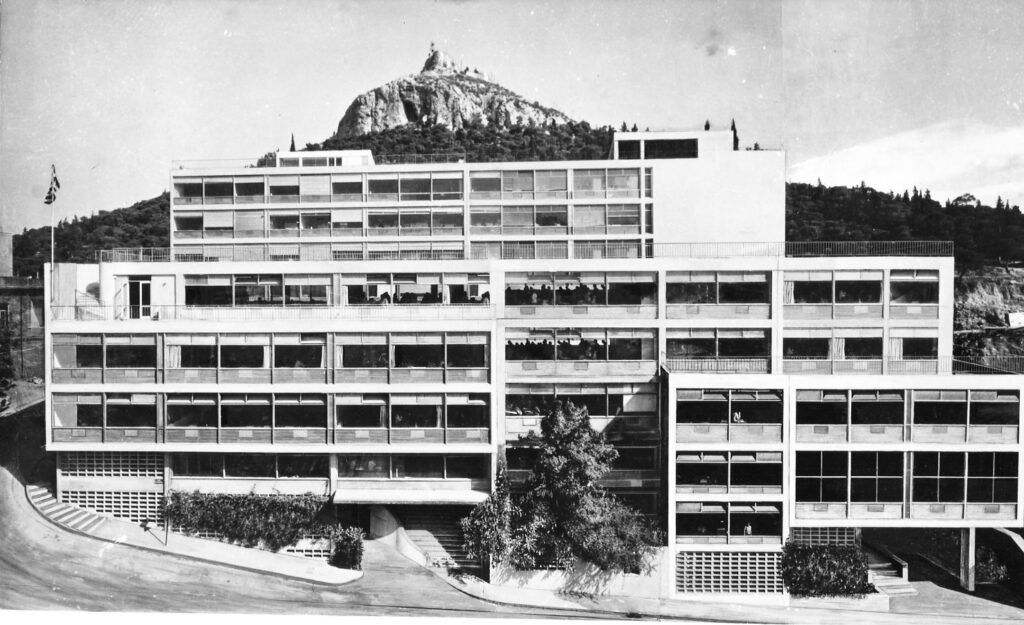
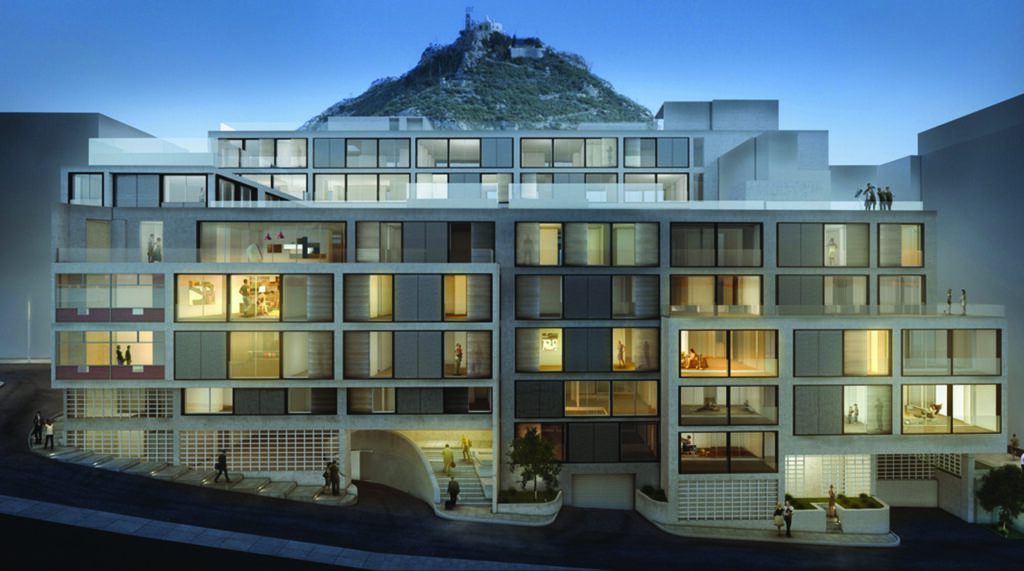
Therefore, I believe the most critical duty of contemporary architecture is to problematize the neoliberal housing crisis that affects European capital cities as an institutional and spatial issue rather than merely an economic one. In the 1970s, a period identified with the wide introduction of neoliberal governmental policies, Marxist academic Raymond Williams highlighted the private as being among the keywords of everyday life, offering an insightful critique of the ideological shift of society [23]. Considering that the idea of the private as being synonymous with a certain configuration of domesticity has been prevalent for centuries, limited work within the architectural discipline has been dedicated to interrogating how the conceptual category operates once it is translated into living culture. Even scarcer are attempts to unveil and question the ideological structures behind the formation of conceptual categories through architectural tools and methods. Such an undertaking will not only elucidate the instrumentalization of the private, but will also provide a conceptual and design interpretation to dismantle this systemic division of knowledge as a framework of intentionally eliminated alternatives. It is not by chance that the economic vector of the private is asymmetrically developed over any other principle of housing administration under the neoliberal mantra of “no alternative.” Neither that Williams exemplifies the semantic development of the private in a moment when neoliberal housing policies come to be forcefully implemented, denoting the cultural embeddedness of the term “as such” in everyday life. To challenge the premises of this discourse vis-à-vis the failure of the neoliberal ideology is to argue that we have never been private [24].