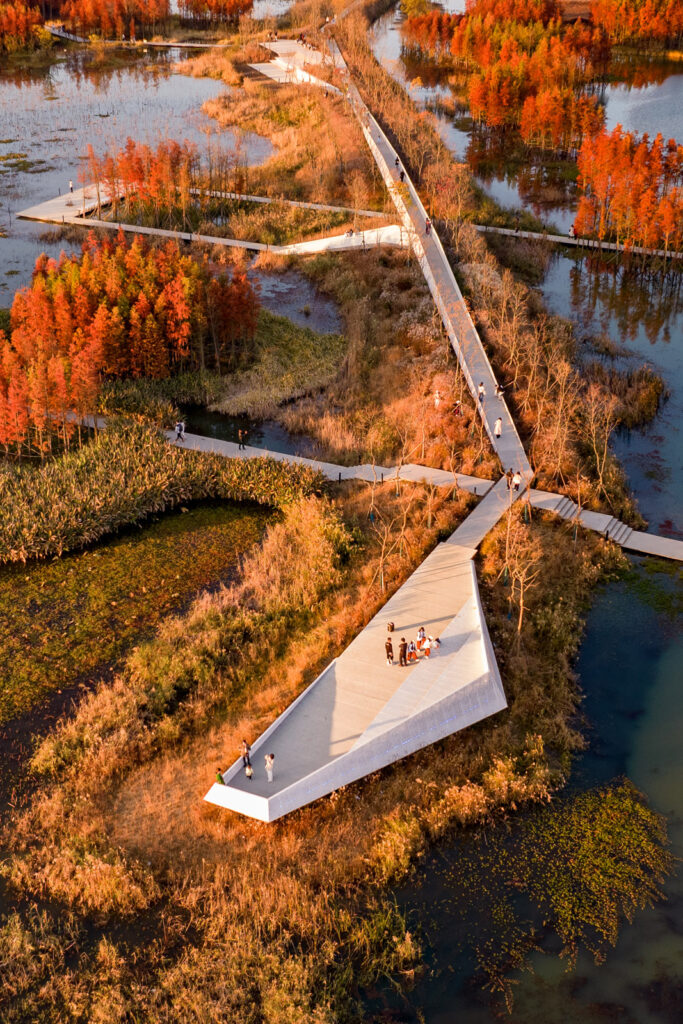



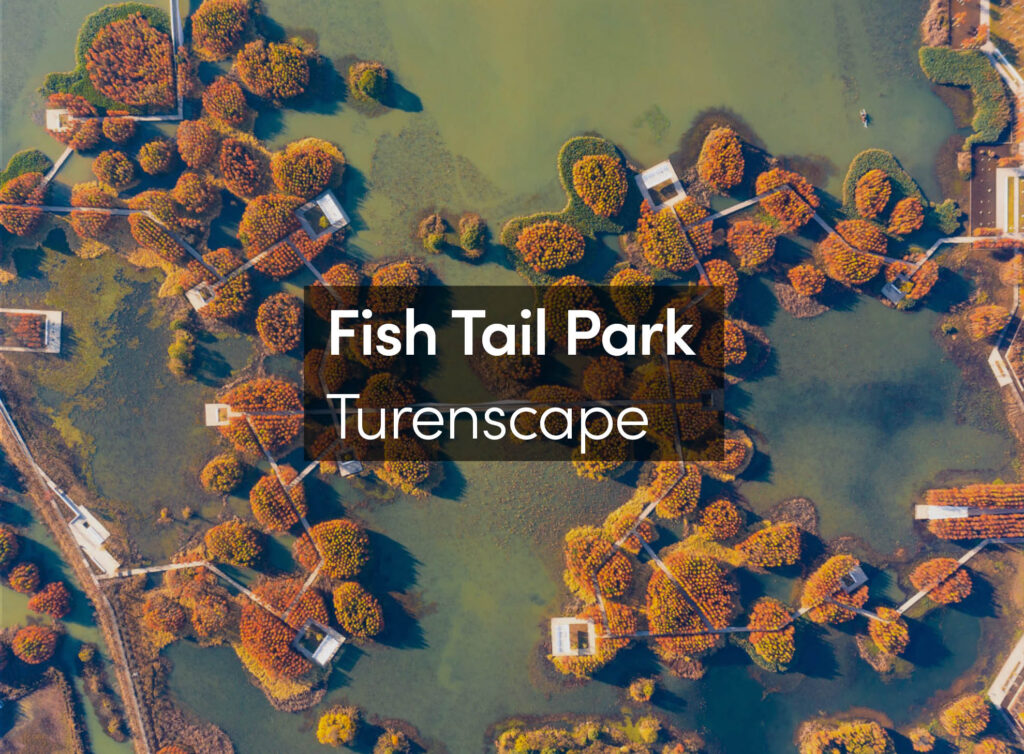
Seen from above, Fish Tail Park resembles an archipelago: dozens of green islands scattered across a large body of water. But this park is more than a visual composition. The parks forest is not always above water. Located in Nanchang, China, the park is designed around a landscape of seasonal inundation, where trees and wetland vegetation tolerate changing water levels. What was once a degraded fish farm and coal-ash disposal site has become has become a floodable urban park centred on a forest that can be submerged seasonally. Turenscapes project Fish Tail Park offers a compelling model for climate-responsive urban landscapes.
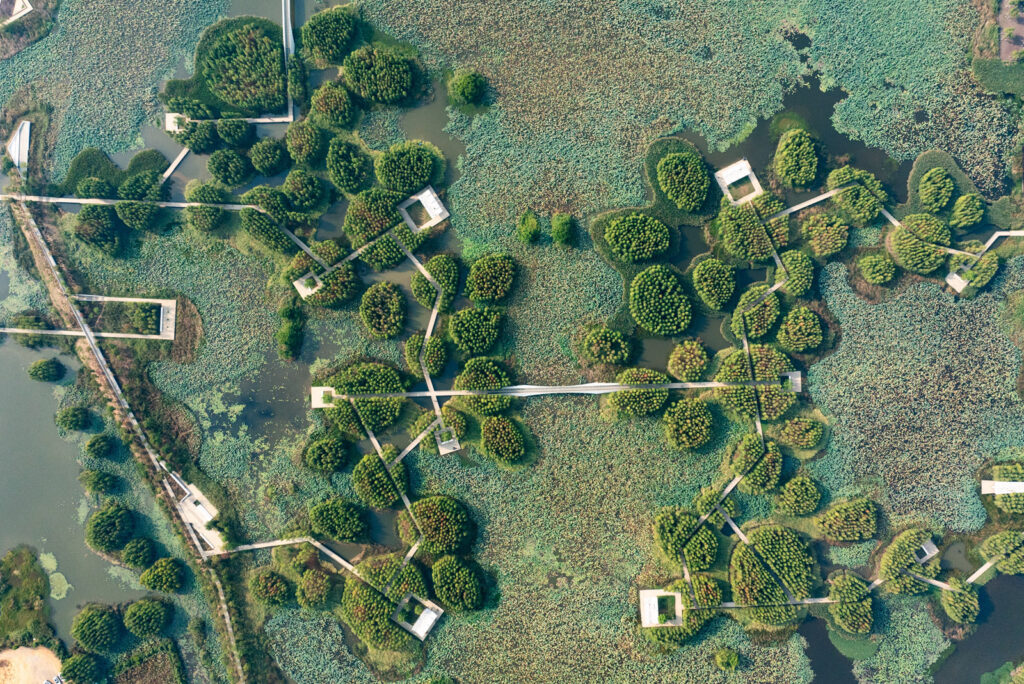
Design Strategy: A Forest on Water
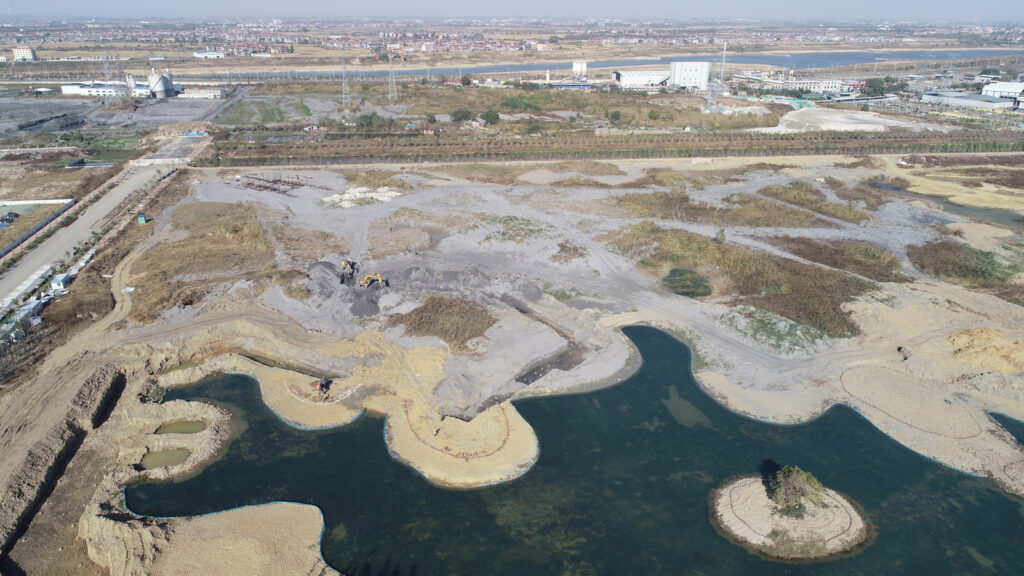
Located in Jiangxi Province, within the Yangtze River floodplain, Nanchang is regularly affected by monsoon rainfall. Urban development has placed further pressure on its waterways, increasing runoff pollution and reducing natural habitats. The former fish farm and coal-ash dumping ground offered an opportunity to rethink how the city could live with water. The aim was to create a floodable urban park that could retain stormwater and restore the site’s ecology, while giving the emerging New District a much-needed public space.
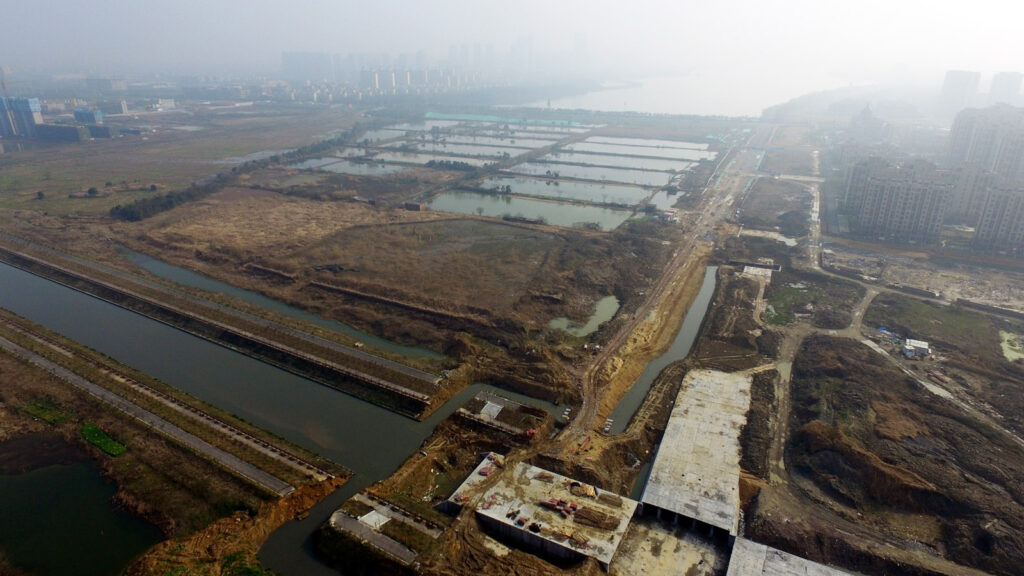
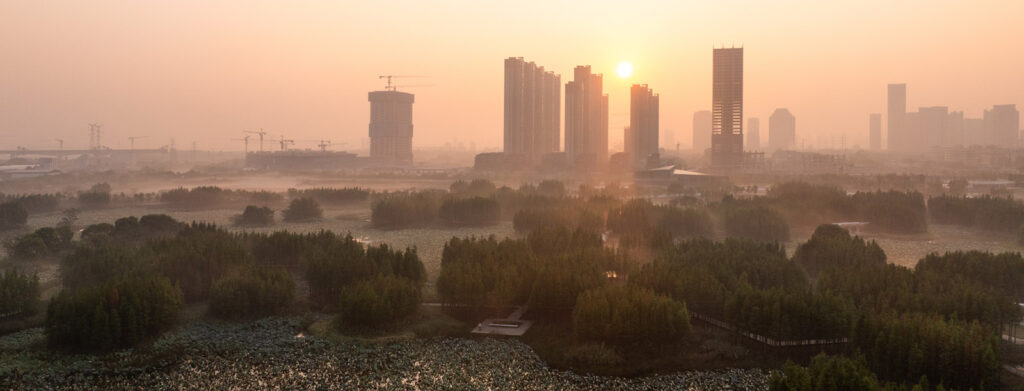
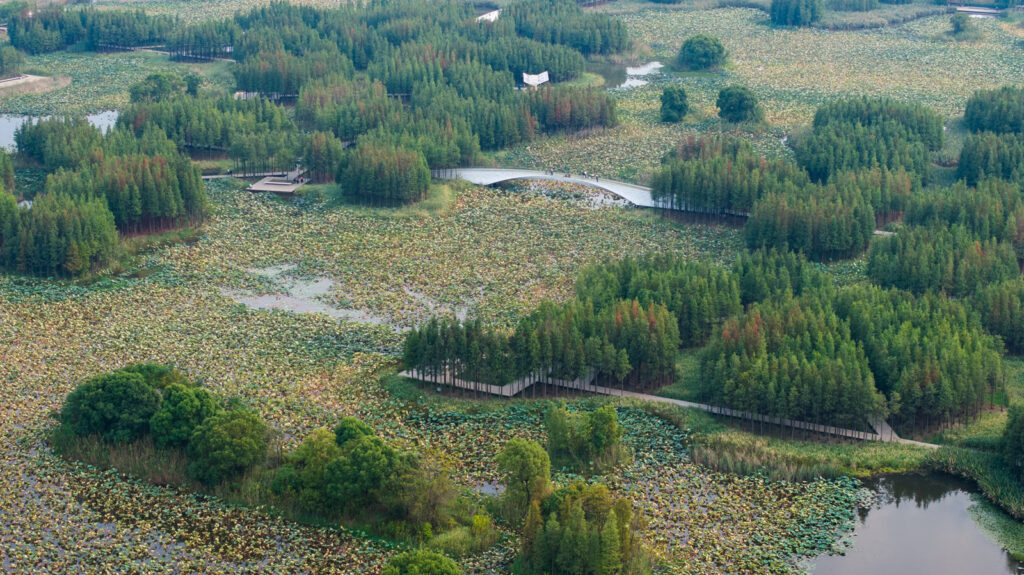
The project began by reshaping the site into a lake dotted with more than 80 islets. Coal ash and pond soil were reused to form the islands, increasing the variety of land and water habitats. With a capacity of one million cubic metres, the lake serves as a stormwater retention basin, holding excess water during heavy rainfall.
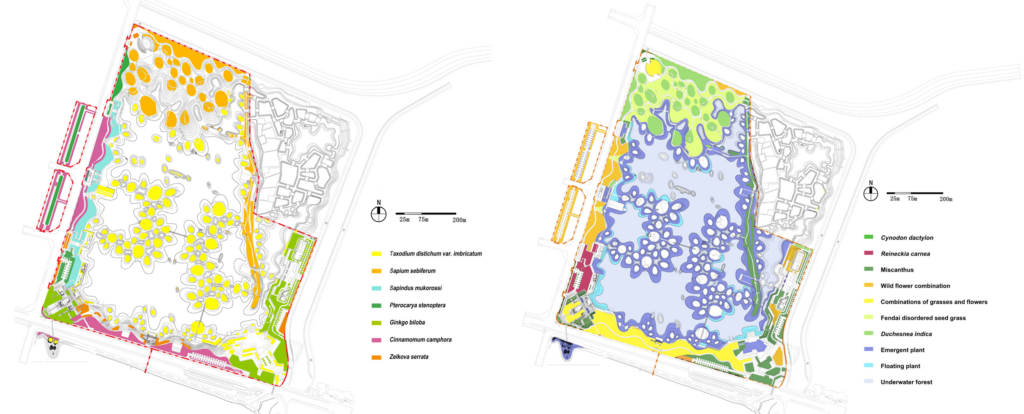
Inspired by the marshlands of nearby Poyang Lake, the central forest is planted with water-tolerant trees such as Taxodium distichum and Metasequoia glyptostroboides, alongside wetland vegetation and lotus plants. See the ful plant list: Plant List of The Fish Tail Ecological Park(4)(1)(1). The forest is designed to be submerged during the monsoon season, making seasonal flooding an integral part of its character.
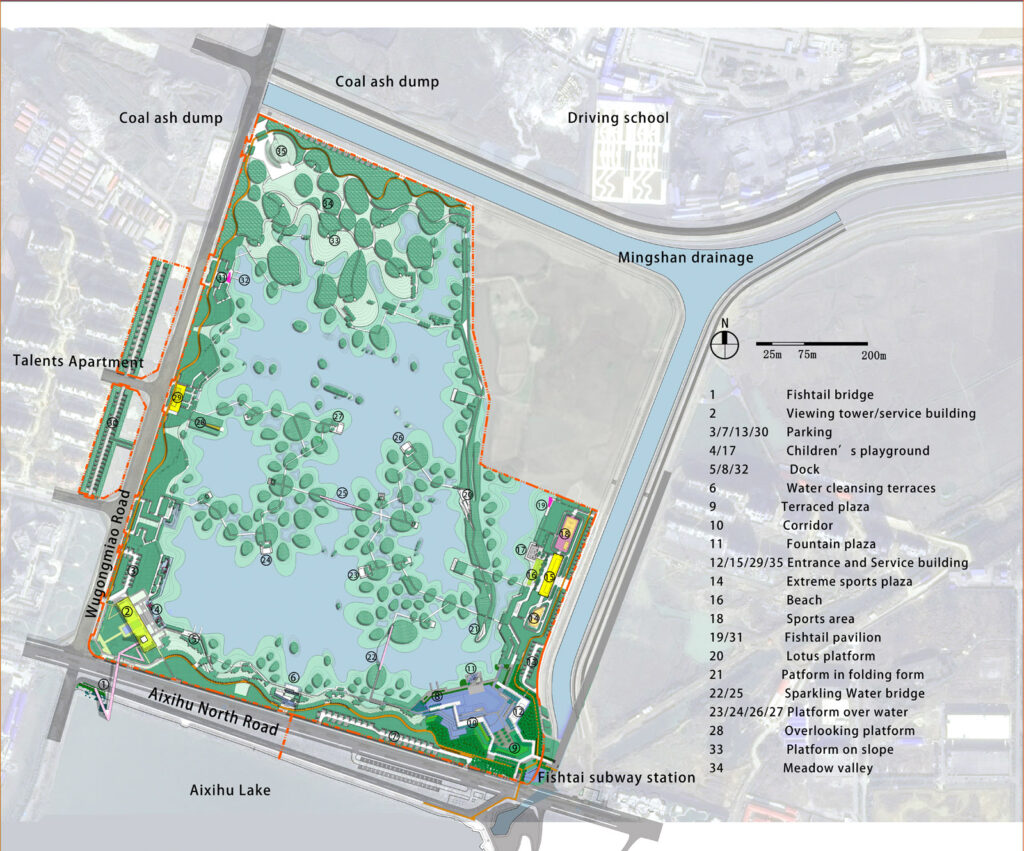
While the central forest accommodates inundation, the peripheral waterfront is designed to accommodate 20-year flood events, while the central boardwalk can be submerged. Terraced wetlands help filter urban runoff, while beaches, fountains, and natural play areas make the waterfront accessible and enjoyable for visitors.
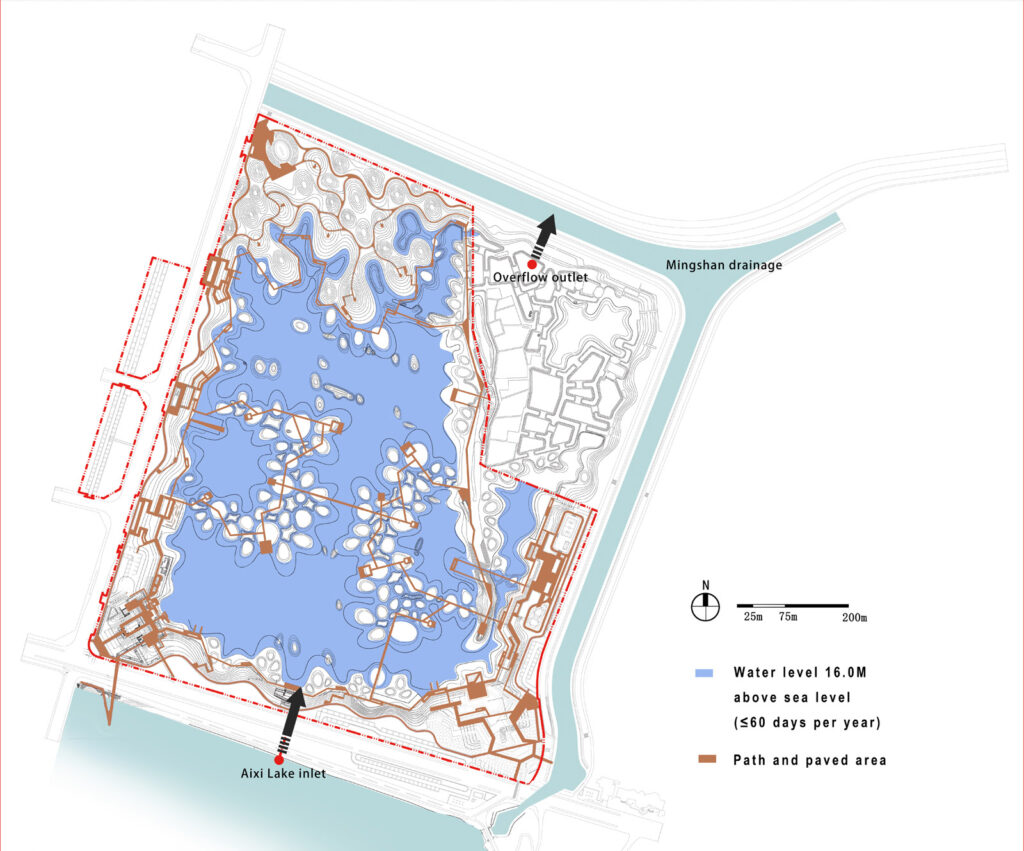
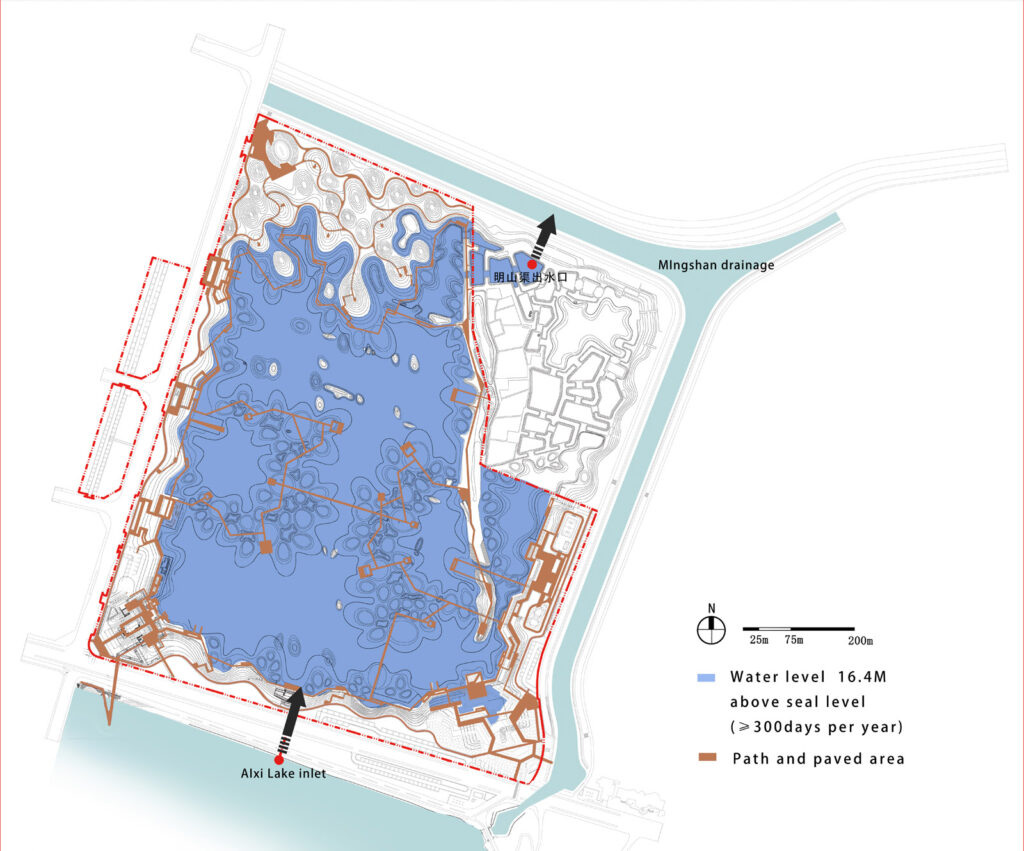
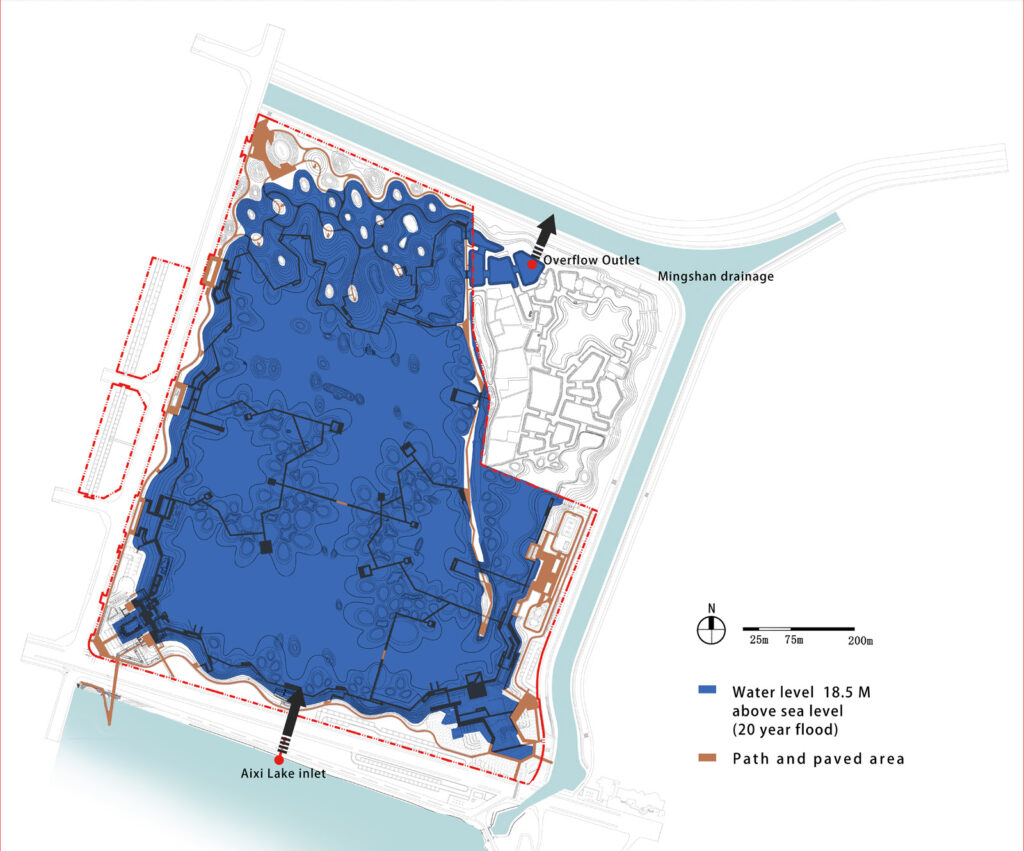
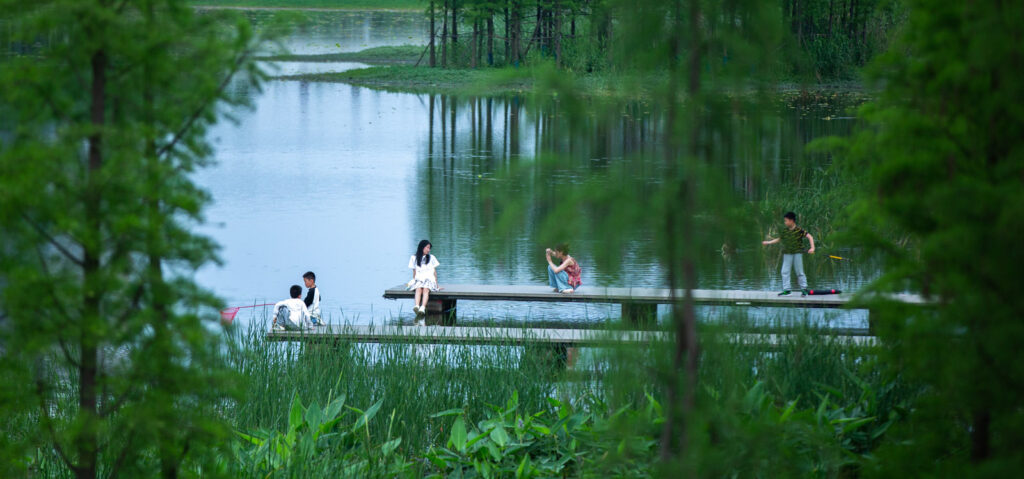
Rather than imposing a formal park layout, the design embraces the untamed character of the wetland. A network of paths and platforms winds between the islets, bringing visitors close to the vegetation and water. The boardwalk is designed to be submerged during floods, allowing the landscape to change with the seasons. Built from prefabricated concrete elements, the boardwalks and platforms are either detached from the ground or float above the water, allowing them to be easily washed clean after flooding.
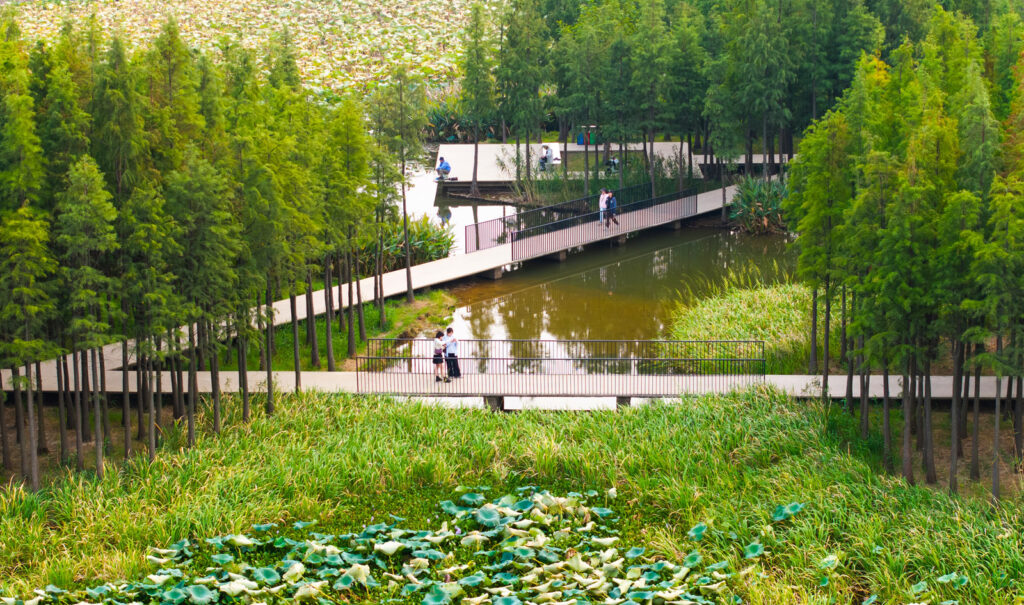
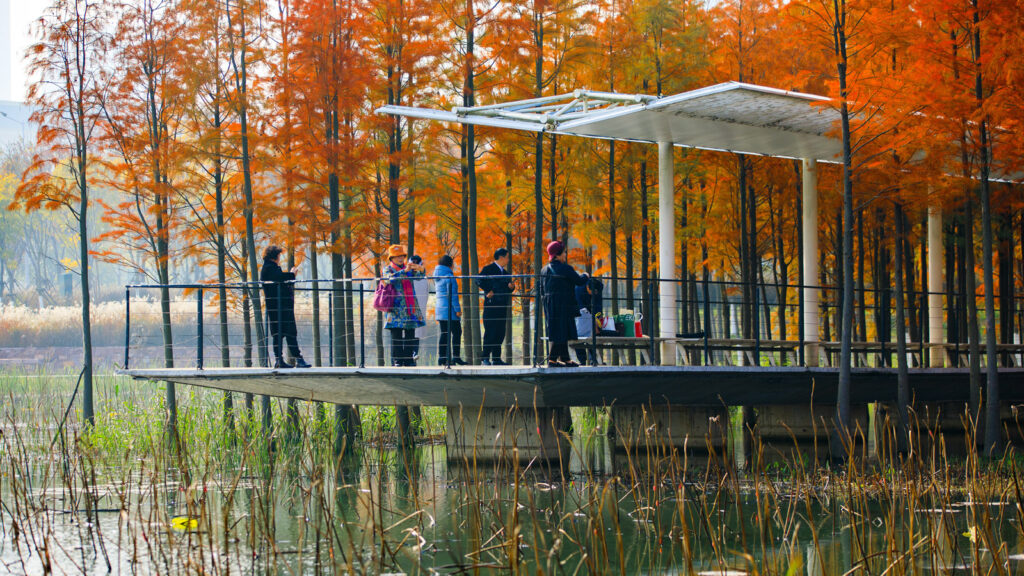
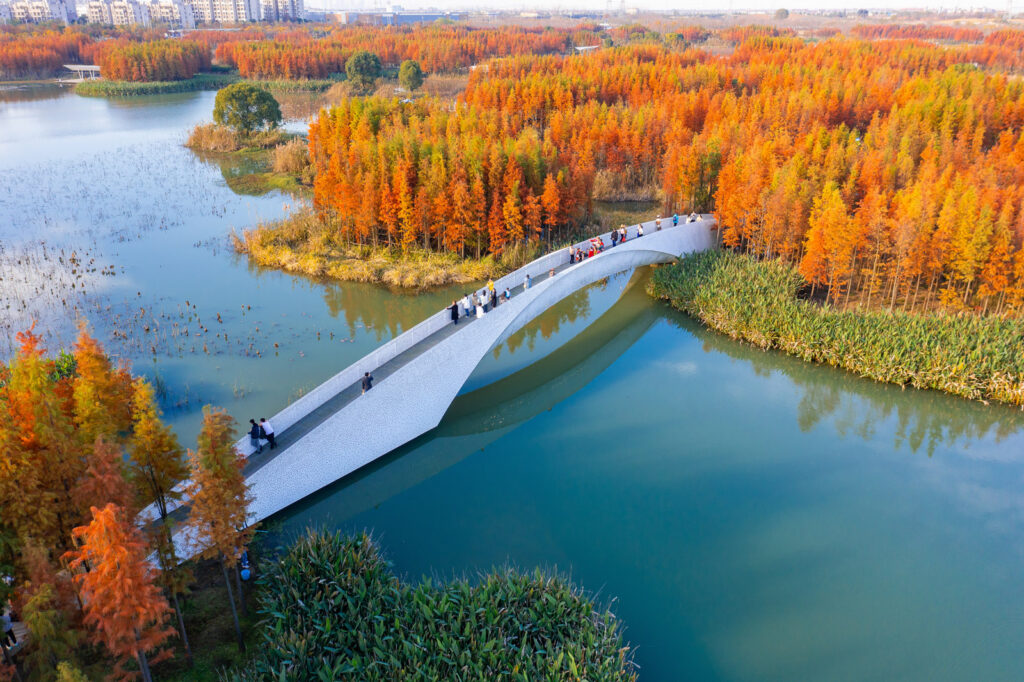
Bridges, pavilions, and viewing towers made of perforated aluminium punctuate the forest. Their geometric forms contrast with the vegetation and frame views across the water. At the entrance, a café is integrated with an overpass, turning an infrastructure connection into part of the park experience.
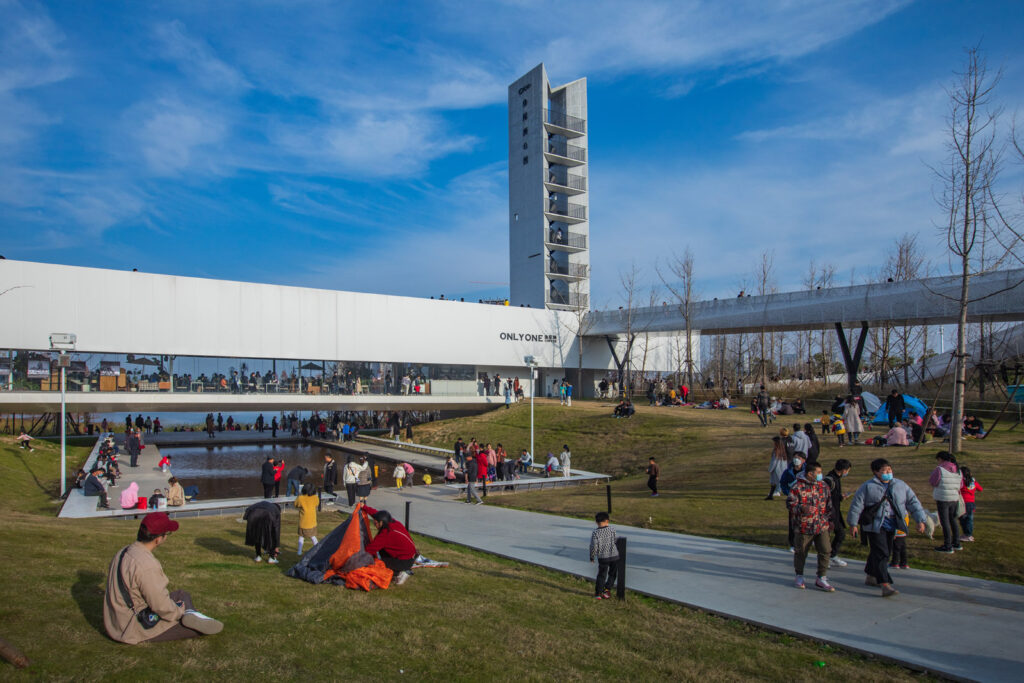
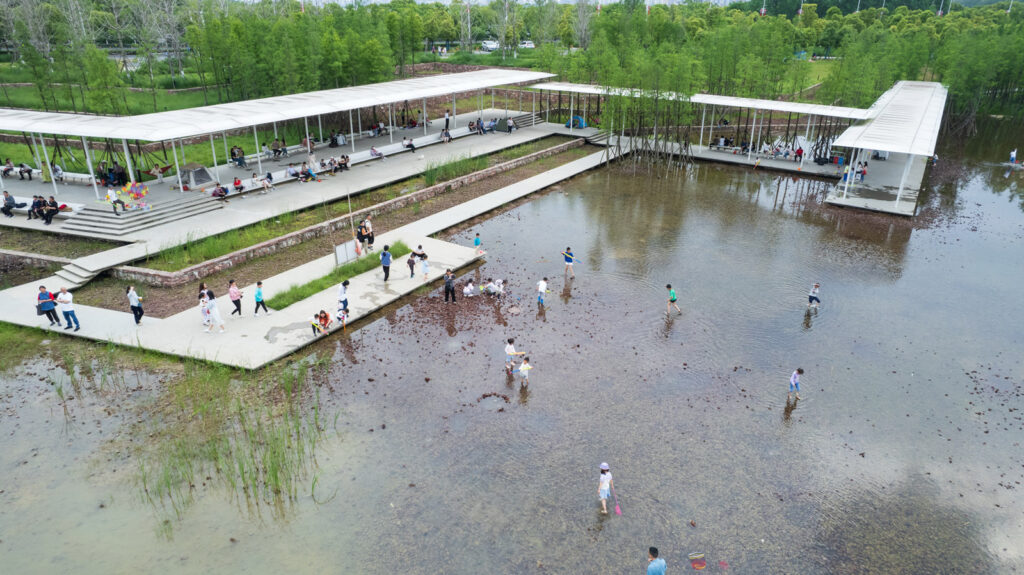
Built on a budget of approximately $4 per square foot, Fish Tail Park has turned a polluted former industrial site into one of Nanchang’s most visited parks. Its lake and wetlands help manage stormwater, while the restored landscape provides new habitats and public access to the waterfront. The park has also helped establish the identity of the New District. Fish Tail Park shows how flood management can become the basis for public space. Instead of treating water as a problem to be contained, the project makes room for its presence and allows the park to adapt to it.