


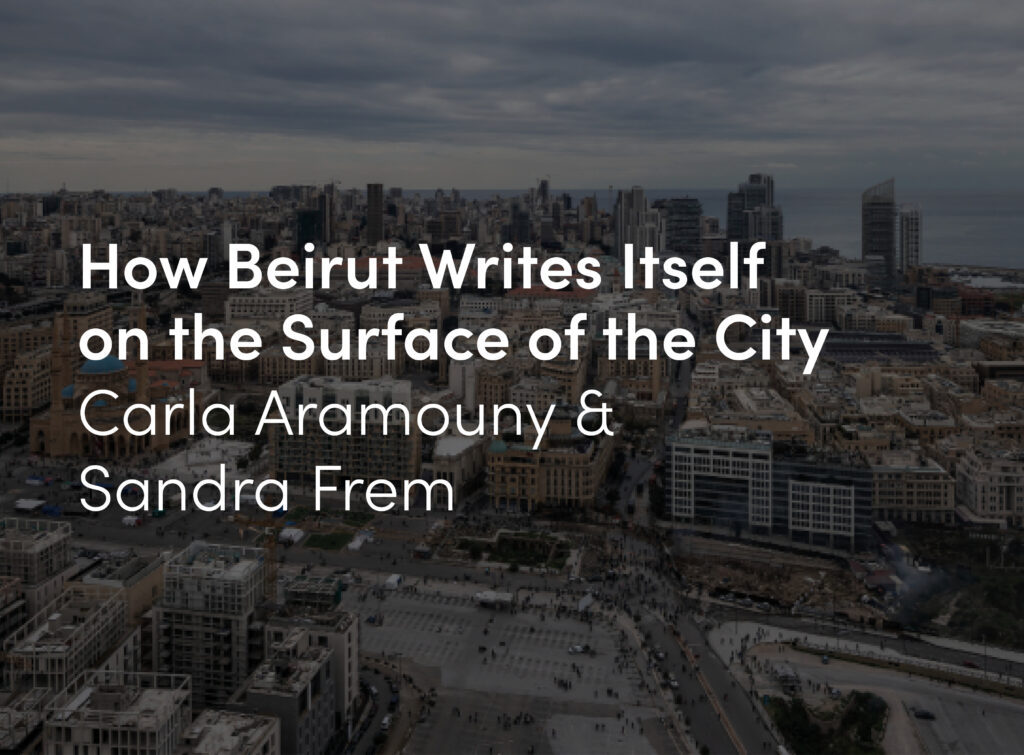
In a city repeatedly transformed by war, reconstruction, financial collapse, political upheaval, and environmental uncertainty, stability has become less a condition than an aspiration. Beirut exists in a state of perpetual negotiation where buildings rise and fall, populations shift, economies fluctuate, and socio-political realities are continuously reconfigured. Yet amid these transformations, there is one place where these changes become visible, tangible, and contested: the ground.
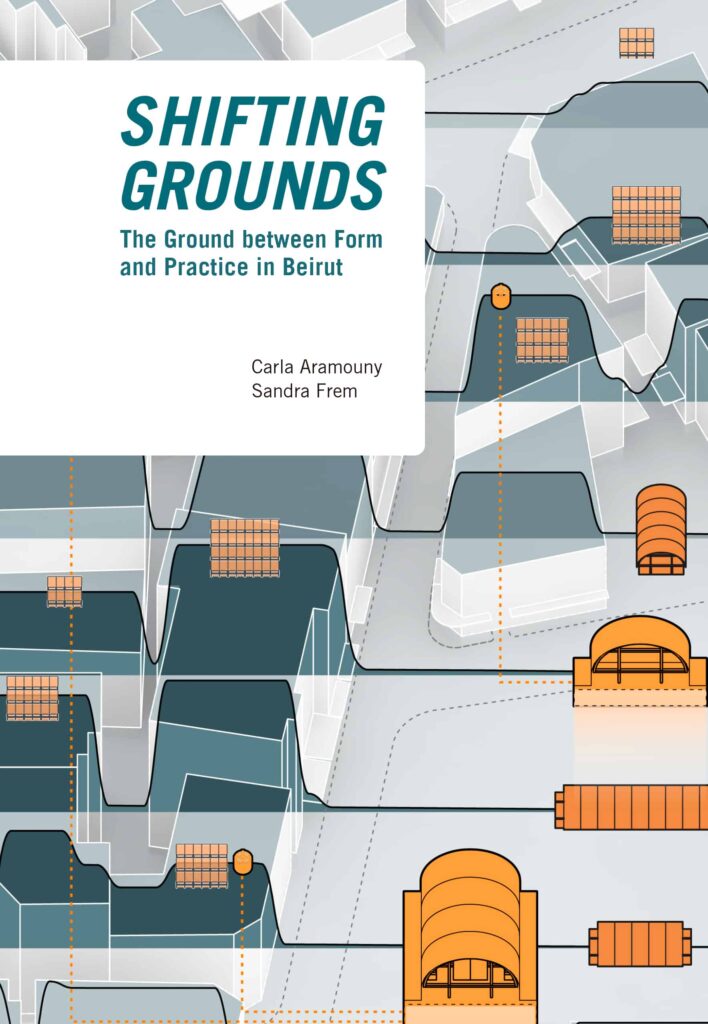
This is the central proposition that architects and researchers Carla Aramouny and Sandra Frem, together with several co-authors and collaborators defend in their latest publication Shifting Grounds: The Ground Between Form and Practice in Beirut (Actar Publishers). Rather than reading Beirut through its monuments, masterplans, or skylines, the book proposes the ground as a critical lens through which to understand the city. “Ground” is understood not simply as the physical terrain beneath our feet, but as the urban surface where social, political, economic, and ecological processes converge. It is where everyday life unfolds, conflict materializes, collective aspirations are expressed, and where the city’s transformations become visible.
Shifting Grounds traces Beirut through a sequence of overlapping crises: the 2019 uprising, the financial collapse, the COVID-19 pandemic, the Beirut port explosion, and subsequent episodes of conflict and displacement. Rather than treating these events as isolated moments, the collective research assembled by Aramouny and Frem reveals how these events collectively reshape urban space and redefine the relationship between citizens and the city.
At the heart of the argument lies a simple observation: Beirut’s ground is always shifting. Not only physically, but socially, politically, and symbolically.
The ground as a shared surface of accumulated practices and informality
Foregrounded by the book, the ground functions as a common surface where Beirut’s many realities meet. It is the space through which different communities, interests, identities, and aspirations encounter one another and intertwine. The city’s social multiplicity is negotiated at ground level, where competing claims to space are continuously asserted, challenged, and reimagined.
This understanding departs from conventional architectural approaches that privilege buildings and formal planning. Instead, it directs attention toward sidewalks, squares, vacant lots, thresholds, streets, and informal infrastructures. These spaces reveal how urban life is actually practiced rather than merely planned.
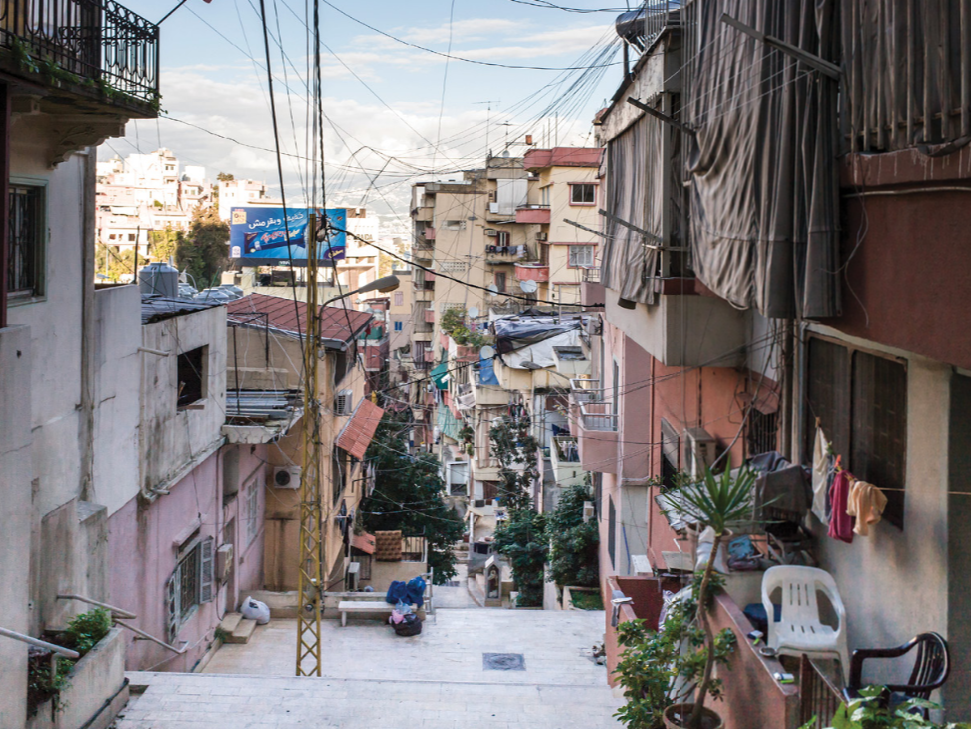
In Beirut, such a perspective is particularly revealing because instability has become a defining urban condition. Political fragmentation, economic precarity, environmental pressures, and cycles of violence have produced a city in constant transformation. Yet these same conditions have also generated remarkable capacities for adaptation and improvisation. The ground becomes the place where these adaptations materialize. The city’s surface records both vulnerability and resilience.
Focusing on practices rather than objects, the book organizes the investigation around four recurring forms of spatial production: appropriation, commoning, production, and activism. Together, these practices reveal a city that is less shaped by centralized planning than by the cumulative actions of its inhabitants.
Production, in Beirut’s case, has historically occurred through fragmented and incremental processes. Unlike cities organized around comprehensive planning frameworks, Beirut’s growth has largely been driven by individual plots, private initiatives, and gradual development. The result is a highly heterogeneous urban fabric, where formal and informal systems coexist in complex ways. This fragmented mode of production has generated both opportunities and inequalities. On the one hand, it has allowed flexibility and adaptation, while on the other, it has enabled speculative development and deepened social divisions.
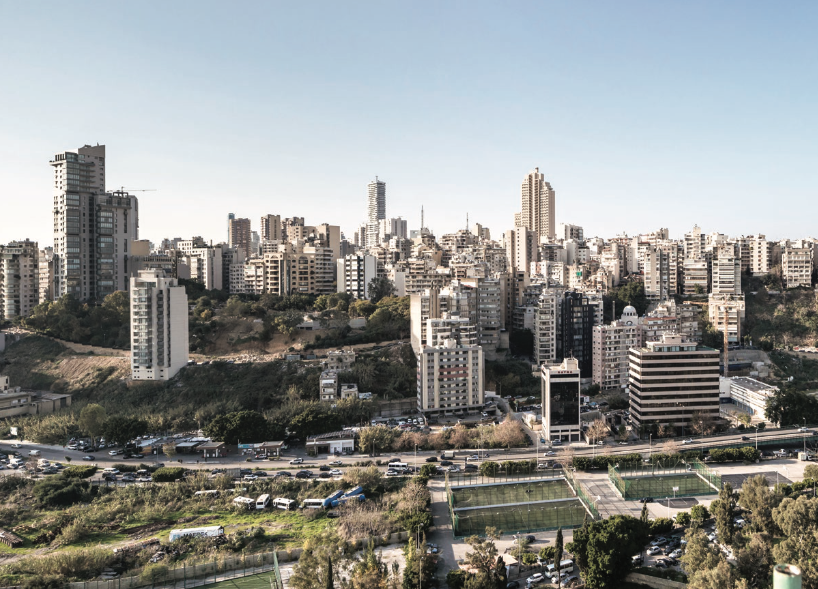
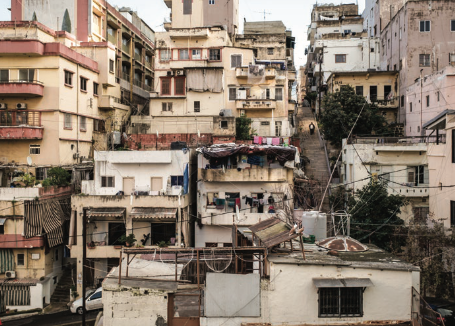
Appropriation emerges as one of the city’s most visible spatial practices. It can be observed in the countless additions, extensions, occupations, and modifications that characterize everyday urban life. Residents transform sidewalks into “living rooms”, storefronts into social spaces, and infrastructural gaps into opportunities for collective use. These interventions often blur distinctions between inside and outside, private and public, formal and informal. What makes appropriation particularly important is that it extends beyond necessity. It is not merely a response to scarcity or inadequate services. It is also a cultural expression of marking space with identity, memory, and belonging.
As Frem suggests, appropriation is one of the practices through which Beirut remains recognizably Beirut.
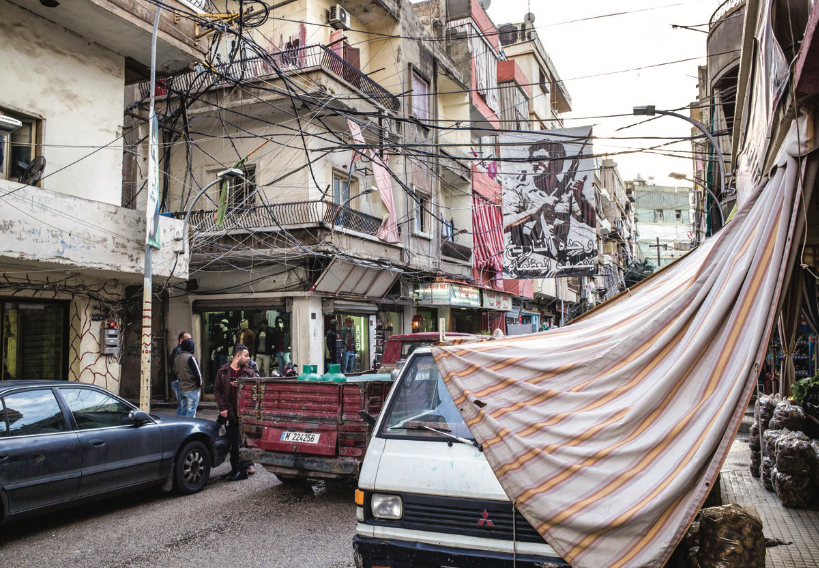
Beirut’s contemporary urban condition cannot be understood without acknowledging the absence of coherent affordable housing policies and the dominance of market-driven development.
The book traces this condition historically, beginning with earlier communal housing experiments associated with migrant and refugee populations, particularly Armenian communities that established collective settlement models during the early twentieth century. These initiatives generated forms of self-help housing and communal urbanism that offered alternatives to later development paradigms.
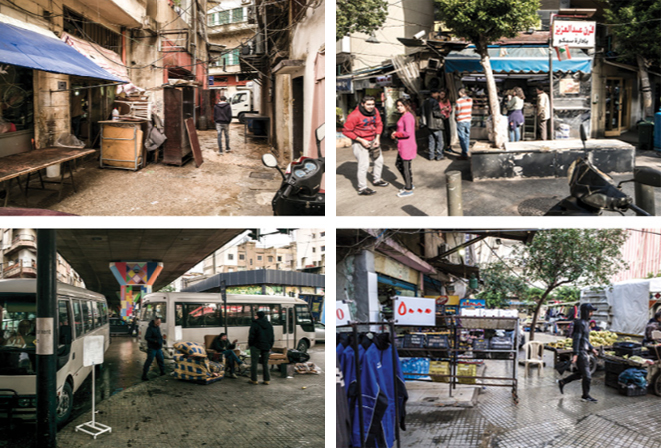
Following the independence of 1943, housing production became increasingly shaped by liberal economic policies and real estate speculation. Elite-oriented development emerged as the dominant model, while affordable housing remained largely absent from state priorities. The consequences are visible throughout the metropolitan region. Informal settlements, such as Ouzai, Hay el Sellom, and Sabra, emerged as responses to exclusionary housing markets. Yet the book resists simplistic readings of these areas as spaces of deficiency. Instead, they are understood as sites where residents developed their own urban logics, infrastructures, and systems of organization. Water networks, electricity provision, mobility systems, and social support structures were often negotiated and produced collectively. Informality, in this sense, became a mode of urban production.
At the same time, these conditions reinforced cycles of vulnerability and exclusion. Informality offered solutions while simultaneously exposing the structural failures that made such solutions necessary. The result is a city where formal development and informal adaptation coexist as parallel systems, each shaping the experience of the ground.
War, the spatialization of division, and the reconstruction without reconciliation
No force has shaped Beirut’s urban geography more profoundly than the Lebanese Civil War.
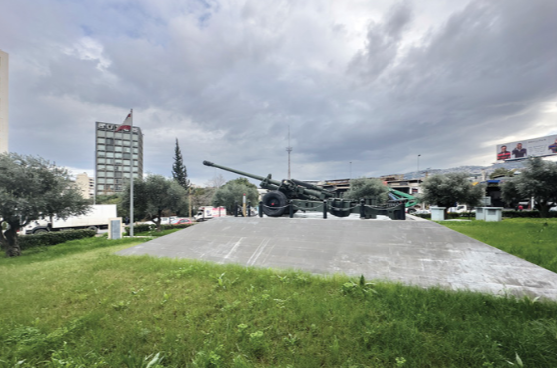
The conflict transformed the city’s ground into a literal battleground while producing enduring spatial divisions that continue to structure urban life today. The Green Line, which separated East and West Beirut, not only divided territory but also reconfigured patterns of movement, belonging, and everyday interaction. Martyrs’ Square occupied a particularly significant position within this geography.
Historically a civic and commercial center, it became entangled in the violence of the conflict, positioned at the heart of the city’s division.
The war produced more than physical destruction. It generated new forms of segregation, reinforcing sectarian enclaves and fragmenting previously interconnected urban territories. Neighborhoods increasingly became associated with specific political, religious, and social identities. Although contemporary Beirut exhibits many forms of overlap and hybridity, traces of these wartime geographies remain embedded in the city. The ground continues to carry the memory of division.
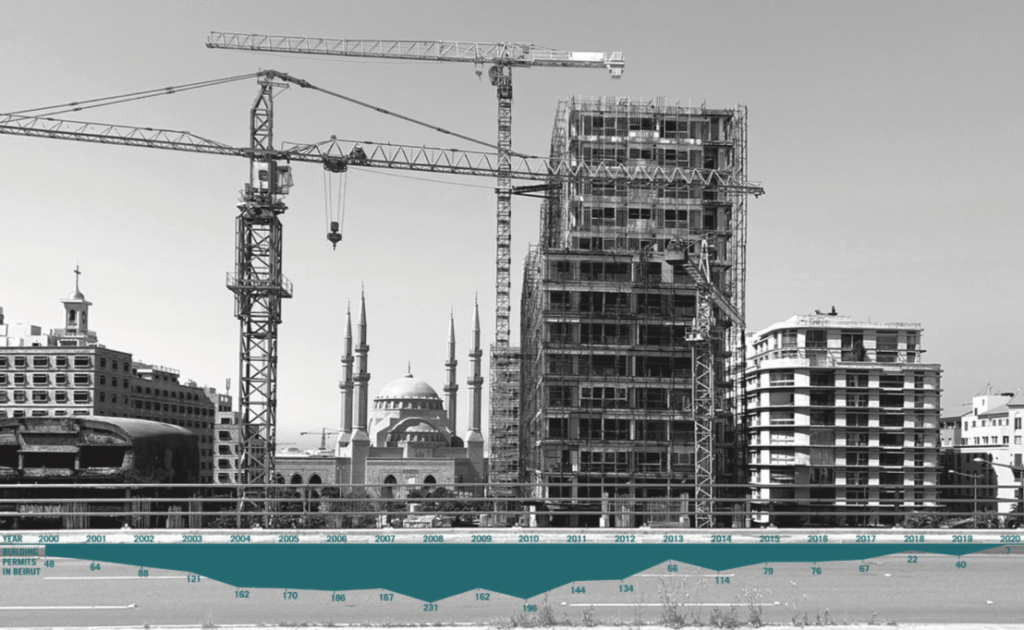
If war fragmented Beirut, reconstruction promised to reunify it. Yet Shifting Grounds presents a critical assessment of the postwar rebuilding process. According to authors, the reconstruction of downtown Beirut prioritized investment, tourism, and real estate development over social reconciliation and collective memory. The Solidere-led redevelopment of the city center established a model that would profoundly influence subsequent urban transformations. Historic districts were selectively preserved, while many structures associated with Beirut’s Ottoman and Arab urban heritage were demolished. Mixed-use environments, traditional marketplaces, and spaces of everyday encounter gave way to highly controlled and carefully managed urban landscapes.
The result was not the restoration of the city but the production of a new enclave.
Downtown Beirut became increasingly detached from the social realities of the broader metropolis. Designed to attract capital and consumption, it often appeared alien to many residents whose memories of the city center had been erased in the process. Yet even here, the full story remains complicated. Despite its physical transformation, Martyrs’ Square continues to exert a powerful symbolic pull. During moments of crisis, protest, and collective mobilization, citizens repeatedly return to the square, proving that its significance persists beyond the material conditions imposed upon it.
The city remembers even when its architecture does not.
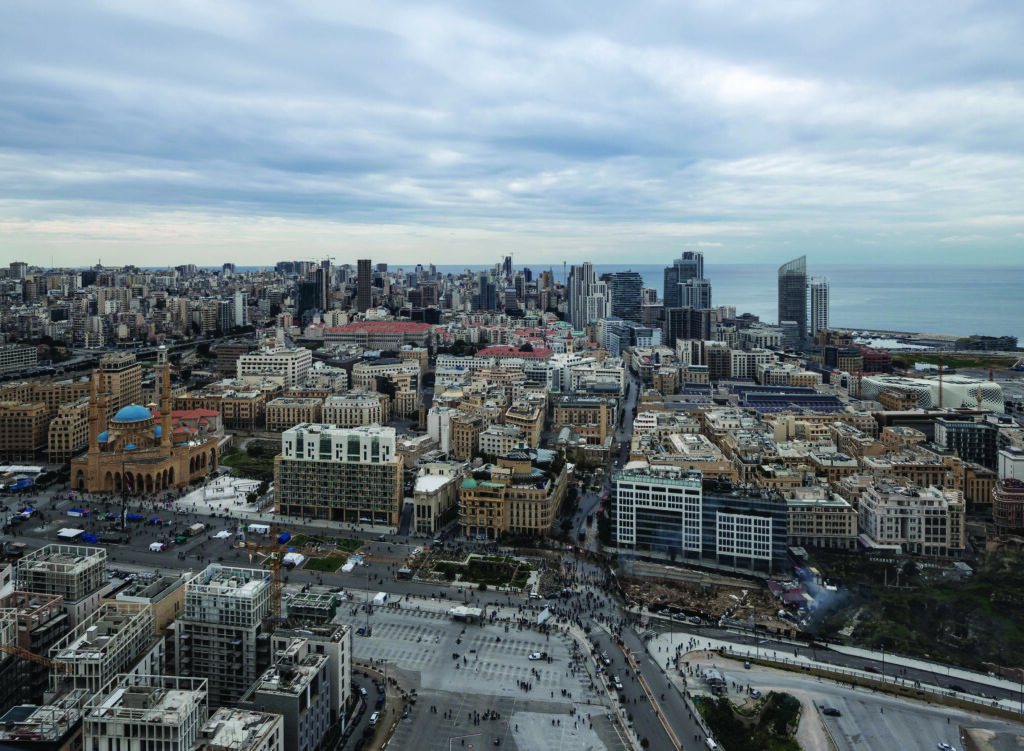
Across Beirut, gated residential compounds, luxury towers, and controlled environments have increasingly replaced more porous urban conditions. The consequences are evident not only in architecture but in everyday life. Privatization transforms the experience of the ground itself through security barriers, surveillance systems, controlled entrances, and parking infrastructures, interrupting pedestrian movement and reducing opportunities for spontaneous interaction, leaving public life to retreat into private interiors.
By contrast, neighborhoods that have resisted large-scale privatization continue to support vibrant street cultures. In areas such as Bourj Hammoud, social life remains visible and collective, small dwellings encourage outdoor activities, and commercial, domestic, and social functions overlap. Children occupy streets, residents gather in public, and urban life unfolds through constant interaction.
These neighborhoods reveal what is lost when the city becomes increasingly privatized: not simply access to space, but the social relationships that make urban life possible.
The financial collapse that began in 2019 exposed the fragility of Beirut’s development model: vacant shops, unfinished towers, abandoned projects, and interrupted investments revealed the limits of a city built around speculative growth. Yet, the crisis also generated new forms of spatial creativity: barter economies emerged, informal exchanges occupied sidewalks and staircases, vacant spaces were repurposed, and urban agriculture reappeared as both necessity and experimentation. What is striking is the speed with which the city adapted. As formal systems weakened, residents developed alternative practices capable of sustaining everyday life.
At the same time, the economic crisis cannot be separated from the other events unfolding around it. Protest movements occupied public spaces, pandemic restrictions transformed patterns of movement, the port explosion devastated entire neighborhoods, and new waves of displacement altered urban dynamics once again. Each event reshaped the ground, layering one crisis upon another.
Commoning the city
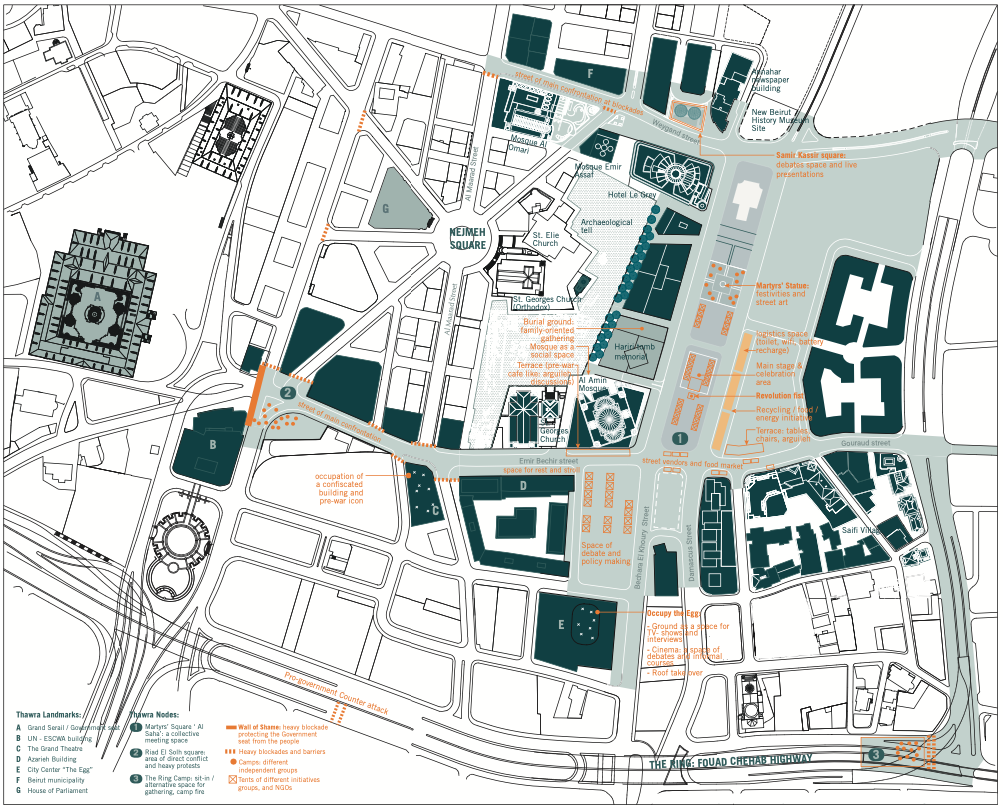
If appropriation describes individual or localized interventions, commoning describes collective ones. Historically, the Martyrs’ Square has functioned as a marketplace, gathering space, political stage, cultural center, and site of collective memory. During the 2019 uprising, many of these historical roles re-emerged through debate tents, communal kitchens, informal marketplaces, public discussions, and cultural events. These transformed the square into an experimental civic landscape where citizens temporarily reclaimed the center of the city and reimagined new forms of collective life.
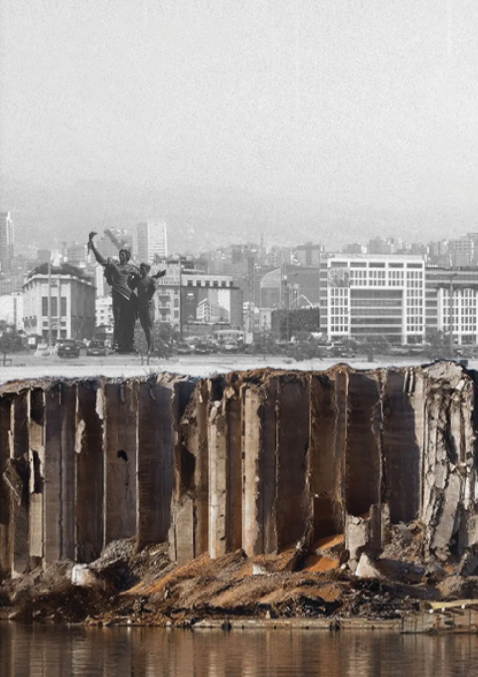
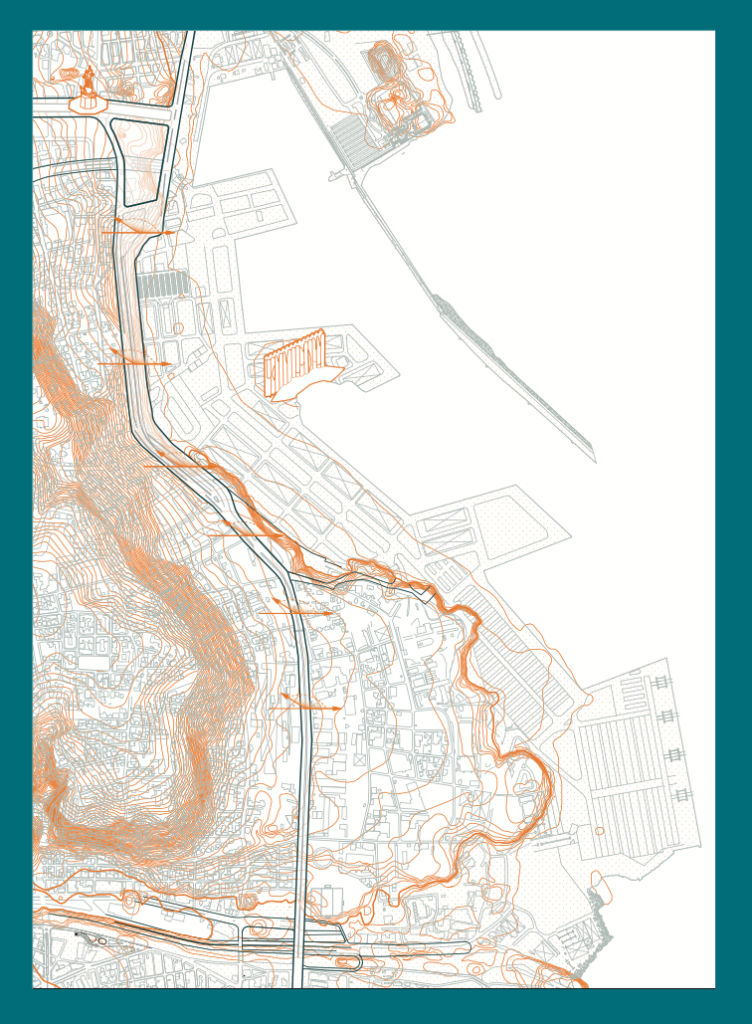
Aramouny identifies another common: the Beirut port silos. Following the explosion of August 2020, the damaged structures acquired a significance that transcended their original function. They became a collective memorial, a site of mourning, and a focal point for debates about memory, justice, and reconstruction. Unlike previous episodes of urban destruction that were followed by erasure, the silos remain standing. Their continued presence raises difficult questions about what cities choose to remember and what they choose to forget.
For Aramouny, commoning is ultimately about more than shared space. It is about producing shared meaning.
Beirut: a city written on its surface
Shifting Grounds redirects our attention towards urbanism as a lived experience.
The book suggests that the essence of Beirut cannot just be found in iconic buildings, masterplans, or development projects. It resides instead in the practices that unfold on the city’s surface: the appropriation of a sidewalk, the occupation of a square, the creation of a communal kitchen, the transformation of a vacant lot, the preservation of a ruin, or the collective reclamation of public space. The ground is where Beirut negotiates its contradictions, where conflict and coexistence meet, where memory resists erasure. It is where exclusion generates improvisation and where crisis creates unexpected forms of solidarity. Above all, the ground in Beirut reveals a city that refuses to die.
In Beirut, urban life is not defined by permanence. It is defined by continual becoming. The city is constantly rewritten, and it is there, on its ground, that its most important stories continue to unfold.