



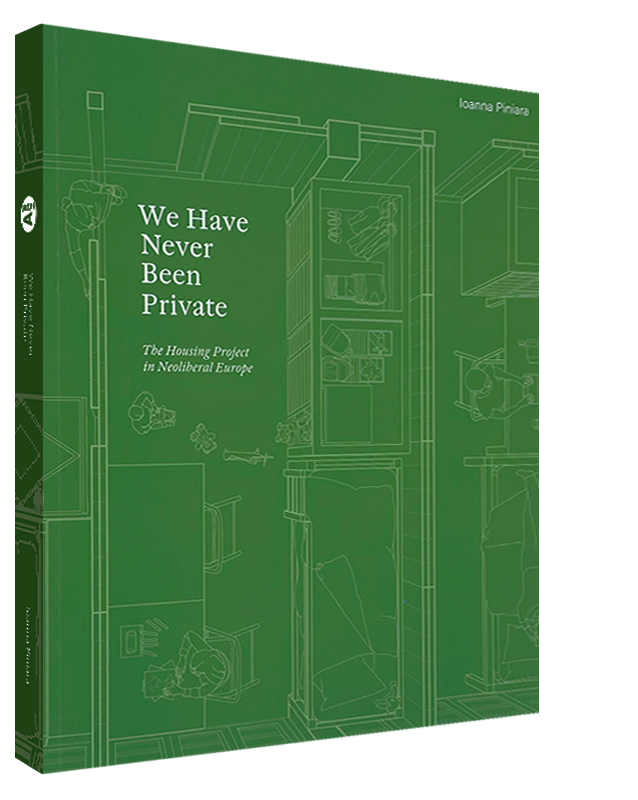
In this conversation, Ioanna Piniara explores the evolution of neoliberal housing provision in Europe through three emblematic case studies: the Barbican Estate in London, the International Building Exhibition (IBA) 1987 in Berlin, and One Athens. Rather than presenting a simple comparison, the discussion traces an evolutionary trajectory, revealing how housing projects responded to critical historical moments while redefining the relationship between architecture, state policy, and urban development.
Piniara argues that neoliberalism should be understood through the inseparable relationship between policy and architectural form. Across all three examples, celebrated housing developments promoted the private home as a vehicle for social improvement, while state intervention played a decisive role in shaping both design strategies and urban agendas. From the Barbican’s reinvention of suburban luxury within the city, to Berlin’s use of urban renewal as a tool for cultural and economic repositioning, and Athens’ investment in luxury housing during a severe housing crisis, the projects reveal recurring patterns in which architectural narratives reinforce conservative models of domesticity and status.
By connecting political analysis, spatial design, and the production of private subjectivity, the conversation highlights how architecture became an instrument of state governance. It offers a critical perspective on the ways housing, urban identity, and state intervention have collectively transformed the meaning of privacy in the contemporary European city.
Key Takeaways
- Neoliberal housing links policy and architectural form through coordinated state intervention.
- Housing projects redefine privacy as a political and spatial instrument of governance.
- Urban renewal can reinforce commodification, displacement, and new forms of social inequality.
- Iconic housing developments shape urban identity while promoting exclusive models of domesticity.
- Historical narratives and architectural symbolism become tools for producing urban value.