



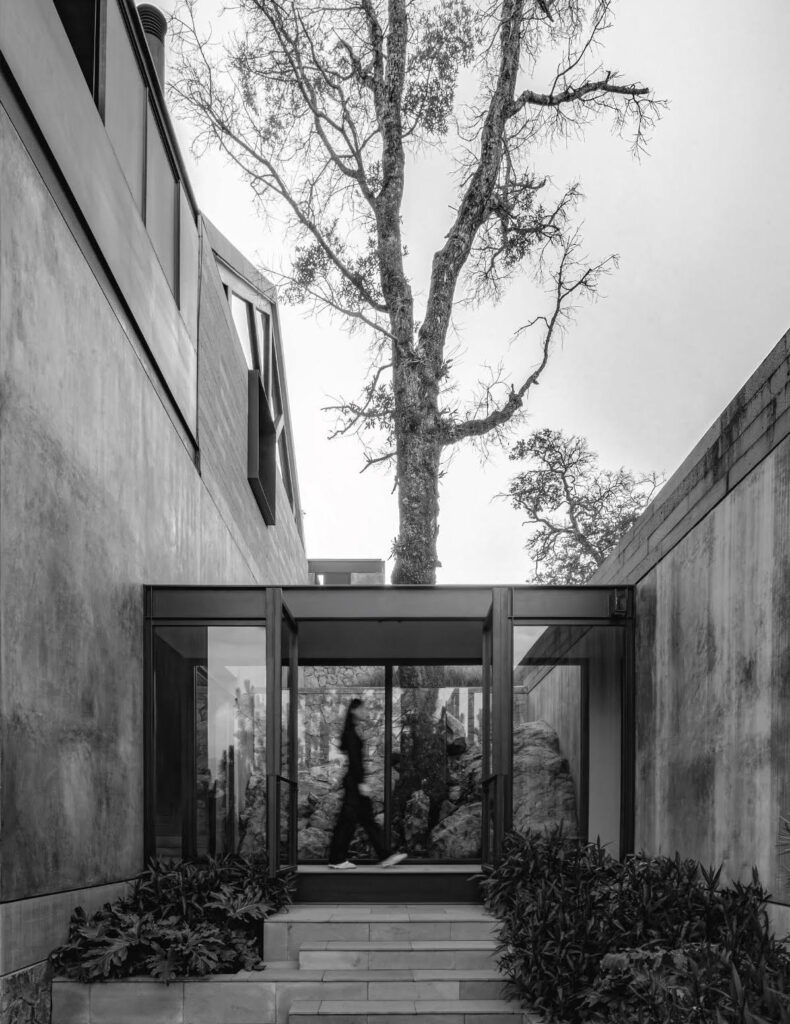
In this conversation, Andrés Escobar discusses the architect’s ethical responsibility as a custodian of the client’s trust, exploring the delicate balance between professional judgment and attentive listening. Drawing on the philosophy behind AE Arquitectos’ residential practice, he argues that architecture requires constant reflection, where experience strengthens the ability to guide decisions without imposing personal ambitions or subjective preferences.
Escobar explains that while architects may sometimes need to challenge a client’s initial wishes, such decisions must arise from careful self-examination rather than authority or ego. The design process becomes an ongoing negotiation in which architecture and human relationships are deeply intertwined, demanding awareness of power dynamics and a commitment to maintaining the client’s interests at the center of every decision. Ultimately, he suggests that the success of a project lies in preserving trust and creating spaces whose value is measured by the quality of the built environment and the satisfaction of those who inhabit it.
Key Takeaways
- Trust gives architects responsibility, not unquestioned authority, throughout the design process.
- Experience strengthens judgment but requires continuous self-reflection and ethical awareness.
- Design decisions should prioritize clients over architects’ personal ambitions or preferences.
- Architecture demands constant negotiation between professional expertise and human relationships.
- Successful projects preserve trust while creating meaningful and satisfying living environments.