


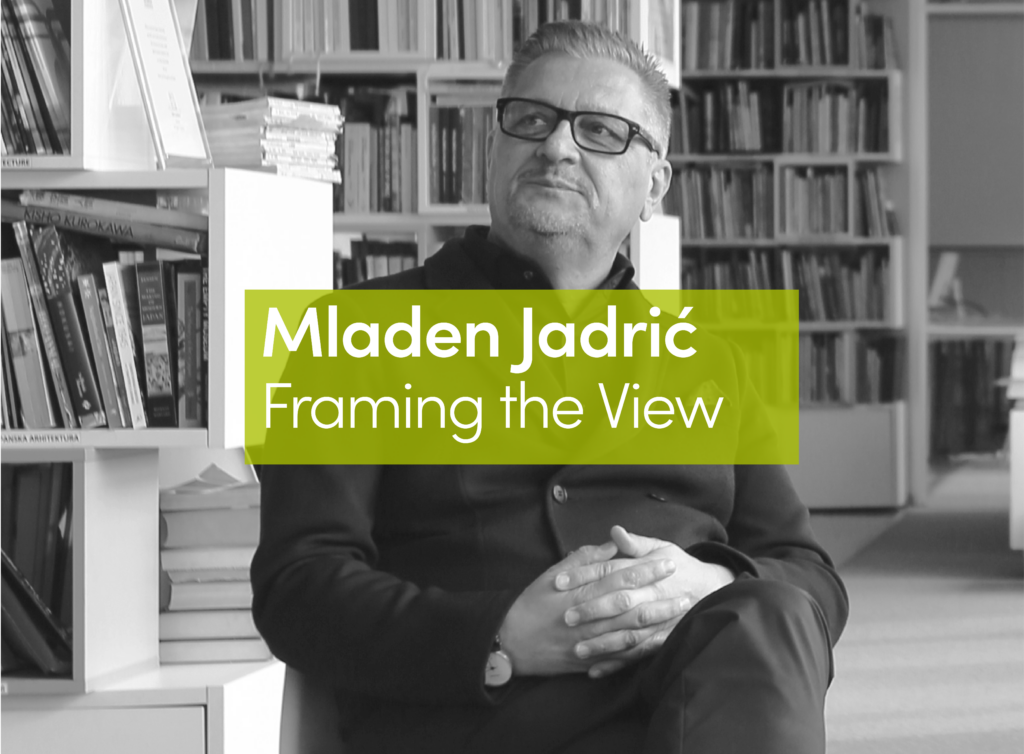
This conversation with Mladen Jadrić focuses on how the “view” operates as a fundamental architectural tool, shaping not only space but also perception, rhythm, and lived experience.
Drawing from diverse references such as Chinese garden traditions, Turkish house typologies, and Baroque compositions like the gardens of Schönbrunn Palace Gardens, Mladen Jadrić describes a lineage of framed vision where windows and openings are never neutral but carefully composed instruments of perception.
Modernist influences further deepen this approach, particularly through the work of Gunnar Asplund, where every view is intentionally constructed, and through the West Coast experiments of Richard Neutra and Rudolph Schindler, where the “cave” condition produces both security and controlled exposure. In this logic, architecture becomes a calibrated balance between openness and enclosure, between near intimacy and distant horizon.
The reflection expands into contemporary practice, where analog and digital vision merge—exemplified in experiments combining physical windows with digital screens, zoom functions, and mediated perception.
Ultimately, the architecture of the view is described as an accumulated “library of elements,” where historical references, sensory effects, and technological conditions are selectively composed. The result is not only spatial composition, but also a psychological and potentially metaphysical structuring of how reality is seen, filtered, and experienced.
Key Takeaways:
- Framed views operate as structural and psychological architectural instruments
- Historical references shape how vision is composed across cultures
- Modernism redefines windows as intentional devices of perception
- Digital and analog systems merge to expand spatial visual experience