



How commoning can reshape housing, privacy, and urban life beyond neoliberal ownership models.
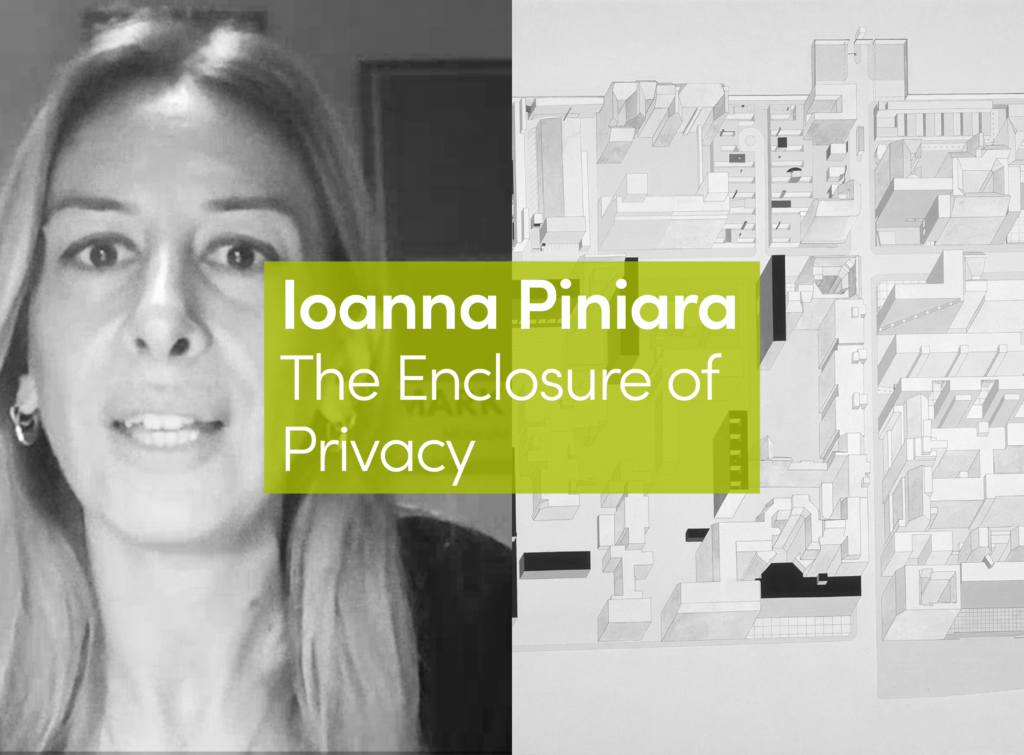
In this conversation, Ioanna Piniara examines how neoliberalism transformed housing from a form of social welfare into a vehicle for economic independence, privacy, and social distinction. Tracing models from the Barbican’s Right to Buy scheme to urban renewal and Greece’s debt-driven homeownership culture, she argues that housing became embedded in a broader “pedagogical project of the private.” Against this logic, Piniara turns to commoning as a framework for redistributing the rights attached to property, challenging the boundaries between private and communal space, and rethinking domestic labor, care, and privacy. What emerges is an “ecology of the private” in which personal autonomy can flourish through shared rights and resources rather than ownership.
Key Takeaways
- Neoliberalism transformed privacy from a social right into an economic reward.
- Housing became a vehicle for producing new class divisions and social antagonisms.
- Commoning redistributes property rights through shared access, responsibility, care, and decision-making.
- Communal spaces can challenge domesticity’s traditional burden of labor and reproduction.
- An ecology of the private reconnects personal autonomy with collective rights and resources.