



How can feminist practices of sharing reshape domesticity and cooperative housing?
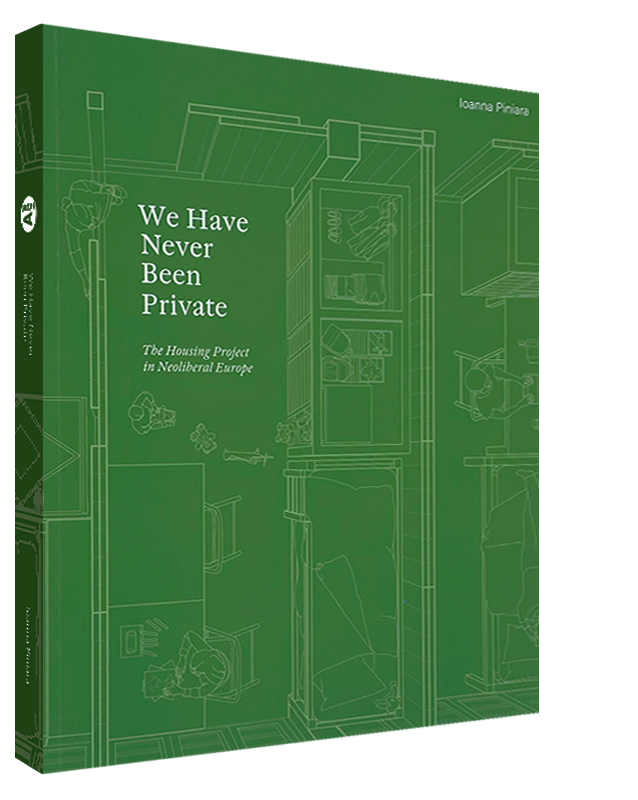
In this conversation, Ioanna Piniara examines domesticity through a feminist and common-oriented lens, arguing that the housing question cannot be separated from the question of gender. The twentieth-century nuclear family apartment, she suggests, reinforced the privatization of living spaces while assigning reproductive labor and care primarily to women.
Drawing on the Trigona settlement in Kaisariani, Athens, Piniara explores how everyday practices of sharing have sustained a long-standing community beyond the dominant logic of privatization. Its predominantly single, middle-aged, and elderly female residents have developed informal configurations of private and communal space that reveal how care can become a collective practice rather than an individual or familial burden.
The conversation considers how architecture can respond to changing life conditions—including single living, single parenthood, aging, and loss–by creating flexible forms of cooperative housing. Rather than treating community as an end in itself, Piniara proposes it as a means of achieving more affordable, sustainable, and resilient ways of living, positioning care and sharing as foundations for new spatial and social models.
Key Takeaways
- Rethink domesticity through collective forms that challenge permanence, ownership, and nuclear-family structures.
- Treat housing and feminist questions as inseparable within capitalist and patriarchal systems.
- Everyday sharing practices can reveal new models for cooperative housing and collective care.
- Design spaces that respond to changing needs, relationships, and life phases.
- Architecture can facilitate care as community-building rather than women’s individual obligation.