


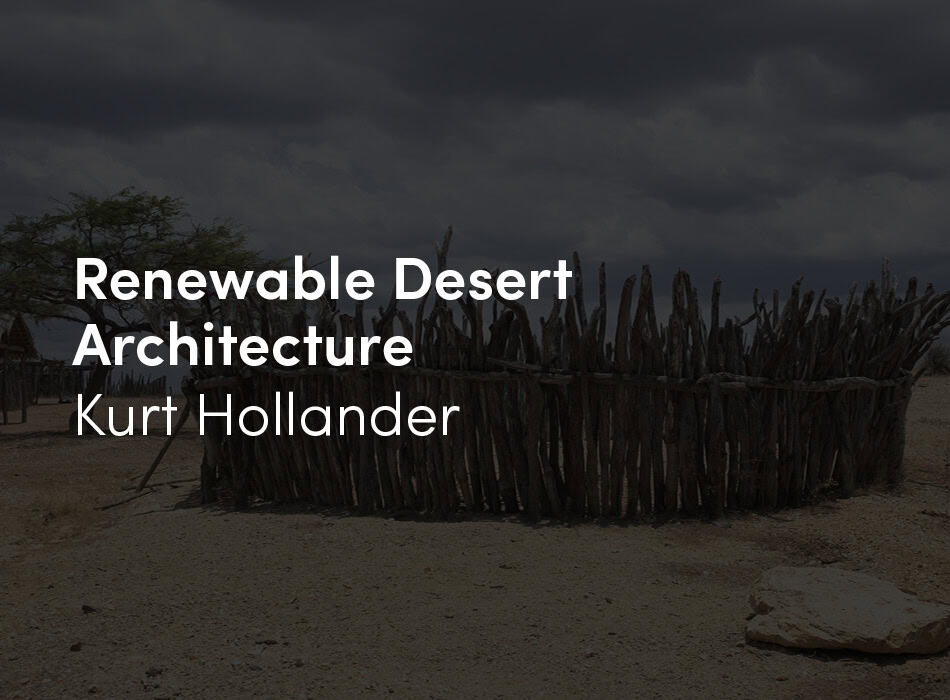
La Guajira, a vast desert in the northeast of Colombia, is the country’s driest region, the windiest, and one of the hottest. These extreme conditions tend to break down solid matter and lead to erosion, thus stressing and truncating the lifespan of any structure located within the desert.
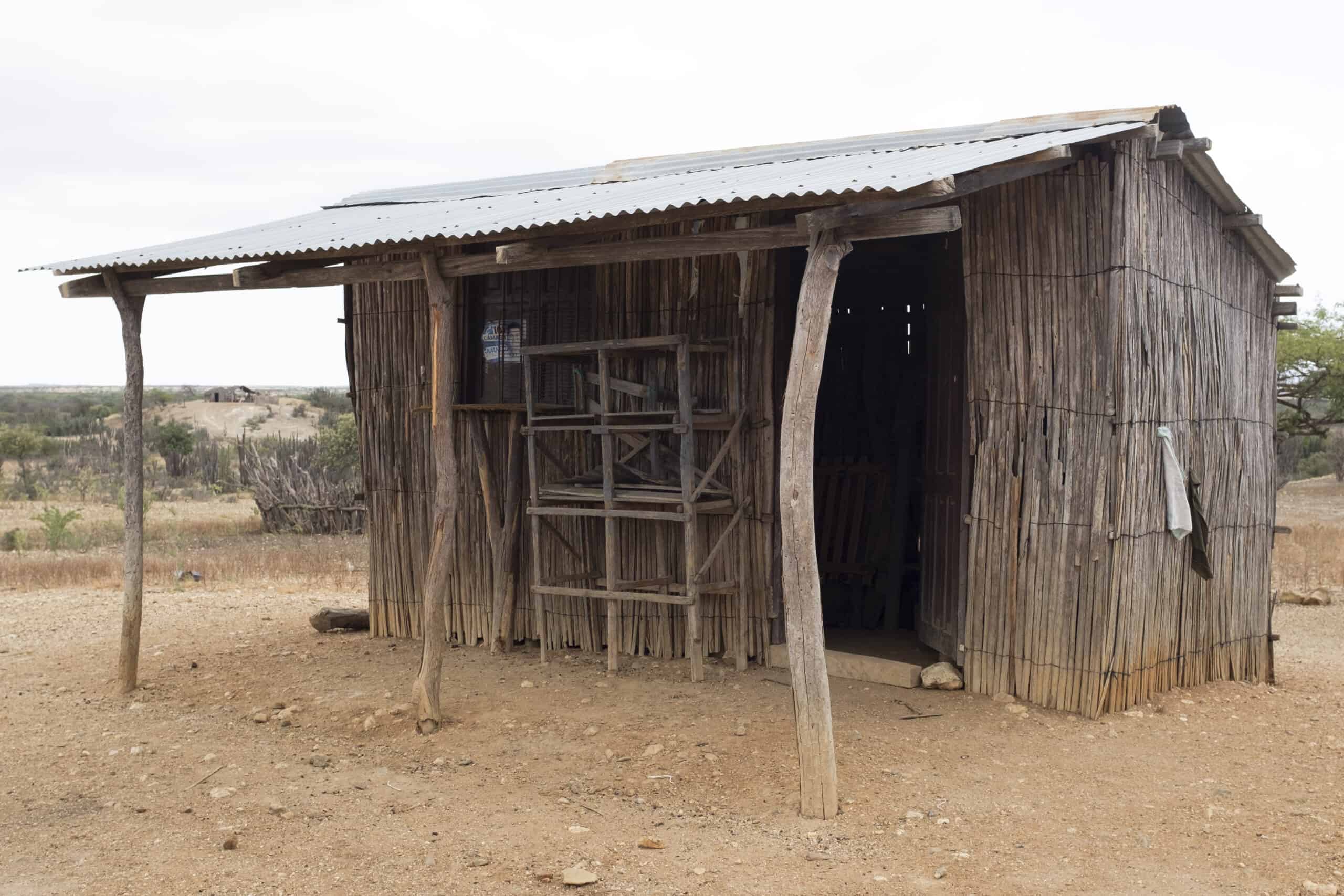
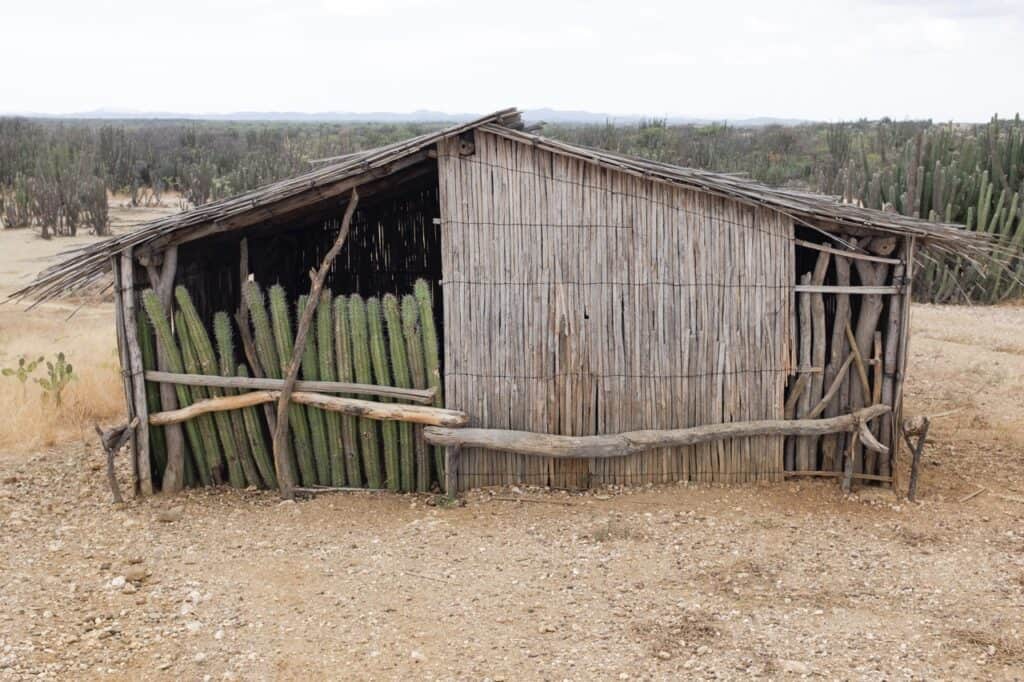
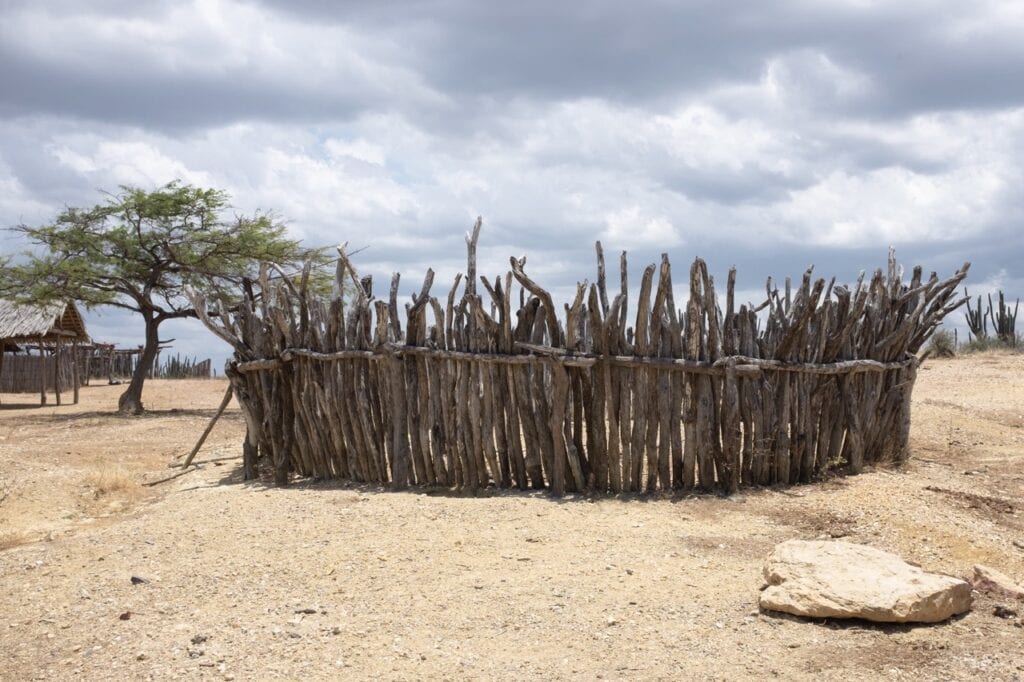
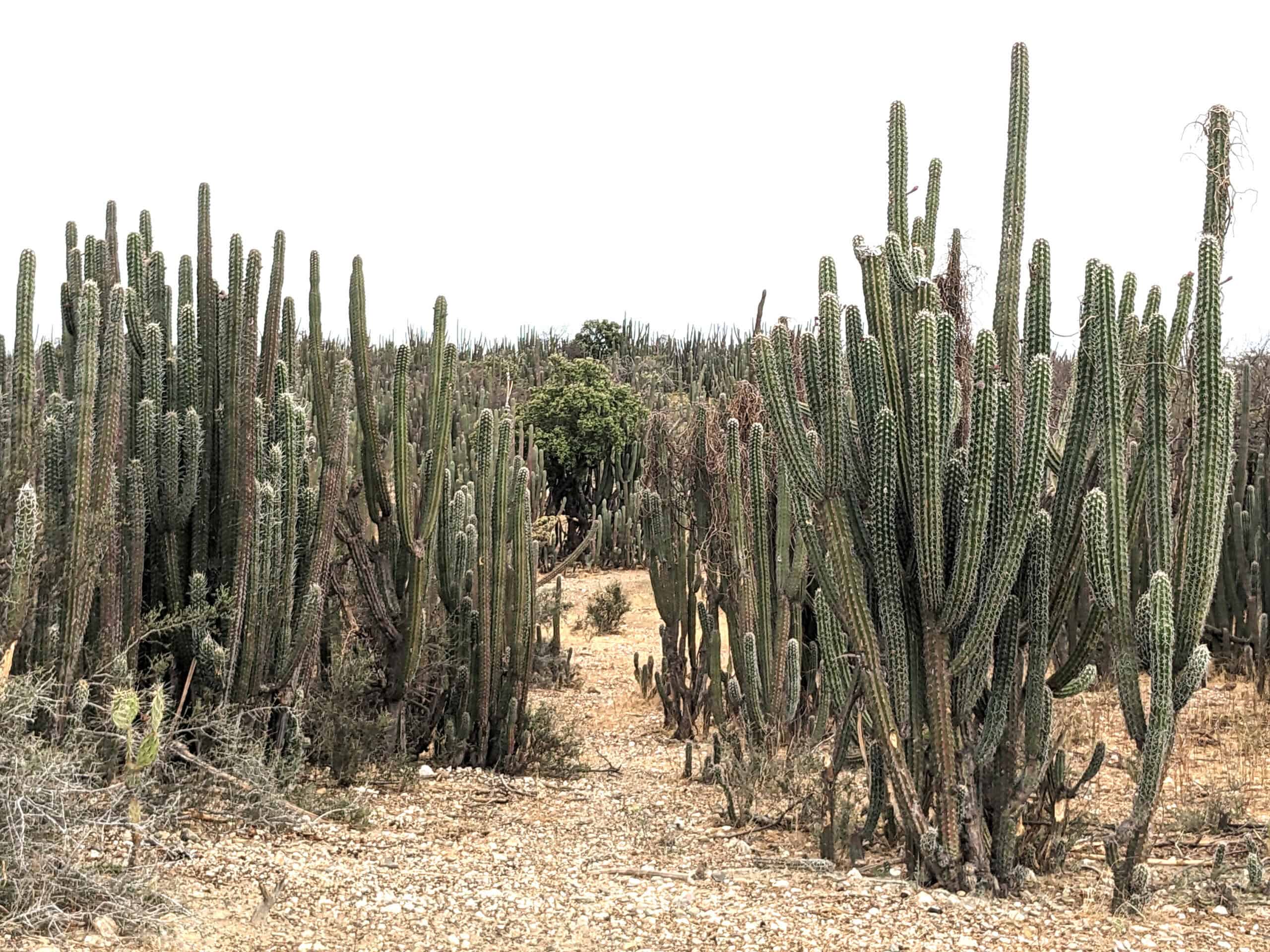
Peoples’ homes in the Wayúu communities, and the corrals that house their goats and chickens, as well, are built from local materials, including plants, trees and the earth itself. The most common building material, and the one that is most unique to La Guajira, is yotojoro. A tall desert cactus, after three years of life yotojoro can be dried out to provide wooded slats for siding and rooftops and is fully resistant to water and sun. Complementing the use of yotojoro, local trees supply the wood used mostly for structural support. Just as the yotojoro cactus and local trees are perfectly adapted to exist within the extreme weather conditions in the desert, so too the homes by the Wayúu, constructed from them, are also well adapted to provide for all the needs of human beings living in such a harsh environment.
The homes that exist today in the La Guajira desert are basically the same design and constructed from the same materials as homes built centuries ago, except for minor additions such as a zinc or asbestos roof or a metal or wooden door. Being that the natural materials used in the construction of homes are free and readily available all around throughout La Guajira, traditional Way’uu architecture is 100% renewable.
Despite how well the homes of the Wayúu are adapted to the desert and despite the fact that they are free to build, there have been several constructions in the desert that seek to “improve upon” traditional Wayúu architecture. The most recent, a modernized version of traditional Wayúu architecture, is an elementary school located along the highway, paid for by a foundation based in Florida that constructs buildings, and designed by a professional architect from Bogota. Although traditional materials, such as mud, wood and yotojoro, were used to build the structure, the building has a metal roof and rests upon a thick cement base. In addition, both the man-made and natural materials were purchased in and had to be transported from a nearby city into the desert. The cost of the construction, and the imported materials and architect, means that when the materials crack or erode, there will most likely be neither funding nor knowledge of how to maintain the structure, and it too will eventually be abandoned and left to crumble back into the desert.
This is also the case with the schools built by local governments for communities in La Guajira. These large cement structures require large budgets to build and the materials used in the construction must be transported in from great distances. Although cement lasts longer than natural materials, it too eventually sucumbs to the extreme heat and dryness of the desert. The dozens of abandoned concrete structures that litter the desert, with toppled walls and their roofs caved in, can be seen as monuments or tombstones to modern techniques and materials that are not adapted to the environment or culture in which they exist.
The tension between traditional and modern materials and designs exists not just in the homes of those living in the desert, but also in the homes of the dead. The burial grounds of the Wayúu ancestors were for centuries built with just rocks and branches from local trees, while the remains of their bodies were buried in ceramic vases, a way in which to allow human bodies to be reabsorbed by the earth. With the arrival of evangelical missionaries into the heart of the desert in the last few decades, cement tombs that are constructed to resist any interaction with the environment have replaced ancestral burial grounds throughout the desert.
It is true that, in the extreme heat and dryness of the La Guajira desert, the local, natural construction materials (yotojoro, mud and wood) used in the construction of the homes of the living and the dead have a relatively short shelf-life. And yet, it is precisely this impermanence, which forces the Wayúu people to constantly rebuild their homes, that keeps the traditional Wayúu architecture alive. These homes are perfectly adapted not just to the climate but also to the local economy (they can be rebuilt in a day with no cost at all), and just as important, they are the repositories of Wayúu millenial culture. Although poverty rates and malnutrition run high in La Guajira, the locals at least have the advantage over most of humanity in that they are blessed with authentic homes of their own construction that reaffirm their roots to the desert and their ancestors.