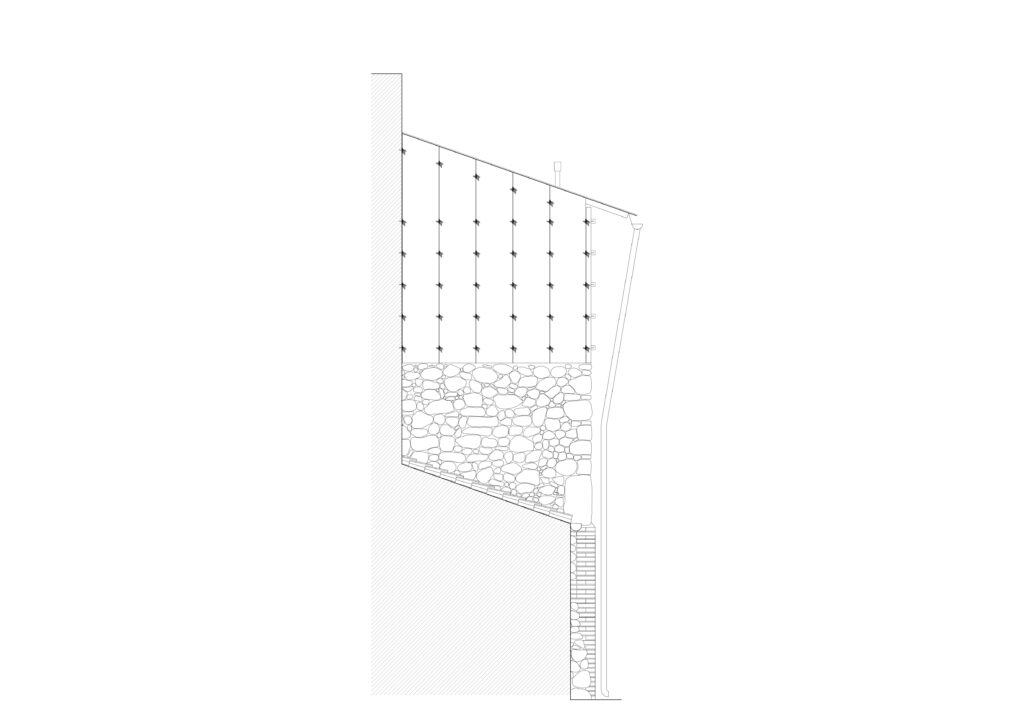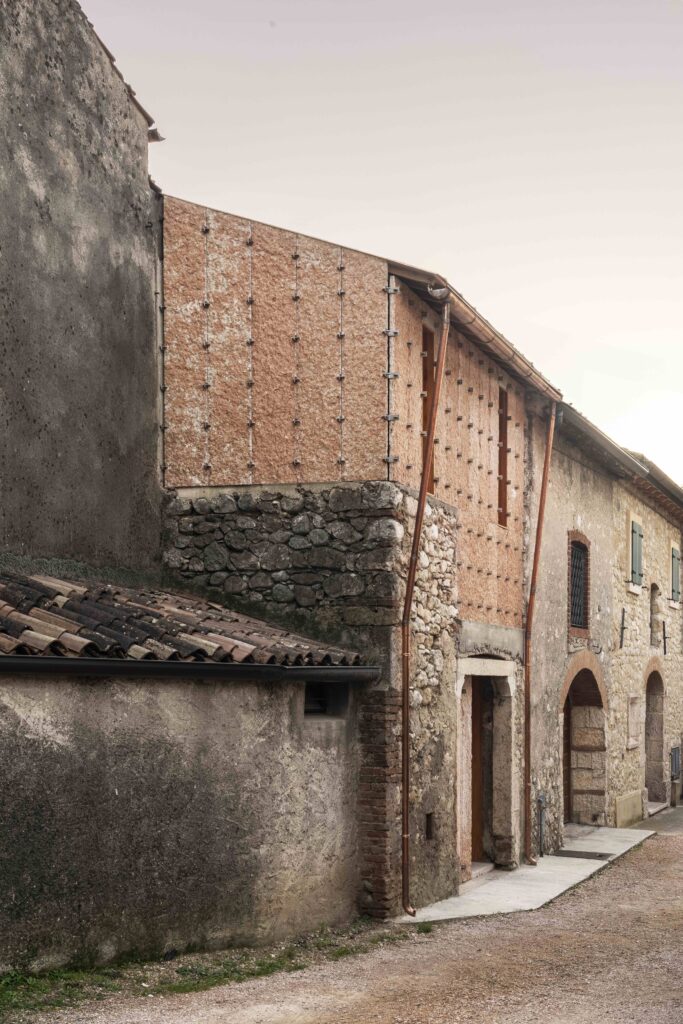



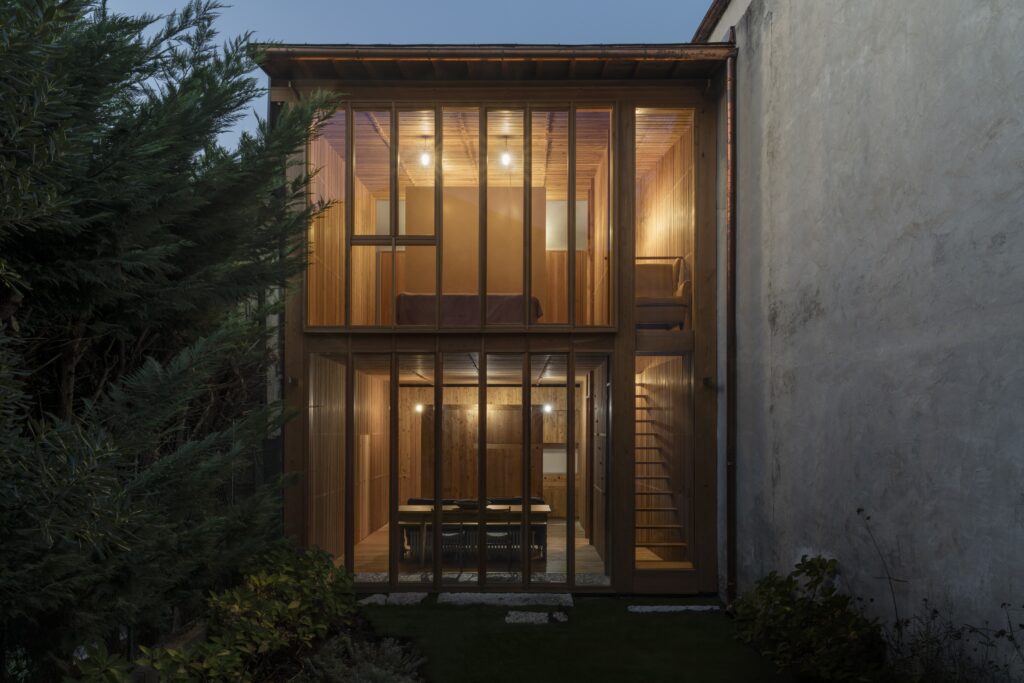
Casa Larun is located in the historic center of Tregnago, a rural village of the Lessini Mountains. The building, originally a small barn with a trapezoidal floor plan, has two façades, one facing a shared northern courtyard and the other opening to a private southern garden.
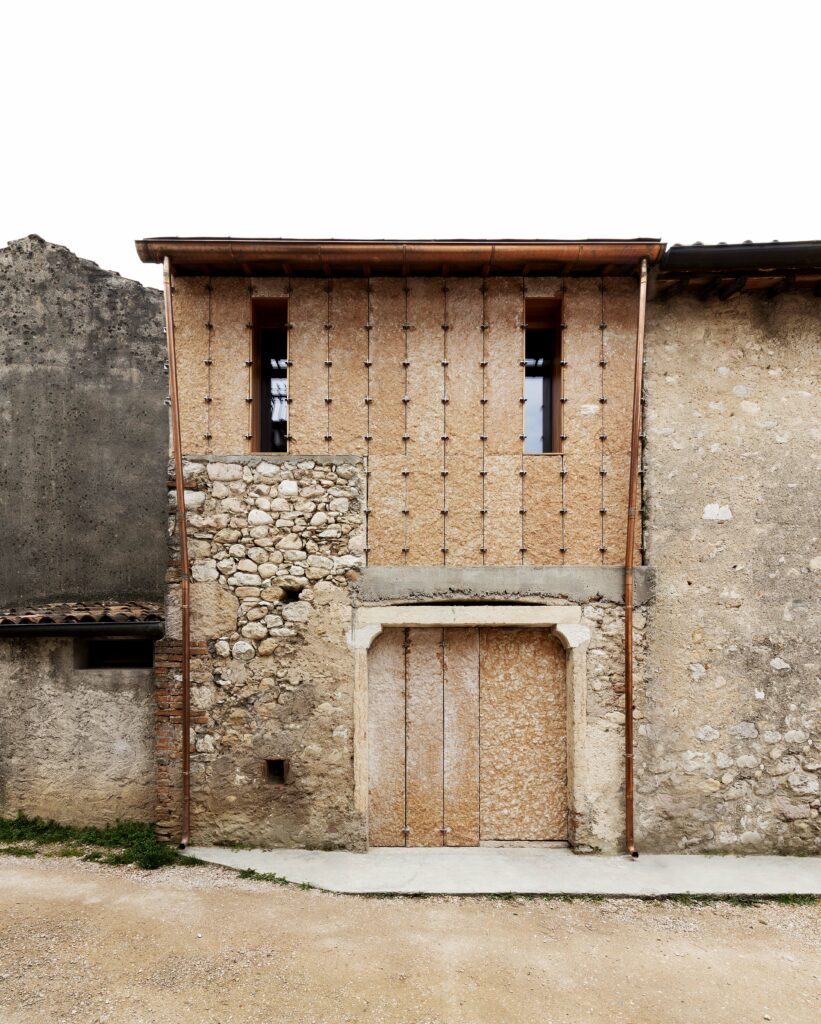
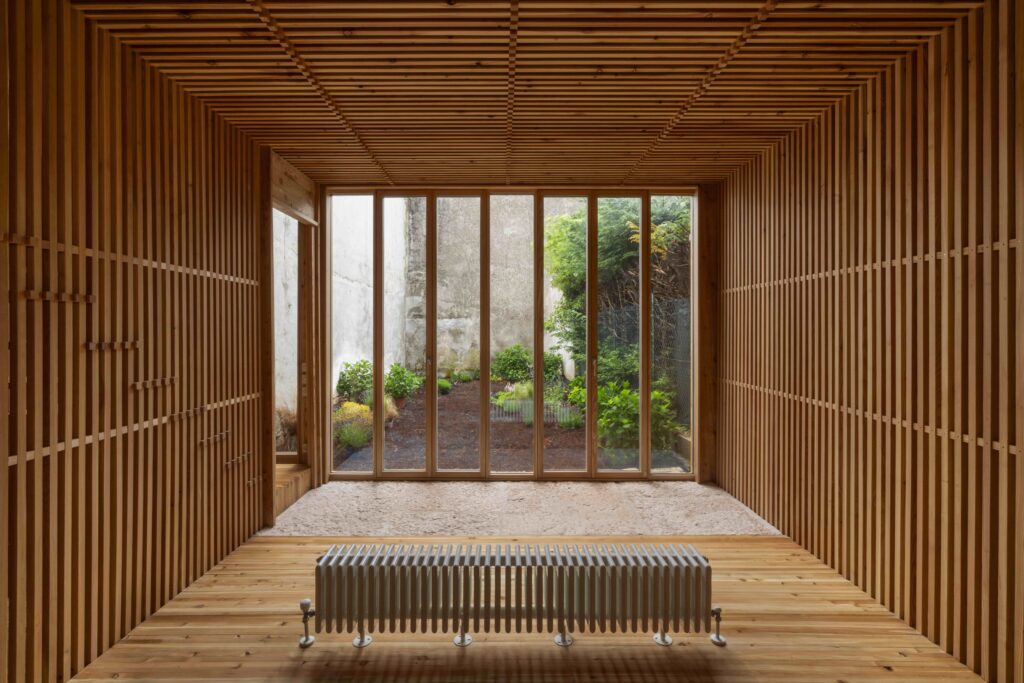
The project explores a construction system based on structural repetition, creating an anti-seismic framework where the wooden structure counteracts the thrust of the stone walls, which in turn brace the timber framework. Structurally, the project explores the limits of wood. The influence area of the floors was minimized, allowing for pillar sections as small as 3×3 cm. Every component of the house follows a 3 cm modular system. The structural elements themselves generate ornament, pushing them to their limit and emphasizing their repetition.
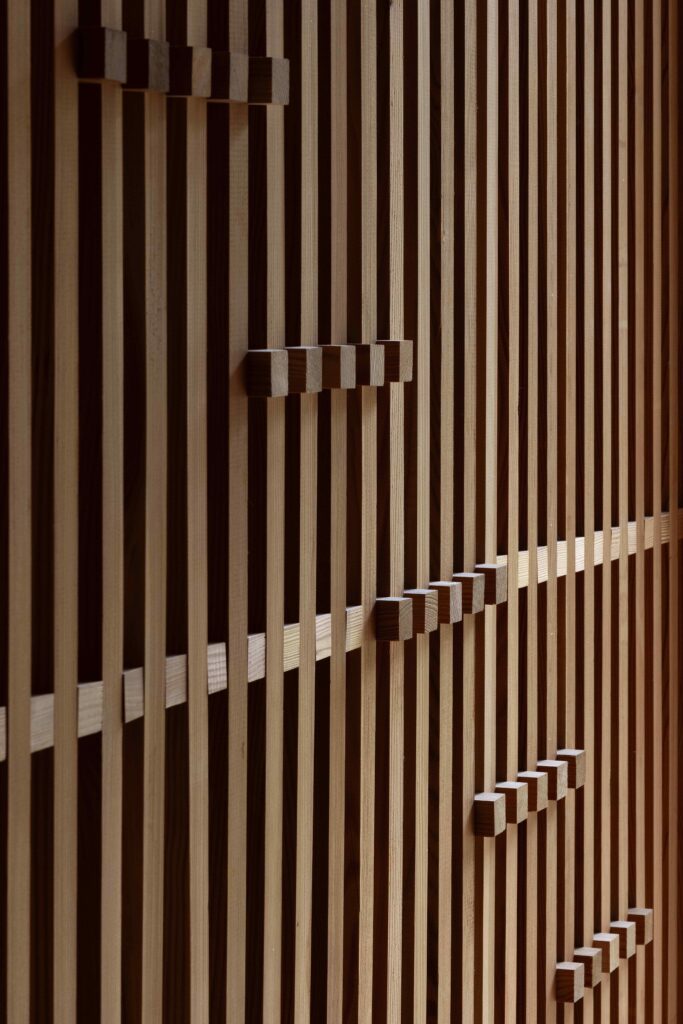
To reinforce the structure and optimize assembly, special horizontal components (‘wood comb’) were introduced, which also accelerated the self-construction process.
The staircase is a key structural element, providing lateral stability where stone walls are absent. Its 3×3 cm steps connect to the pillars, acting as additional bracing. Assembly followed a north-to-south sequence rather than a conventional bottom-up approach.
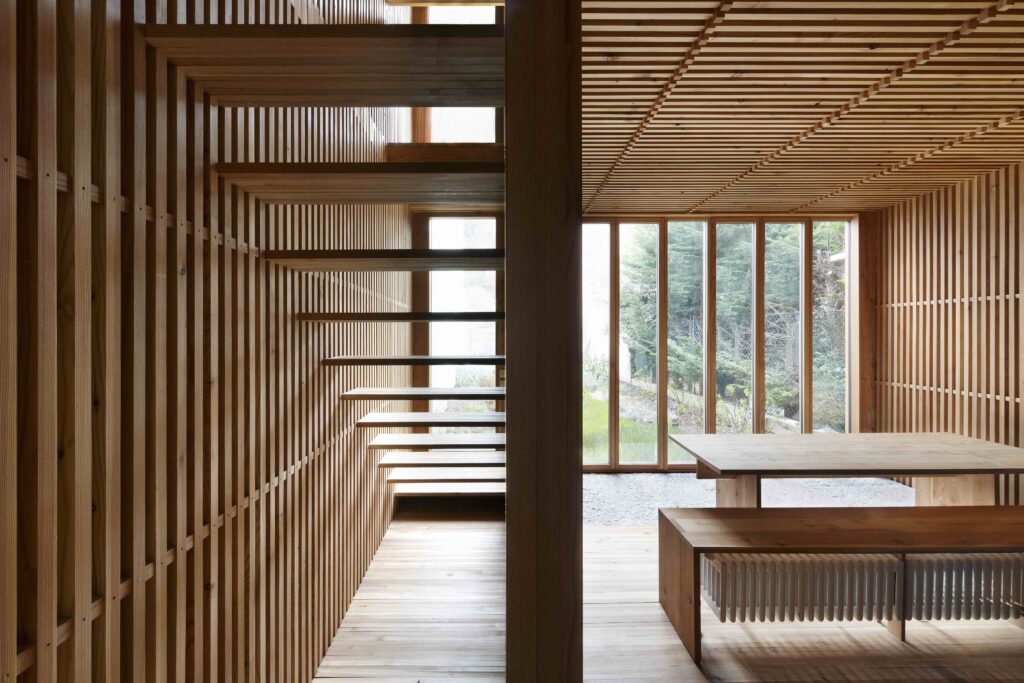
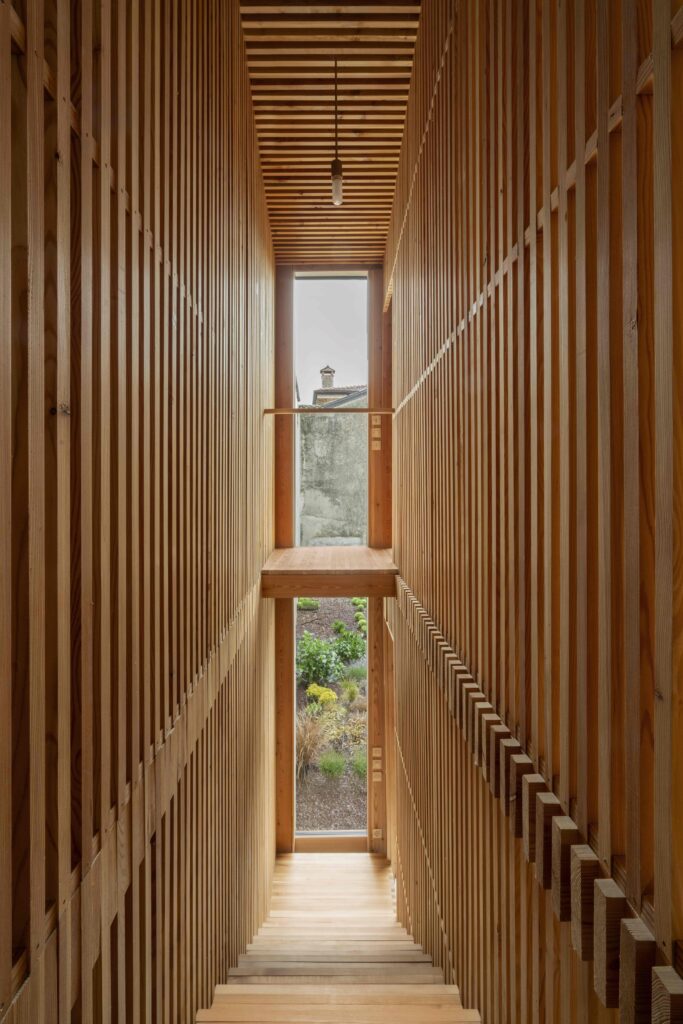
The house is organized on two levels. The ground floor follows a climatic logic: the kitchen is placed in the cooler northern area, while a central fixed furniture element divides spaces and enhances privacy. The upper floor contains the bedrooms and bathroom.
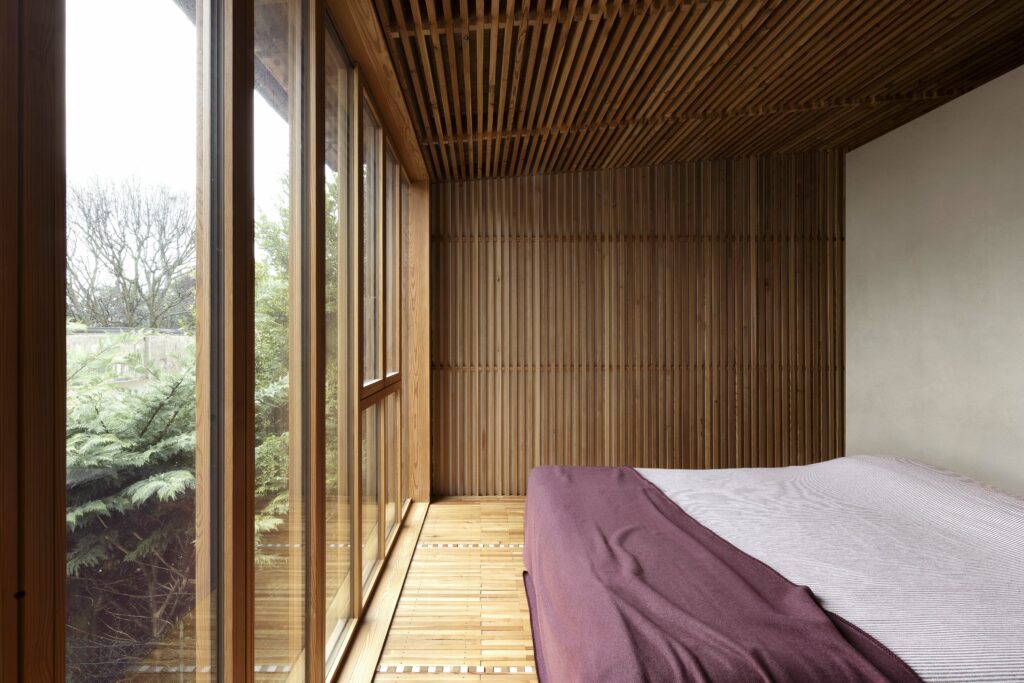
The glazed façade is divided into three sections—living area, bedroom, and staircase. The living room features a rhythmic sequence of fixed and openable glazing doors, giving verticality. The first-floor bedroom screen replicates the ground floor pattern but projects outward, reinforcing its connection to the garden. A large glass panel, 6m tall, in front of the staircase emphasizes the verticality found throughout the interior.
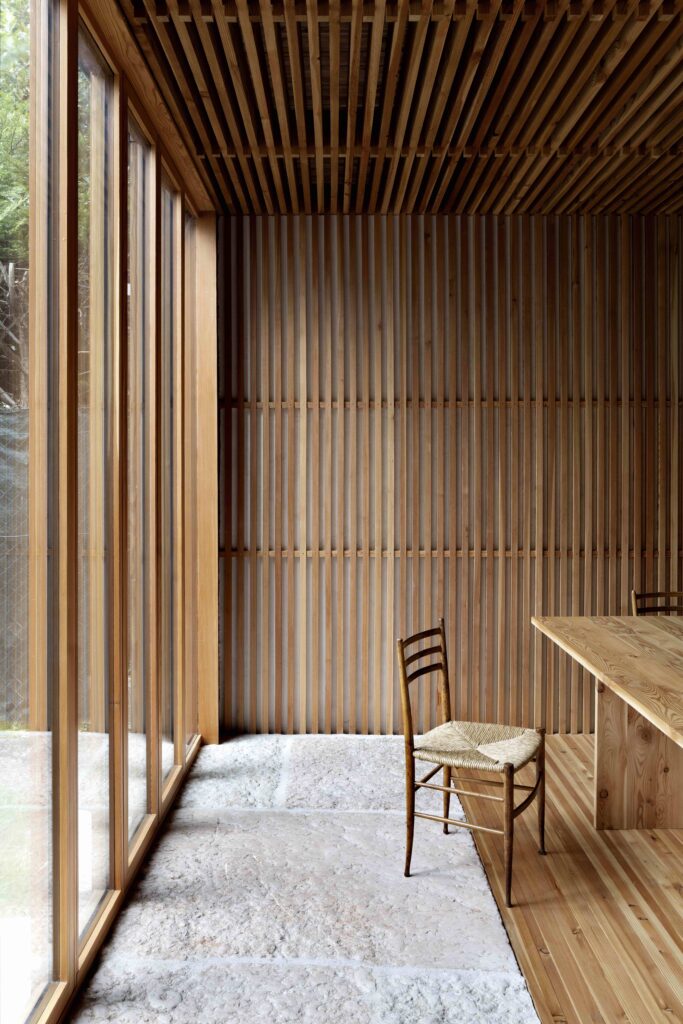
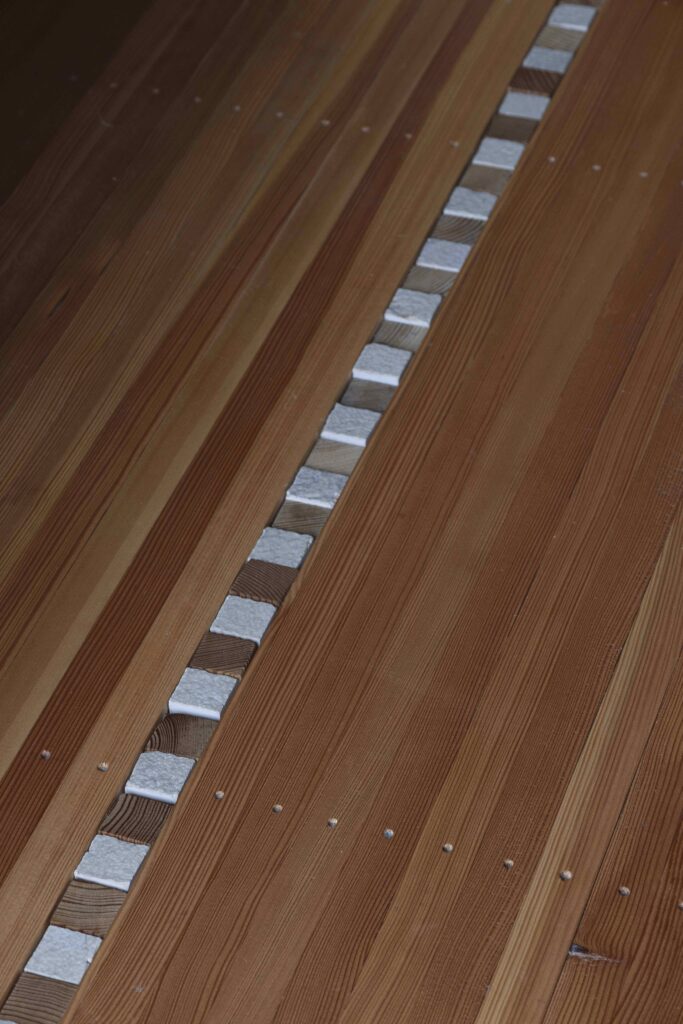
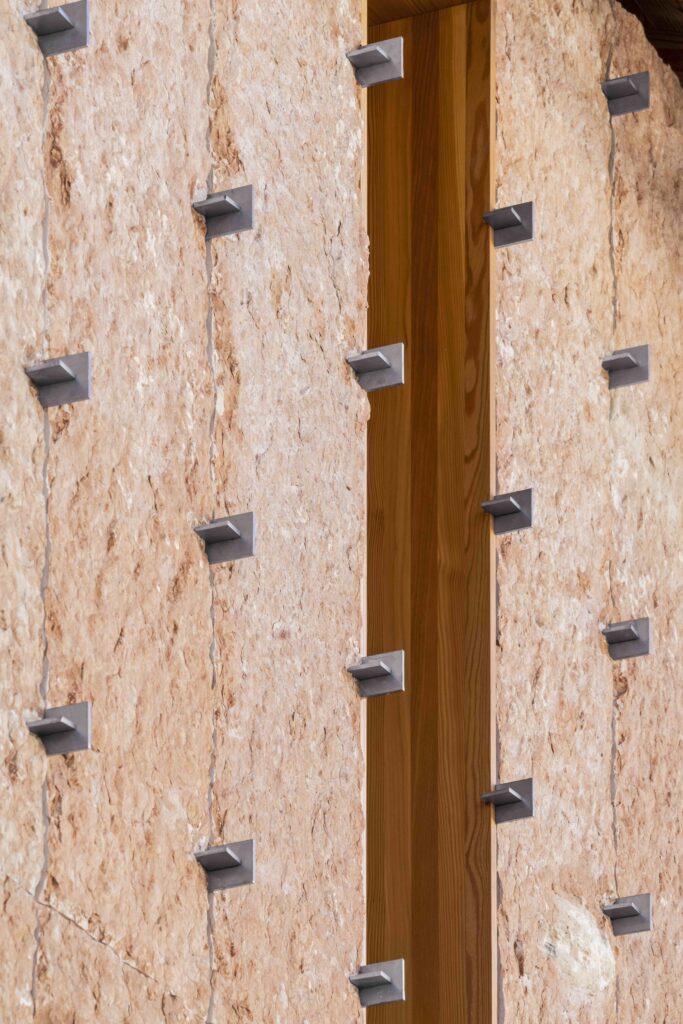
The house embraces a rural aesthetic, enriched by slight imperfections from self-construction, reflecting the region’s rural identity. The north façade is enclosed for insulation and privacy, while the south façade is fully glazed, maximizing natural light. The main façade, built with dry-laid prun stone, inspired from local vernacular architecture (the Lessinia region).