


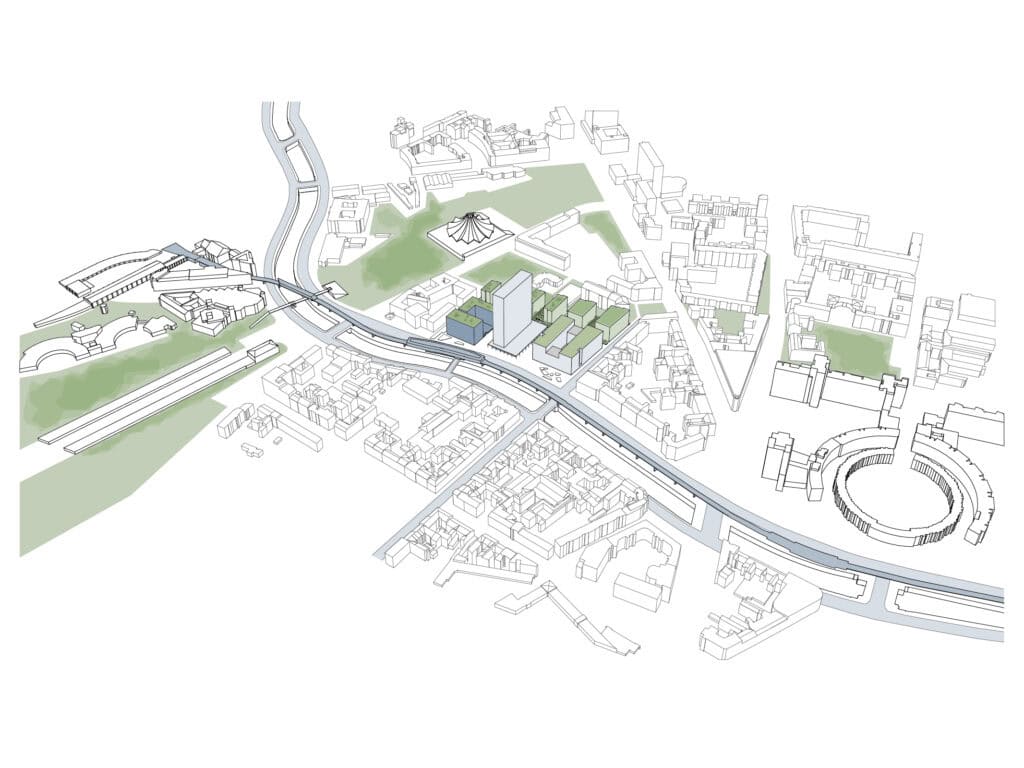
This project forms part of a master plan for the redevelopment of the former postal check office site in Berlin Kreuzberg. The plan envisions six new building clusters that reintegrate the existing 1970s high-rise into the contemporary urban structure. The resulting spatial fabric creates a dialogue between the adjacent Gründerzeit quarters and the post-war modernist landscape to which the high-rise originally belonged. The scheme therefore combines the openness of freestanding buildings with the continuity of Kreuzberg’s historic streetscape.
The former commercial site is reimagined as a mixed-use neighborhood for living and working. Integration into the urban environment is achieved through a clear articulation of the new volumes: along the canal, staggered building heights mediate between the courthouse, the tower block, and the residential blocks on Großbeerenstraße. To the north, at the edge of the adjoining park, three additional plots are designated for housing. Between the quiet residential area and the lively canal-side quarter, a spatial weave of diverse typologies unfolds, punctuated by green lanes and public squares accessible to residents, passersby, and neighbors alike.
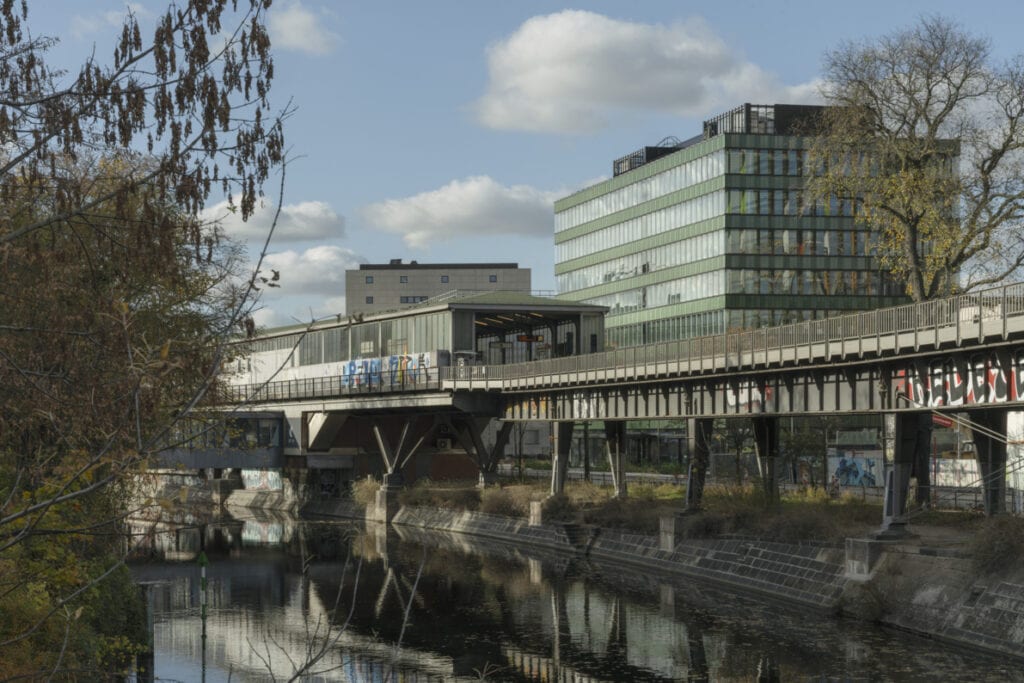
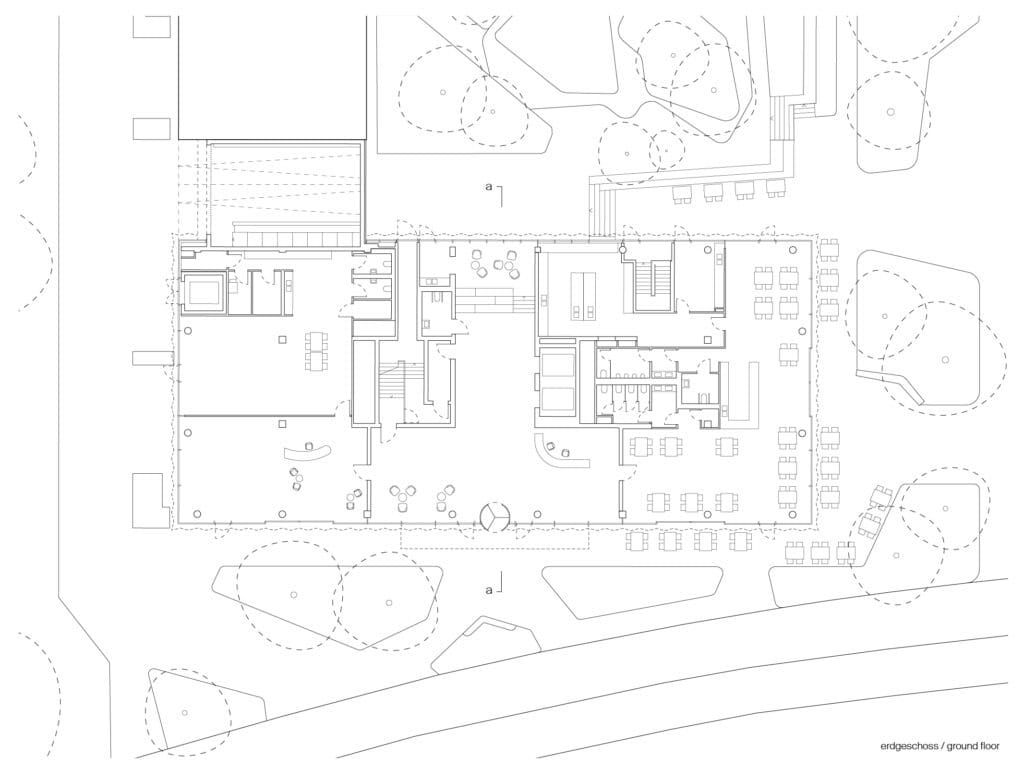
Marking the southwest corner of this ensemble is a flexible, high-quality office building of contemporary character. Together with an adjacent housing development, it frames a shared courtyard. Directly opposite the Möckernbrücke underground station, the eight-story building is accessed centrally from Hallesches Ufer. The ground floor is open on all sides, connecting to the landscaped courtyard and accommodating restaurant space, alongside retail that can either operate independently or be adapted by office tenants as conference or co-working facilities. On the upper floors, lift lobbies are oriented to provide views across reception areas toward the Landwehrkanal, while a shared rooftop terrace offers panoramic vistas over Kreuzberg.
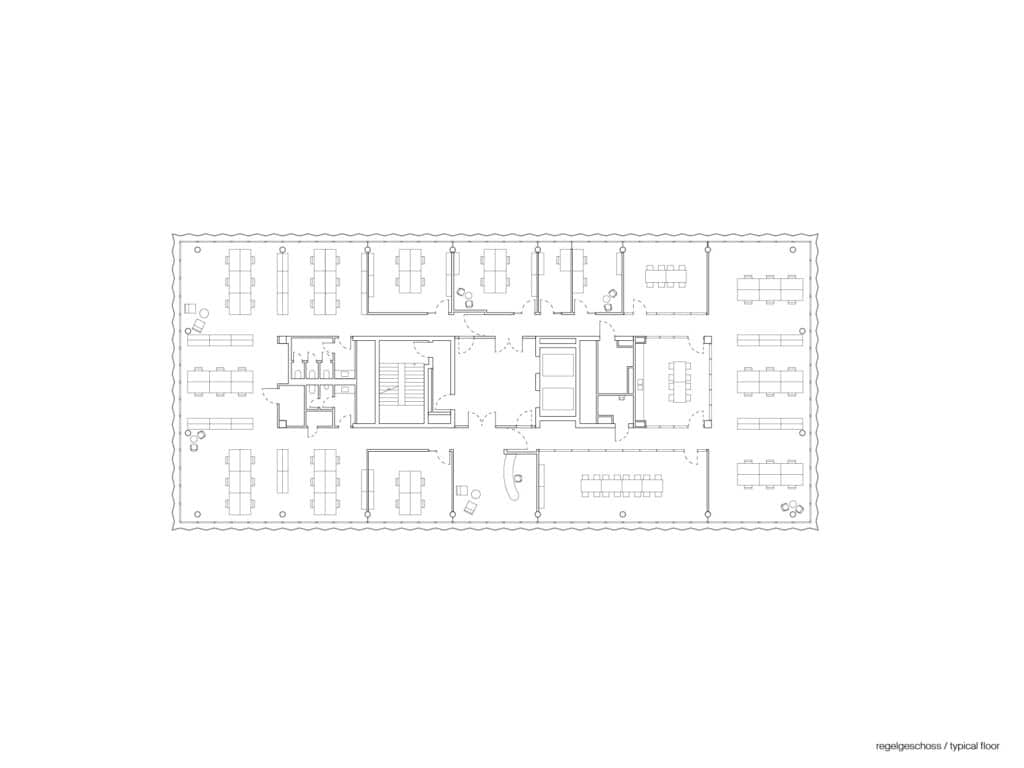
Each office level is divided into two units and can be configured for either single-tenant or multi-tenant use. A rational building structure—featuring a compact central core, optimized grid, and continuous ribbon windows—ensures both efficient daylighting and flexible floor plan design, enabling arrangements from individual and two-person offices to open-plan concepts.

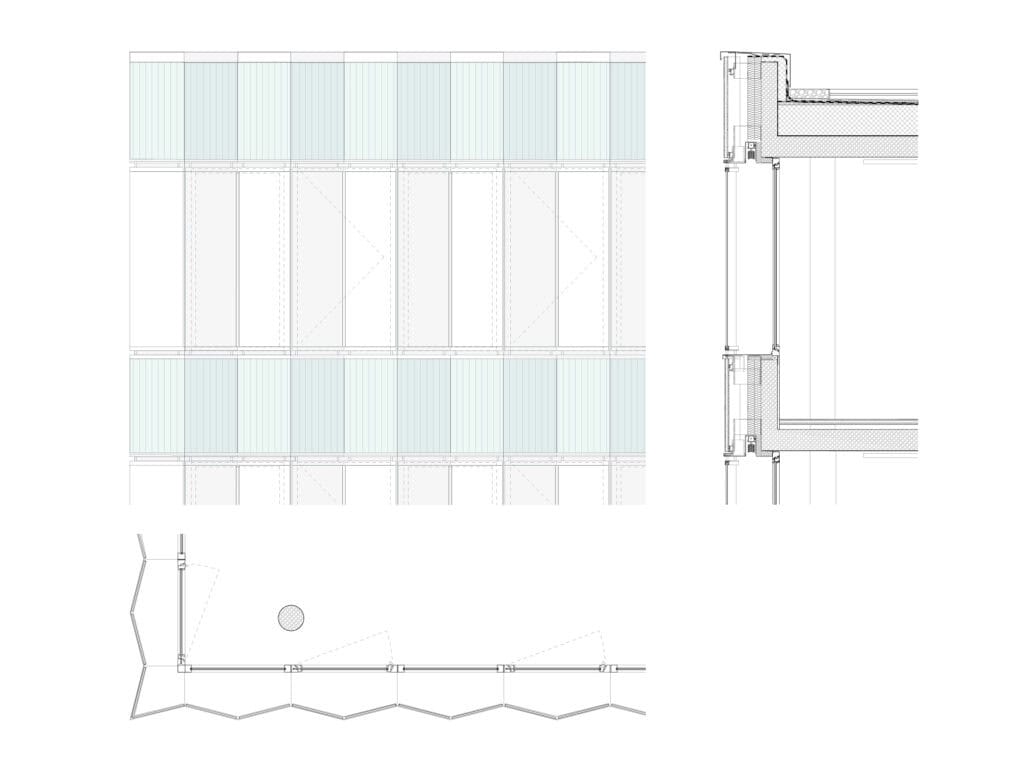

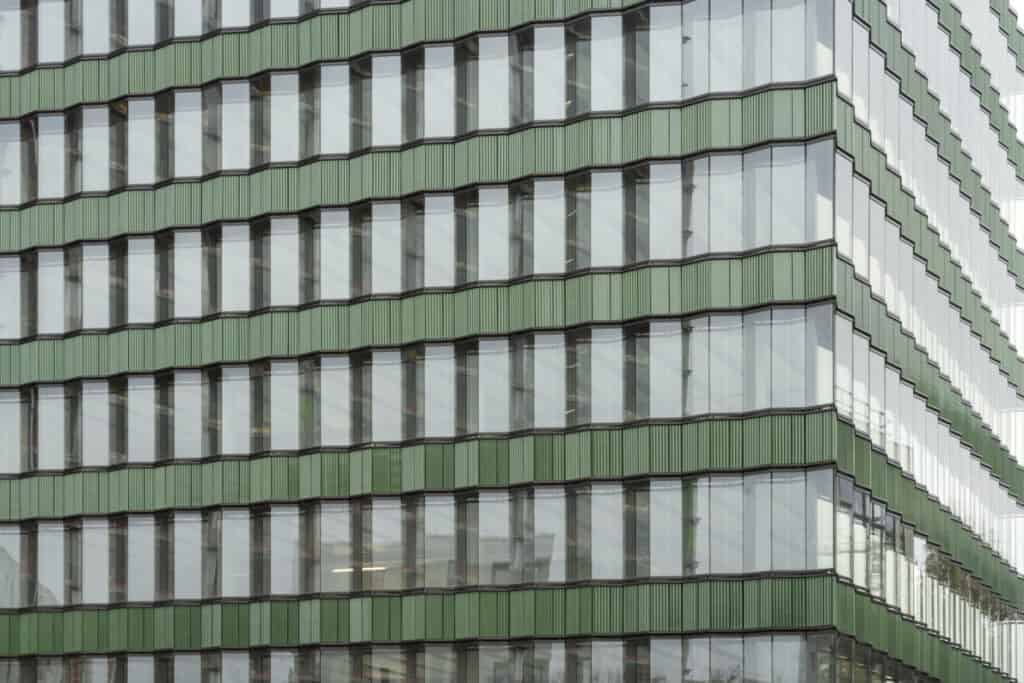
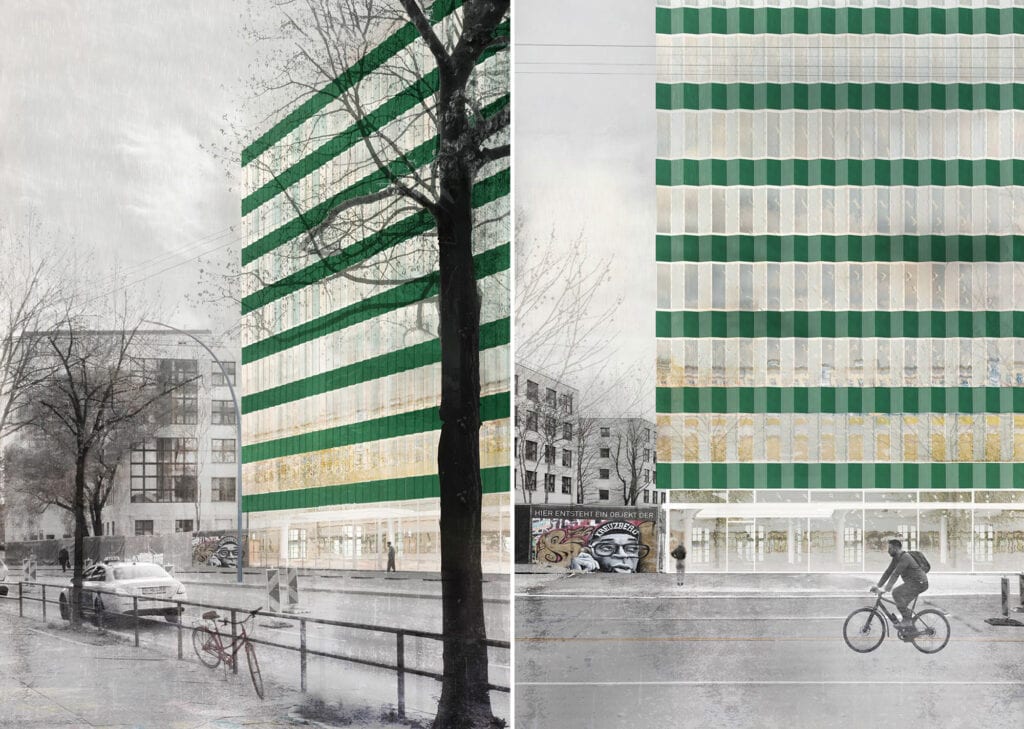
The architectural language references the district’s industrial past. Robust elements, reminiscent of Wilhelminian factory buildings, are combined with refined materials to create a balanced ensemble. The continuous ribbon façade is clad in green glazed ceramics, chosen for their durability, recyclability, and ability to develop a rich patina over time. The façade is animated by subtle folds, while the profiled ceramics enhance depth and color variation, shifting with weather, daylight, and movement.
This robust ceramic materiality alternates with slender window bands designed as three-layered box-type windows: an external protective pane shelters venetian blinds from noise and weather, while the innermost layer allows operable windows. Set in alternating angles, the panes follow the zigzag rhythm of the parapet strips, producing a dynamic interplay of light and shadow.
Inside, the contrast between raw and refined materials continues: exposed concrete and terrazzo meet expanses of glass cladding, lending an atmosphere of simple elegance and lightness. The interplay of contrasting materials resonates with neighboring structures while asserting a distinct identity within the urban landscape.