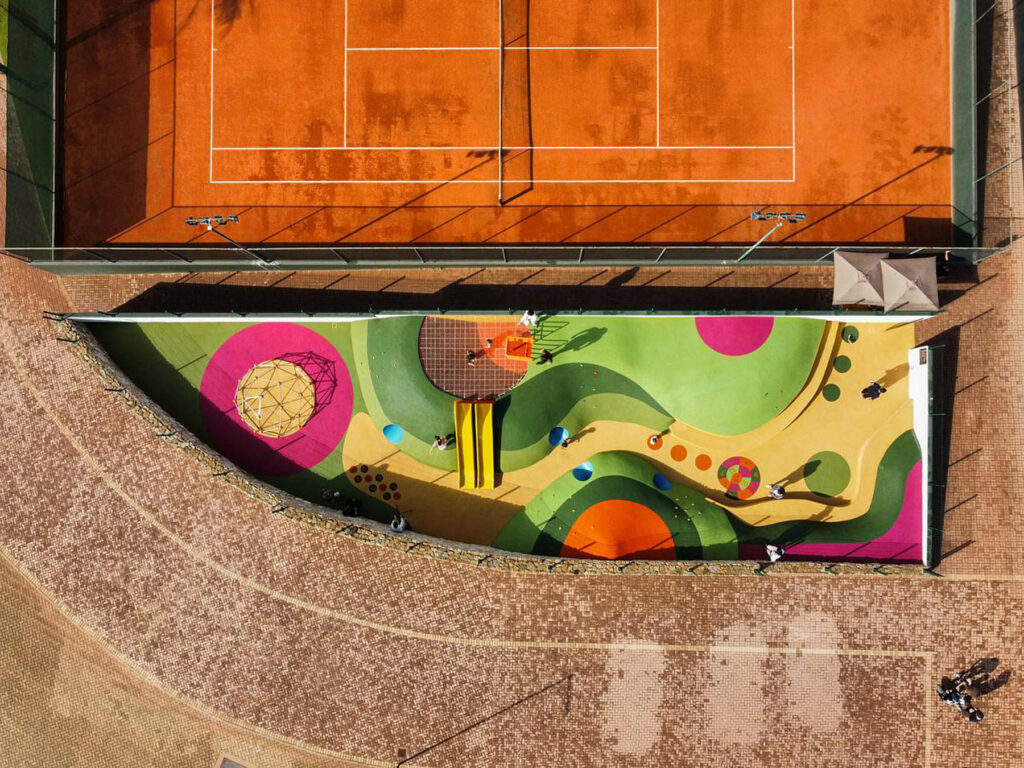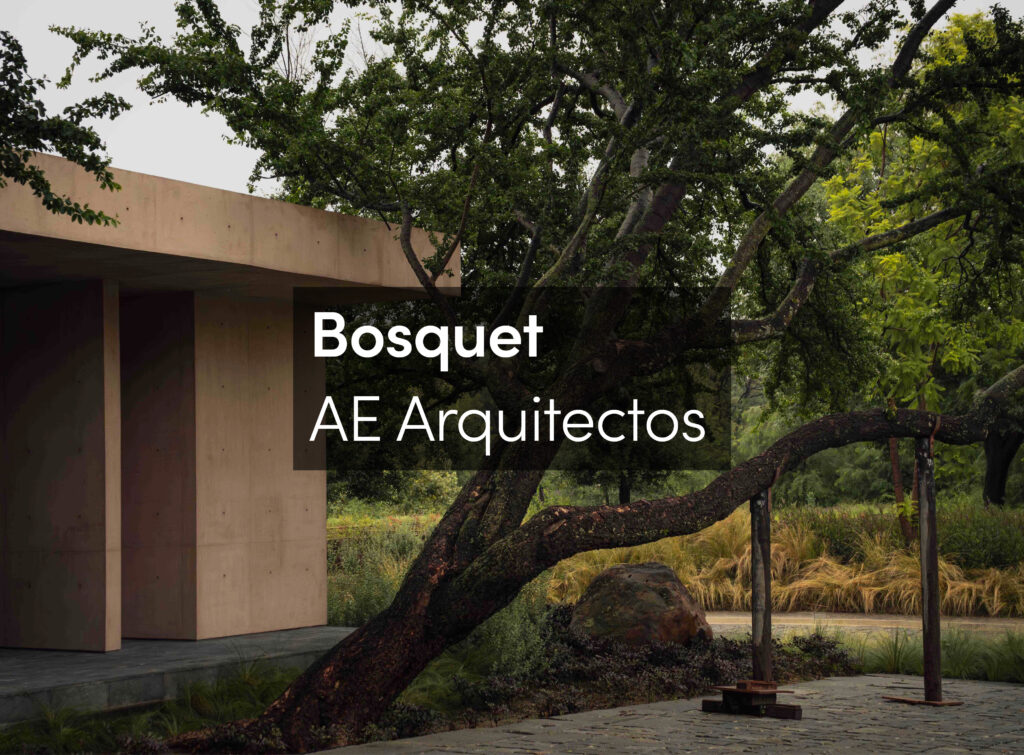



Set at the entrance of the BoaVista Palhano condominium in Brazil, this small-scale recreational intervention redefines the playground as a landscape for collective play. Occupying a garden shaped by the curvature of the road and the site’s natural slope, the project draws from the sail-like geometry of the plot to establish both its spatial logic and its playful identity.
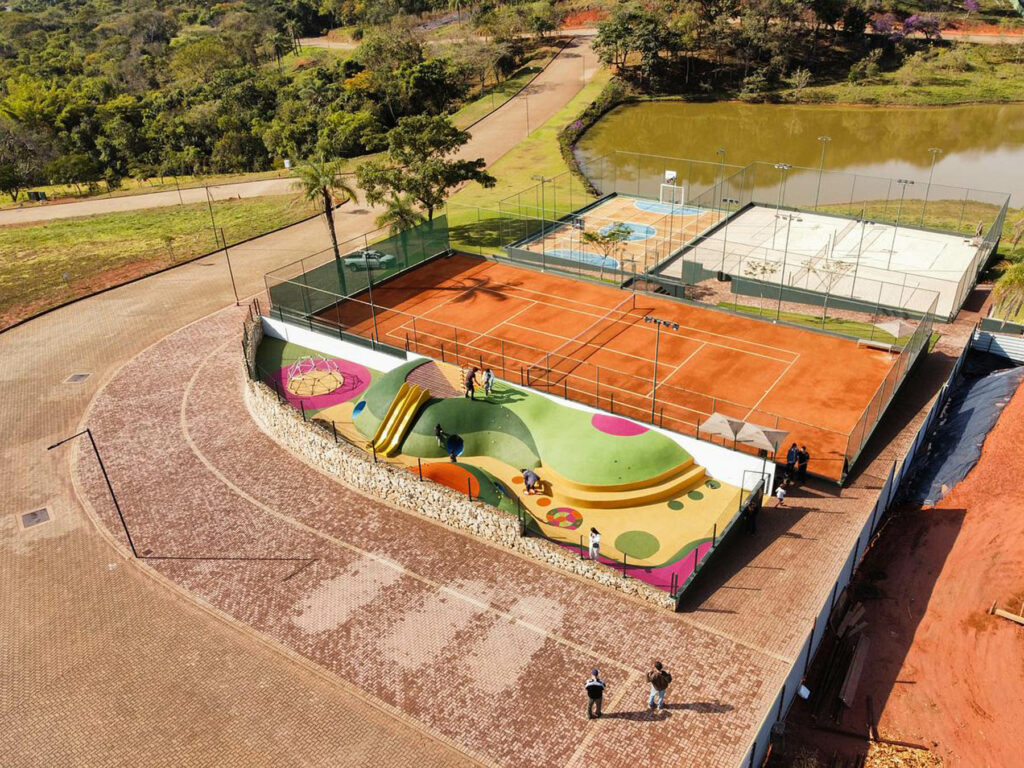
Rather than relying on conventional equipment, the design introduces an active topography that structures the space through slopes, diagonals, and embedded elements. Located close to the street, the playground negotiates safety through sectional strategies: the ground plane is lowered below street level, while stacked-stone retaining walls extend the material vocabulary of the condominium. This approach secures the site while maintaining visual continuity with its surroundings and preserving views toward the Serra da Moeda.
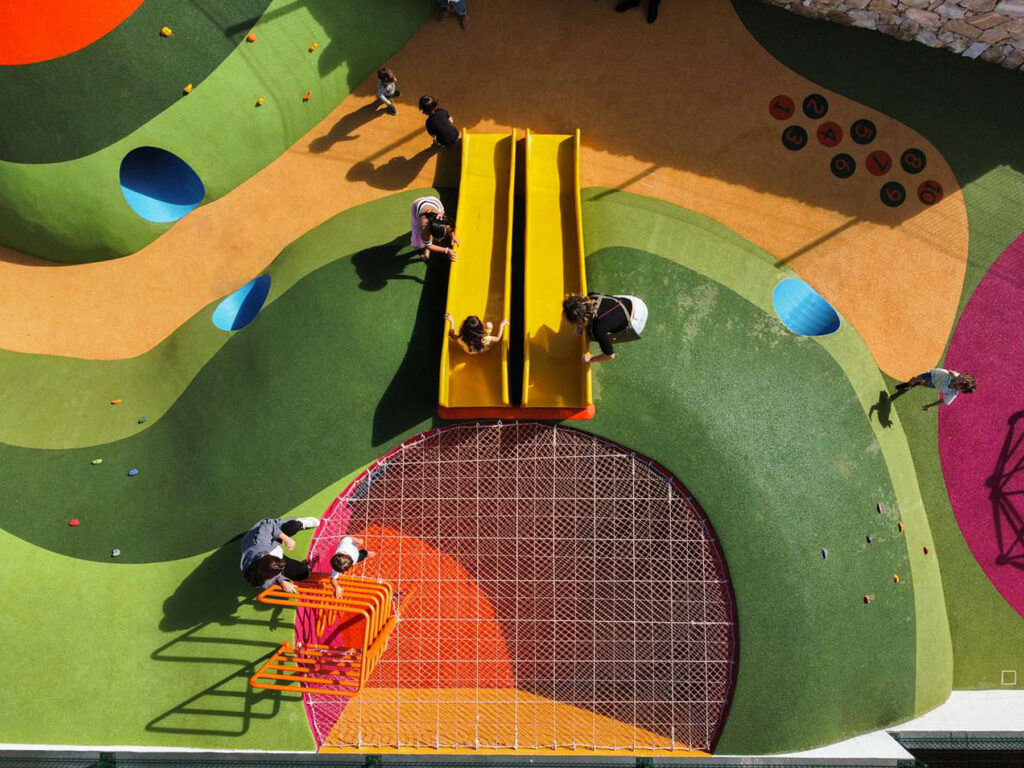
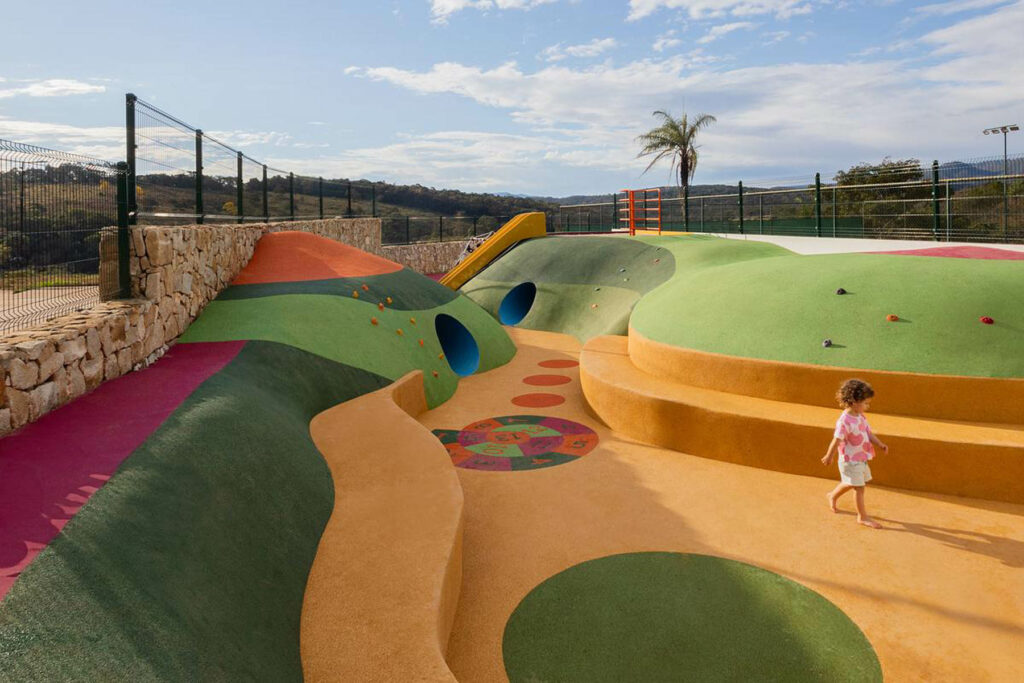 Conceived as a territory of imagination, the project encourages children’s interaction both with space and with one another. In this sense, it resonates with the work of Aldo van Eyck and Herman Hertzberger, framing architecture as a catalyst for spontaneous and collective play.
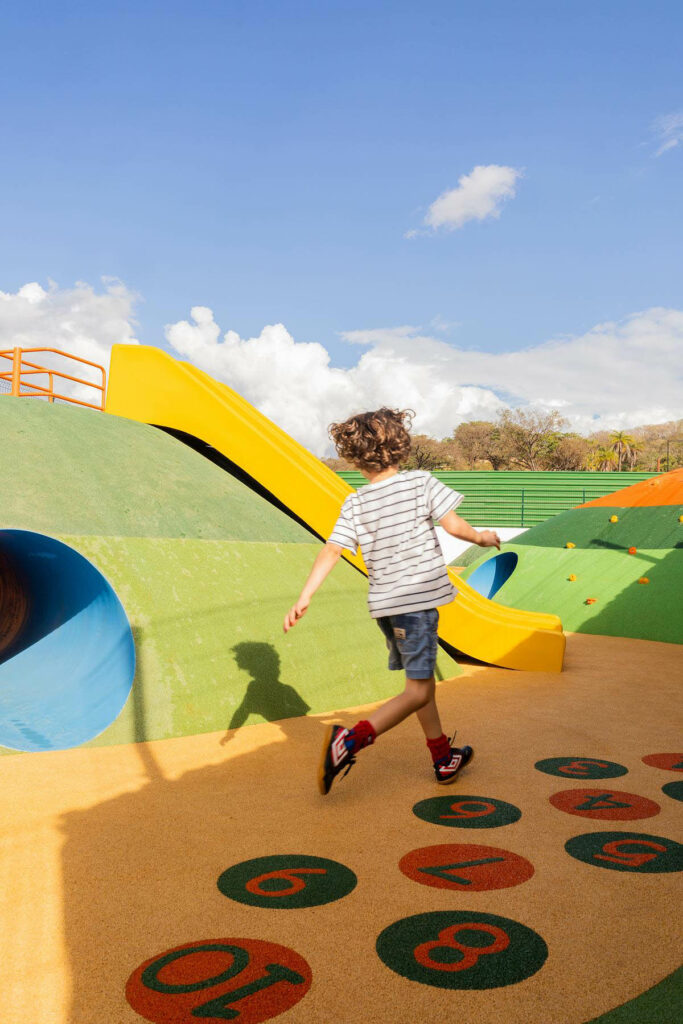
Paths and programmatic zones are organized along the diagonals of the trapezoidal site, generating a continuous field of movement. Slides, tunnels, climbing elements, and hidden spaces are integrated into the terrain, fostering exploration and bodily engagement. At the same time, an amphitheater, a stage, and seating areas accommodate caregivers, reinforcing the playground’s role as a shared social environment. Compact in scale yet expansive in experience, the project operates as an open-ended framework for discovery, interaction, and play.