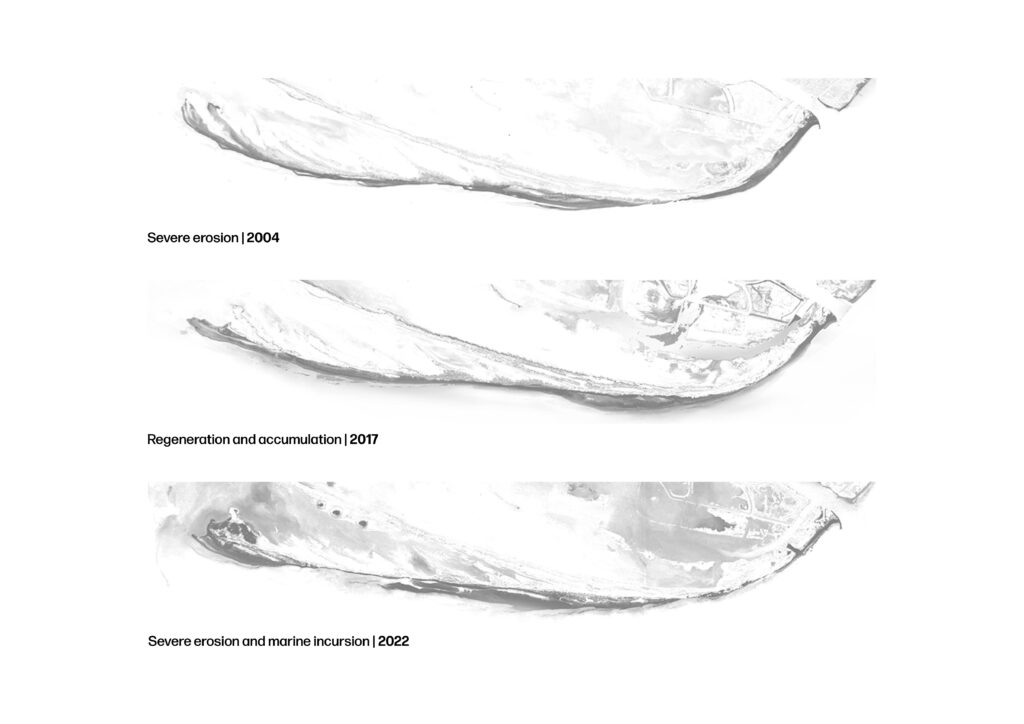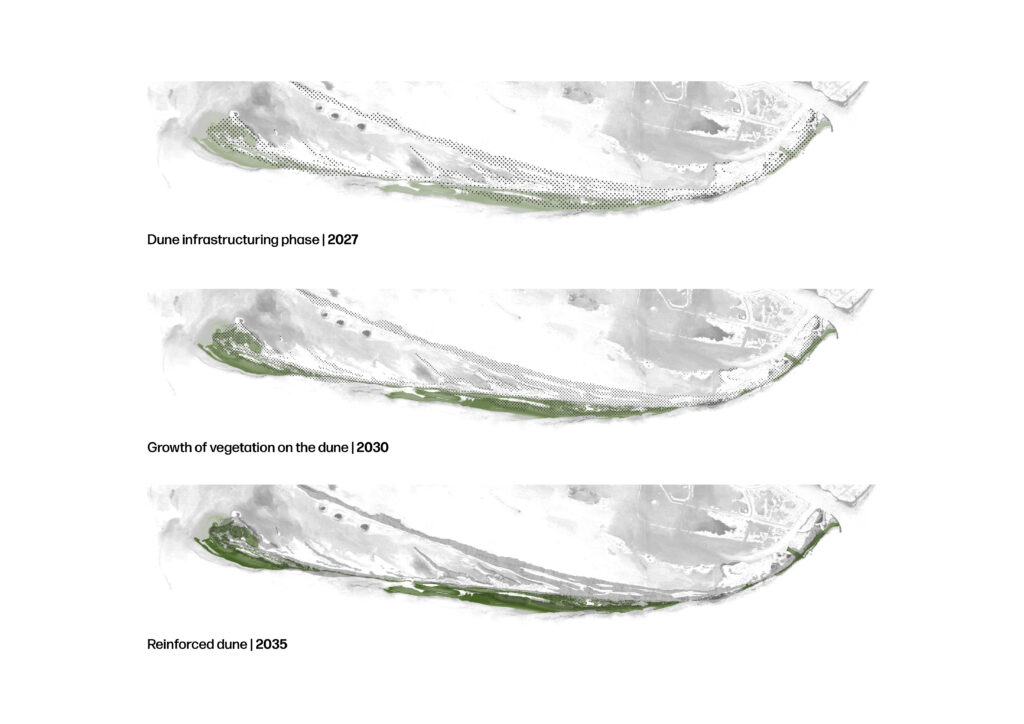



Antifragile Landscape is part of a research line aimed at territorial antifragility. We understand this attitude as a process of redefinition, in which critical conditions are interpreted as opportunities for growth and strengthening.
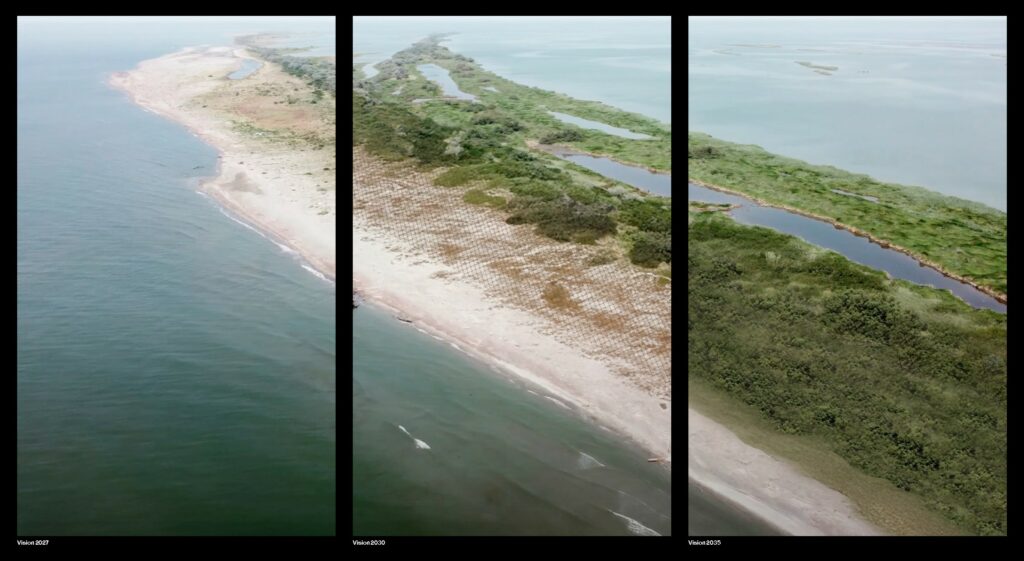
Ecotone territory
The project concerns an emerged salt marsh, formed in part through sediments and debris carried by the Po River. It is a territory suspended between sea, productive lagoon, and anthropized land—three sensitive landscapes that must preserve their existing relationships through the identification of potential, hidden portions of the landscape.
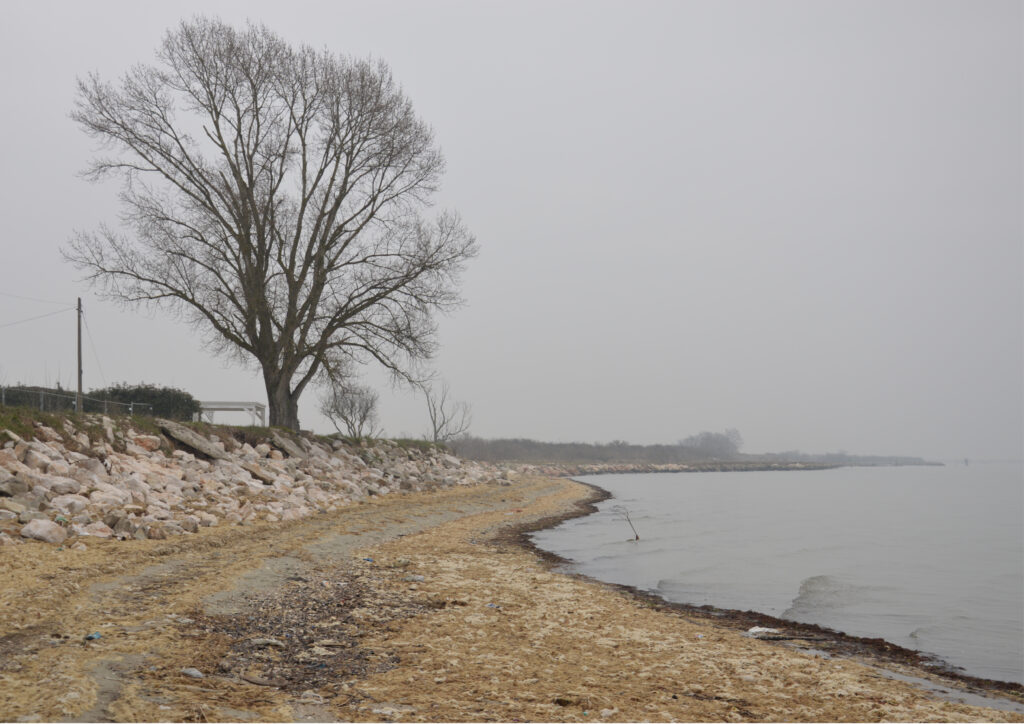
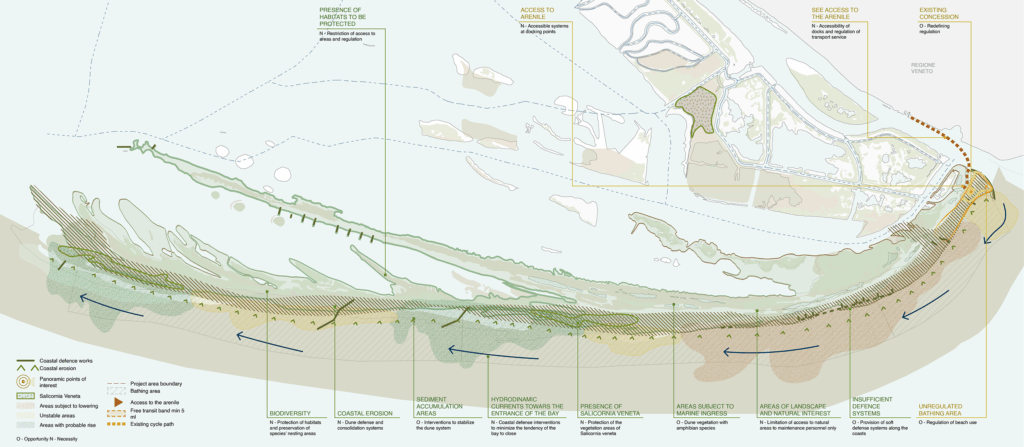
Antifragility as a design method
Antifragility, understood as the ability of a system to benefit from shocks, is the core principle of the design strategy. Through targeted actions such as the placement of sand-sedimentation nets, the Goro waterfront is reimagined as an evolutionary interface: a place where natural dynamics are not opposed but embraced to generate new balances. This is an incremental process over time, in which the sea nourishes the growth of native amphibious species. Marine nourishment increases their volume to protect the anthropized human territory, while simultaneously allowing its crossing through a contemplative fil rouge.
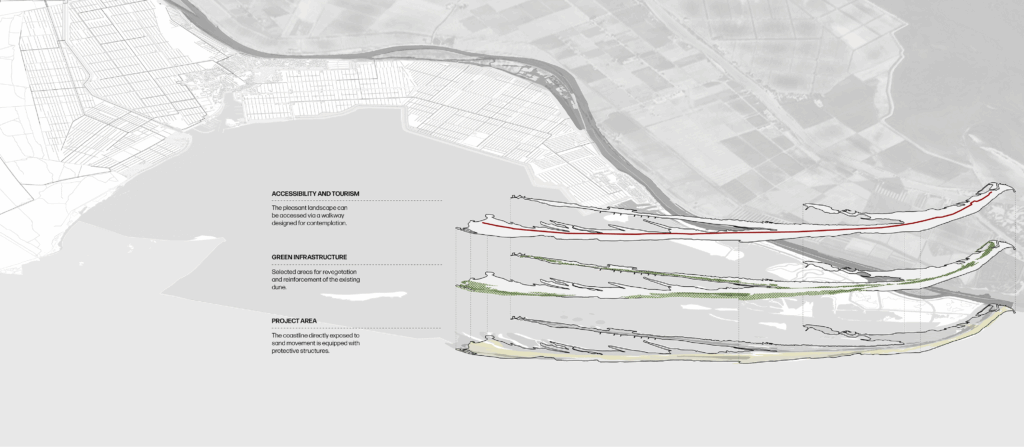
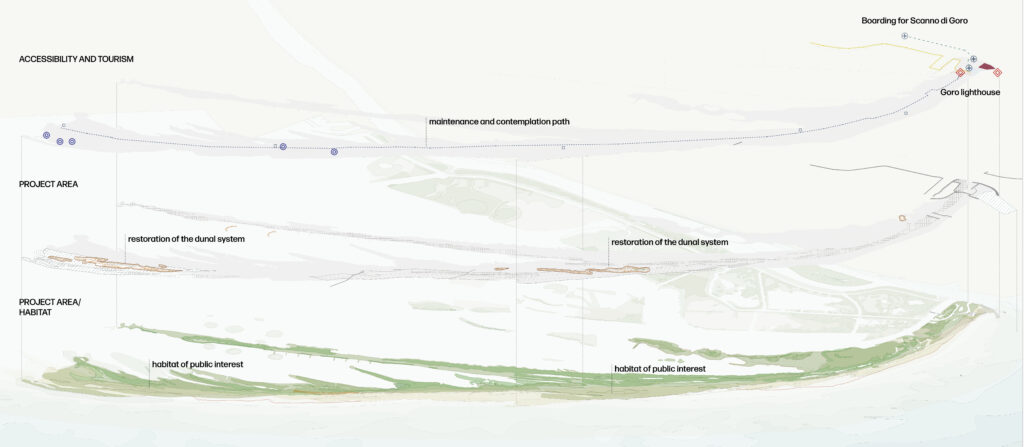
From natural to hyper-natural
An evolution in the relationship between humans, nature, and the sea is introduced. Marginal areas are transformed into dynamic mediation spaces, capable of withstanding climate change and generating new centralities through anthropic induction, leading a natural landscape to evolve into a hyper-natural one.
The dune system is no longer a simple natural line, but a reinforced ecosystem that regenerates through the interaction between natural elements and targeted design interventions. In this perspective, human action is not imposed but calibrated, integrating into the rhythm of nature to generate a landscape that grows and evolves—transforming fragility into a resource, shifting from anthropocentrism to ecocentrism.