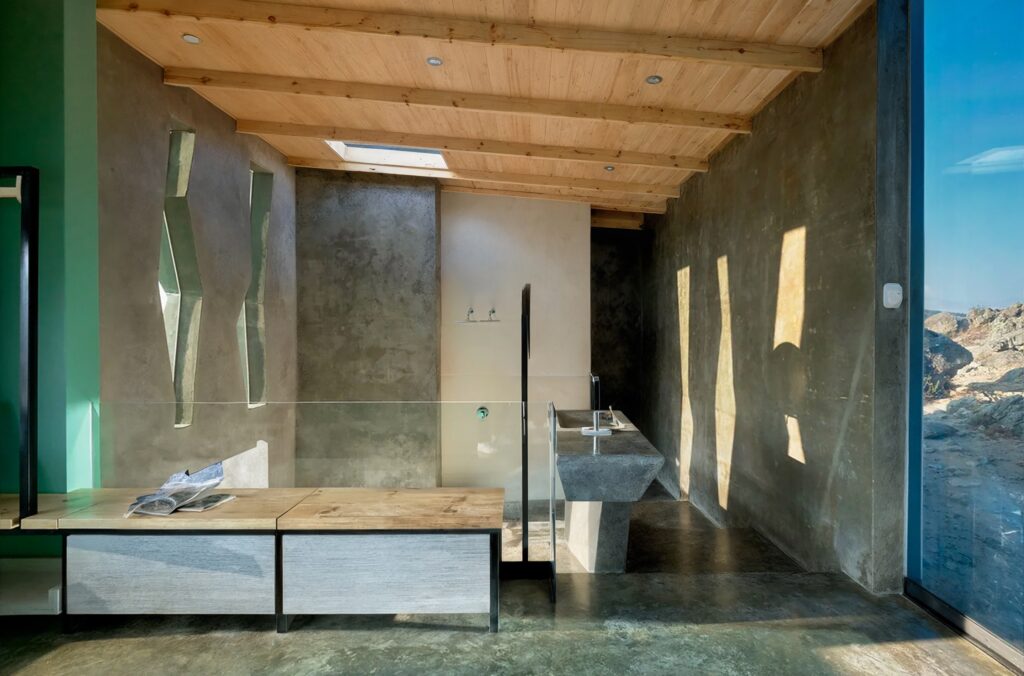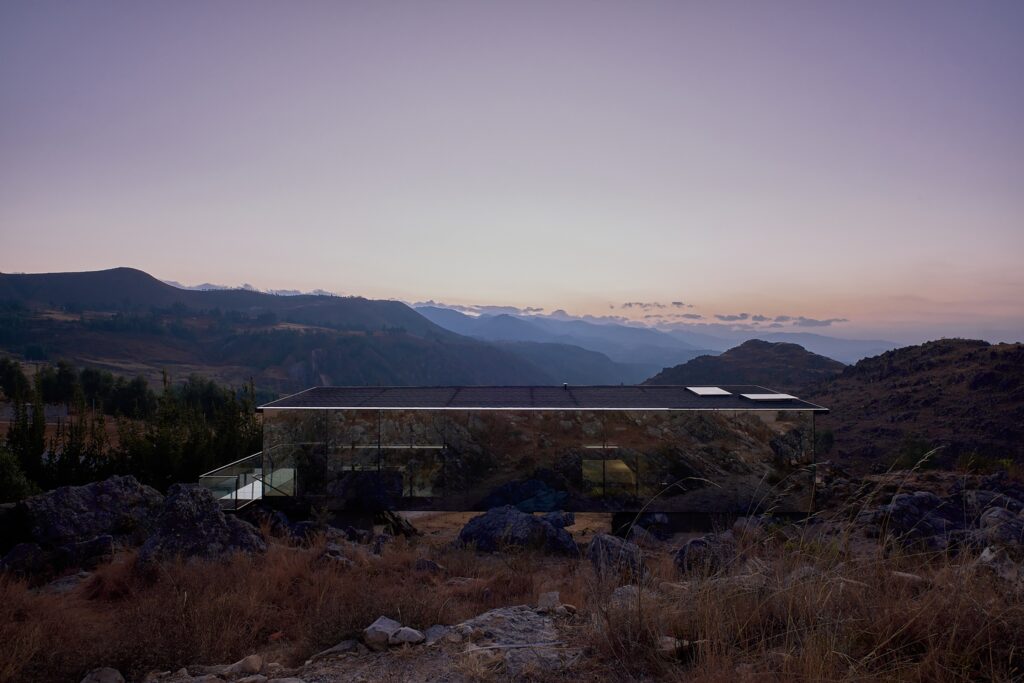



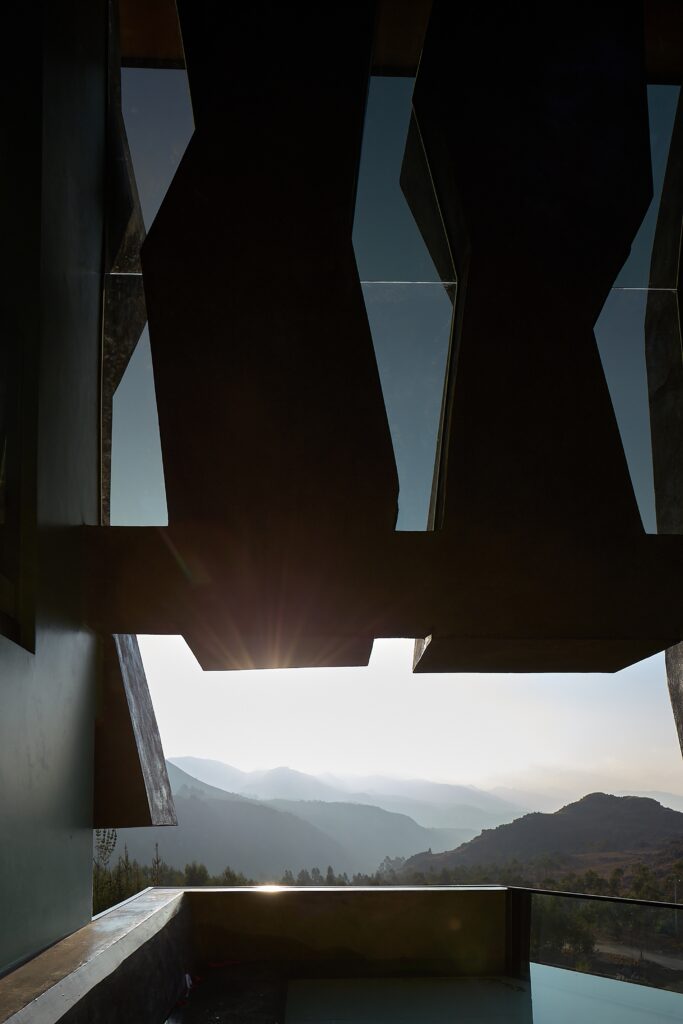
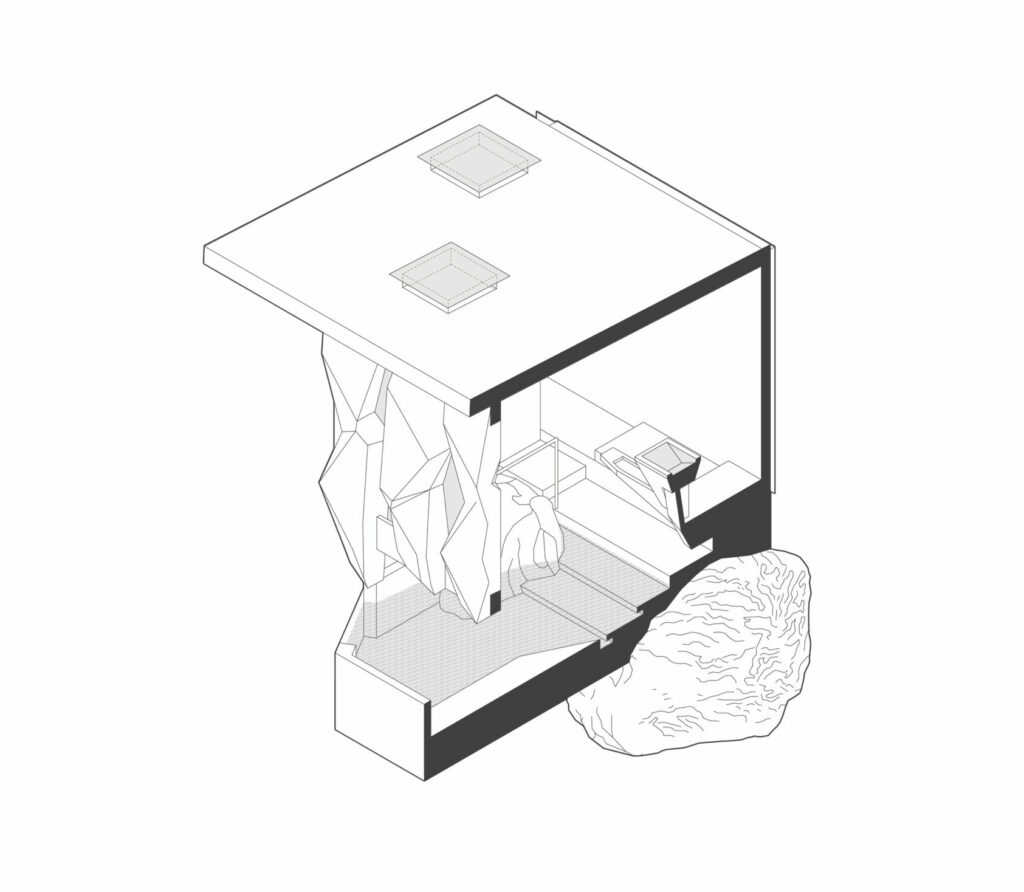
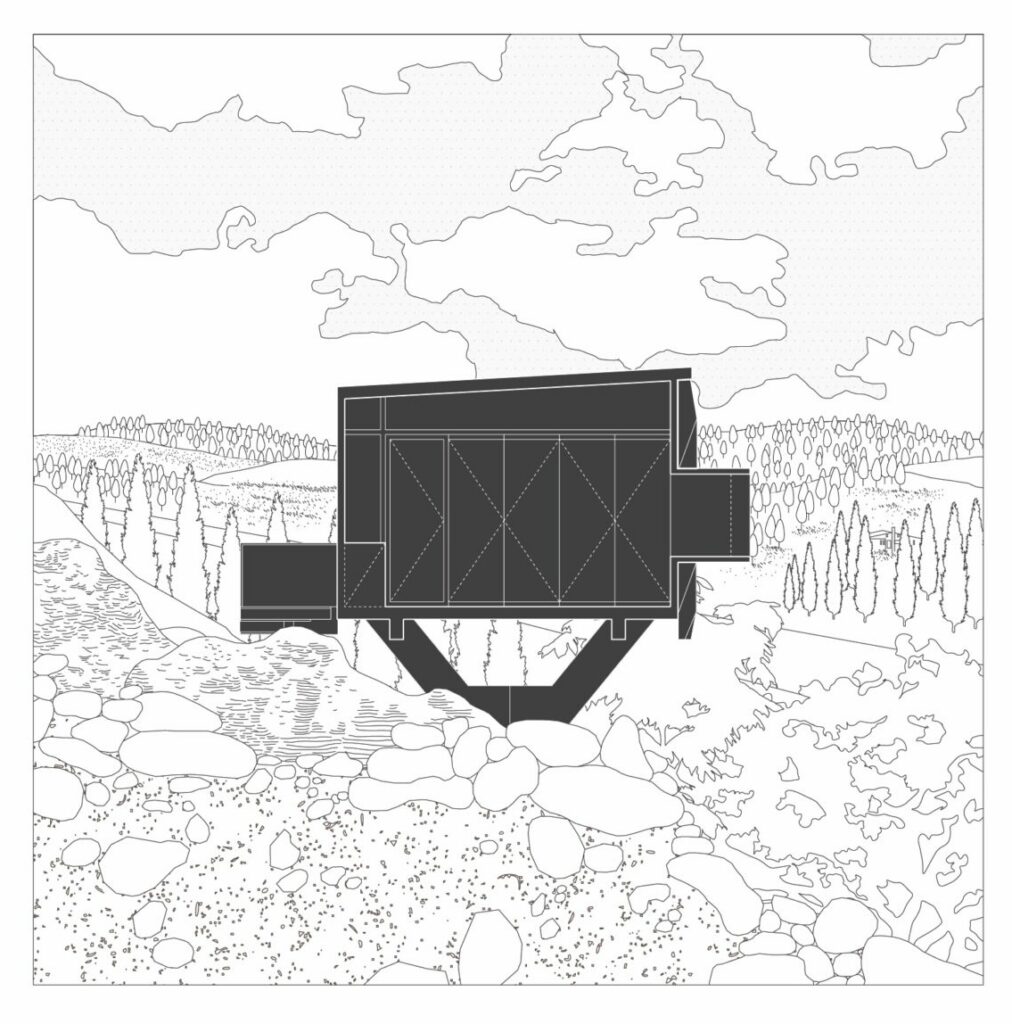
The Rumi Ñahui Cabin is conceived from a premise of submission to its setting: the imposing Andean landscape and its cold, windswept climate. To the east, the architecture blends into its surroundings through the use of faceted elements that evoke suspended rocks, softening the built volume while providing protection from the wind. In contrast, to the west, a continuous wall of reflective glass mirrors the landscape, dissolving the building’s boundaries, reducing its visual impact, and capturing the afternoon sun.
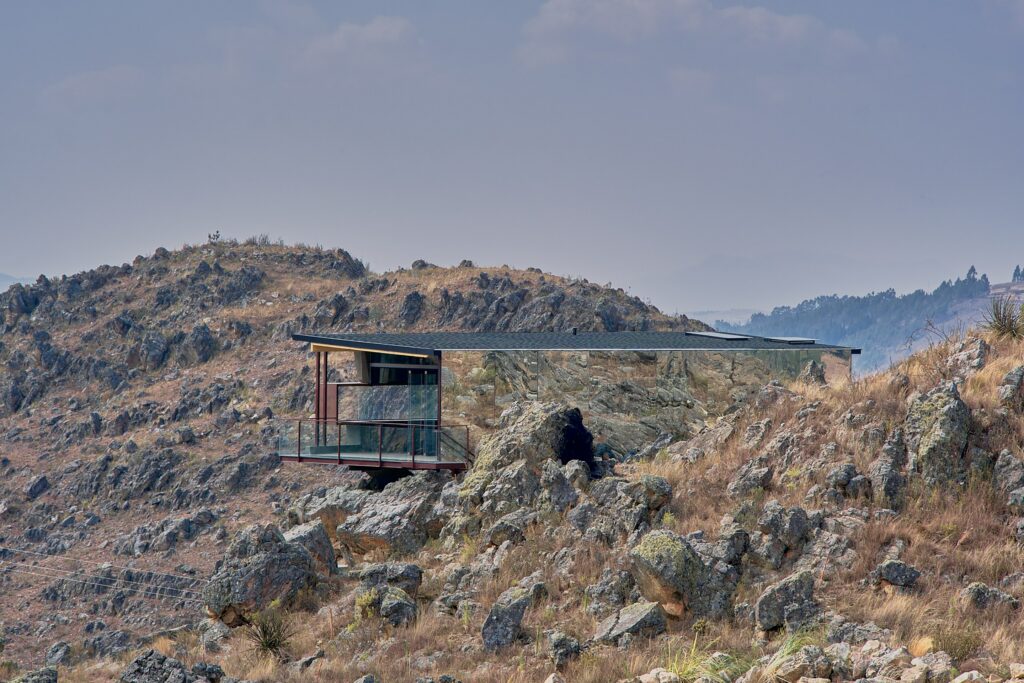
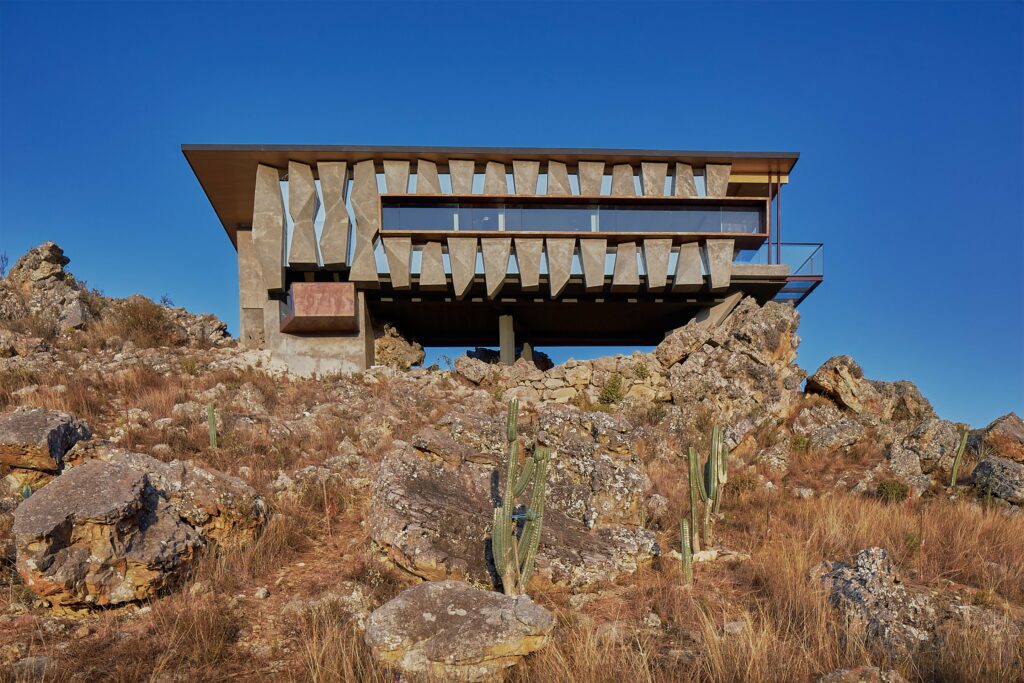
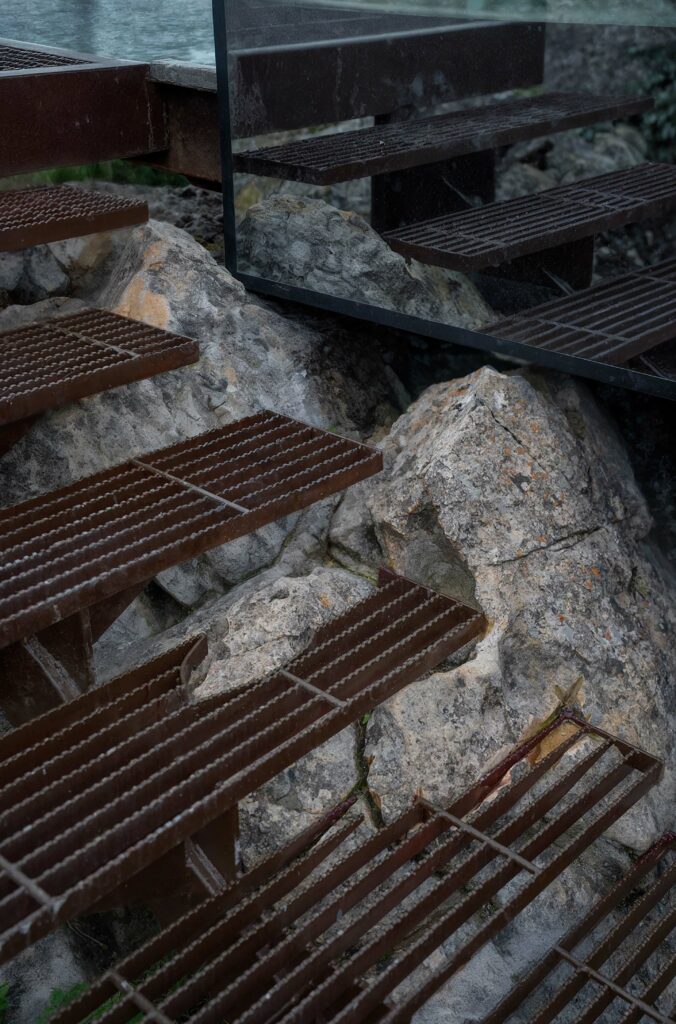
The elevation of the volume above the ground—allowing the landscape to flow freely beneath—reinforces the idea that it is the place, rather than the architectural object, that ultimately prevails. From the interior, the landscape is framed through a large horizontal window facing east, while semi- reflective glazed panels visually extend the surroundings into the interior. Even the furniture reinforces this dialogue with the landscape, from the kitchen fittings with reflective finishes to the sculptural washbasin that evokes suspended carved rocks.
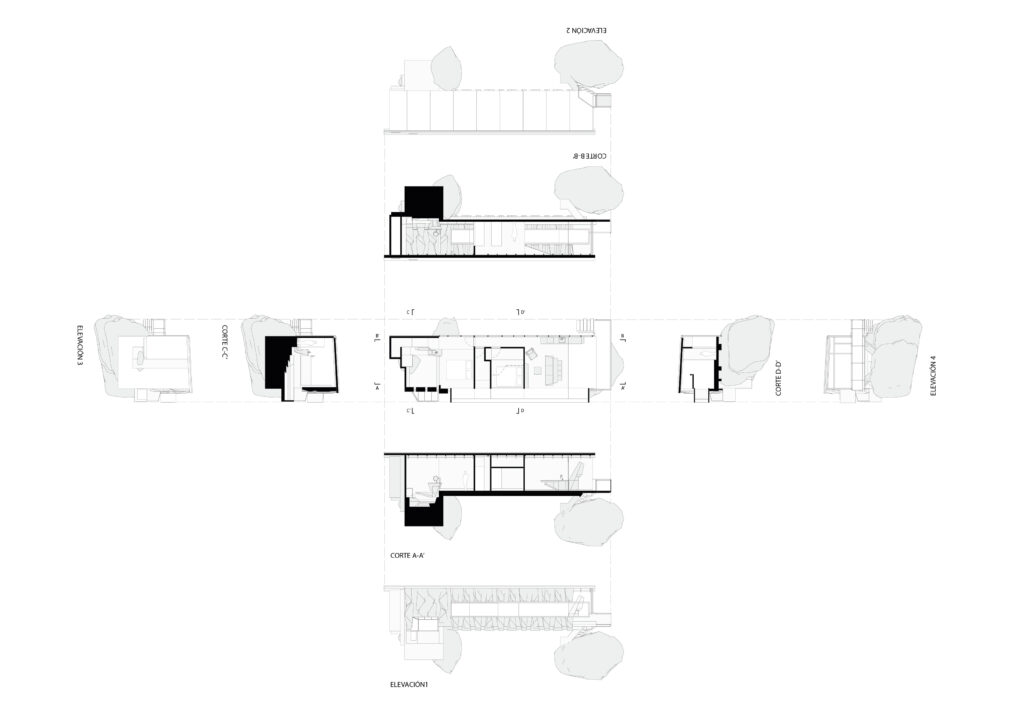
At the same time, the project responds efficiently to the local climate. Its compact rectangular form, oriented with its long façades facing east and west to optimize solar gain, enhances thermal performance through passive strategies such as the use of thermally massive materials, airtight windows, and controlled ventilation.
These measures are complemented by active systems, including photovoltaic panels and a biodigester for waste management, consolidating a sustainable architecture that remains deeply attuned to its landscape