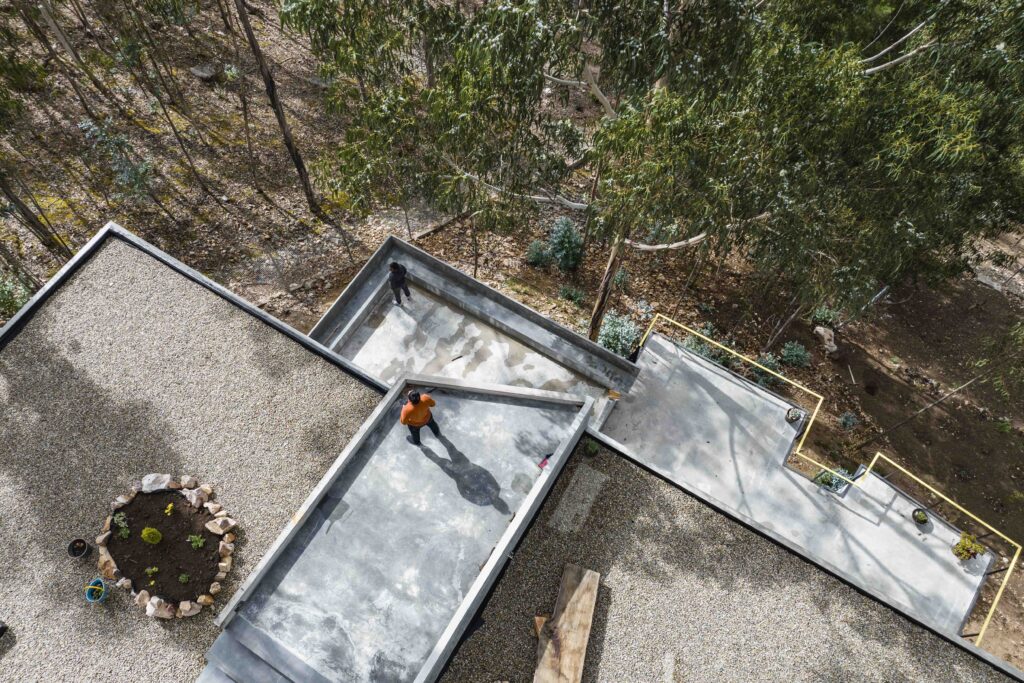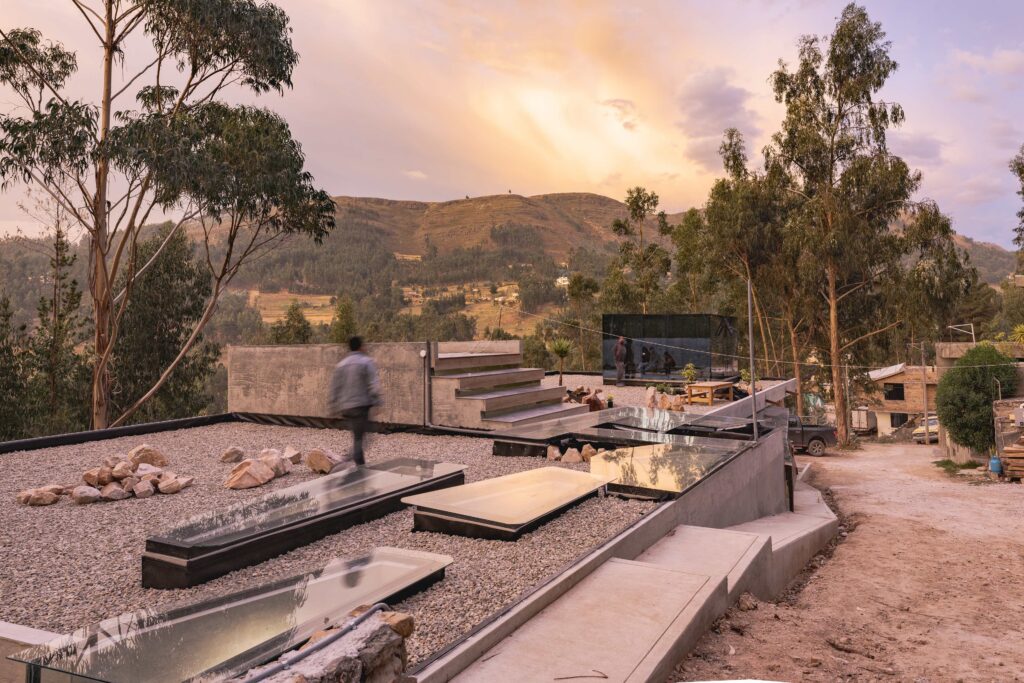



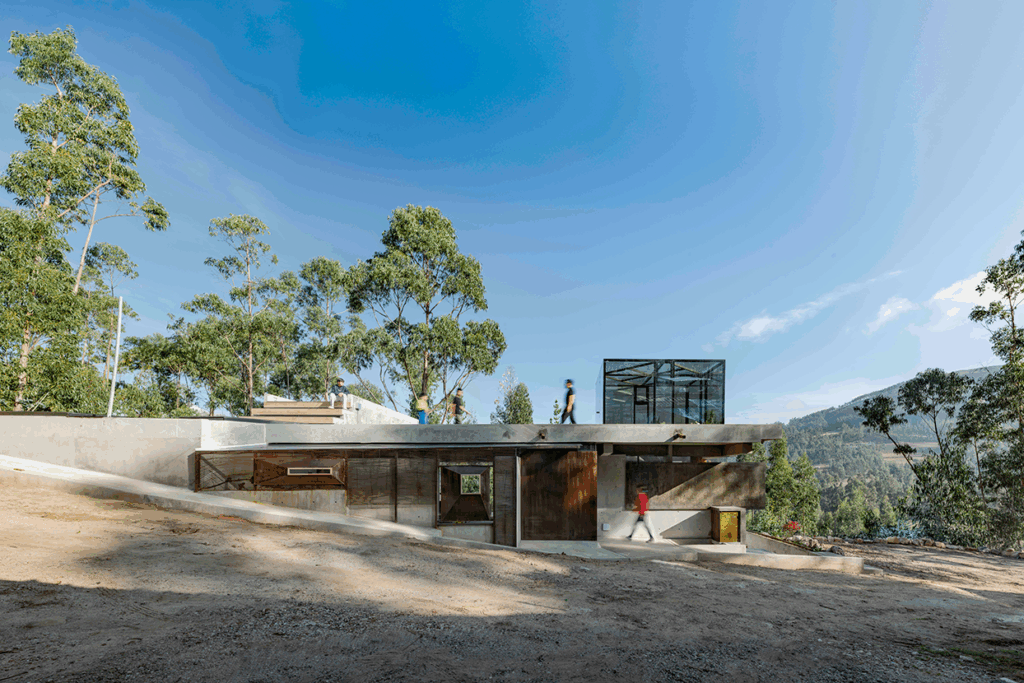
Casa Callacpuma is conceived as an architecture that does not impose itself on the hillside but rather extends it through a suspended garden-roof that functions as park, landscape, and communal articulation. This green surface is not decorative but a topographic restitution strategy that restores continuity to the terrain, visible both from the street and from the architect’s office.
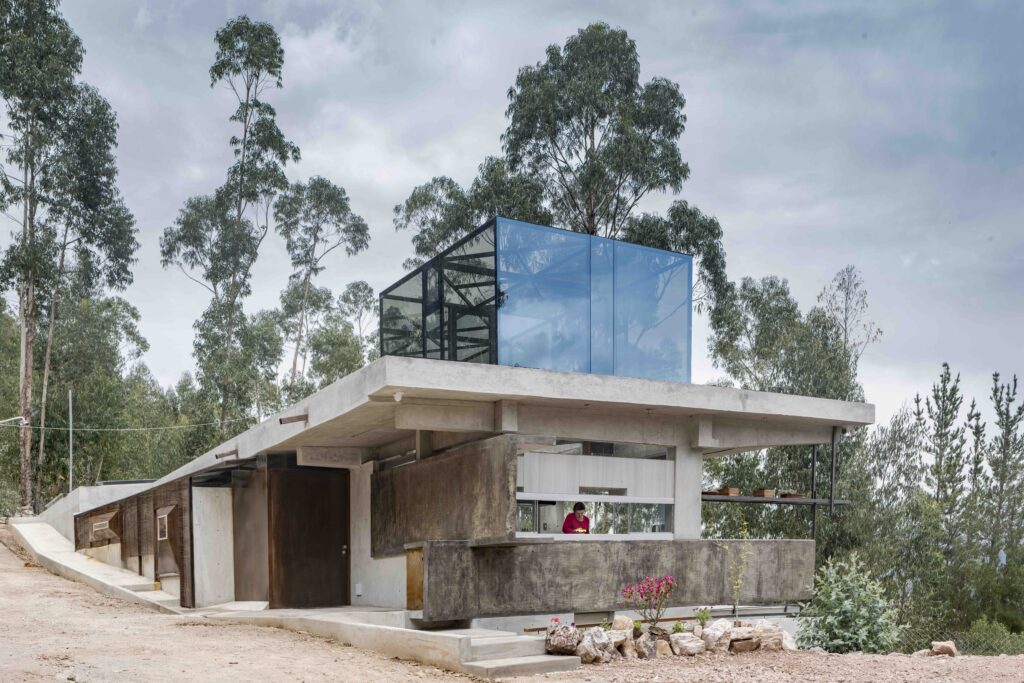
Beneath it, the dwelling fragments into volumes connected by walkways and voids, creating an open system that avoids enclosed masses. The structure, supported by slender pillars and a beam-furniture element, reinforces the tension between the domestic and the structural. This ruin is neither nostalgic nor literal, but a critical condition of dwelling: what remains when we choose not to impose, not to saturate, not to enclose.
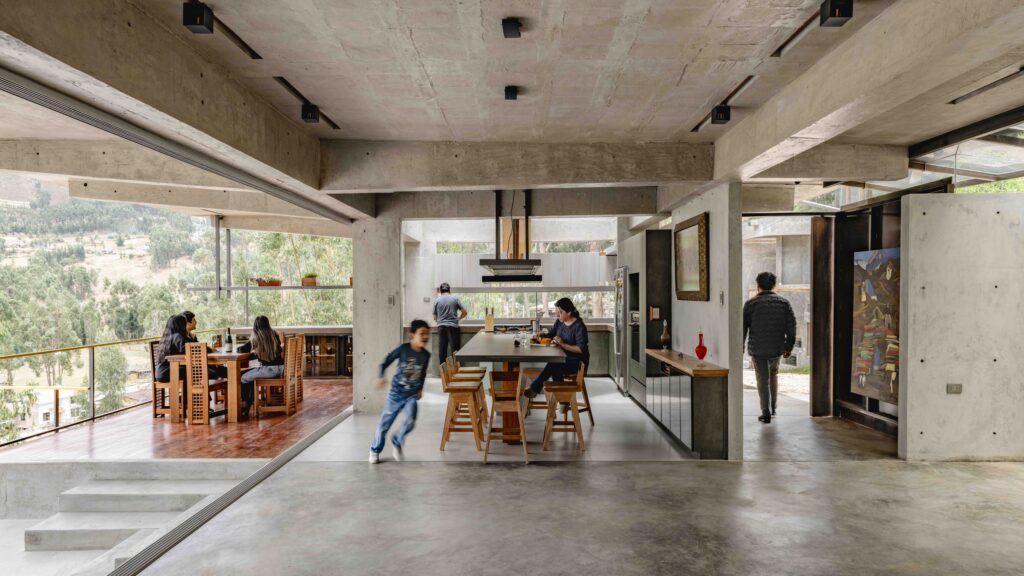
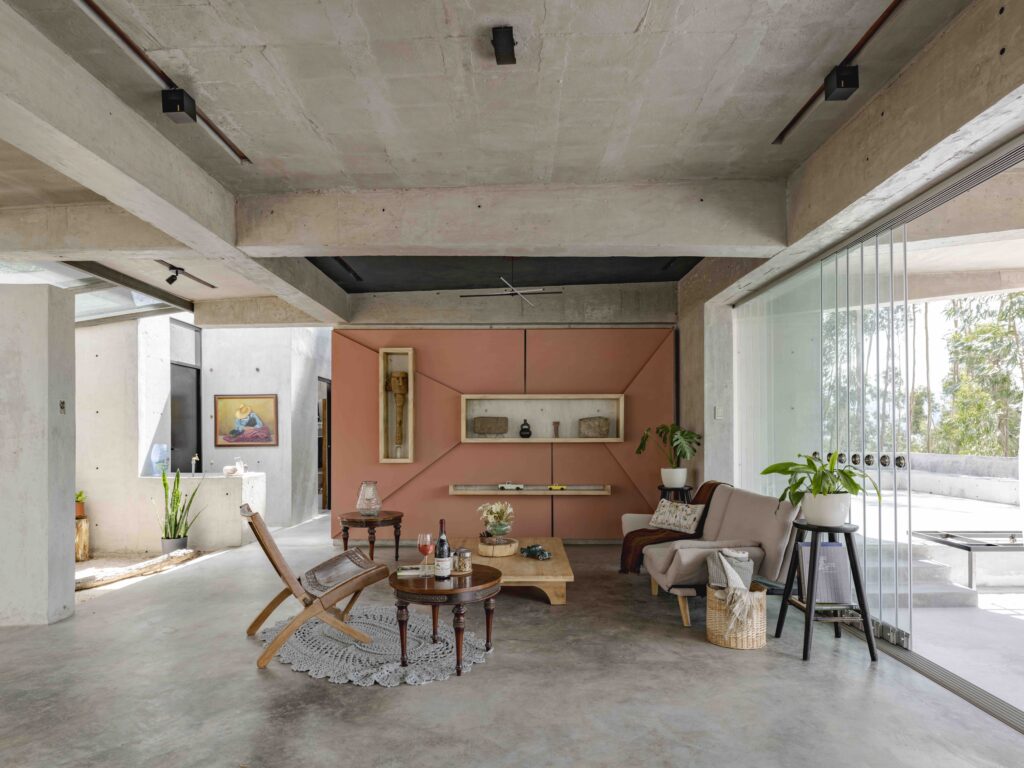
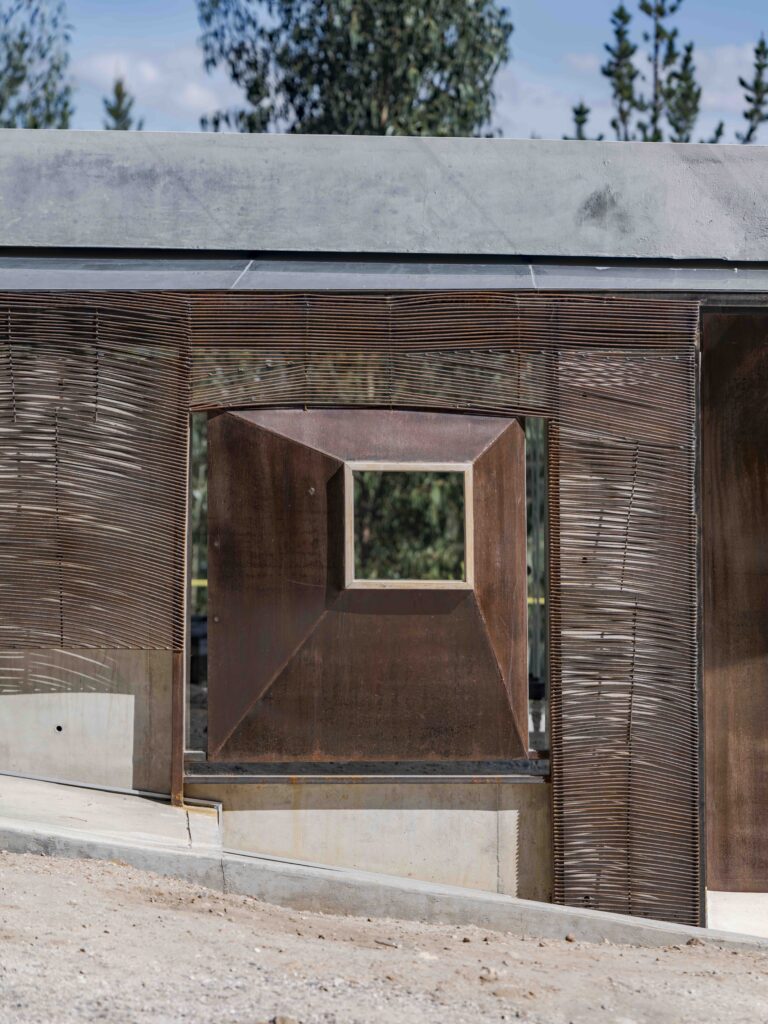
Set on a steep slope of over 35 degrees, the house addresses the Andean challenge of building without denying the inclination, incorporating it as a spatial generator. Its stepped configuration continues the natural rhythm of the hillside, with three levels intersecting visually and structurally.
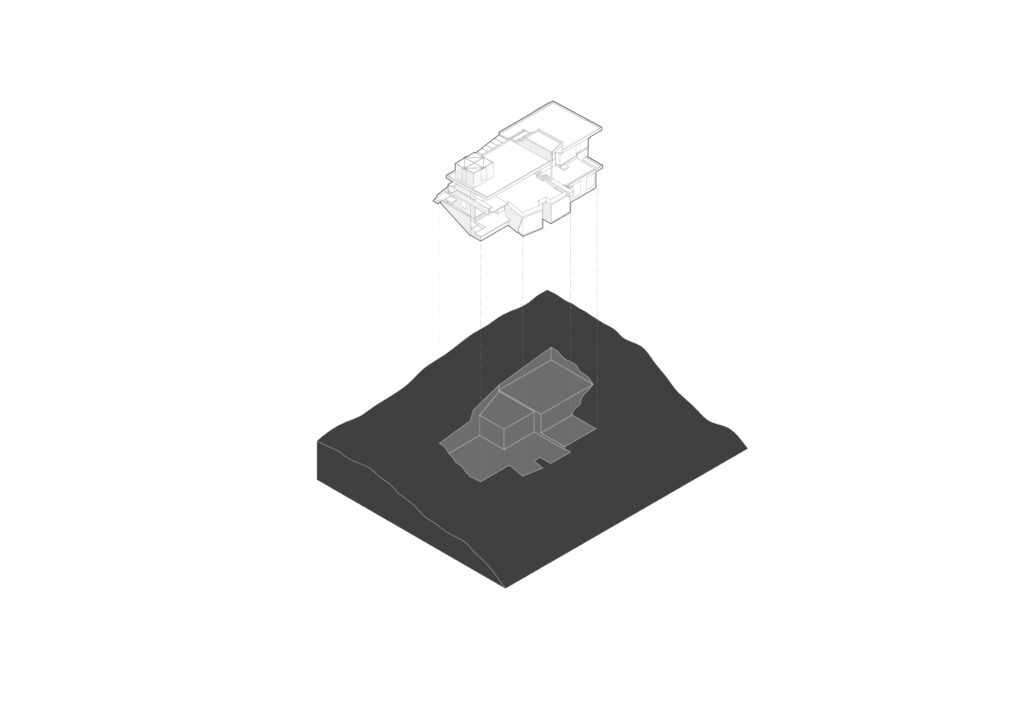
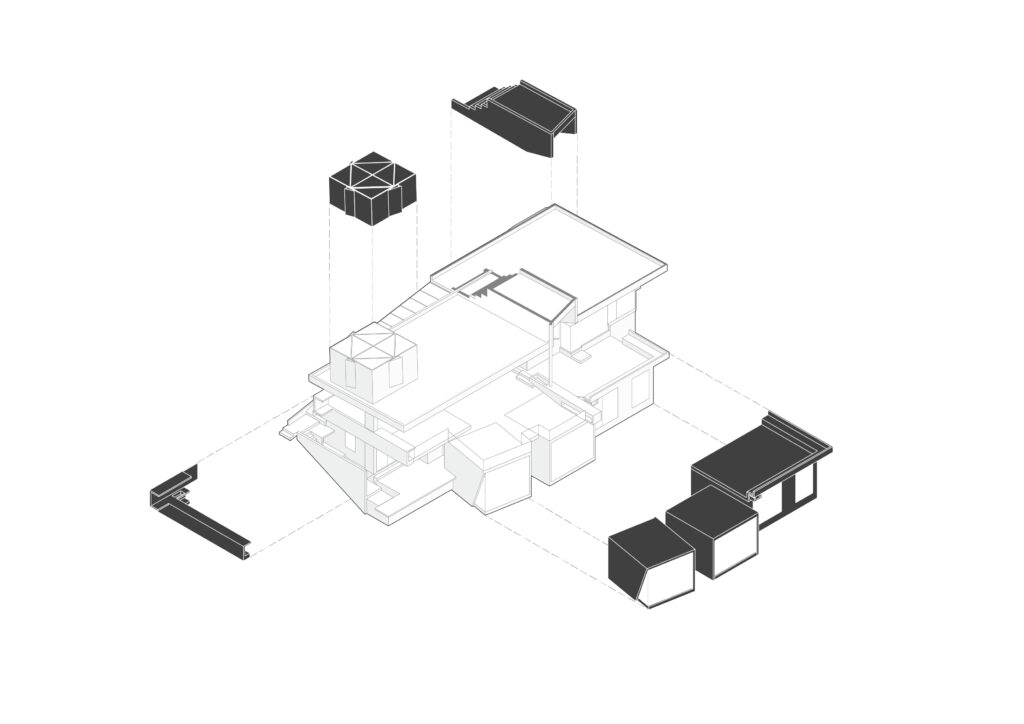
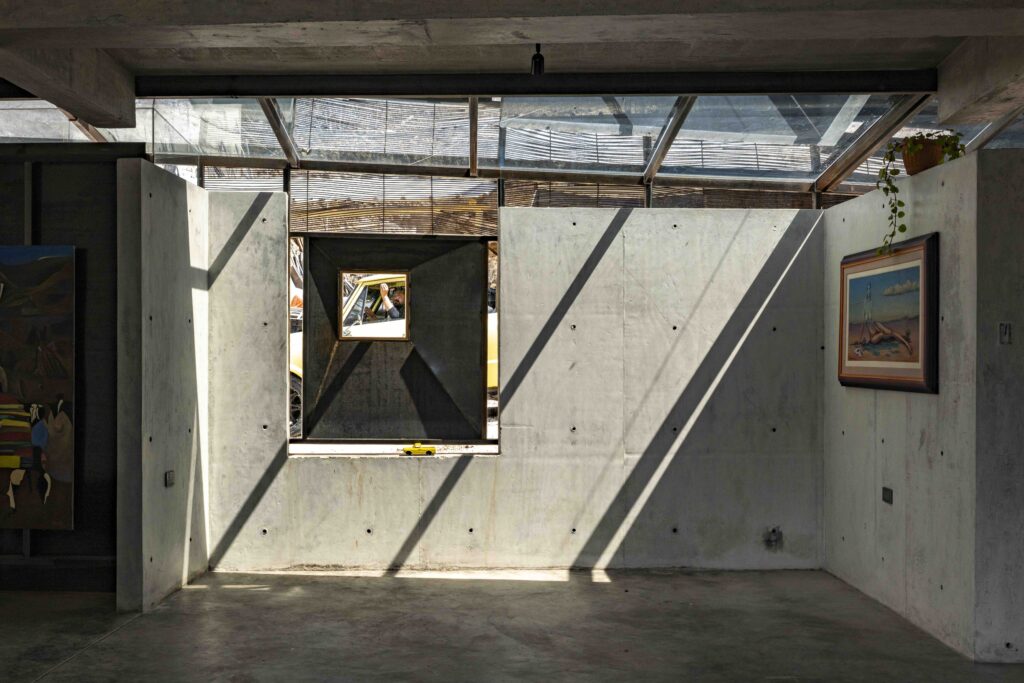
The social terrace, both semi-buried and serving as the roof of the private zone, opens to the landscape in continuity with the topography, while the interior dissolves into the forest without visible boundaries. An elevated greenhouse above the kitchen regulates light and climate, acting as an atmospheric filter at the domestic core.
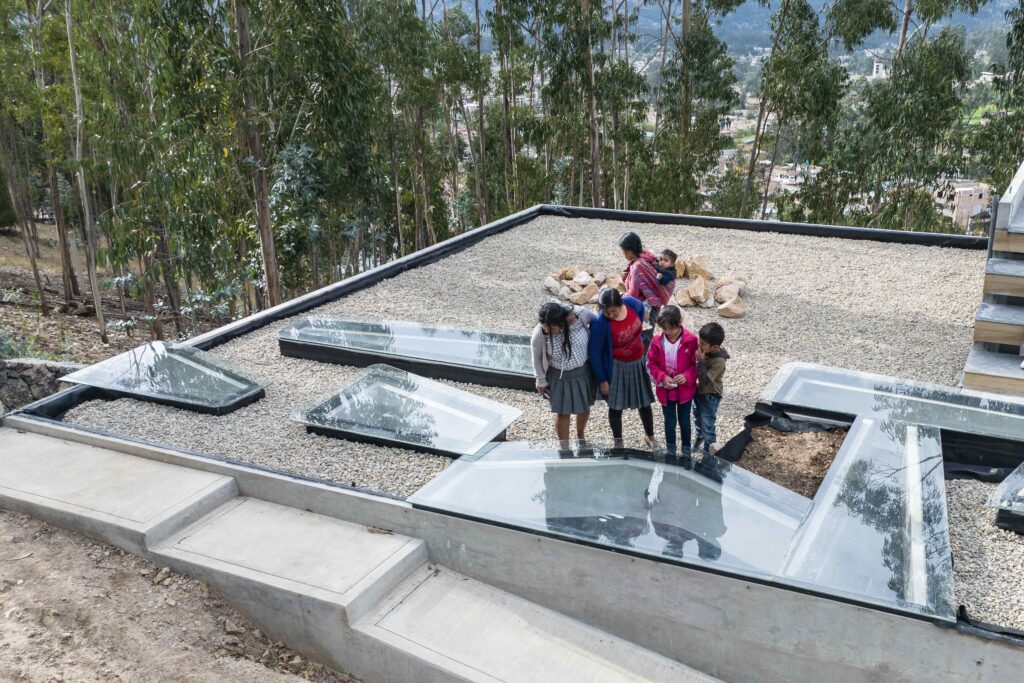
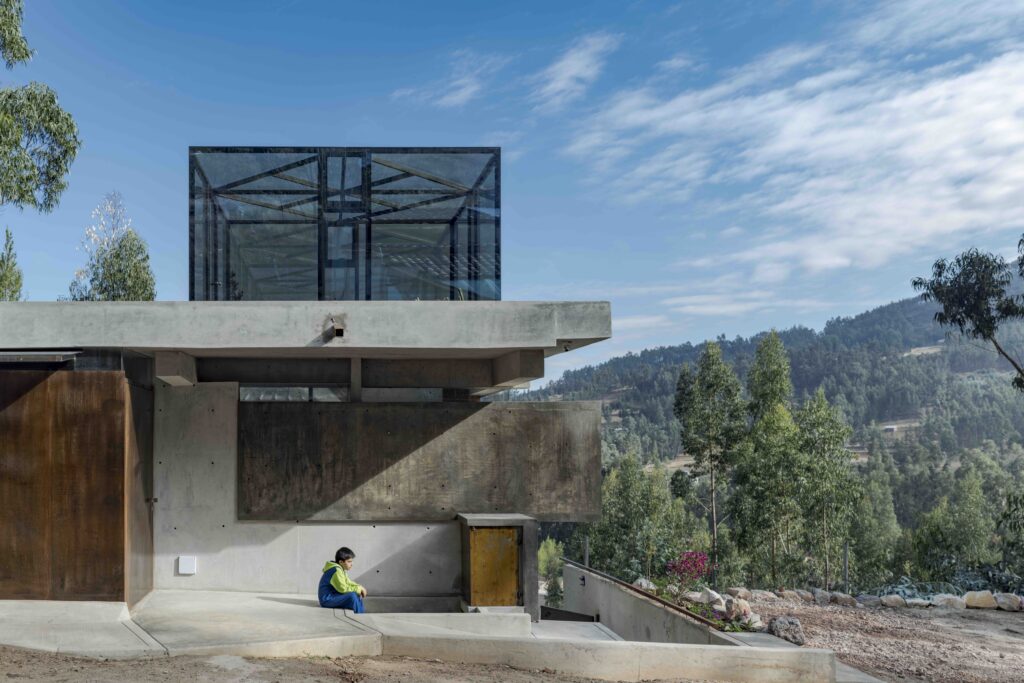
Finally, the garden-roof consolidates as the key gesture: thermal insulation, cultivation space, and shared urban platform, offering the territory a new landscape that adds greenery to the urban fabric and restores value to the hillside.