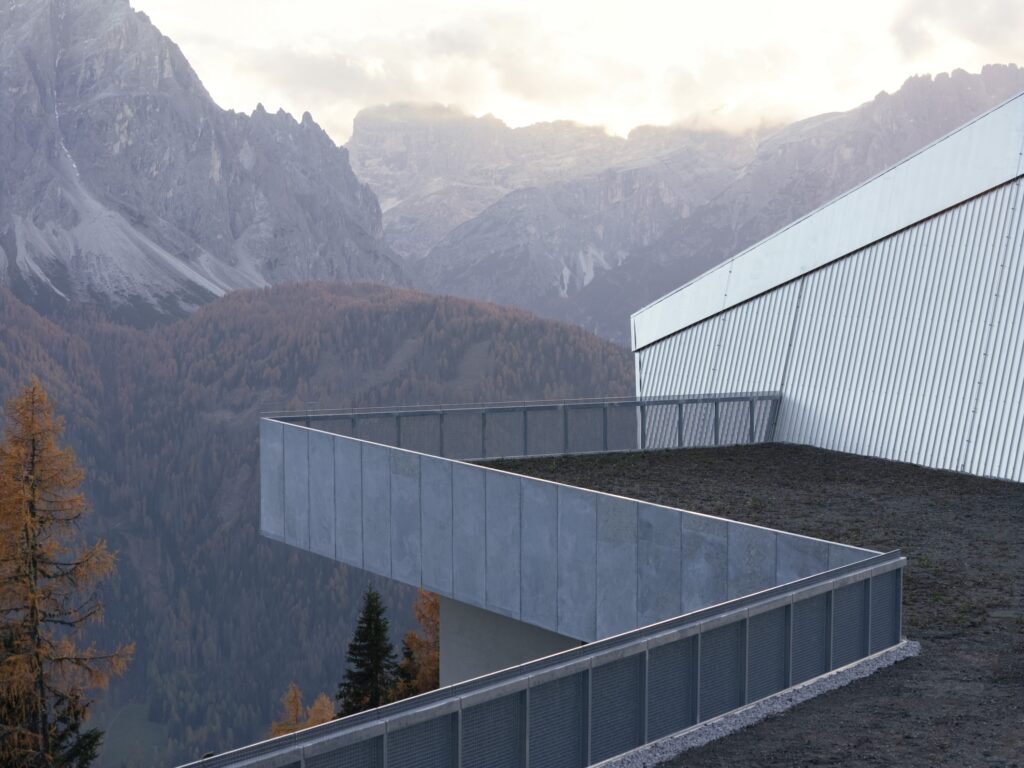



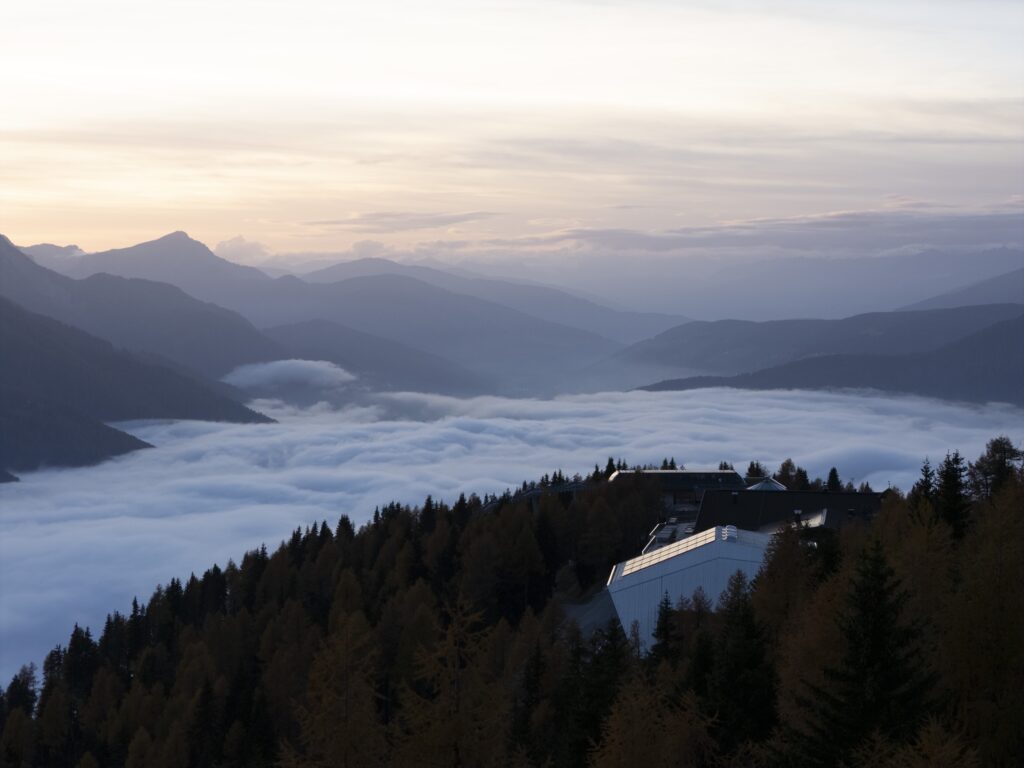
With an original upcycling project, Plasma Studio transforms the former cable car station on Monte Elmo, above Sesto, in the 3 Peaks / 3 Zinnen Dolomites region in Northern Italy. The new Reinhold Messner Haus — open to all and dedicated to the mountains, alpine culture, and sustainability — is a monumental structure that is deeply connected to nature.
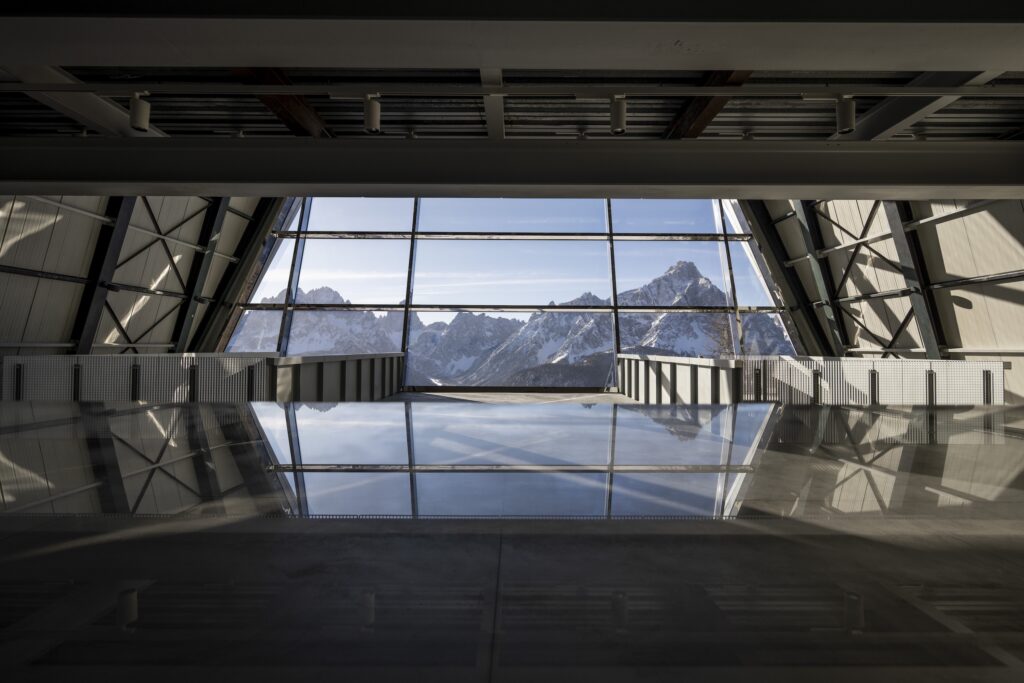
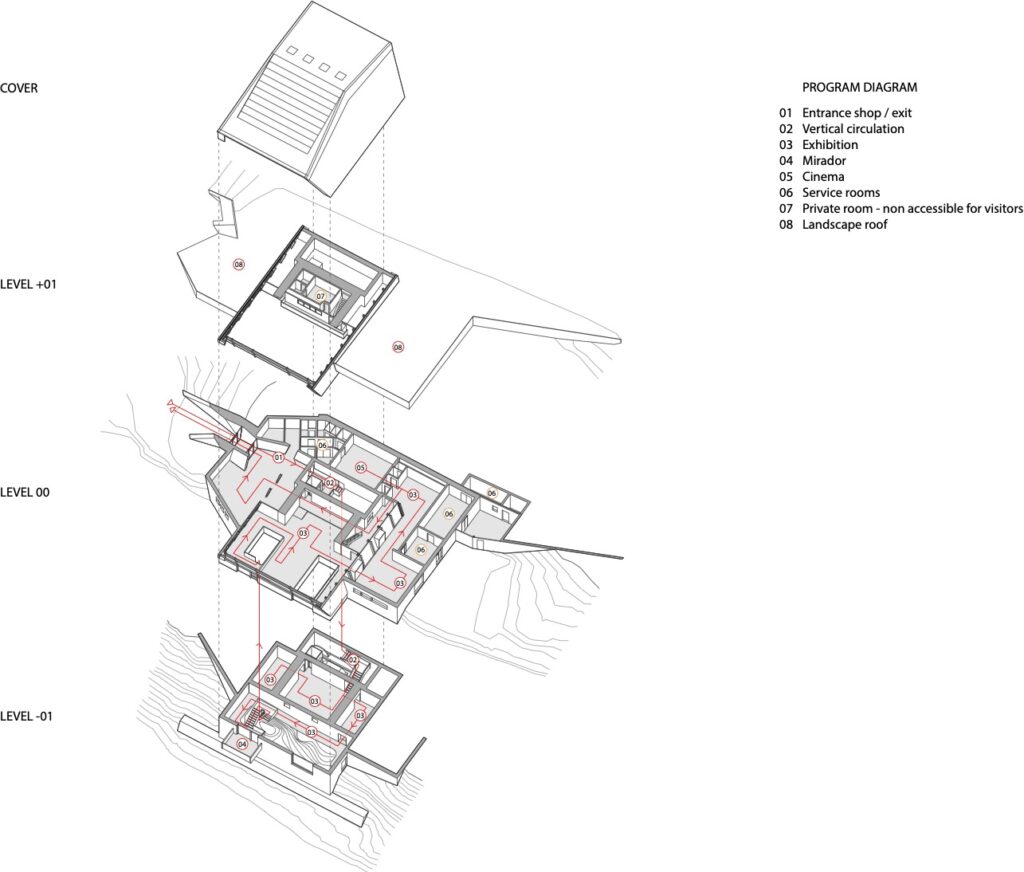
Visiting the Reinhold Messner Haus offers a unique cultural experience, guiding visitors through a path that weaves through the building, alternating moments of contemplation with spectacular views. The upcycling project reimagines the old cable car station by reclaiming demolished materials, such as concrete and steel, to optimize resources, preserve historical memory, and breathe new life into the new institute. Plasma Studio’s architecture integrates the structure with the surrounding landscape, reshaping the topography and establishing a new balance between built form and the natural environment.
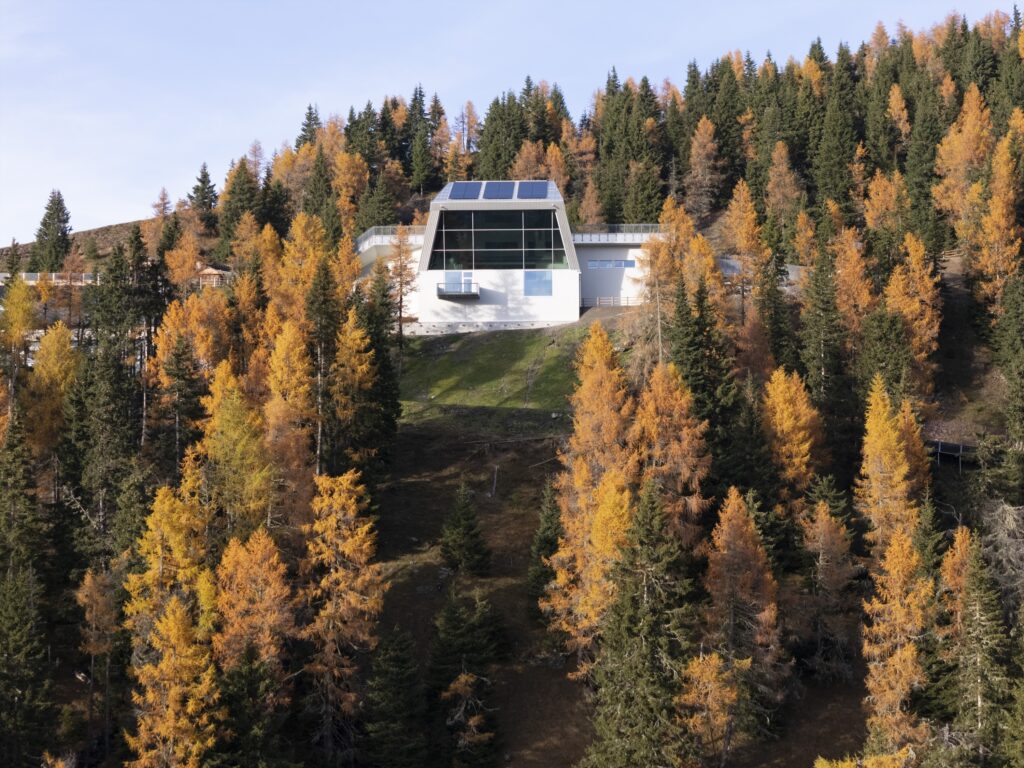
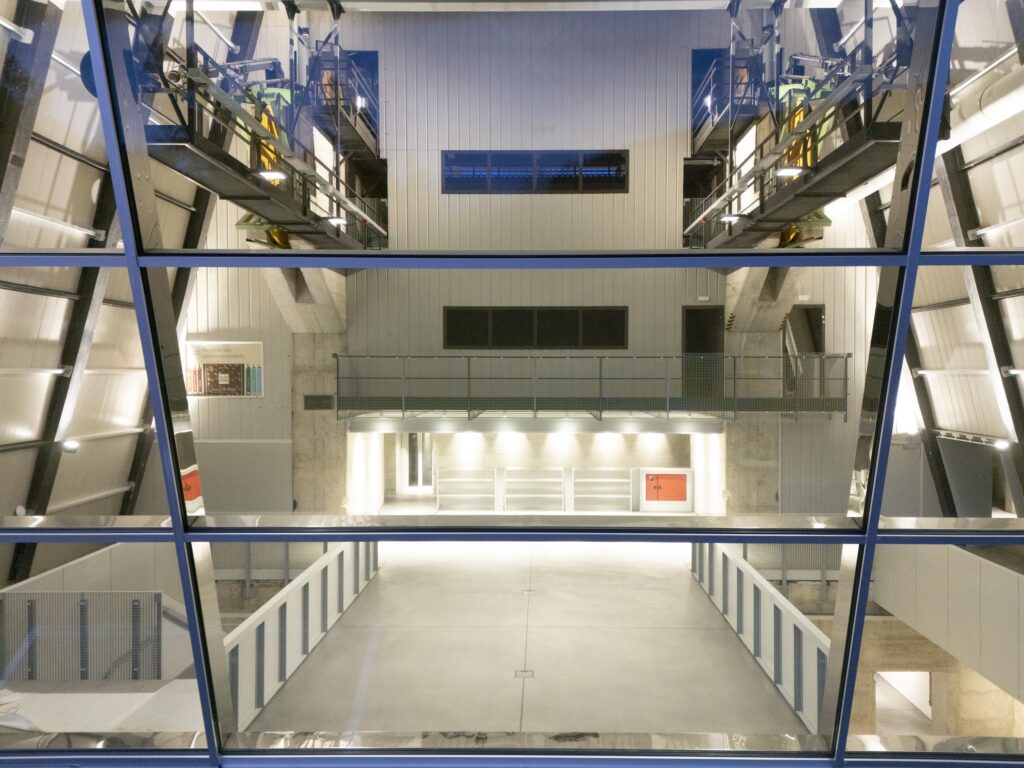
The massive concrete, sculpted like rock, appears to emerge from the mountain, marked by scratches and signs of use that preserve a readable memory of the past. Inside, the space unfolds along a path where vividly colored mechanical elements — pulleys, cables, gears — resurface like an archaeological form of kinetic art, now frozen in place. The visit becomes a physical and educational ascent, culminating in the awe of a breathtaking Dolomite panorama. The spaces of the new Reinhold Messner Haus — designed by Plasma Studio through the regeneration of the old cable car station connecting Sesto (Bolzano) to Monte Elmo in the Tre Cime di Lavaredo region, at about 2,000 meters above sea level — are evocative and convey a sense of time suspended.
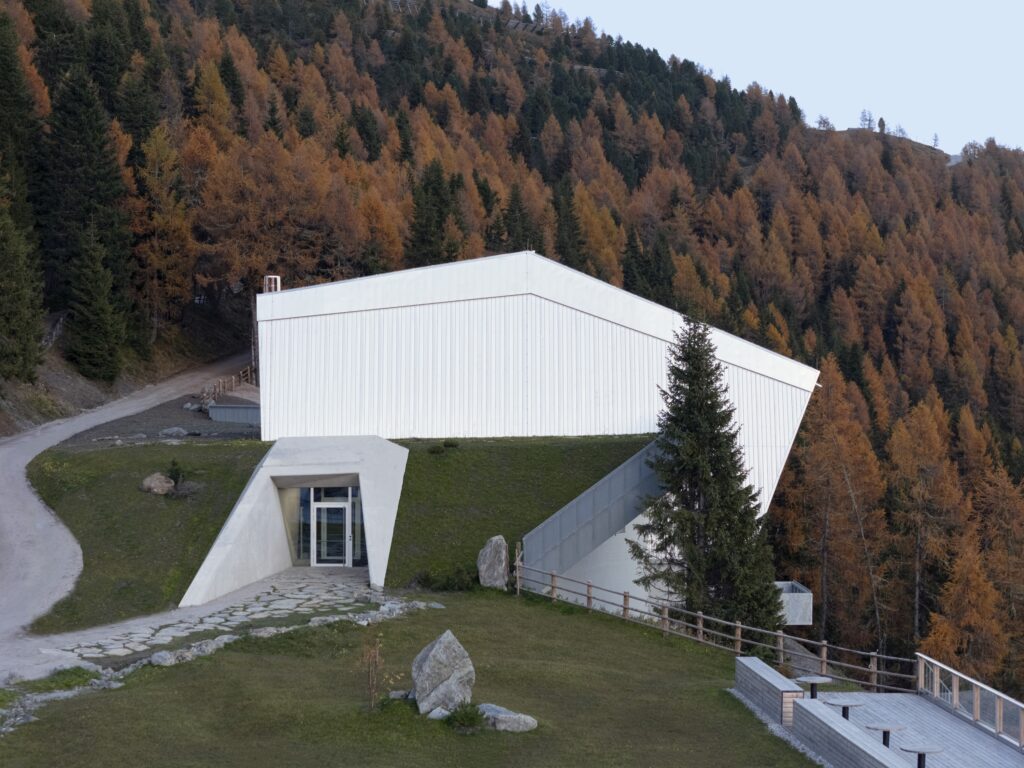
The Reinhold Messner Haus is conceived as an educational facility and a space for reflection on the core values of exploration: risk, slowness, silence, sustainability, tourism, and mountaineering. These themes are embodied in the repurposing of the original structure, which was already designed to withstand extreme conditions and is now reshaped to deepen its dialogue with nature. Firmly embedded in the rock, the structure gains renewed strength through the regeneration project, which connects it directly to the surrounding topography. The immersive path suggests a new perspective on alpine tourism: more conscious, slower, and lower in environmental impact.
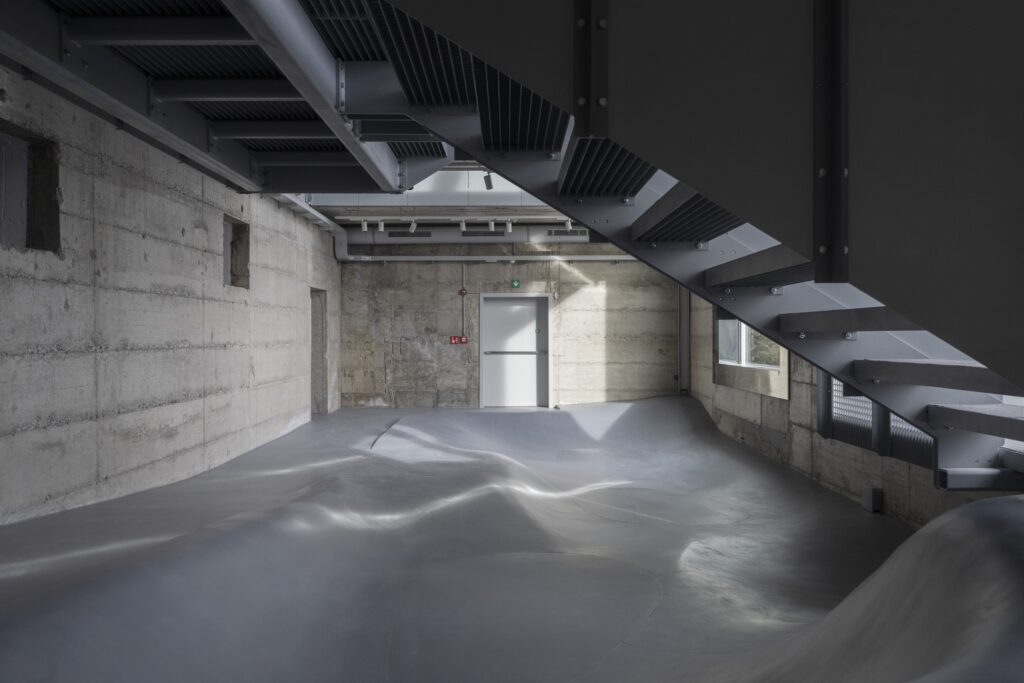
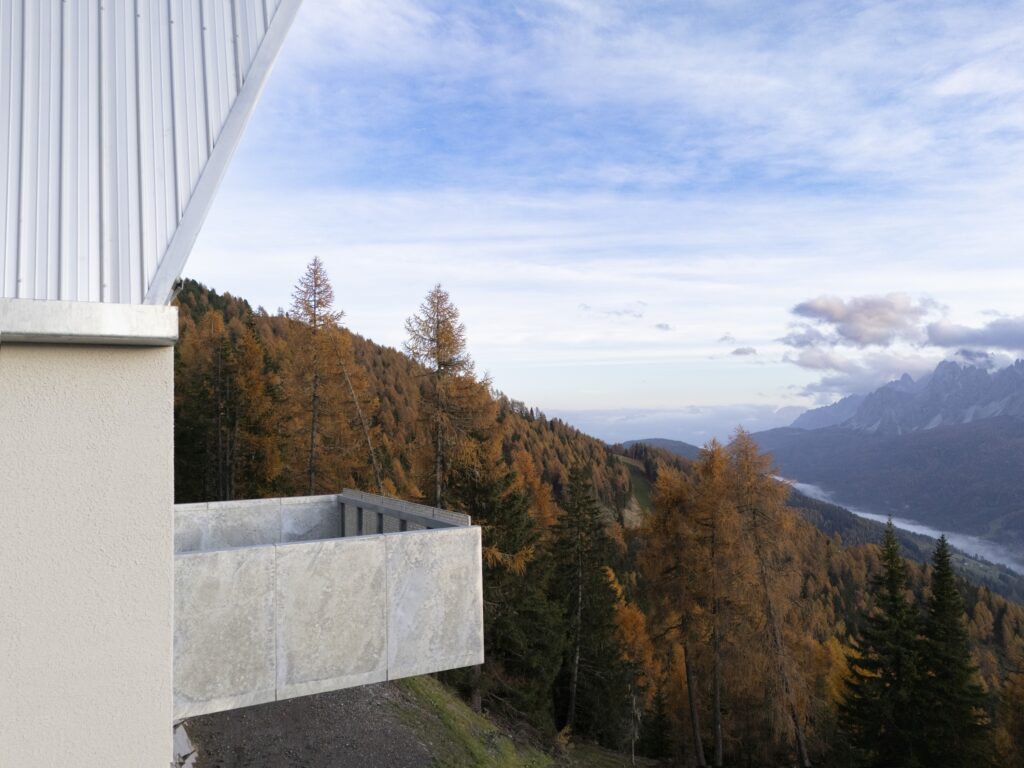
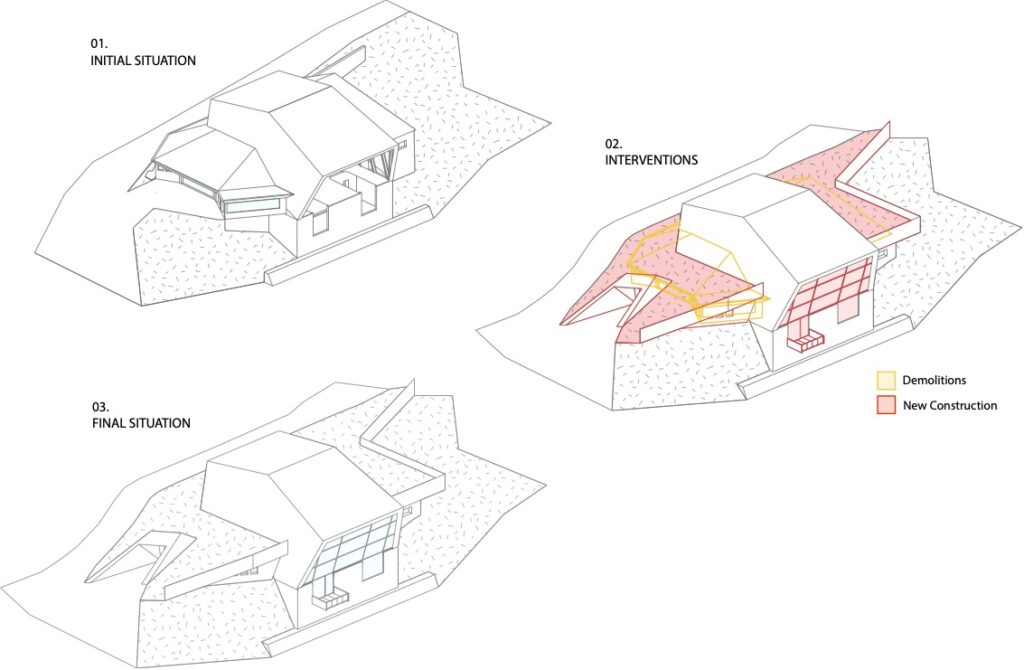
The main volume of the old station has been stripped of numerous accretions to make way for a large roof that becomes an artificial landscape. Visitors enter the exhibition space through an opening carved into the concrete, allowing them to pass through this new terrain and reach the foyer below. The journey begins here, moving through the dramatic 17-meter-high counterweight shaft, now repurposed as a vertical circulation space. Immersed in the raw, tactile aesthetic of the original construction, visitors descend to the old storage rooms before ascending into a luminous space where, for the first time, the dramatic view of the Dolomites opens up.
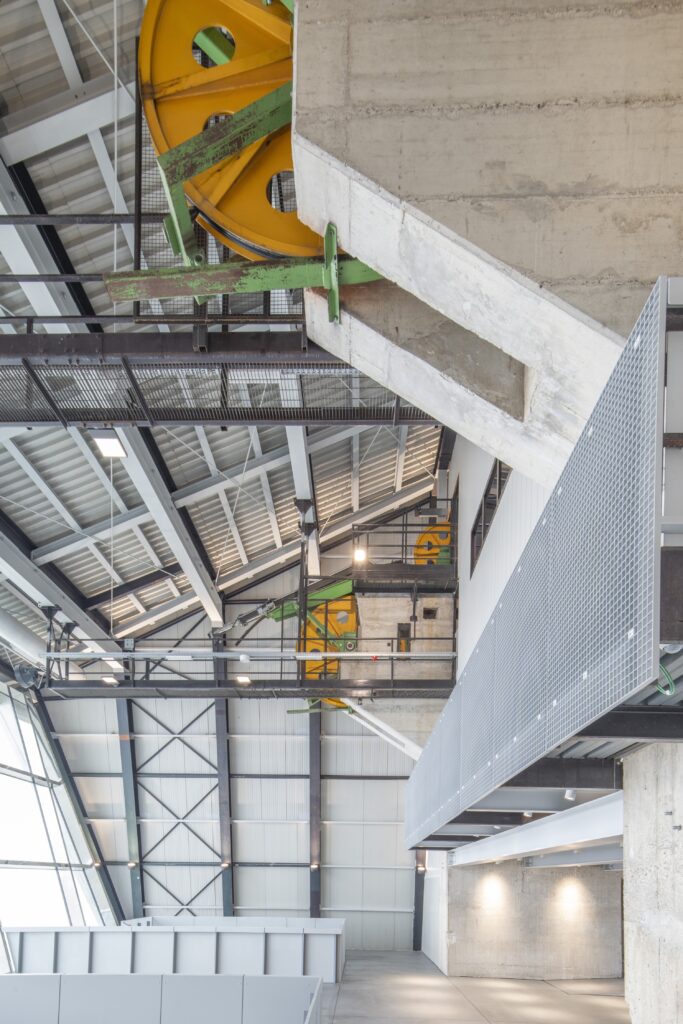
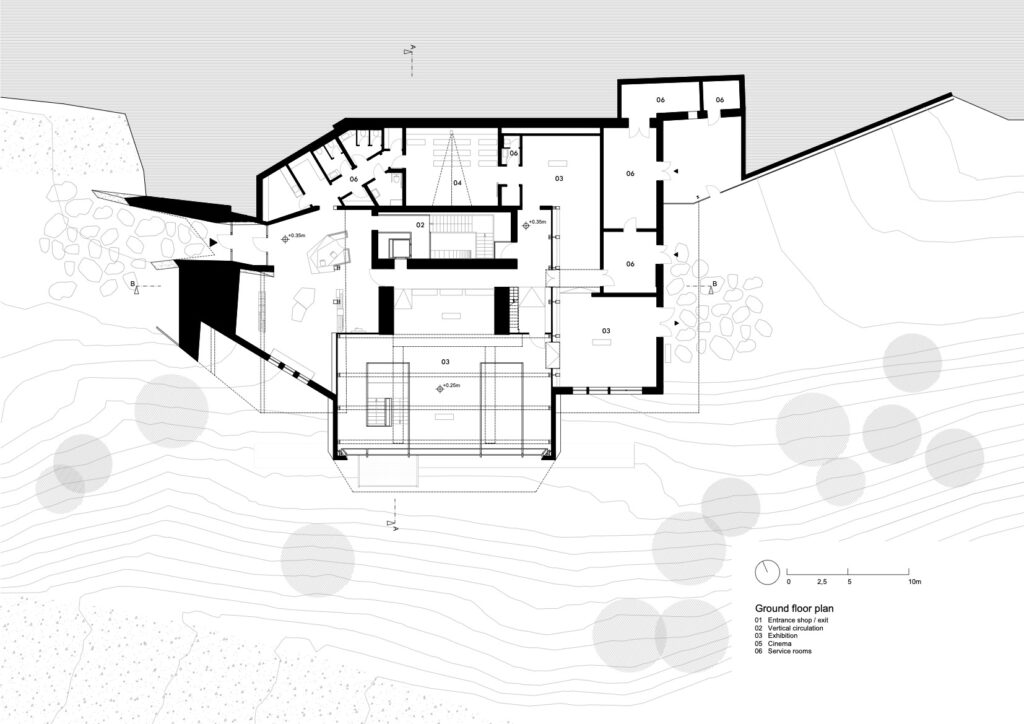
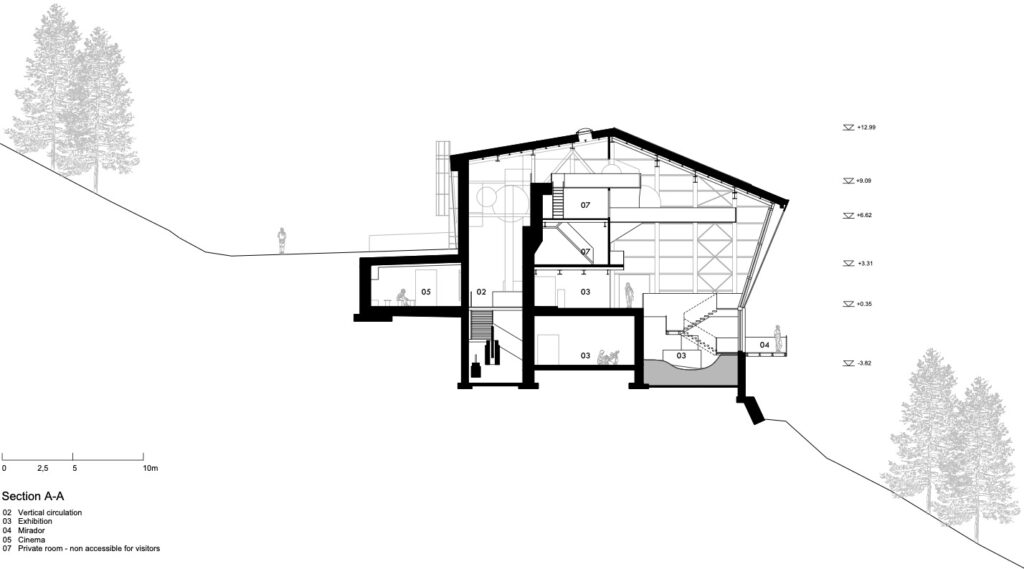
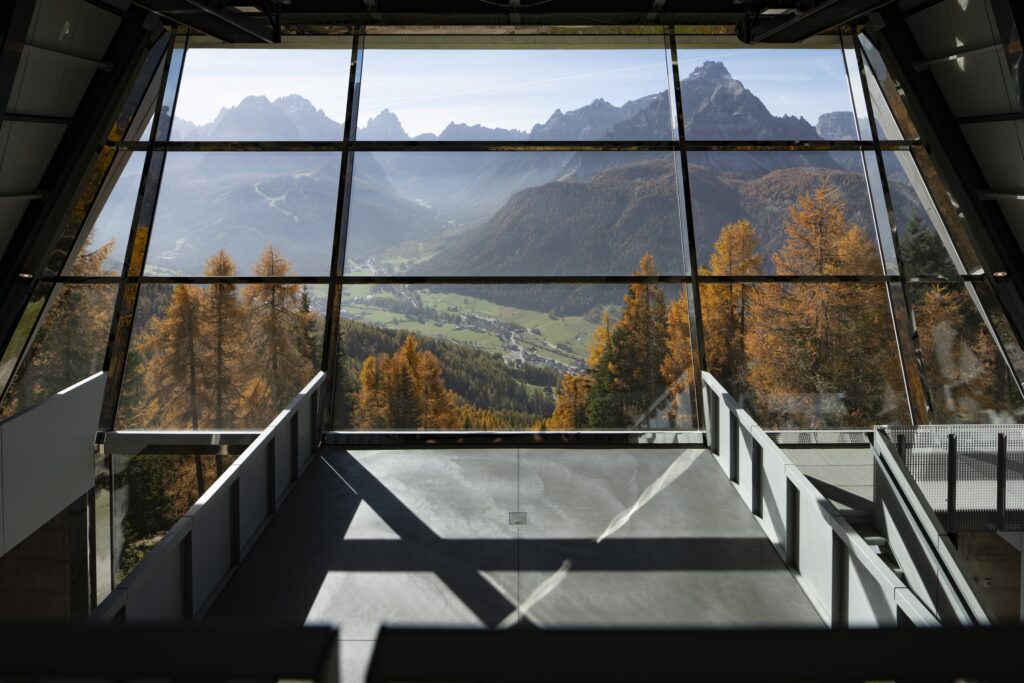
The area beneath the old cabin platform has been transformed into a panoramic point, where a flowing surface — shaped from demolition debris — leads visitors to a viewing platform that juts into the landscape. The ascending path culminates in the main hall, dominated by a large sloping façade that echoes the original steel structure of the station and frames a sweeping 180-degree view of the mountains. From here, the route continues through the old workshops and storerooms to a small cinema room — also intended for lectures — before reconnecting to the foyer via technical spaces now integrated into the experience.
The new glazed façade and the trapezoidal roof opening, once designed for cable car arrivals, retain the infrastructural character of the building while transforming it into a viewing device. The panoramic platform in the lower museum area further underscores the connection between architecture and landscape, enriching the narrative and educational aspects of the exhibition, where Reinhold Messner’s personal legacy enters into dialogue with the vastness of the Dolomites.
Commissioned by 3 Zinnen Spa, the project engages with Reinhold Messner’s vision of the mountains — one that goes beyond mountaineering to embrace a balance between human presence and nature, between memory and transformation. In this context, upcycling is not merely a construction strategy but a way of extending the life of the site while preserving its essence. Bricks and demolished concrete are reused to reshape the terrain in the lower area; original sheet metal becomes the soffit of the new structural system. The result is an architecture that does not erase its infrastructural origins but instead integrates them into the narrative of the exhibition.
Under the direction of Ulla Hell, Plasma Studio approaches the project with a sensitivity that combines architectural experimentation with contextual respect. Known for its innovative and experimental approach, the studio explores the relationship between architecture and landscape through fluid, dynamic systems. The Reinhold Messner Haus stands as a tangible example of this methodology: build only what is essential, enhance what already exists, and reinterpret it through a contemporary lens. In a fragile ecosystem like that of the Dolomites, this is a design stance that expresses deep ethical responsibility. The intervention transforms utilitarian mountain infrastructure, acknowledging its historical and material value while projecting it into a more conscious future.