


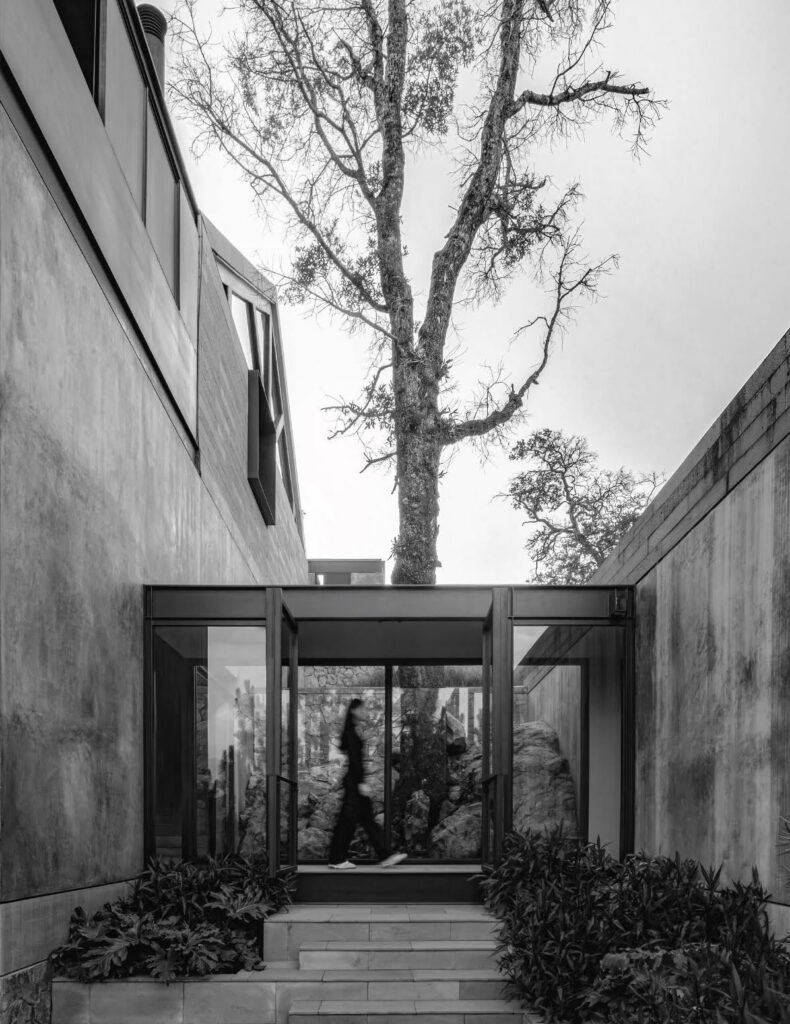
Bosquet is an exclusive residential development in Zapopan, Jalisco, that redefines urbanization with a sustainable and innovative approach. It features 17 single-family lots spread across 4 hectares, dedicating more than 50% of its area to green spaces. The project highlights the restoration of two ravines, transformed into green lungs that manage stormwater and foster biodiversity.
Its design includes a monumental entrance featuring local materials like concrete, wood, and stone, surrounded by lush vegetation. A winding street connects natural pathways, lakes, and communal areas, prioritizing privacy and panoramic views. With over 300 trees and a carefully adapted plant palette, the project minimizes environmental impact. Experts in various fields collaborated to integrate architecture, landscape, and technology, creating a development that harmonizes nature and contemporary living. Bosquet symbolizes the forefront of habitability with deep respect for the natural environment.
Designed by Perimetral and AE Arquitectos in collaboration with the American firm SWA, Bosquet redefines contemporary urbanization by prioritizing sustainability, landscape, and integration with the natural surroundings. This high-end community features 17 single-family lots distributed across 4 hectares, with over 50% of the land dedicated to green areas, consolidating the Project as one that places landscape at the heart of its design.
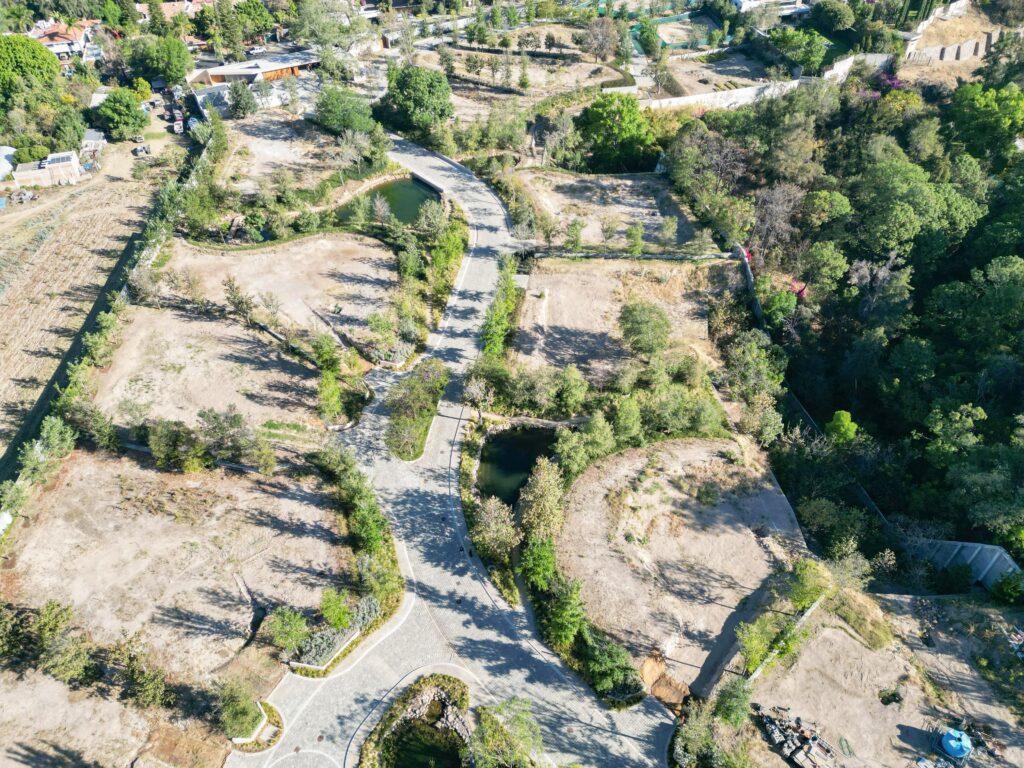
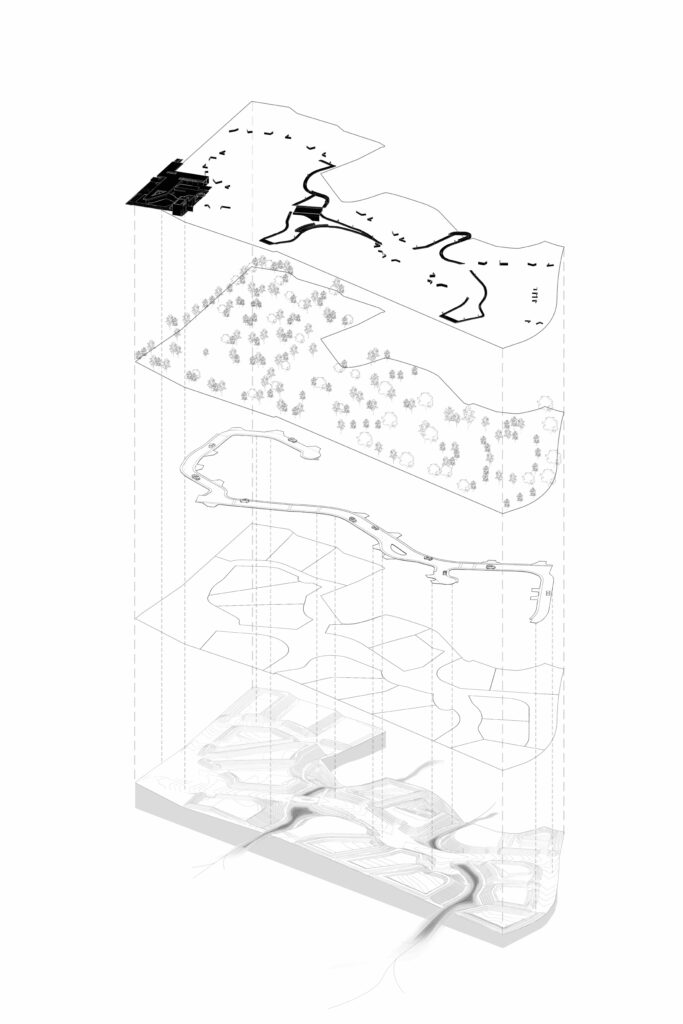
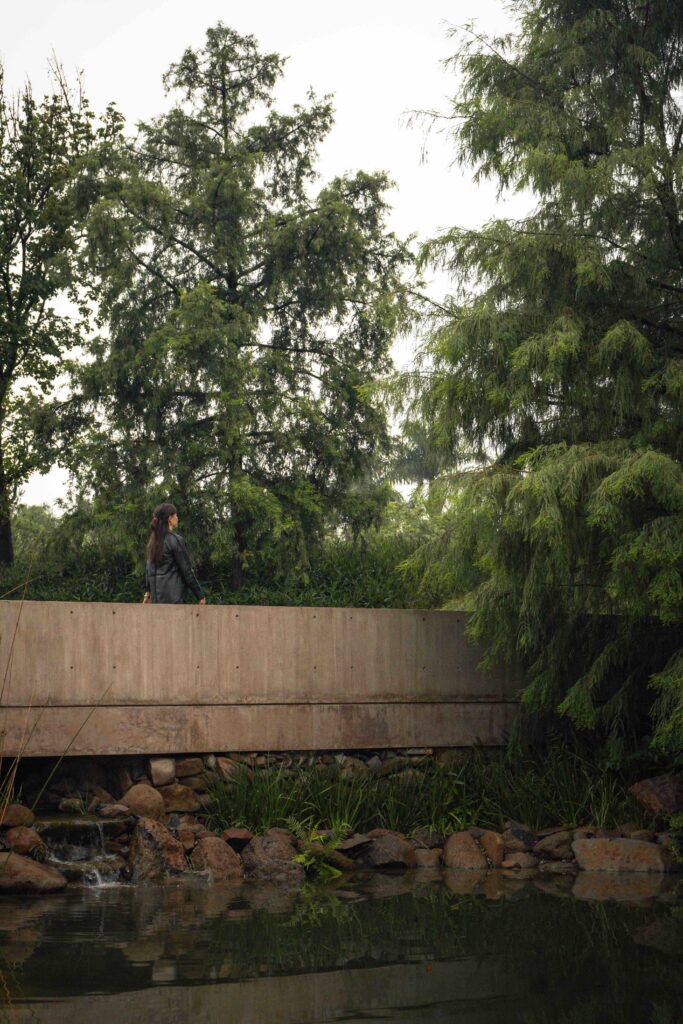
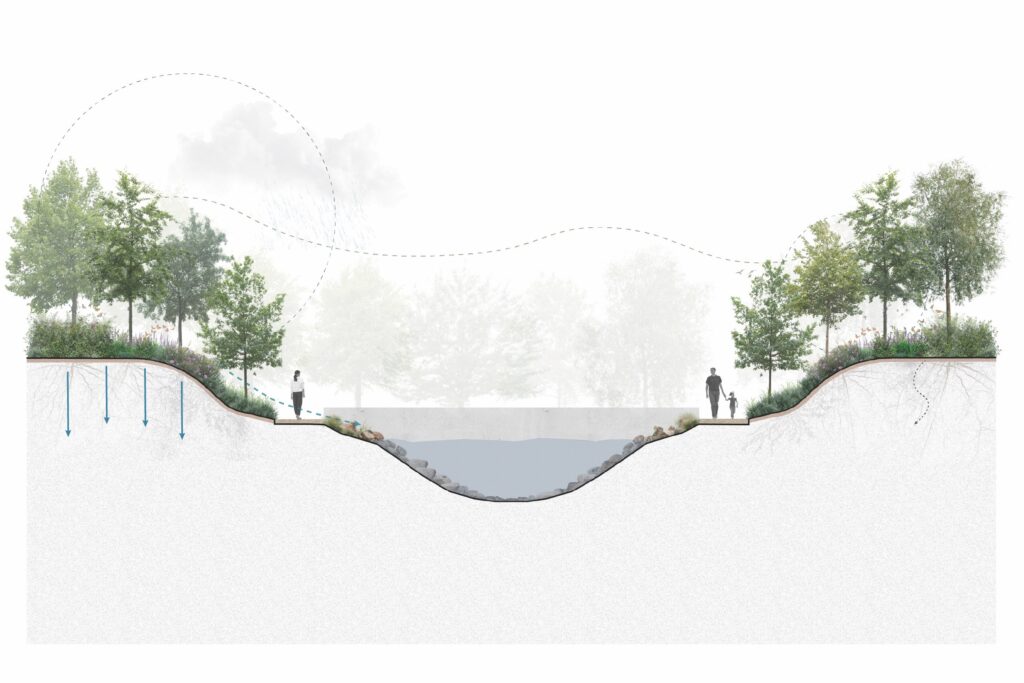
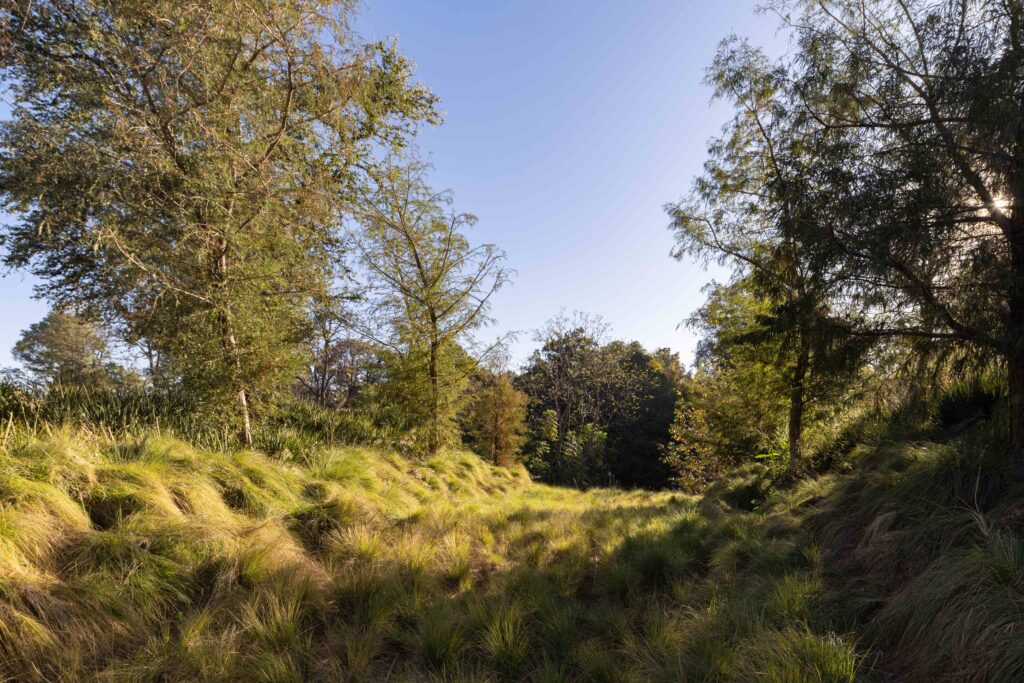
One of Bosquet’s highlights is the restoration of two pre-existing ravines, transformed into the green lungs of the development. These areas were rescued from construction debris and converted into regenerative spaces that promote biodiversity, improve environmental quality, and serve as natural reservoirs for rainwater. The original topography was strategically utilized to create elevated platforms that ensure privacy for each residence while optimizing panoramic views of the natural surroundings. This strategy allows each lot to have a unique connection to the landscape, respecting and enhancing the original environment.
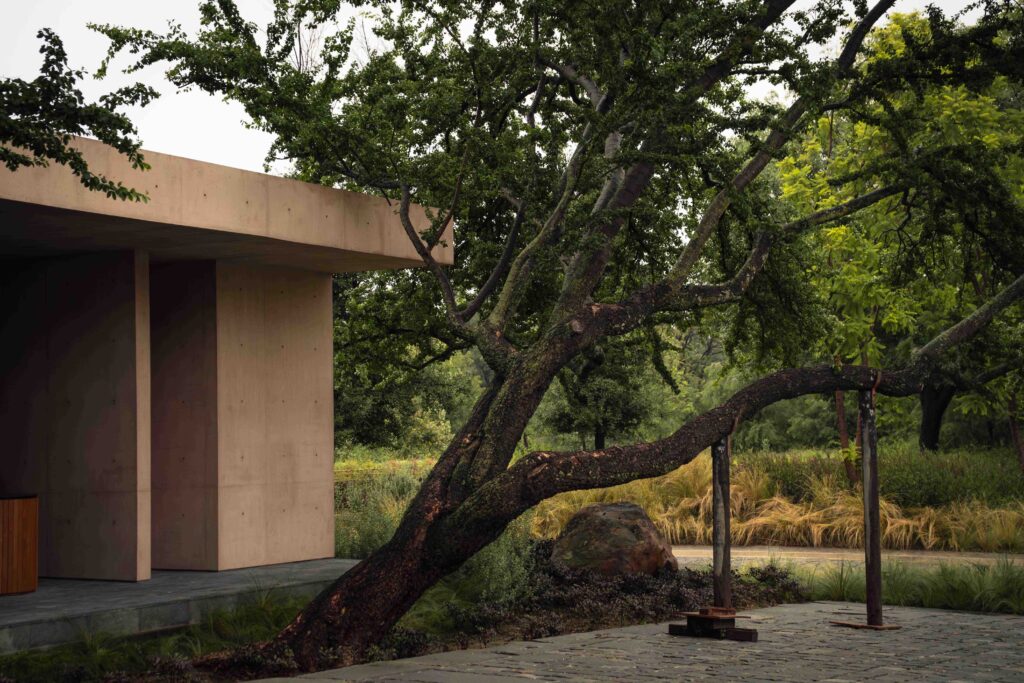
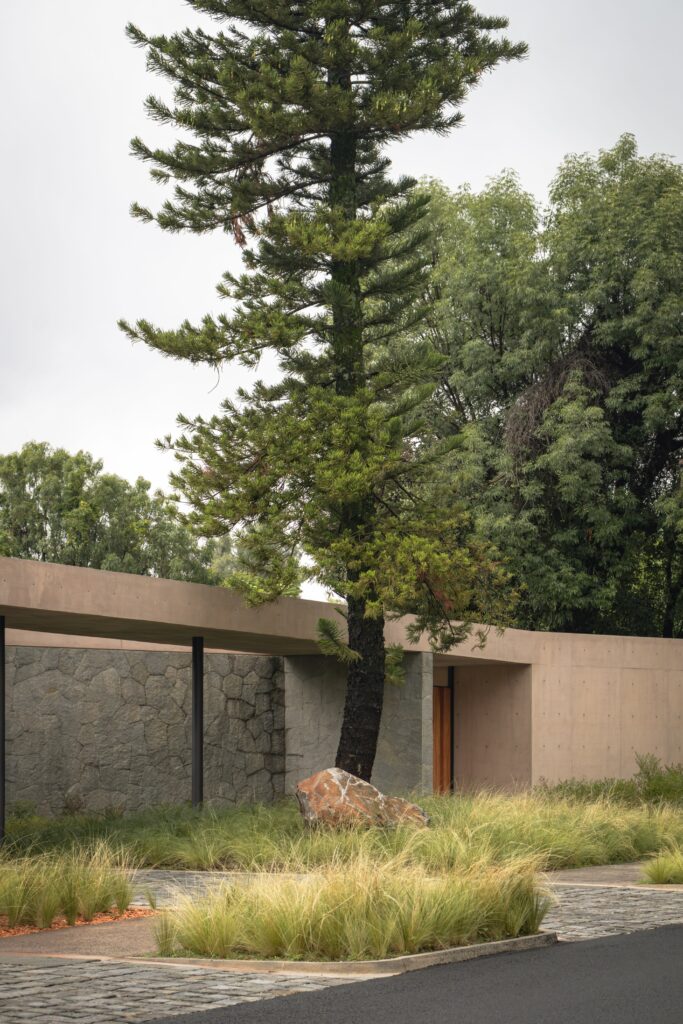
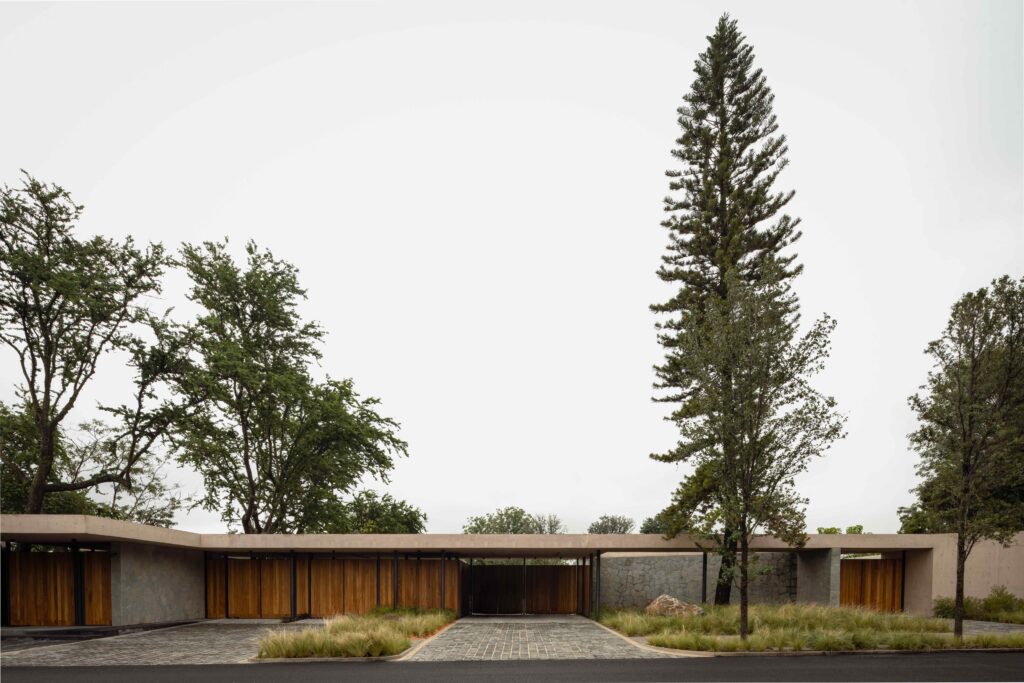
The development’s entrance is designed as a monumental experience, with an entry that blends residential scale and theatricality. A 40-meter horizontal concrete slab appears to float between wood, local stone, and steel, framed by lush vegetation. This Access point is not only functional—incorporating security, services, and storage—but is also conceived as an architectural statement of identity. A large native Guamúchil tree (Pithecellobium dulce) is featured as a central organizing element, symbolizing the commitment to native species.
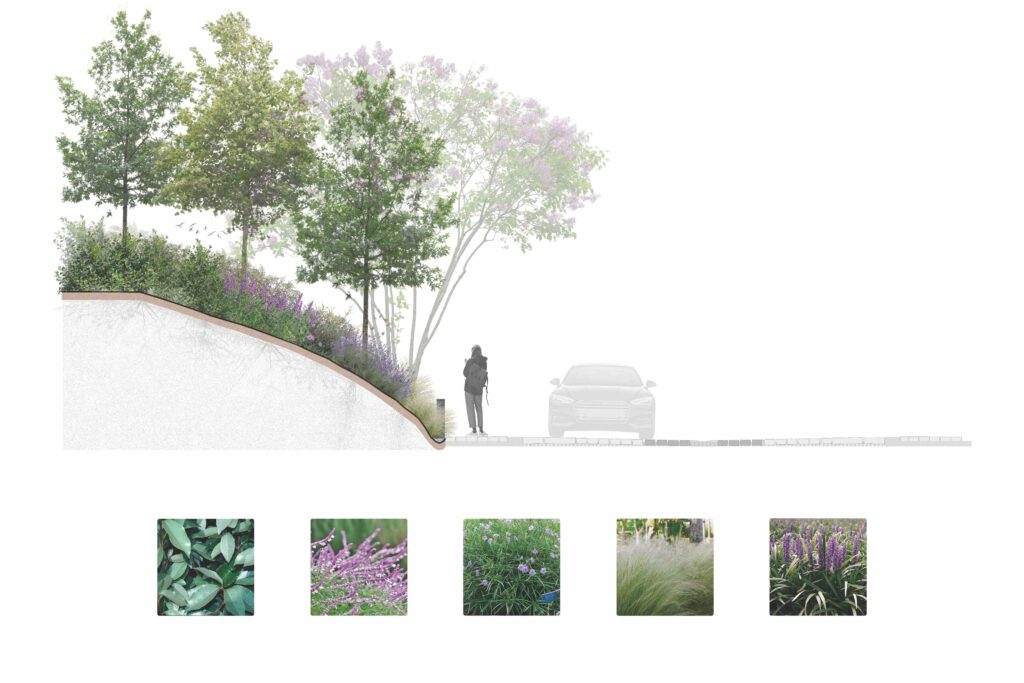
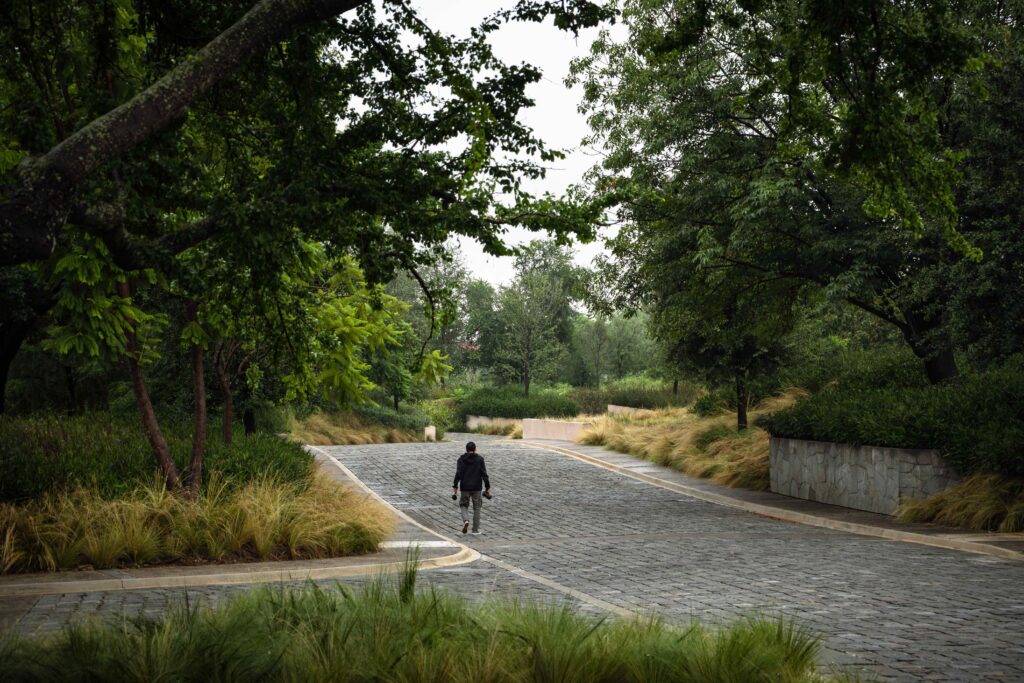
Circulation is organized around a single cobblestone street, designed with gentle curves to soften the terrain’s slopes and reduce vehicle speeds. Wide sidewalks connect natural trails and residential entrances, while vegetated embankments and tree lines provide visual and acoustic privacy. More than 300 trees were planted on-site, with a plant palette selected to create seasonal color, shade, and privacy. Species such as Jacarandas, Tabachines, Pirules, Sabinos, and Oaks are mixed with low-water- consumption pollinator plants to promote a naturalistic and regenerative landscape.
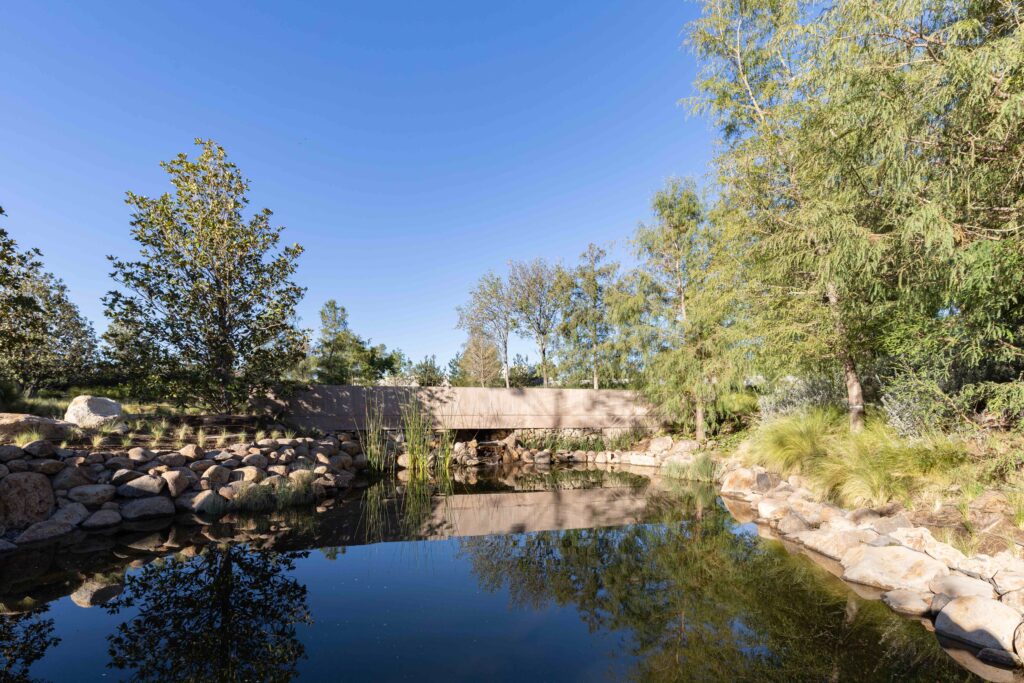
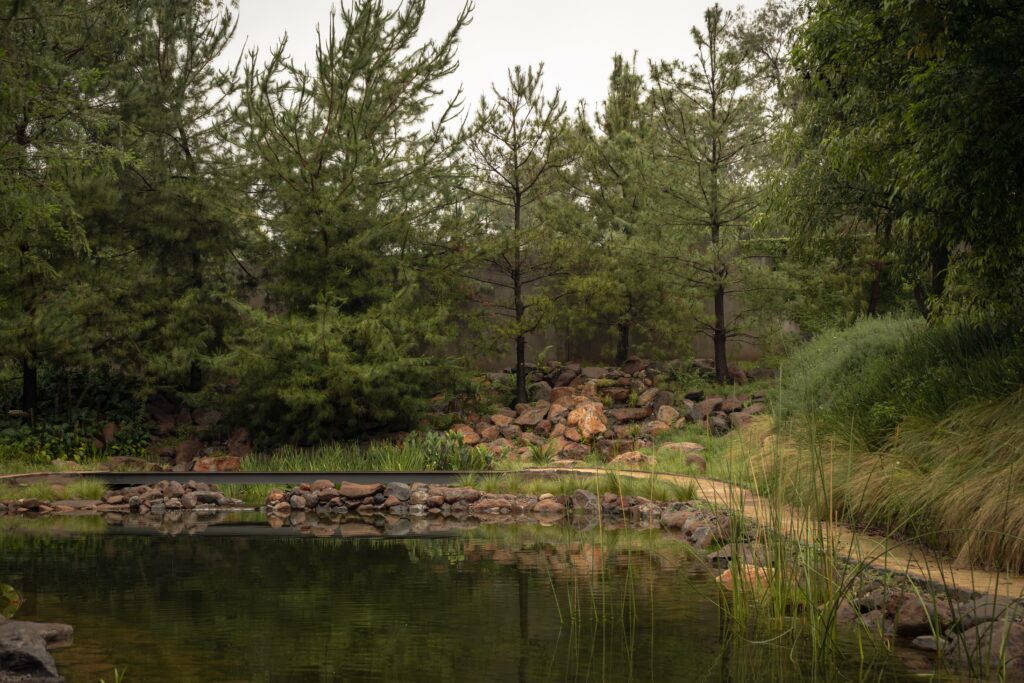
The green areas also include a pair of artificial lakes designed to manage rainwater, surrounded by aquatic vegetation and natural pathways. These spaces, designed as “secret valleys,” invite residents to explore a tranquil and protected environment, while the vegetated embankments preserve privacy for the homes on higher levels. Every detail, from path design to ambient lighting, aims to create a sensory experience that transforms with light and the changing seasons.
Sustainable design extends throughout Bosquet. Large lawn áreas were avoided in favor of site-adapted ground cover that encourages the spread of native species and reduces water consumption. Additionally, lighting—planned with Noriega Iluminadores—highlights both vegetative areas and architectural elements, creating a magical atmosphere at night.
The development process, which began in 2019, involved collaborations with engineers, biologists, agronomists, and lake specialists. The 2020 pandemic brought additional challenges, such as finding debris instead of compactable soil in the ravines, requiring a reevaluation of earthworks management. These challenges were overcome with innovative solutions that respected the original vision of creating a functional and regenerative landscape.
Bosquet is more than just a housing development; it is a model for how urban design can harmoniously coexist with the environment. From its sustainability focus to the integration of architecture, landscaping, and local materials, this project sets a new standard for contemporary developments that aim to transcend conventional approaches, adapting to current needs while protecting and regenerating the natural environment.