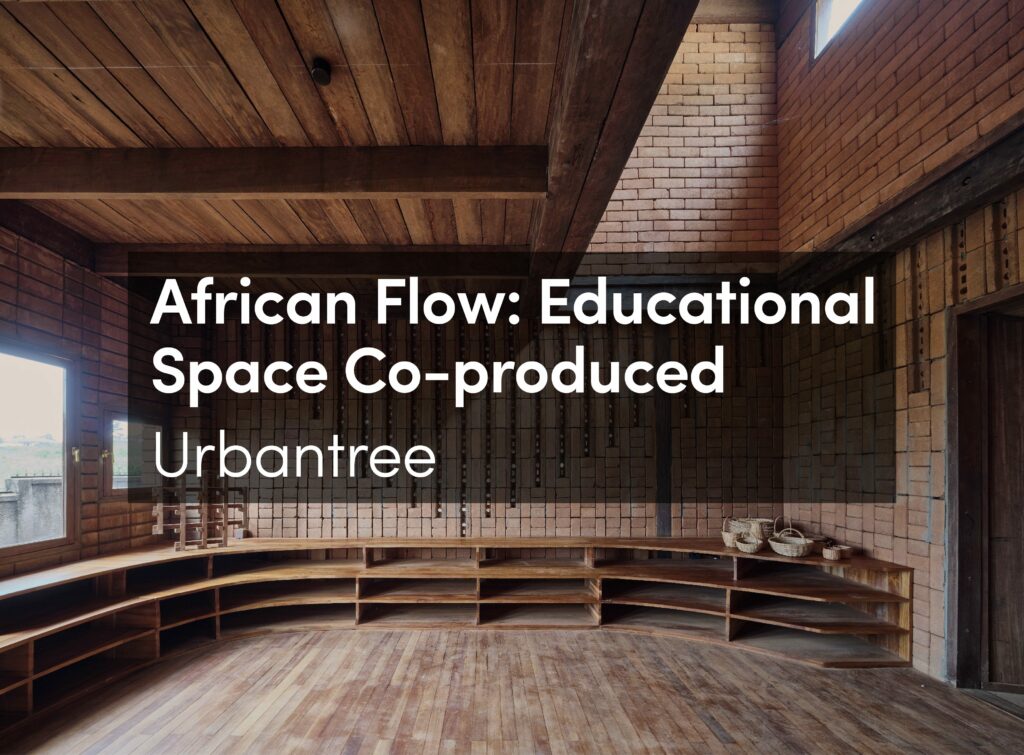



A new kindergarten in Soa, near Yaoundé, Cameroon, redefines educational architecture by drawing on the spatial and symbolic traditions of ancestral African building. Designed by architects Vicente Guallart and Daniel Ibáñez (Urbanitree), African Flow offers a low-tech, locally crafted structure that not only fosters learning but reinforces cultural continuity through its materials and organization.
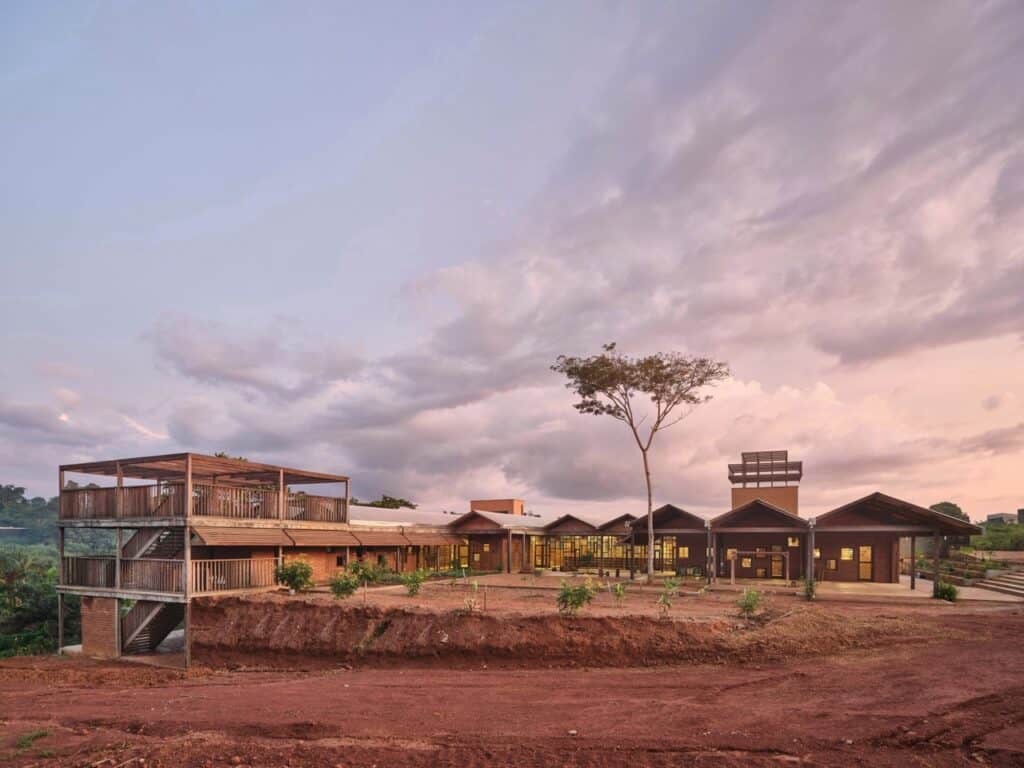
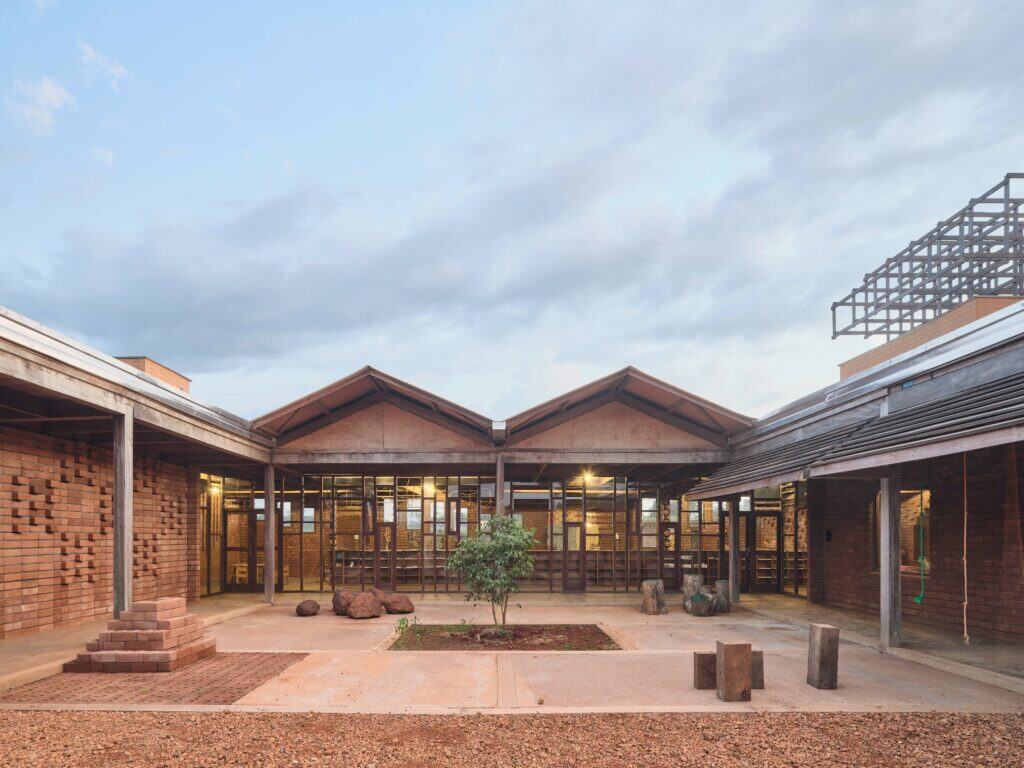
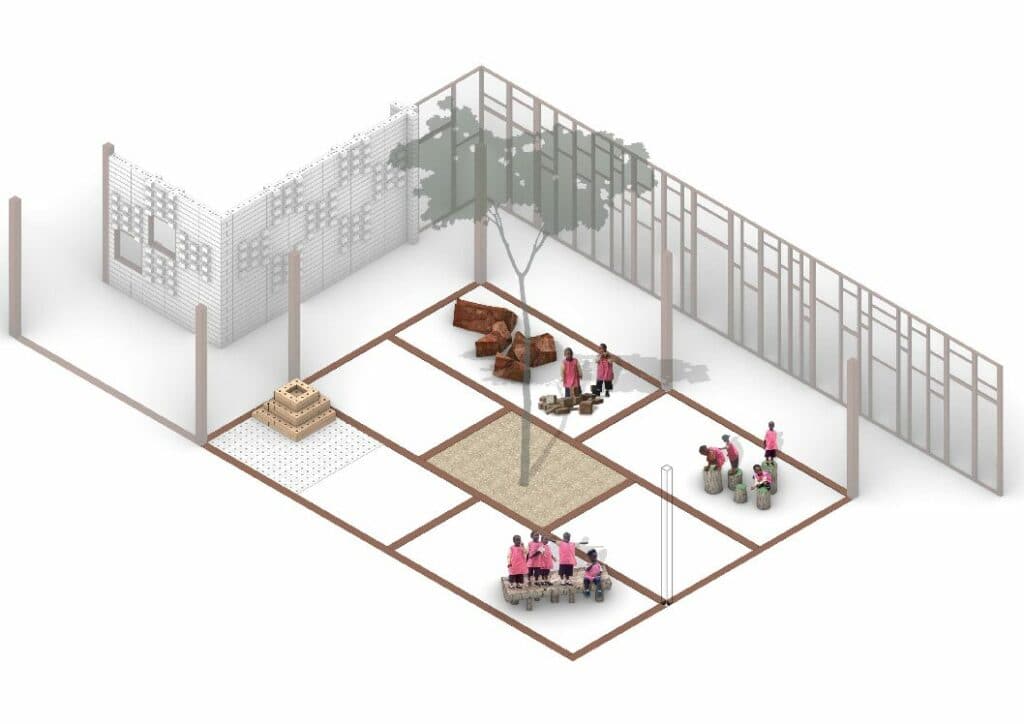
Commissioned by the Missionary Daughters of the Holy Family of Nazareth, the school introduces a spatial system inspired by four ecosystems—mountain, savanna, village, and forest—guiding children through fluid transitions that mirror natural landscapes and social practices. These environments shape the children’s daily routines through embodied, multisensory experiences:
-
Mountain: A grotto-like space for introspection and creation.
-
Village: A communal zone with an abstract chapel, inviting shared reflection and silence.
-
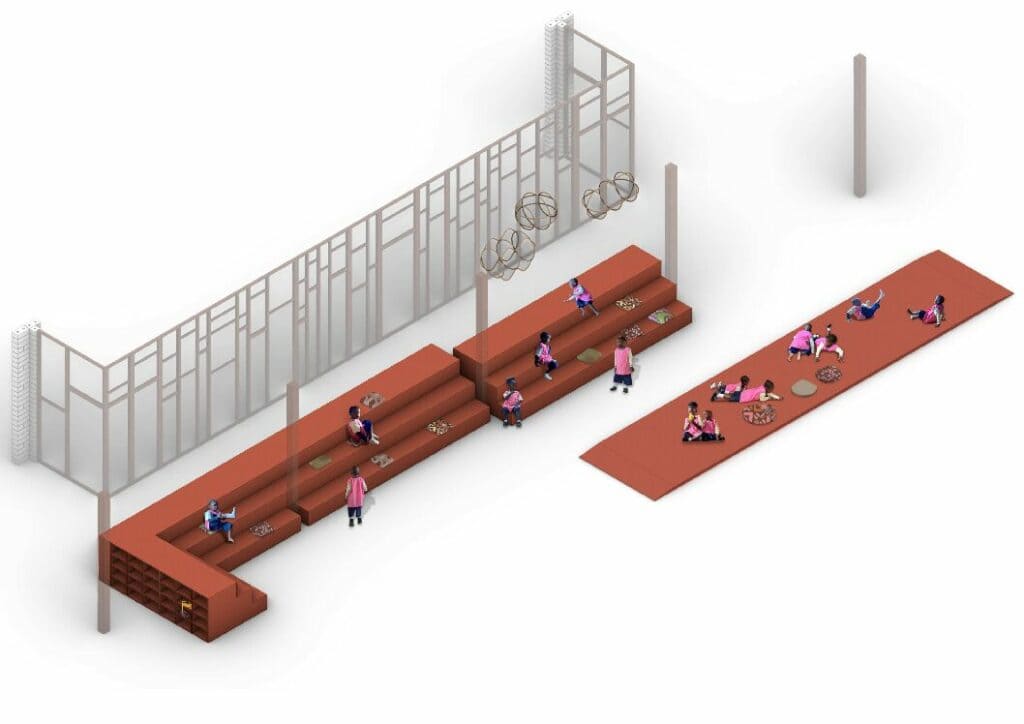
Savanna: A linear area with stepped seating for group learning, echoing the archetype of gathering around a fire.
-
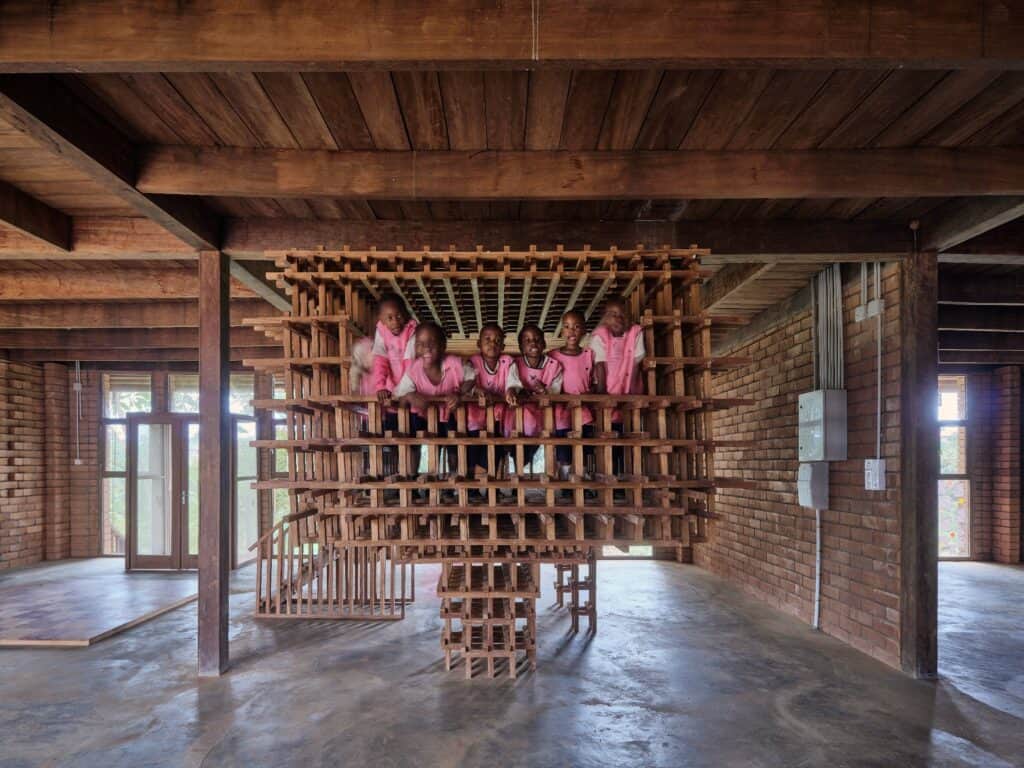
Forest: A transitional threshold between inside and out, featuring a climbable “tree” structure adjacent to a natural grove.
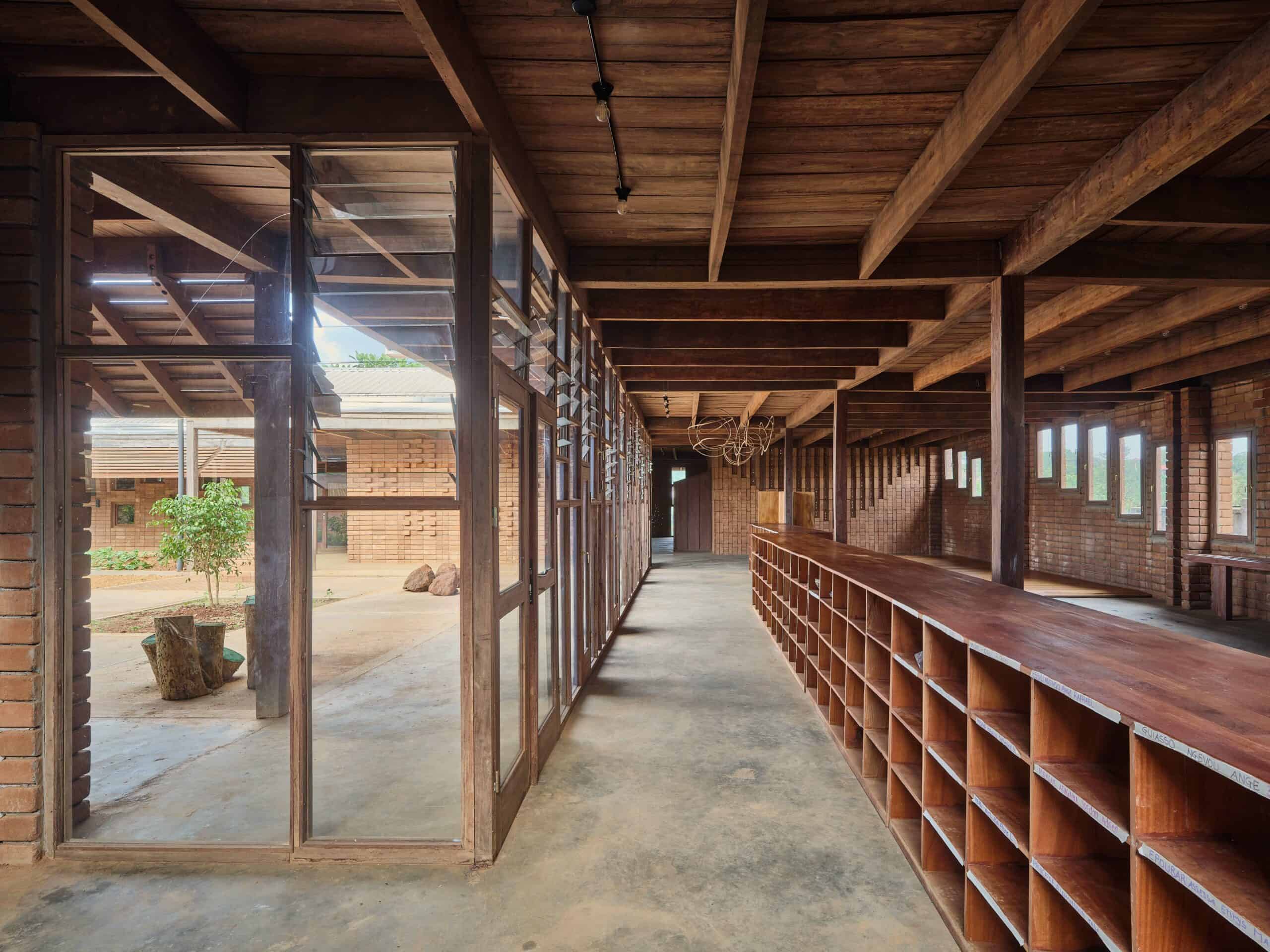
The school unfolds around a central courtyard and corridor, serving as both a circulation spine and a social axis. Activities—ranging from group assemblies and playtime to music, craft, and exploration—respond to the architecture and stimulate different learning modalities. These spaces act as a second teacher, encouraging autonomy, collaboration, and connection to place.
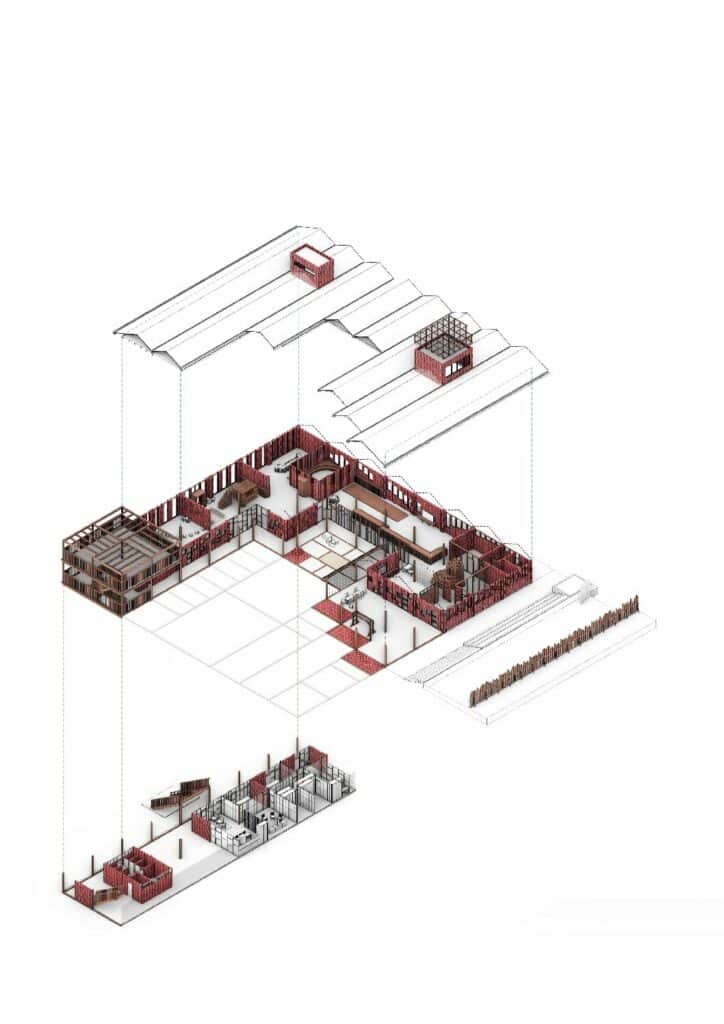
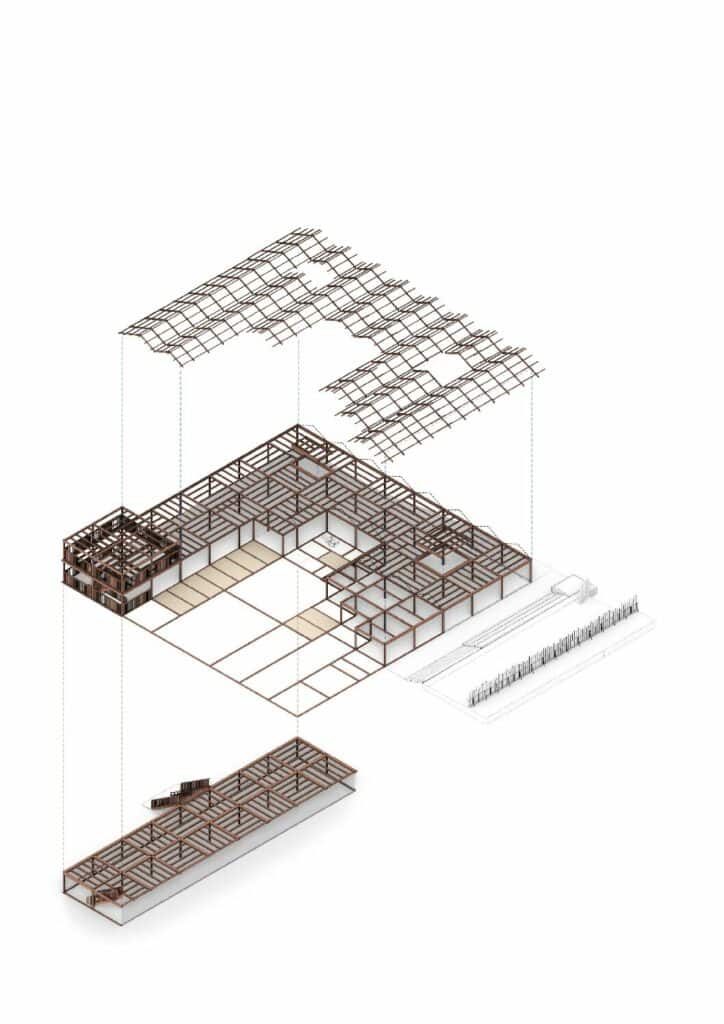
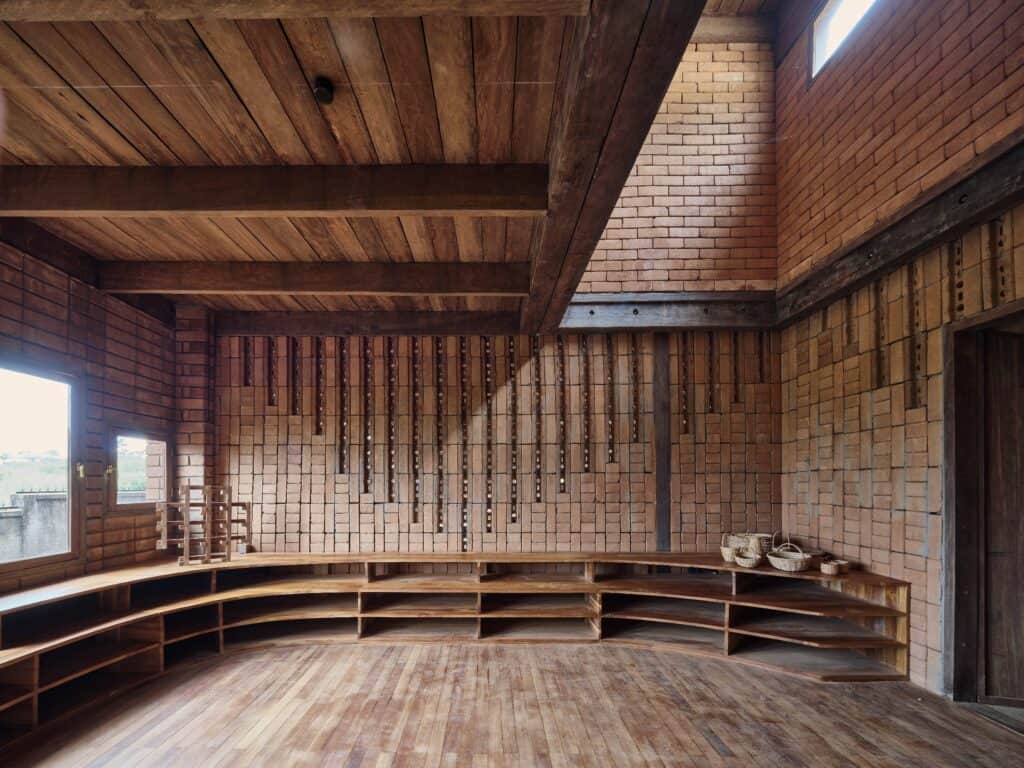
The project challenges conventional notions of “progress,” often defined by industrialized processes, by rooting itself in local materials, labor, and knowledge systems. Rather than importing expertise, the European-based design team approached construction as a reciprocal learning process, working alongside Cameroonian artisans and suppliers. The structure is primarily built with azobé, a dense, termite-resistant local wood, and rammed earth bricks, whose reddish hues blend the building with the soil. The façades feature geometric perforations that allow light to filter softly through, mediating between interior and exterior environments.
Interior elements—stairs, rails, furniture—employ woods such as iroko, sapele, doussie, and movingui, typically reserved for export. These were reintroduced into the local building economy by sourcing directly from Cameroonian suppliers and training local craftsmen unfamiliar with wood-based construction. A striking feature of the complex is its photovoltaic wooden water tower, which departs from standard concrete forms to deliver a sustainable solution to energy and water supply in a region marked by frequent outages.

The project is envisioned as the first phase of a broader educational campus that will expand to include primary and secondary schools, as well as residential spaces for the teaching community. Its pedagogy and architecture are intertwined, both aimed at reinforcing collective identity and ecological awareness.
Through its simple construction systems, embedded cultural references, and dedication to low-carbon methods, African Flow presents a replicable model for educational infrastructure across Africa—one that prioritizes place-based knowledge, environmental care, and spatial dignity.