


A new office building that gathers several government agencies under one roof in the centre of Odense is a pioneer project in large‑scale timber construction and the largest timber office building in Denmark.
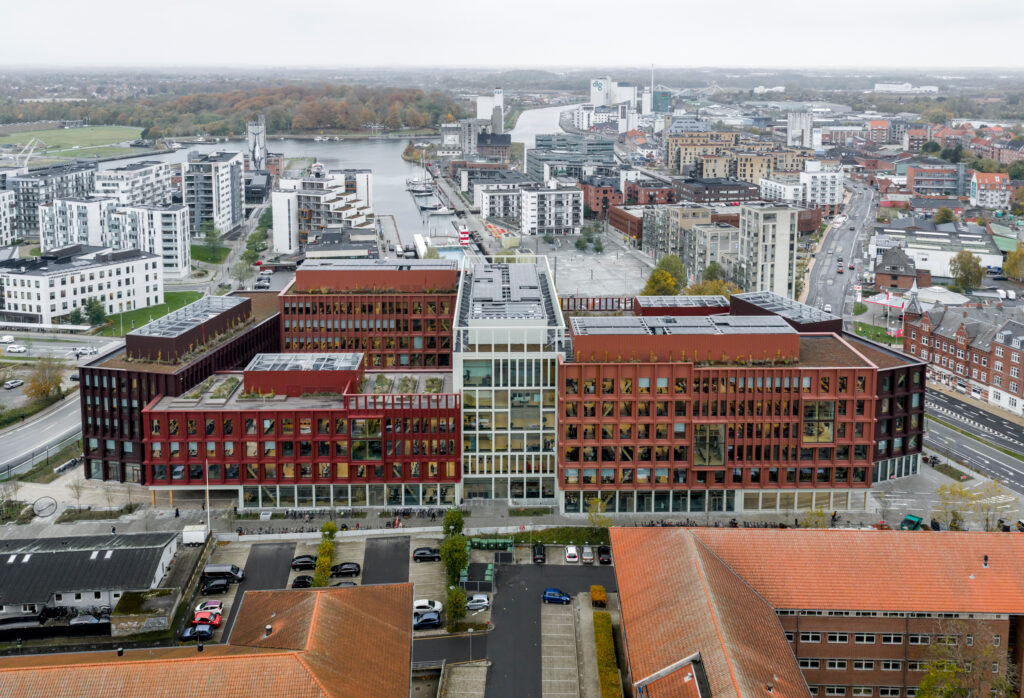 The new office hub accommodates 1,600 public employees in a climate‑responsible, modern and flexible multi‑user building that carefully fits into its surroundings.
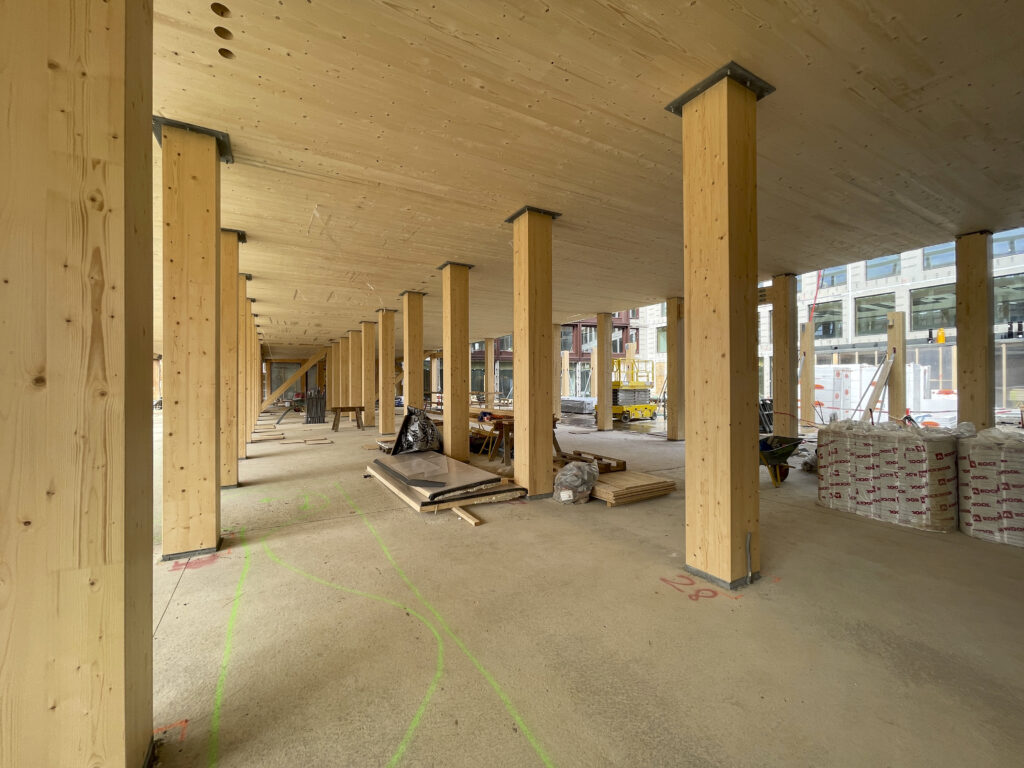
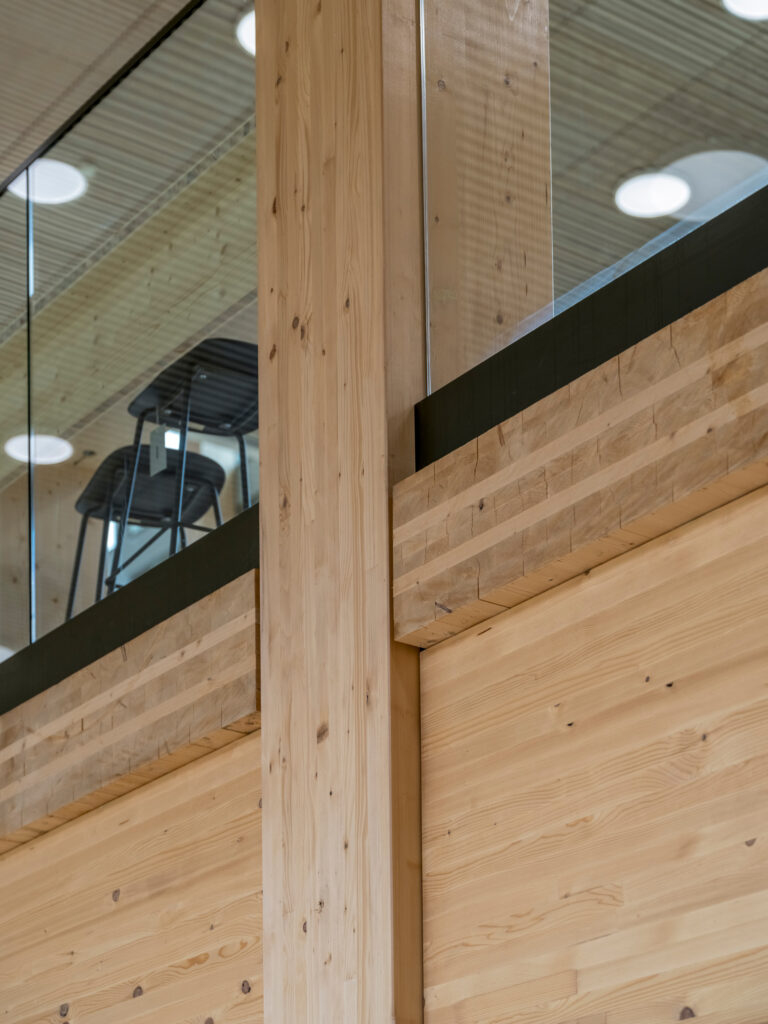
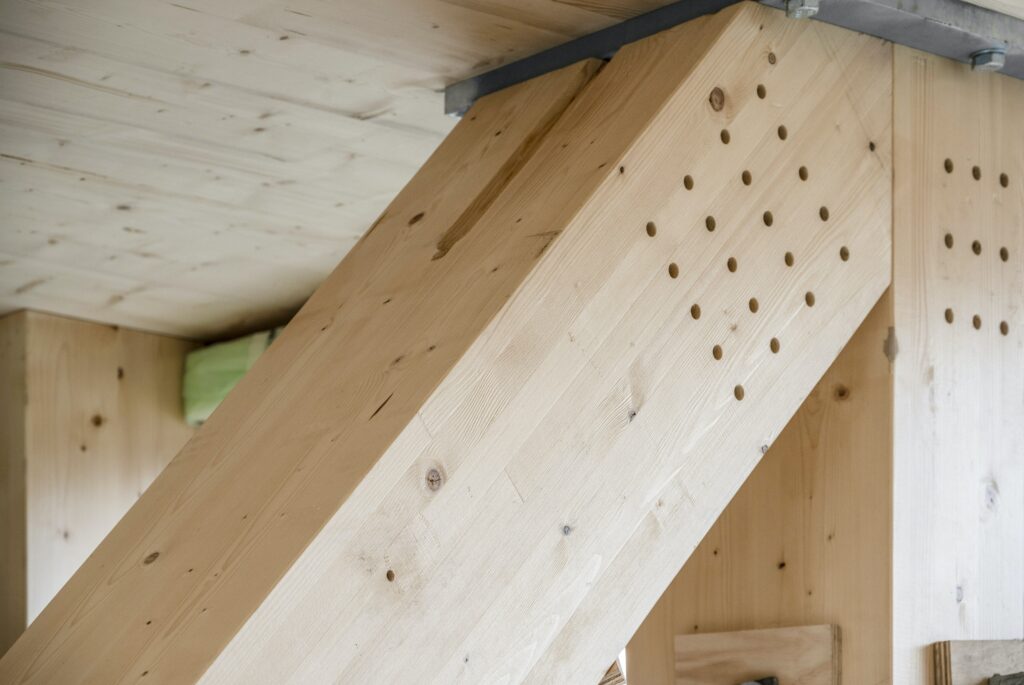
With its 31,000 m² solid timber structure, the project reduces lifetime CO₂ emissions by 5,400 tonnes compared to a conventional build and is seen as a national flagship in documented low‑carbon public architecture. Visible glulam columns and partially exposed CLT floor structures serve as recurring load‑bearing elements, delivering both technical performance and sensory quality while storing carbon.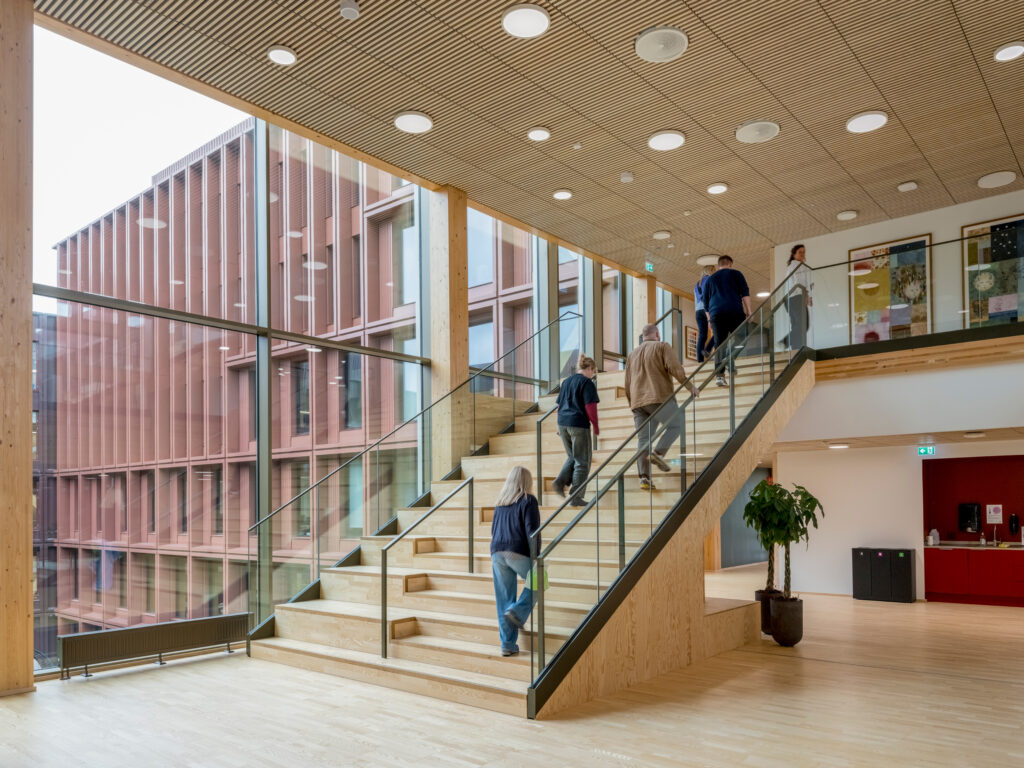 The façades are made from recycled aluminium in red‑brown hues that echo the surrounding brick buildings, creating a coherent composition. Their varied depths, attuned to the sun path, provide passive shading that eliminates the need for mechanical screening while ensuring generous daylight and a comfortable indoor climate.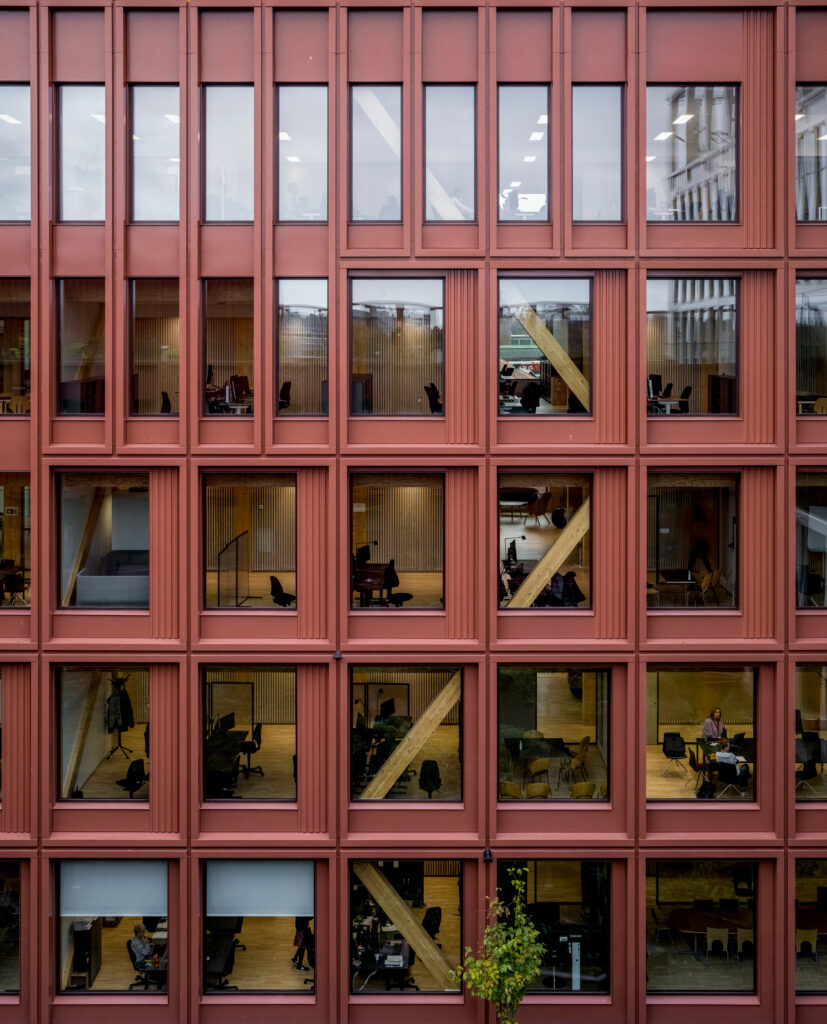
 Blending work, city and nature
The spatial organisation sets a robust and adaptable framework, balancing office workspaces with social meeting places. Interiors can be re‑configured as needed, supporting long‑term adaptability.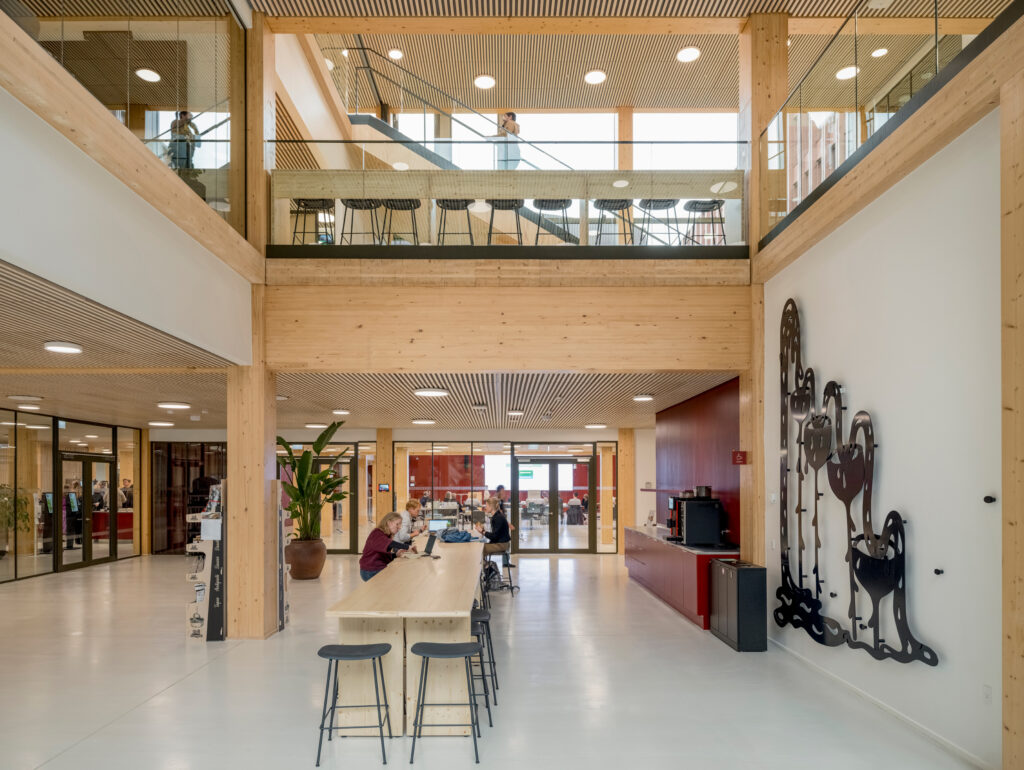 Two staggered, C‑shaped office wings face east and west, ranging from three to six floors, and meet in a seven‑storey central wing containing most meeting rooms – designed to maximise knowledge sharing and collaboration.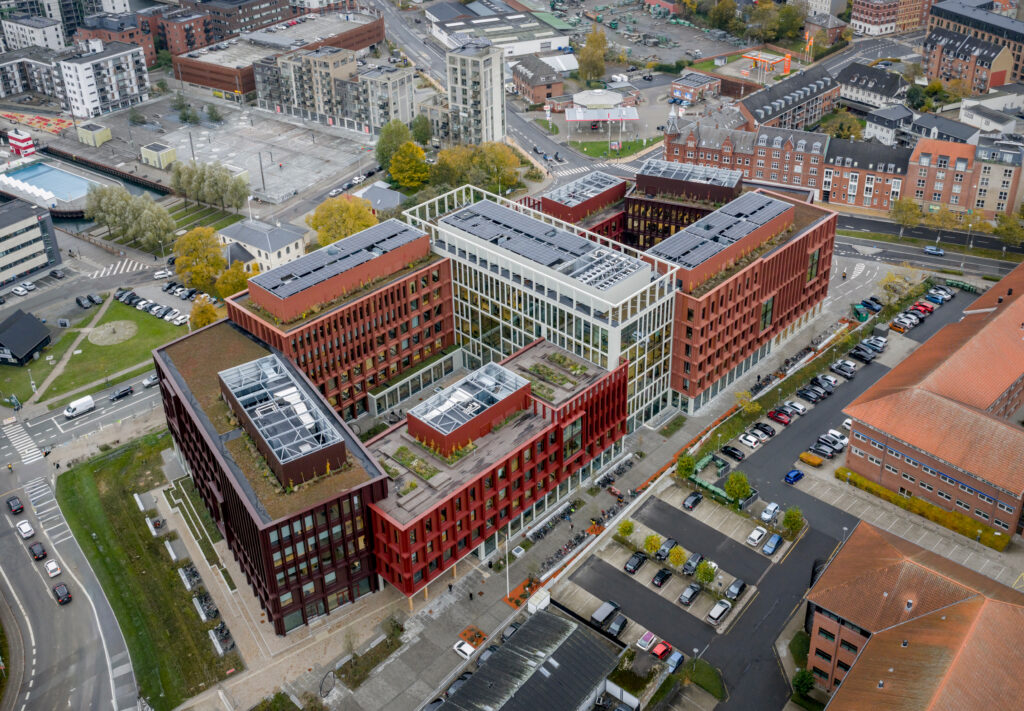
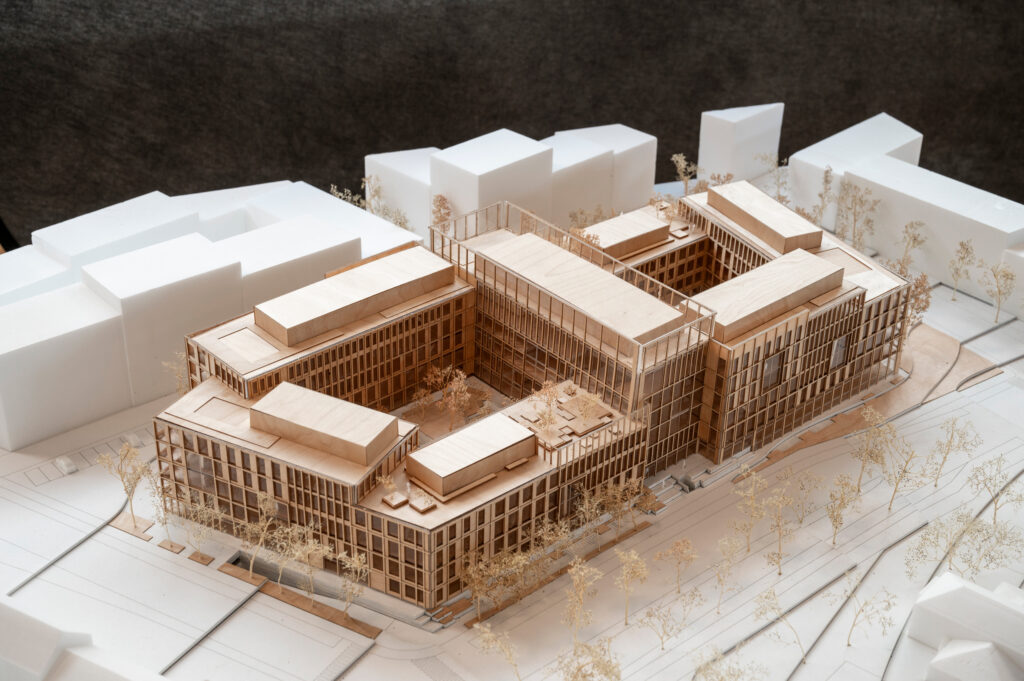 At ground level, a meeting centre, canteen and public front‑office functions connect the building to the city, linking urban life with the inner garden. Niches and recreation spaces along the outer façade strengthen dialogue between the workplace and the public realm.
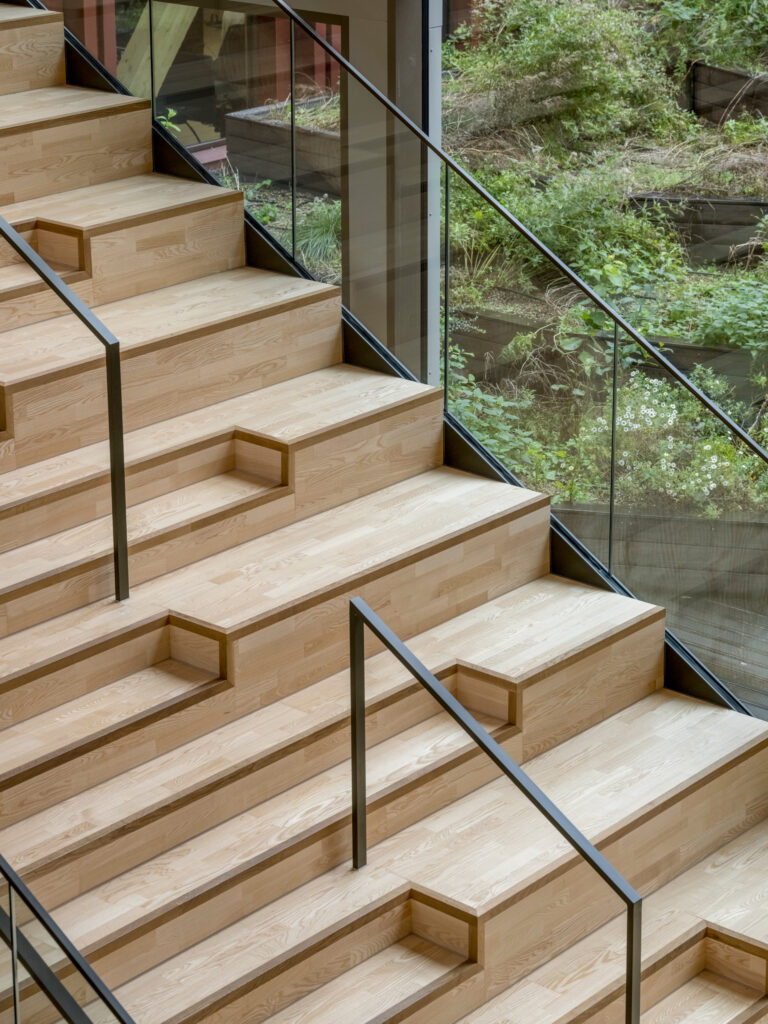
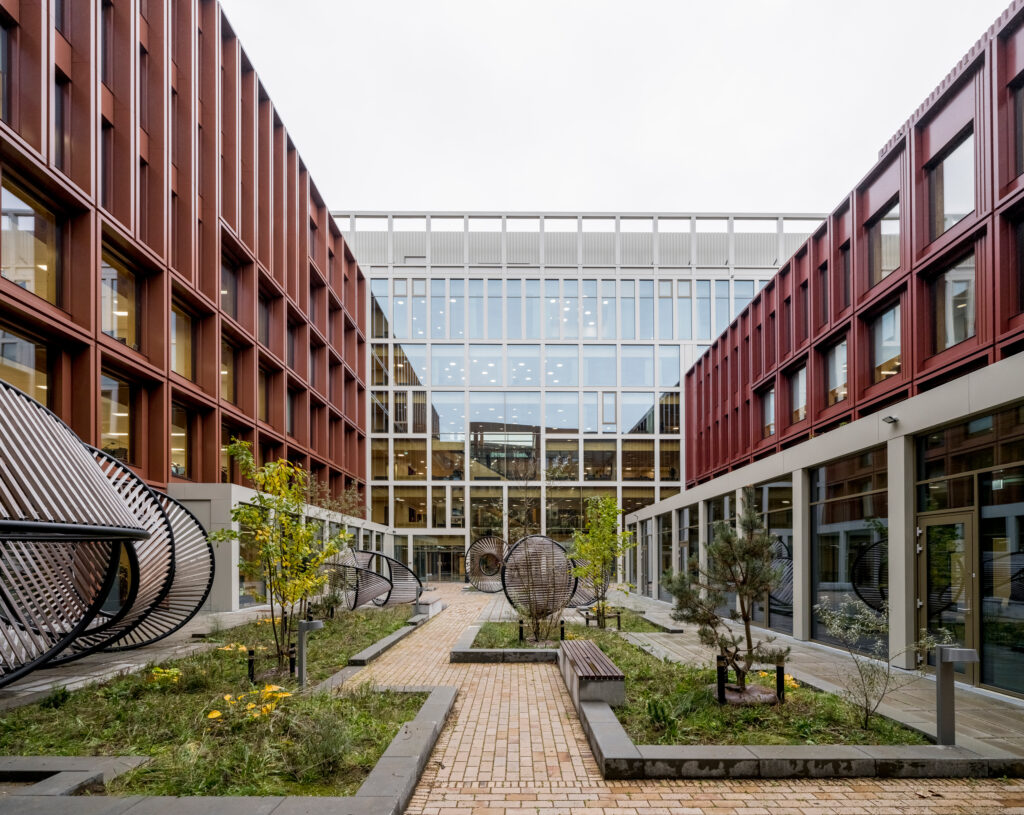 The building rises to its highest point at its centre and recedes in steps towards neighbouring structures. Roof terraces, raised courtyard gardens and green courtyards extend workspaces outdoors, supporting local biodiversity and providing spaces for breaks and meetings.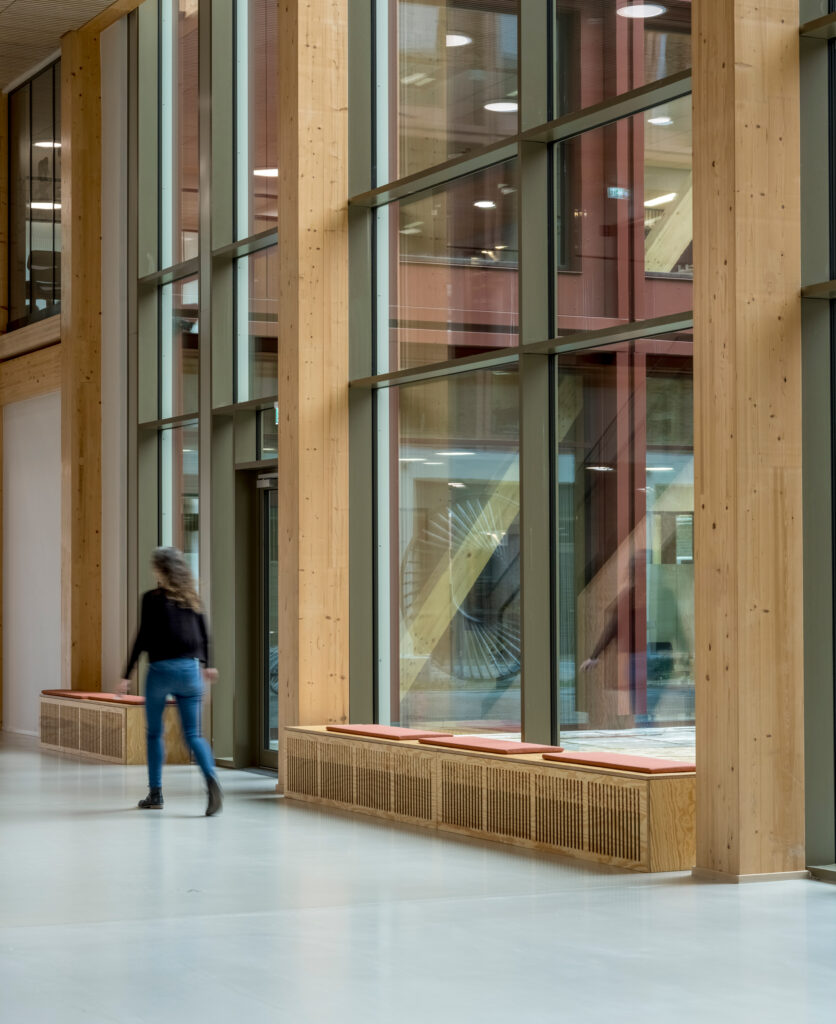
Interview with Thue Borgen Hasløv, Partner and Architect at C.F. Møller Architects
Architect and partner Thue Borgen Hasløv reflects on designing WoodHub – Denmark’s largest timber office building – and the lessons that point towards a new era in architecture. He highlights courage, material intelligence, and close collaboration as key ingredients for a truly sustainable building practice.
Timber as the Core Idea
The choice of timber was driven by the Danish Building & Property Agency’s goal of creating a building with a significantly reduced climate footprint. For C.F. Møller Architects, this was an opportunity to explore timber’s ability to shape both structural performance and atmosphere on a large scale.
“Timber has a dual quality,” explains Hasløv. “It stores carbon and lowers the building’s overall CO₂ footprint, while also creating a warm, healthy indoor climate. Glulam and cross-laminated timber give us strength, flexibility and tactile appeal”.
 Public Construction with a Clear Signal
As a state-owned office building housing eight government agencies, WoodHub carries symbolic weight: “Public buildings should set the example,” says Hasløv. “Climate responsibility, quality and budget considerations can coexist. Here, reduced CO₂ from timber structures and a maintenance-free recycled aluminium façade show how material choice can deliver documented benefits”.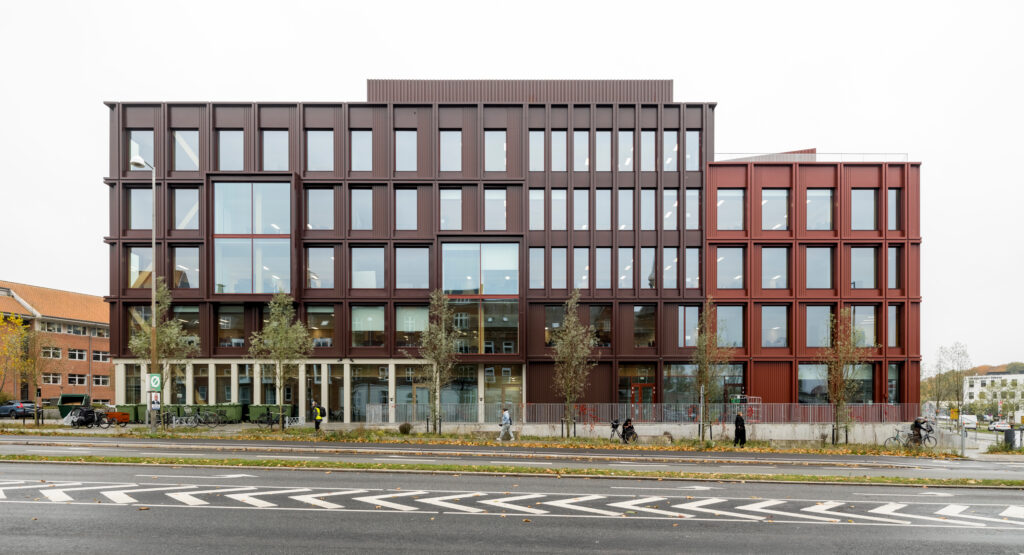 A New Way of Building
Hasløv sees WoodHub as proof that major timber buildings are viable in public construction: “Working with timber requires more precise planning, modular design thinking, and close collaboration across disciplines. This approach builds trust and efficiency.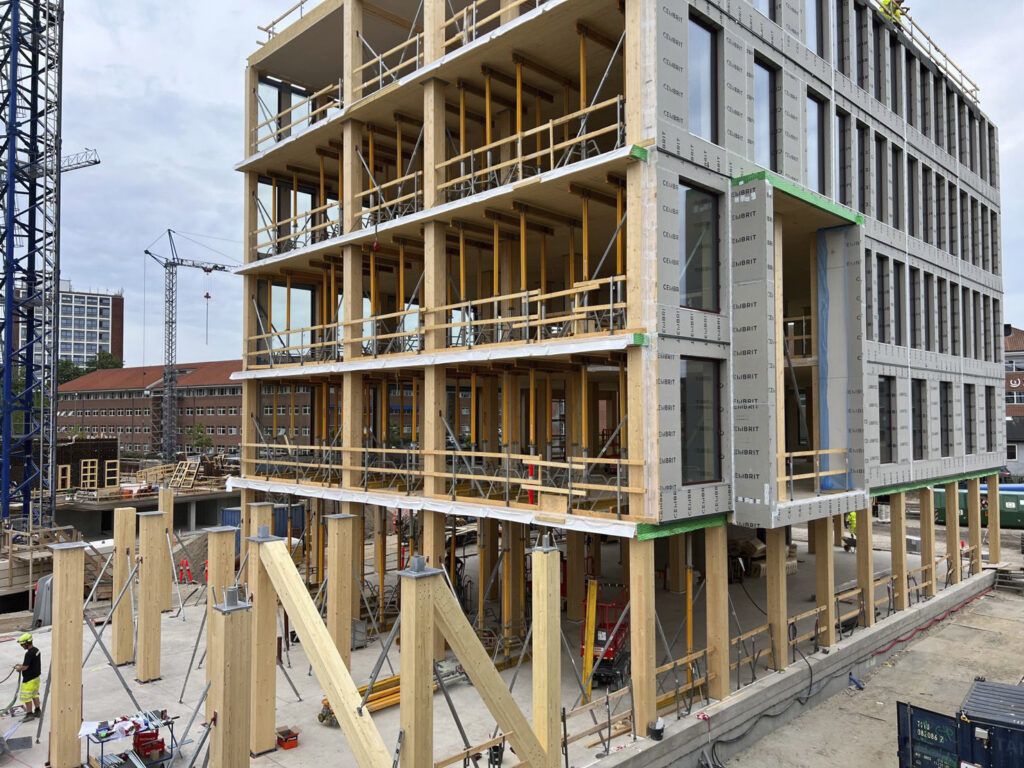 Built for Longevity
The beamless timber structure enables interior reconfiguration over time, supporting extended building life and reducing the need for major structural alterations. “Longevity is perhaps the most climate-responsible feature of all,” says Hasløv. While Hasløv sees timber as important in future projects, he warns against treating it as the sole solution: “We need to select materials based on performance and lifecycle impact, combining them intelligently for the right purpose”.