


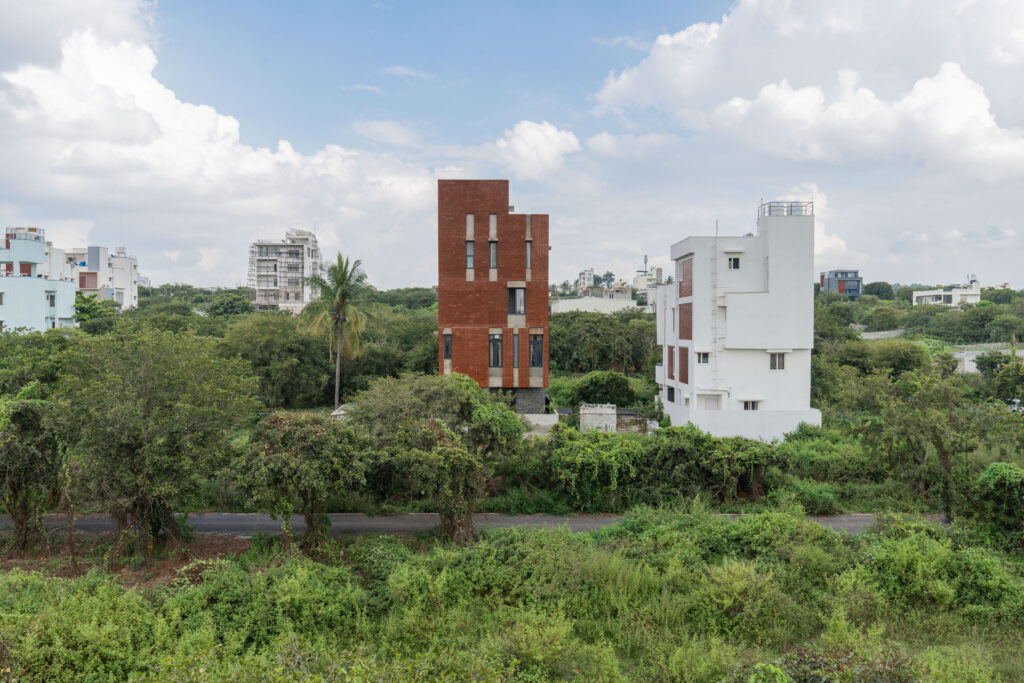
The Turahalli House, a residence for a family of three, is located in the quiet suburbs of Bangalore. The 30-foot by 40-foot plot sits within a government-planned neighbourhood, with proximity to and views toward the Turahalli forest. The modest footprint and the client’s request for an airy, spacious interior established a productive tension that shaped the project’s spatial strategy.
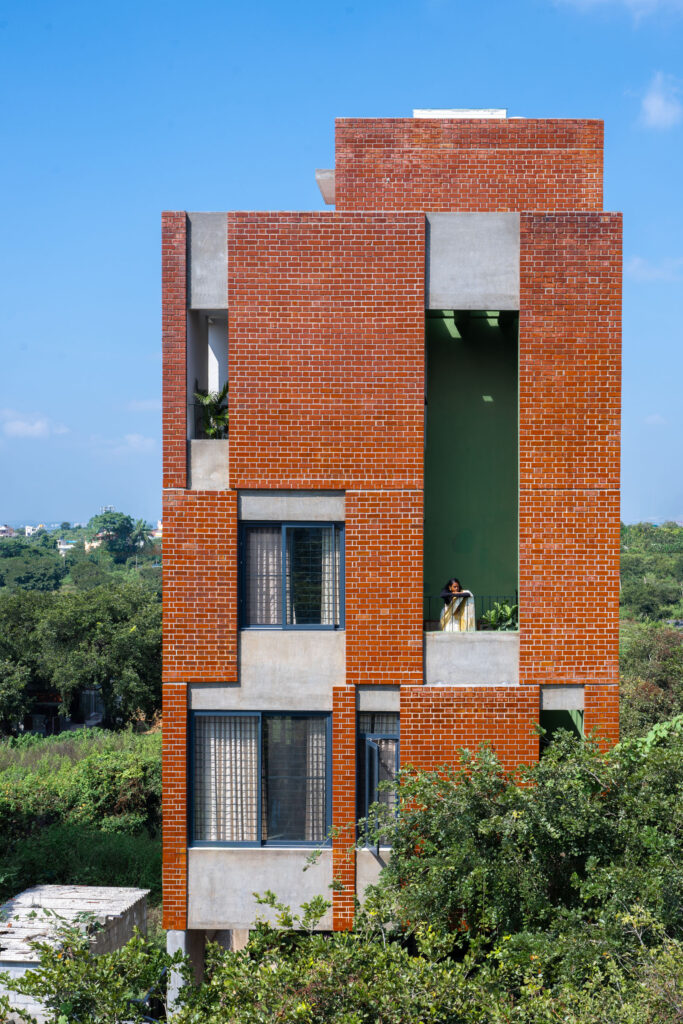
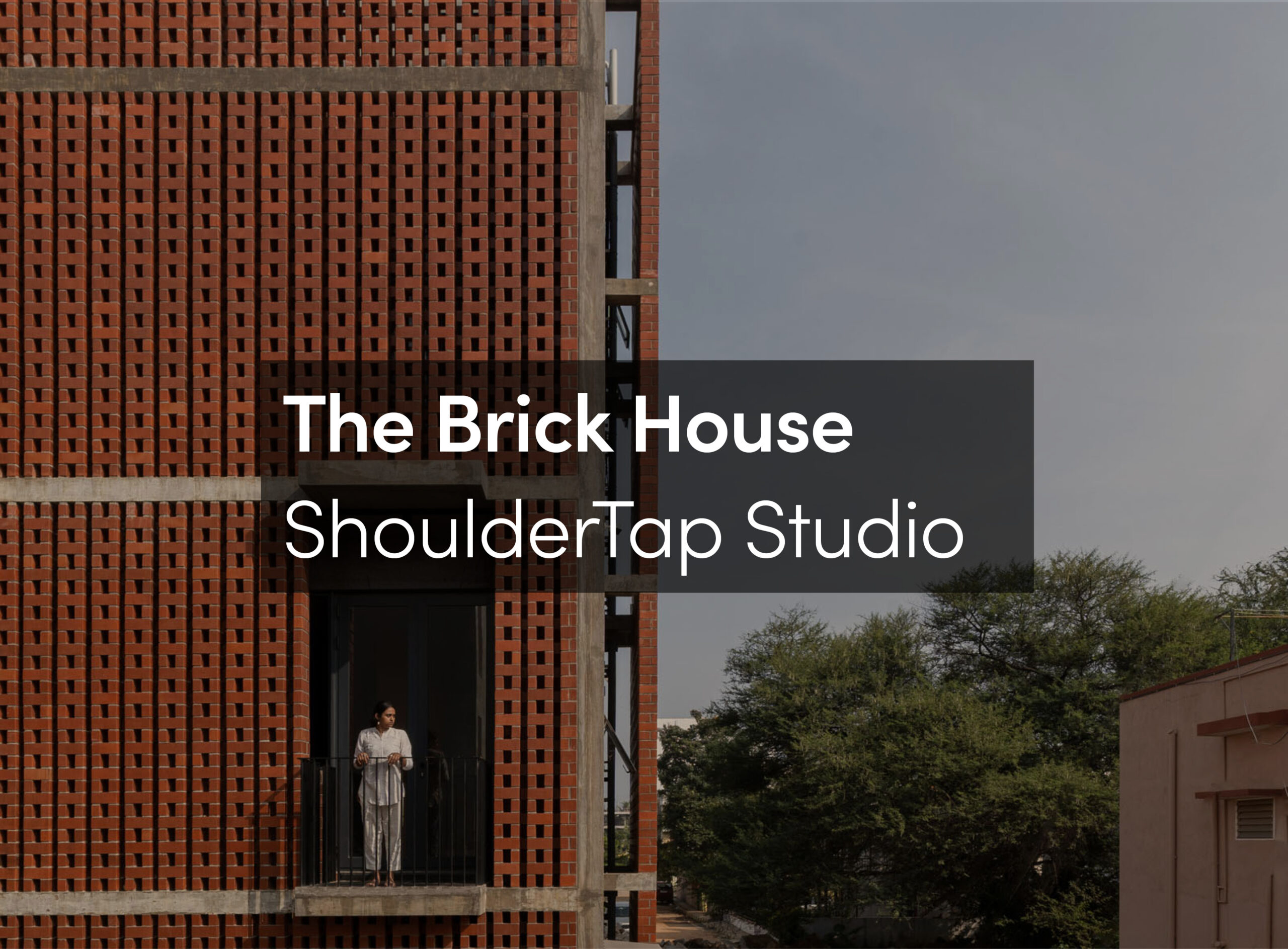
Set against the area’s hilly terrain, the building registers from several blocks away. A red-brick facade catches the sunlight, reading in sharp contrast to the surrounding green landscape and the open sky.
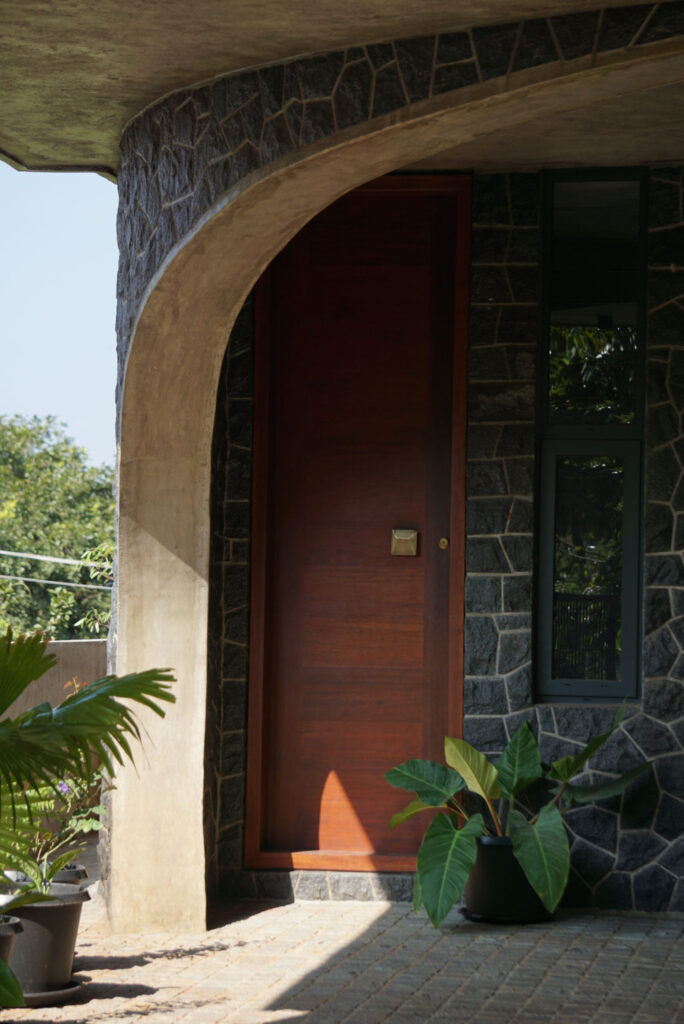
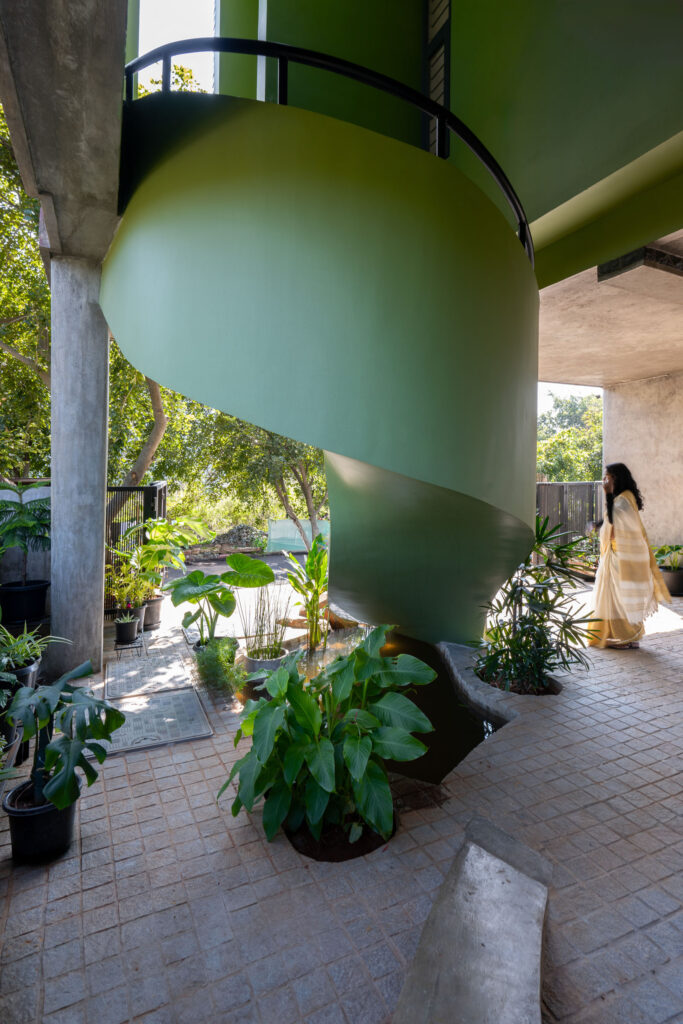
At closer range, the composition becomes more intricate. The ground floor is distinctly articulated against the upper levels through curved walls and a dark stone finish. A metal gate opens to a garden forecourt, where a sculptural, green, curved stair rises above a pond. This entry sequence is organized through calibrated shifts in volume and view: the upper skylight is briefly revealed, a second-floor mass enters the frame, and the foyer’s ceiling resolves the vertical field. The threshold anticipates the house’s recurring logic of concealment and disclosure—an architectural “house of surprises.”
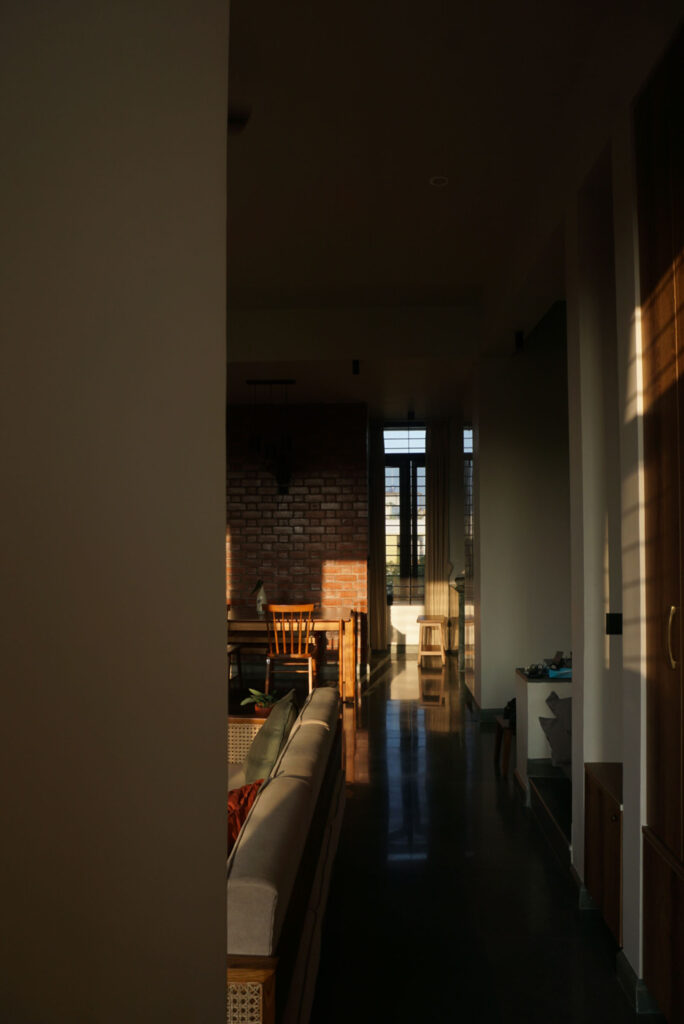
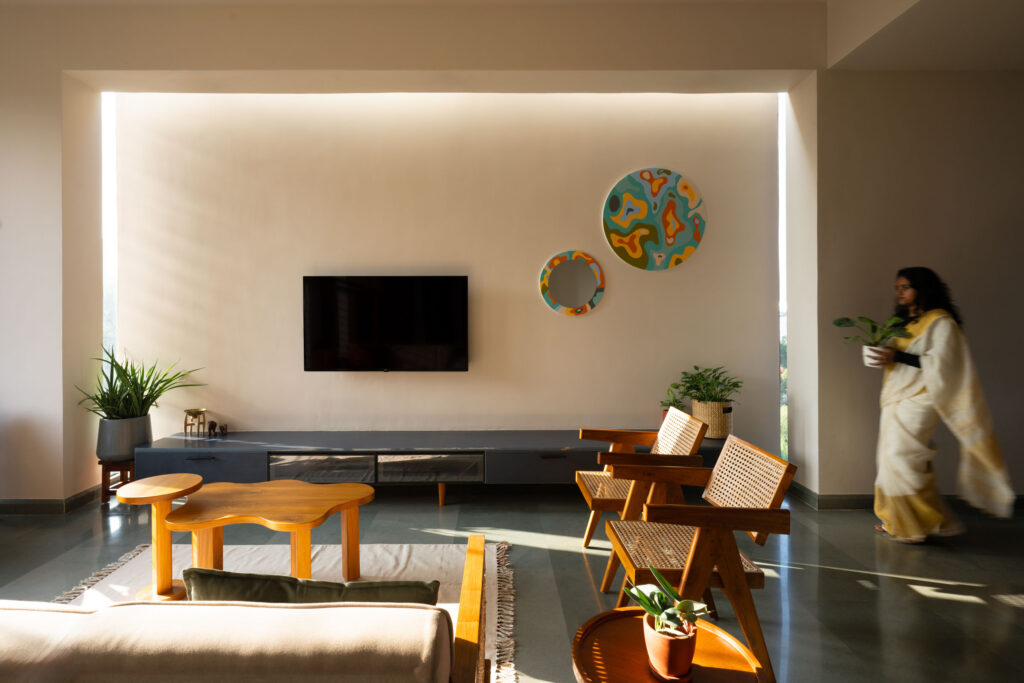
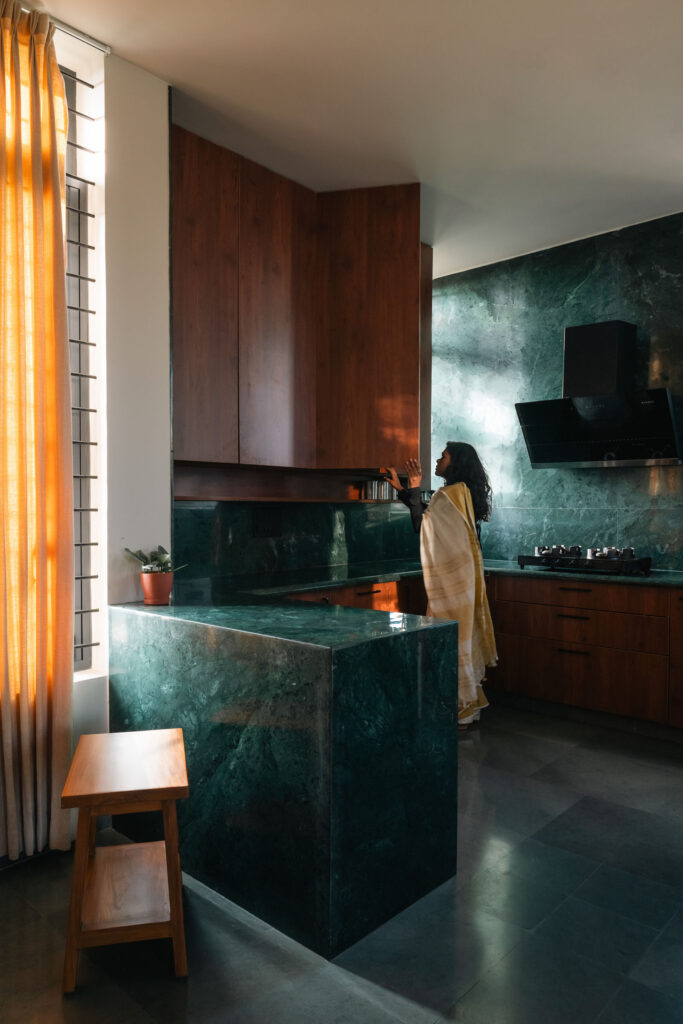
The main door leads into a compressed entry hall that gives way to a larger living-and-dining volume. A high ceiling amplifies the room’s breadth, while large openings on the east and west bring daylight deep into the interior. To the south, a freestanding wall is held slightly apart from the primary structure, forming a narrow slit that registers the sun’s movement over the day. Time becomes legible as an atmospheric condition, encouraging extended occupation. The kitchen remains visually recessed from the living area while opening to the dining zone; Rajasthan green marble and warm timber shutters introduce a deliberate material intensity.
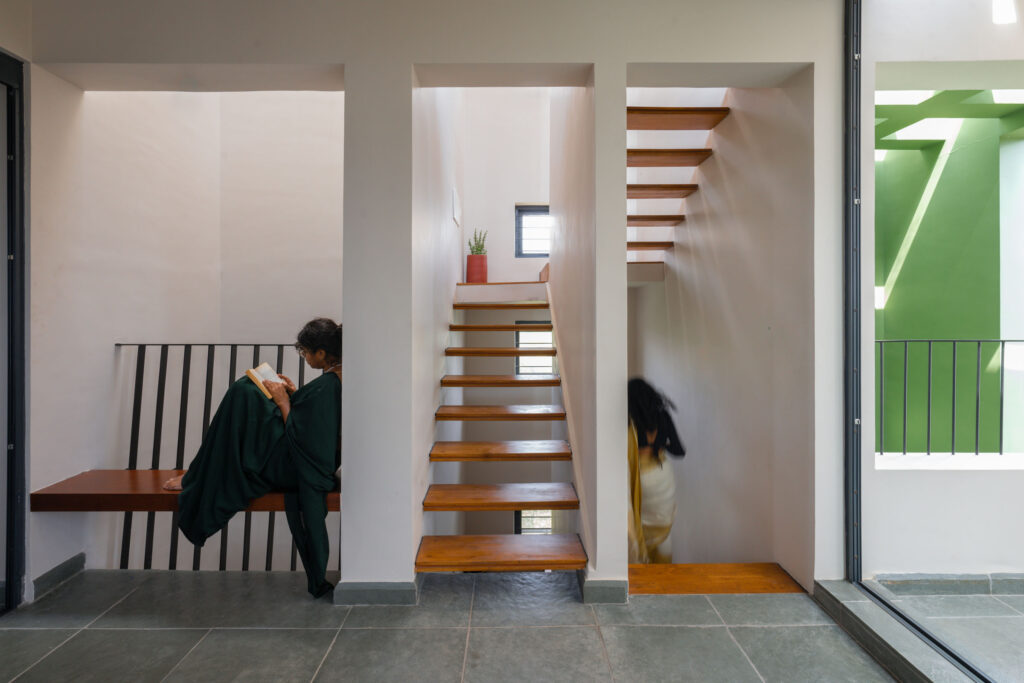
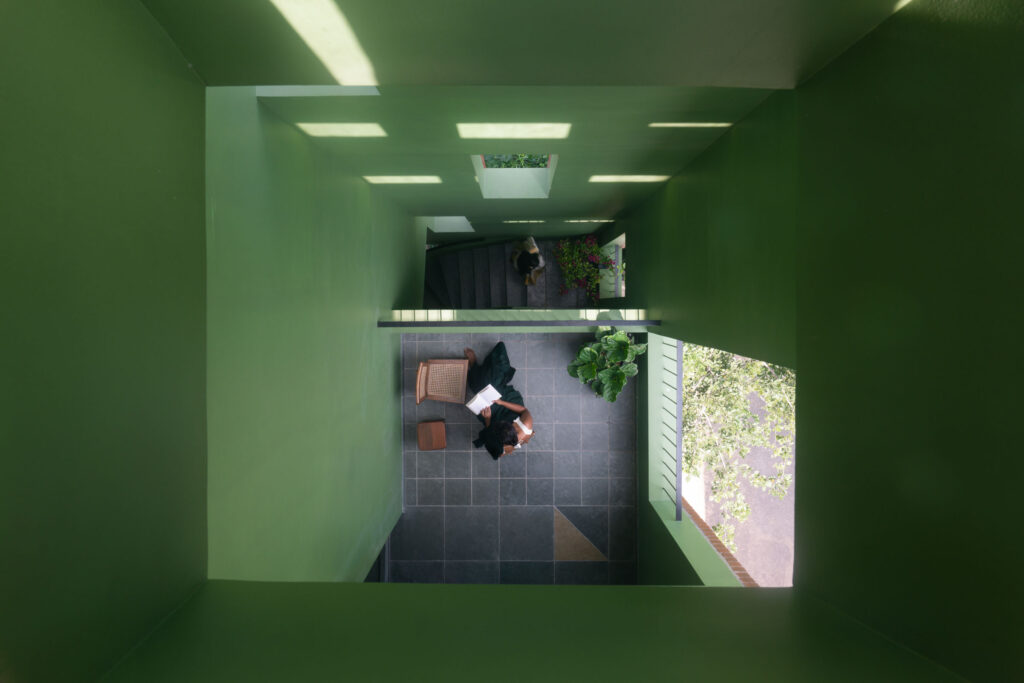
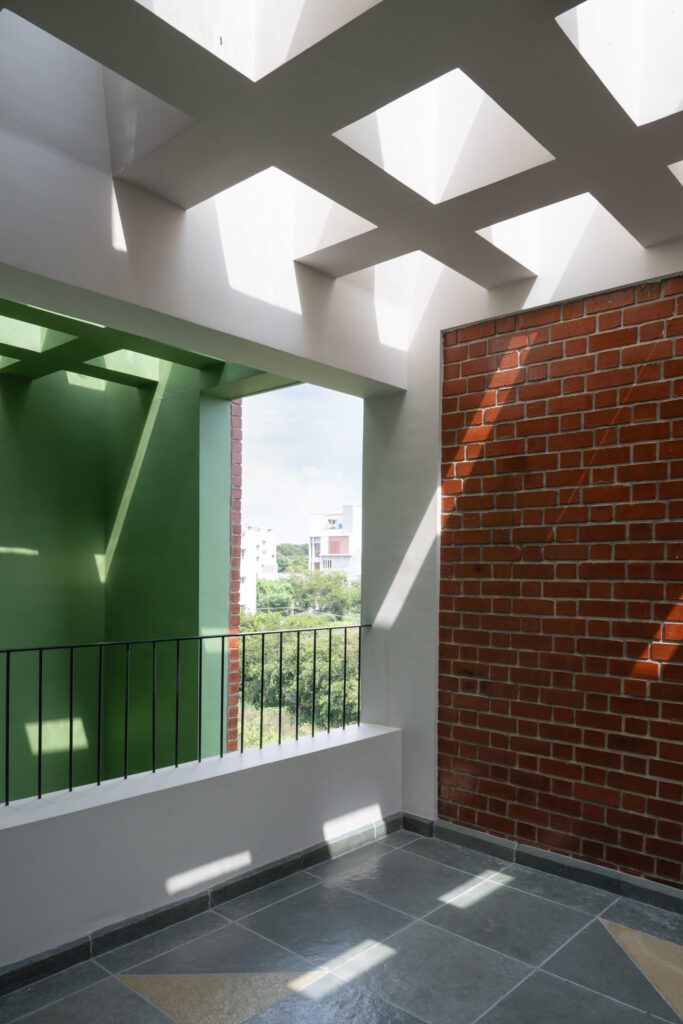
A narrow, dog-legged stair organizes the transition to the bedroom level, where the scale becomes more intimate and aligned with privacy. Yellow triangular inlays punctuate the floor, which combines two local stones—Kota and Tandur. This level also includes a double-height balcony finished in green, introduced as a spatial counterpoint to the bedrooms’ quieter domestic character. The balcony participates in the house’s vertical continuity, linking the entrance volume to the upper balcony and reinforcing a layered sectional relationship across floors.
Ultimately, the project uses section, light, and calibrated thresholds to transform a compact plot into a spacious, time-based domestic interior.