


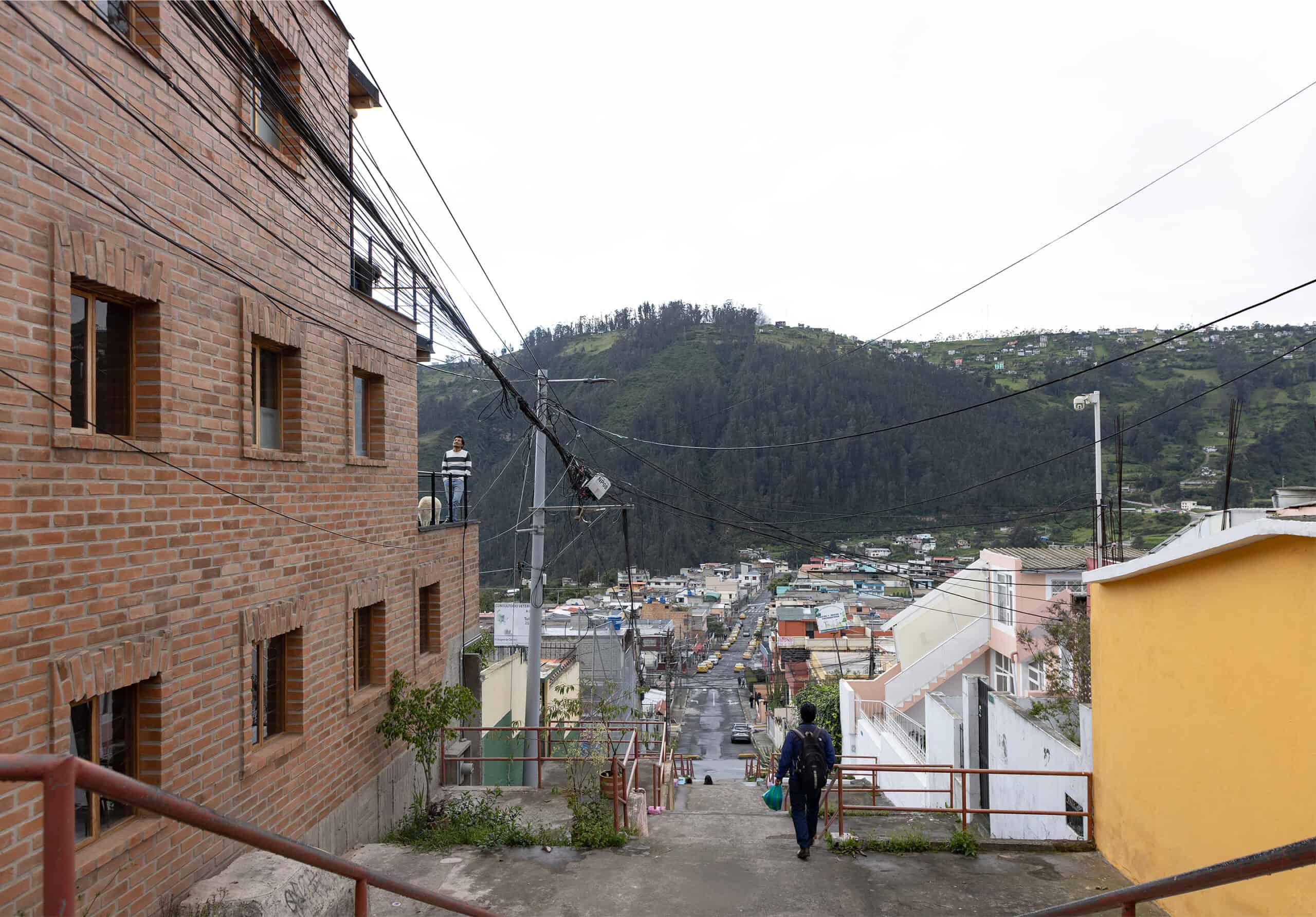
Located in La Vicentina, a traditional middle-class neighborhood in Quito, Ecuador, the house occupies a lot positioned on a staircase, making parking impossible. Rather than a limitation, this condition aligns with the owner’s lifestyle as an avid cyclist. The hillside topography further offers sweeping views toward Cerro Auqui. The program required three distinct functions: a main home for the owner, a smaller dwelling for his daughter, and a flexible common area that could serve as both workshop and social space.
The house is the personal project of Freddy Ordóñez, a mechanical engineer, professor, and director of the SCINERGY research group at the National Polytechnic School. Beyond its domestic role, the dwelling operates as a living laboratory: sensors embedded throughout the building generate data for ongoing research, testing the performance of resilient, replicable housing strategies suited to equatorial contexts.
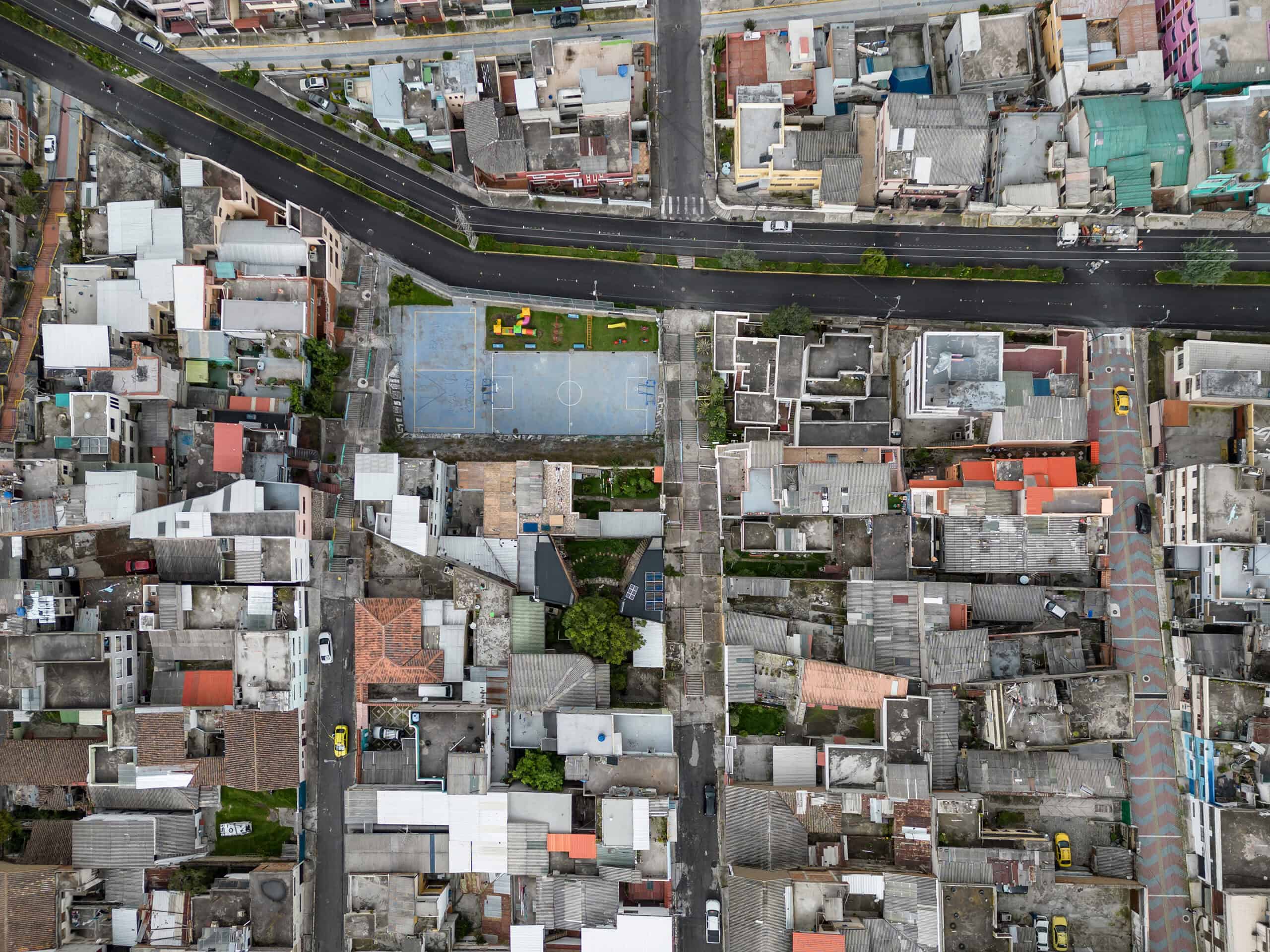
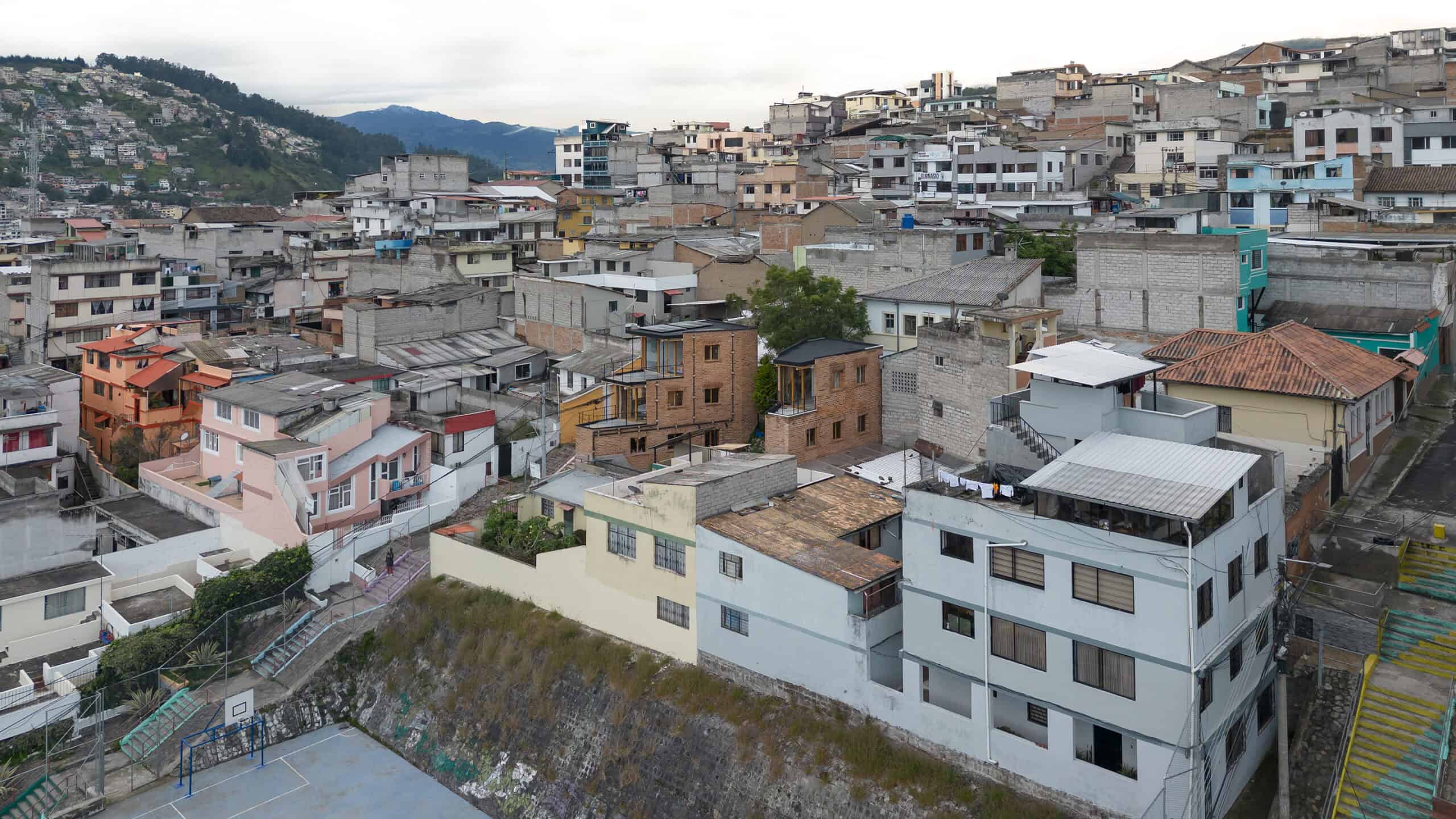
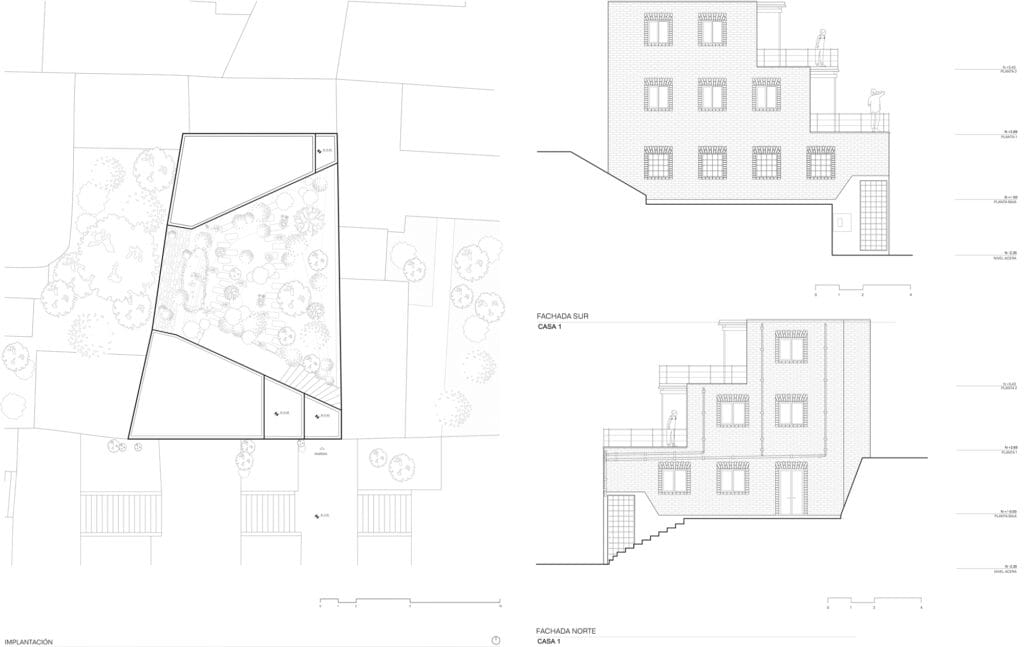
Verticality defines the design, concentrating the program into two slender volumes to maximize ground-level space and create a shared courtyard. This trapezoidal patio merges visually with the neighboring yard, preserving an existing jacaranda tree and optimizing solar gain through its geometry.
Each level is assigned a primary function: ground-floor social spaces, a bedroom and study above, and another bedroom on the second floor. Reduced floor area at higher levels allows the upper stories to retract, forming terraces that open eastward to sunlight and views. These terraces extend daily life outdoors and reinforce a sense of openness to the neighborhood.
The absence of a perimeter wall and the orientation of windows toward the street deliberately encourage visibility. This promotes spontaneous community surveillance, discourages crime, and nurtures social interaction. Architecture here becomes an active instrument for reinforcing community ties, embodying the client’s desire to connect with his surroundings.
Quito’s ubiquitous eucalyptus trees are both resource and reminder of colonial-era forestry policies that destabilized native ecosystems. Introduced in 1865, eucalyptus spread aggressively, displacing local vegetation and eroding soils.
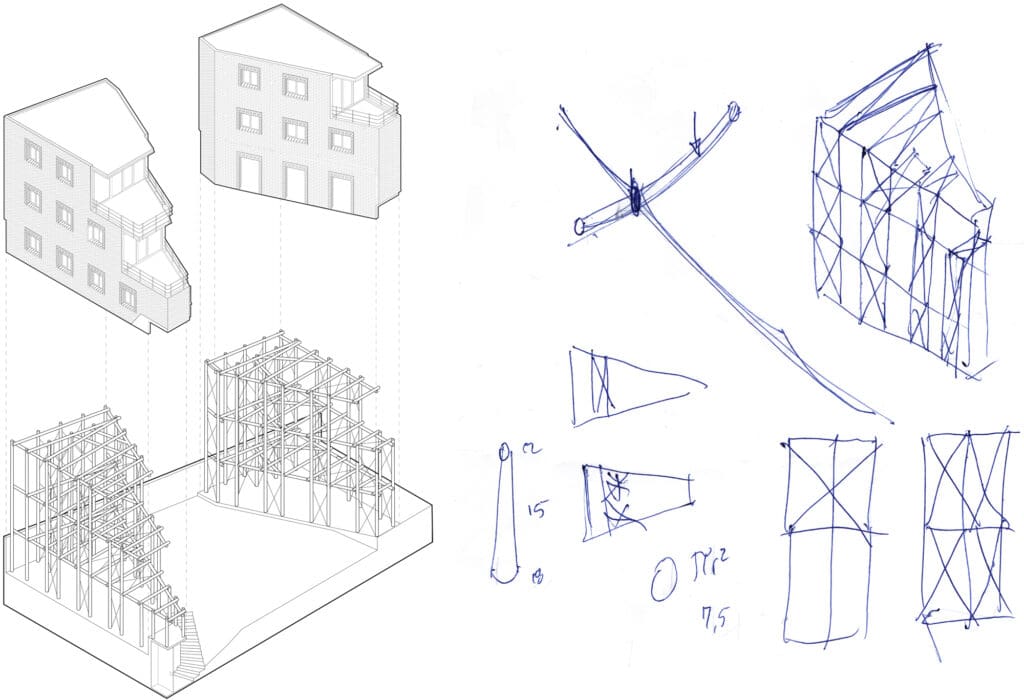
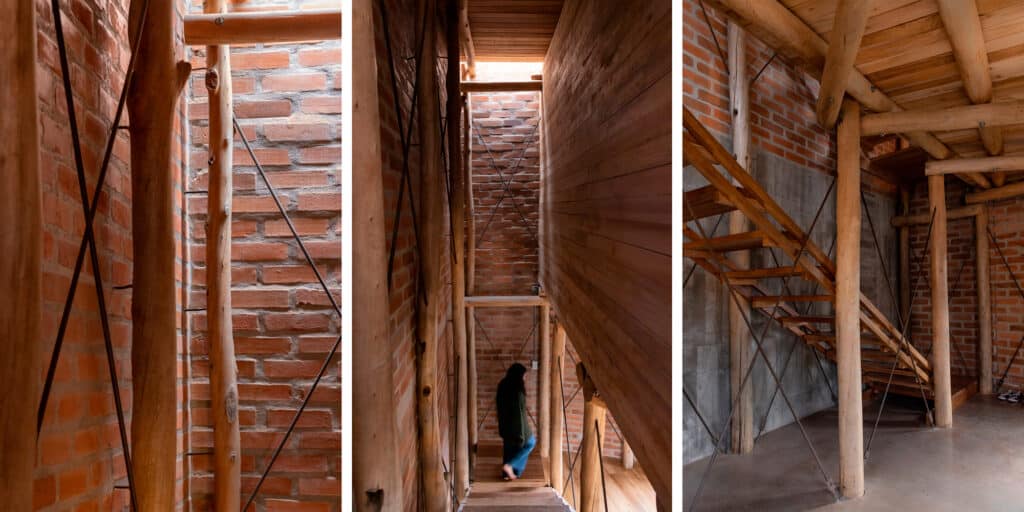
In this project, 9-meter eucalyptus logs—locally called pingos—form the structural skeleton. Harvested just 12.3 kilometers from the site, these logs were sourced from a forest where the owner is actively replacing eucalyptus with native species. This approach not only restores ecological balance but also ensures full traceability of materials, rarely achievable in conventional construction.
Using eucalyptus in its raw, round form avoids industrial processing, minimizing waste and energy consumption. The strategy significantly reduces both embodied and operational carbon emissions, demonstrating an efficient use of invasive species as a resource.
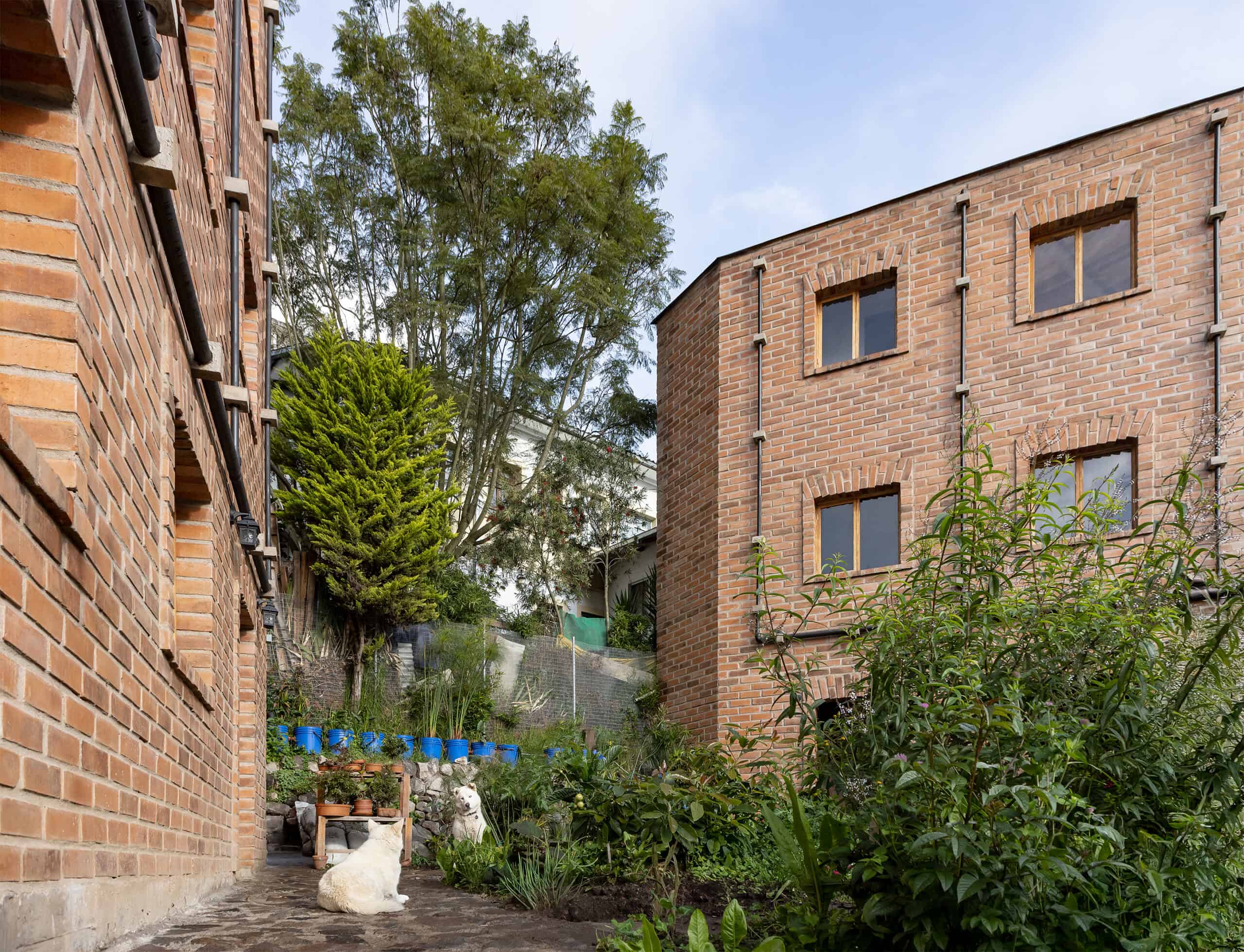
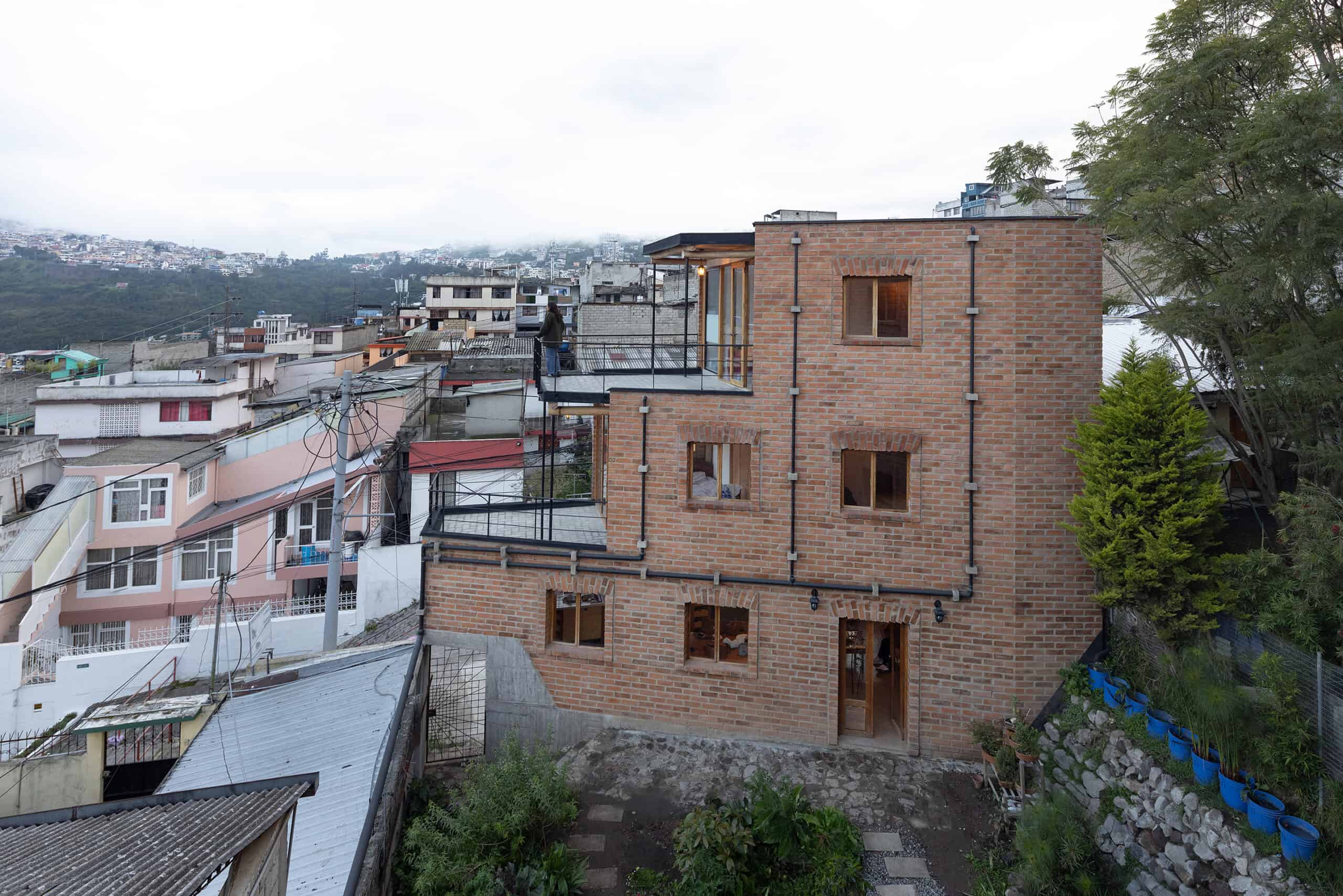
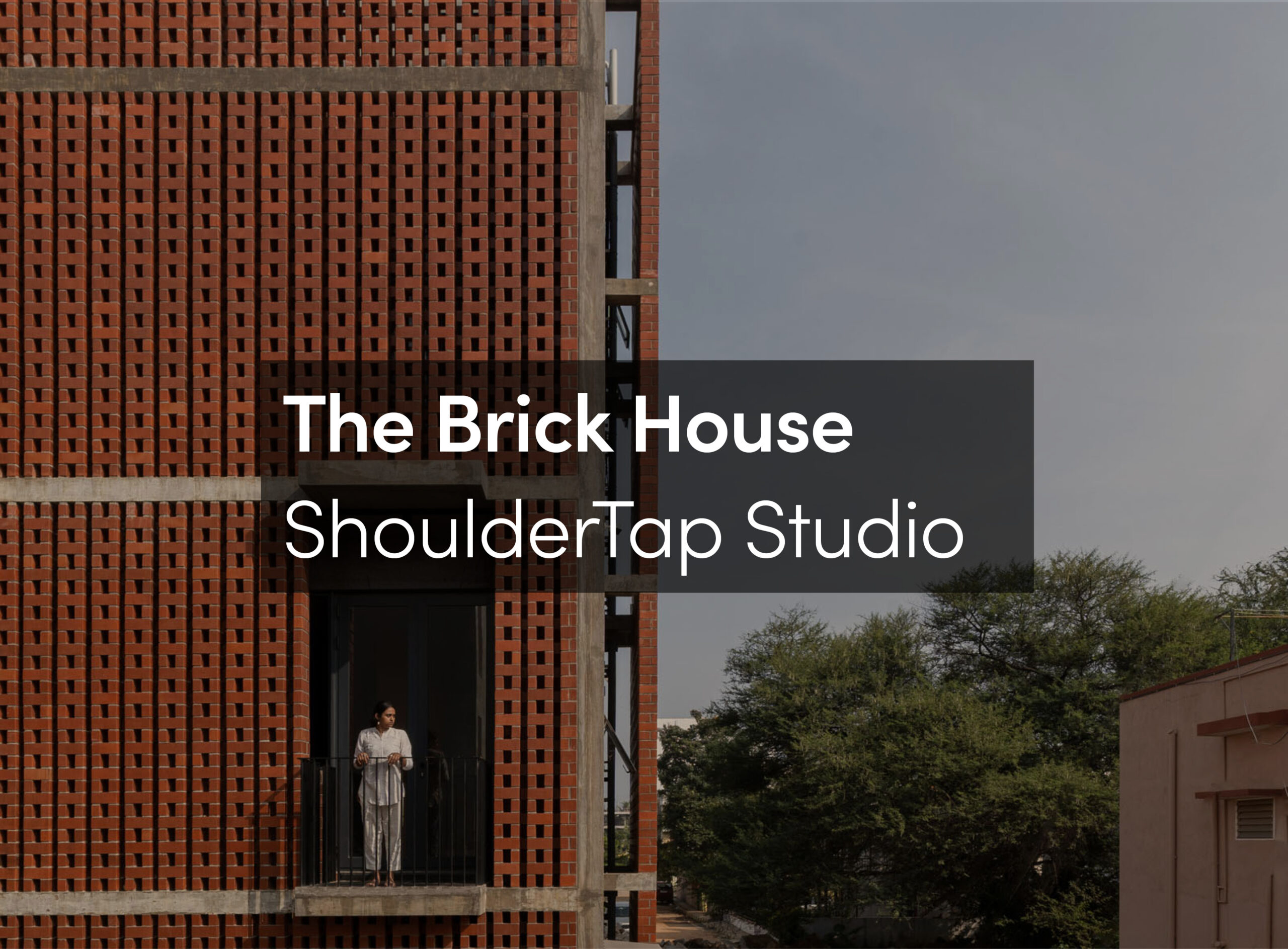
Wood requires protection, which is provided here through a brick envelope. Beyond weather resistance, brick brings critical thermal performance: absorbing heat during the day and releasing it gradually at night. The skin is separated from the irregular timber frame, simplifying construction.
In Quito’s seismic context, the combination of lightweight timber and masonry posed structural challenges. The solution was a hybrid system where the eucalyptus skeleton carries vertical loads and the brickwork provides rigidity. Handmade bricks were deliberately chosen from small family-owned brickyards, supporting local economies rather than industrial suppliers.
Designed as a research platform, the house integrates passive thermal strategies—solar orientation, cross-ventilation, thermal mass, and insulated roofs and floors—that achieve 72% annual thermal comfort, compared to the city’s average of 40%. It also achieves a net-zero electricity balance through photovoltaic panels, a heat-pump water system, and reduced energy demand. Rainwater harvesting and greywater reuse reduce potable water consumption by 40%. Overall, the use of eucalyptus and artisanal brick reduces embodied carbon by 80% compared to conventional construction.
The courtyard further functions as an infiltration zone, contributing to aquifer recharge. At a time when water sources are increasingly remote and cities struggle to secure supply, such localized strategies highlight the value of small-scale, replicable interventions. Rather than relying solely on large infrastructures, the accumulation of individual actions demonstrates how micro-level decisions can collectively shape more resilient urban futures.