


Digital Twin Project Integrating Machine Learning for an Effective Asset Management
 Project Overview
The COVID-19 pandemic exposed significant limitations in long-term resource planning within hospital environments, particularly regarding clinical patient profiles and the availability of critical medical equipment. According to Alfonso Sanahuja from Consorci Sanitari de Terrassa, the HOSPITALES 4.0 project provided a proactive solution, helping healthcare institutions anticipate new pandemics, handle critical situations, and simulate different scenarios to address them effectively.
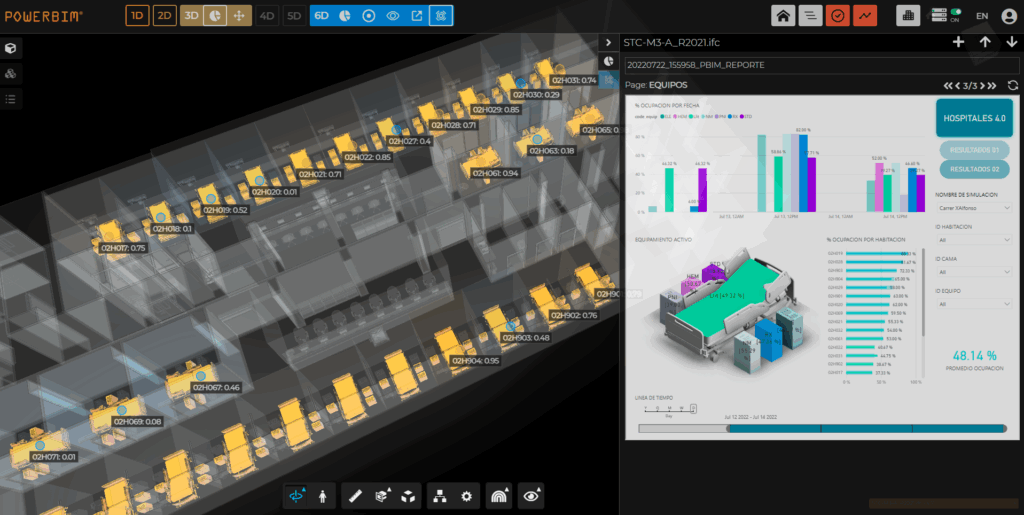
As part of the initiative, a pilot project was developed in a critical Intensive Care Unit (ICU) at Terrassa Hospital. Frederic Gil Banús, MEP and Smart Building Lead Engineer in BIM6D, explains, this pilot integrates a Digital Twin platform—POWERBIM—that digitally represents ICU boxes, spaces, and medical equipment. The platform connects these elements with equipment inventories, historical pathology data, and technical maintenance records. This comprehensive integration allows stakeholders to predict potential failures, anticipate needs, and analyse different alternatives through simulations.
Gil Banús adds that the application of artificial intelligence algorithms, machine learning, and simulation technologies enables the system to forecast the demand and availability of ICU beds, medical equipment, and associated resources based on hospital admission pathologies, as well as predict and anticipate their availability. “Obtaining predictive maintenance” he stresses, “reduces corrective maintenance and optimizes operating costs, improving health care and patient safety”.
From an asset management perspective, Miguel Delgado from Universitat Politecnica de Catalunya notes, the intelligent and predictive approach implemented in HOSPITALES 4.0 offers clear advantages over traditional maintenance systems. These include a reduction in maintenance costs by identifying optimal windows for preventive interventions, increased resource availability by extending the mean time between failures and the useful life of equipment, and, consequently, greater operational efficiency with lower overall operating costs.
 Beyond the healthcare sector, Helena Perez from CadTech Iberica emphasizes, the technologies developed within HOSPITALES 4.0 demonstrate strong potential for application in any industry where facilities are critical and depend on high-demand equipment. Within hospitals specifically, the project also supports reductions in waiting times, improvements in patient experience, and enhanced predictive capabilities for managing healthcare demand.
 Digital Twin as a Service
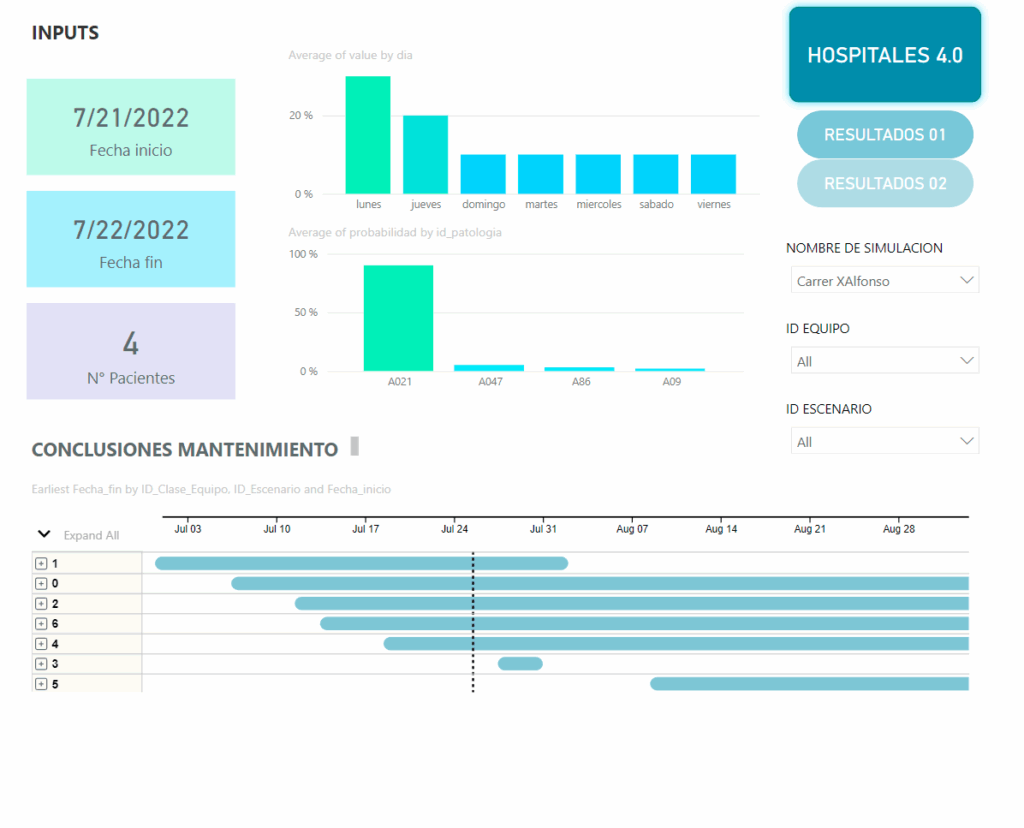
The POWERBIM Digital Twin functioned as the central integrative platform for all systems involved. Its BIM-based data structuring and classification capabilities enabled the systematic organization of information, while simulation inputs and results were managed through an interactive database directly linked to the digital model.
One of POWERBIM’s most innovative capabilities is its ability to create custom data analytics templates that capture project workflows, automate processes, and present simulation results in an intuitive, visually clear way. The platform also allows users to ‘play’ simulations along a timeline, enabling them to compare scenarios, analyze outcomes, and make informed decisions based on actionable data insights.
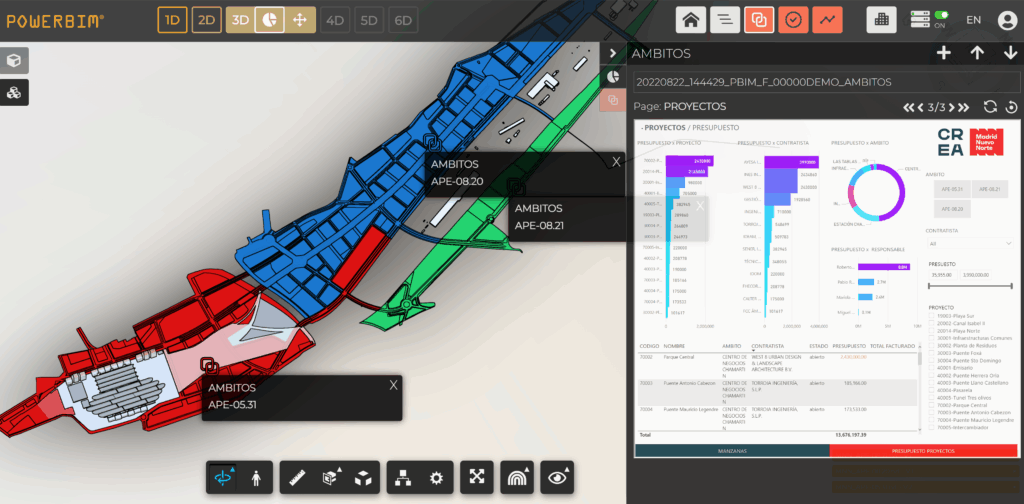
Enjoy the video for the POWERBIM result of the project through this link:
https://bim6d.eu/portfolio/hospitales-4-0/