The Arctic is a fragile ecosystem increasingly shaped by human demands on nature. This photosurvey looks at the Arctic, and it’s locals’ relationship to the land, where local ways of living are closely attuned to nature, its rhythms, and its limits.
Arlyn Charlie’s photographs document his family’s intimate relationship with the landscapes of Teetł’it Zheh (Fort McPherson, Northwest Territories, Canada). It is a close view of Gwich’in culture and how they live with the land, sharing ongoing fishing, hunting, gathering, and survival traditions through seasonal activities that connect them deeply to their ancestral territories.
Arlyn Charlie’s is a Teetł’it Gwich’in multidisciplinary artist based in Teetł’it Zheh (Fort McPherson, Northwest Territories, Canada). A published writer and photographer, his work is dedicated to documenting and preserving traditional knowledge of the Teetł’it Gwich’in people. Guided by the belief that language and culture are the foundations of identity, his work emphasizes the importance of preserving both, as neither can exist without the other.
Image descriptions, in order of appearence:
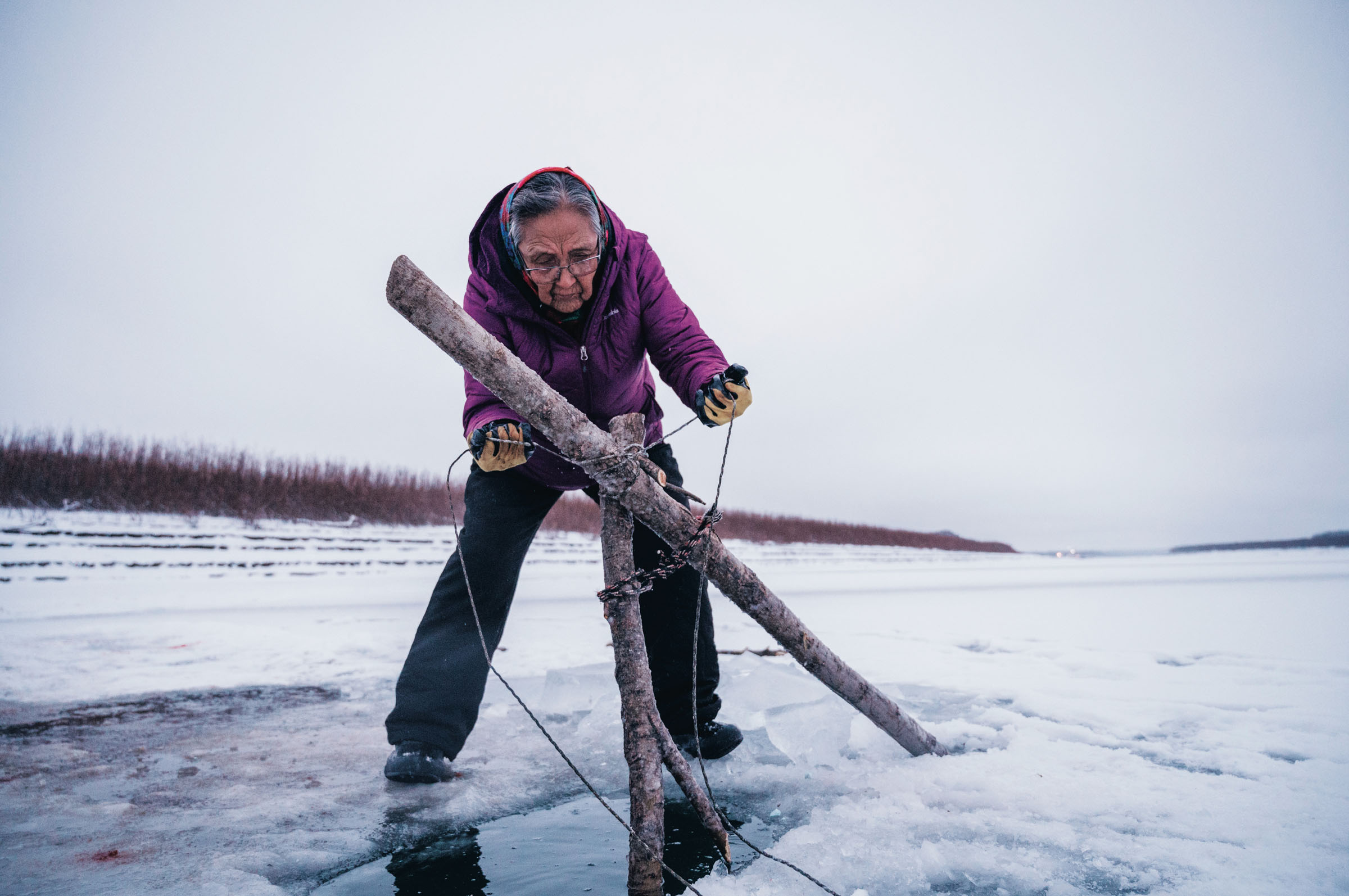
- 2023, Nijìn ok nizii chihvyàh eenjit gwiinzii. Where there’s an eddy, it’s good for the net.
People travel from Teetł’it Zheh or the camps nearby to Nataiinlaii (8-Miles), where the nets are set. Oftentimes, people work together to fish during the fall freeze-up. In the winter, fishing nets are left submerged for hours at a time, only checked once or twice a day by being pulled to the surface. The trapped fish are removed, and the net is placed back under the water. - 2021, Shigyuuwhan kat łuk khagi’gi’in. My parents are catching fish.
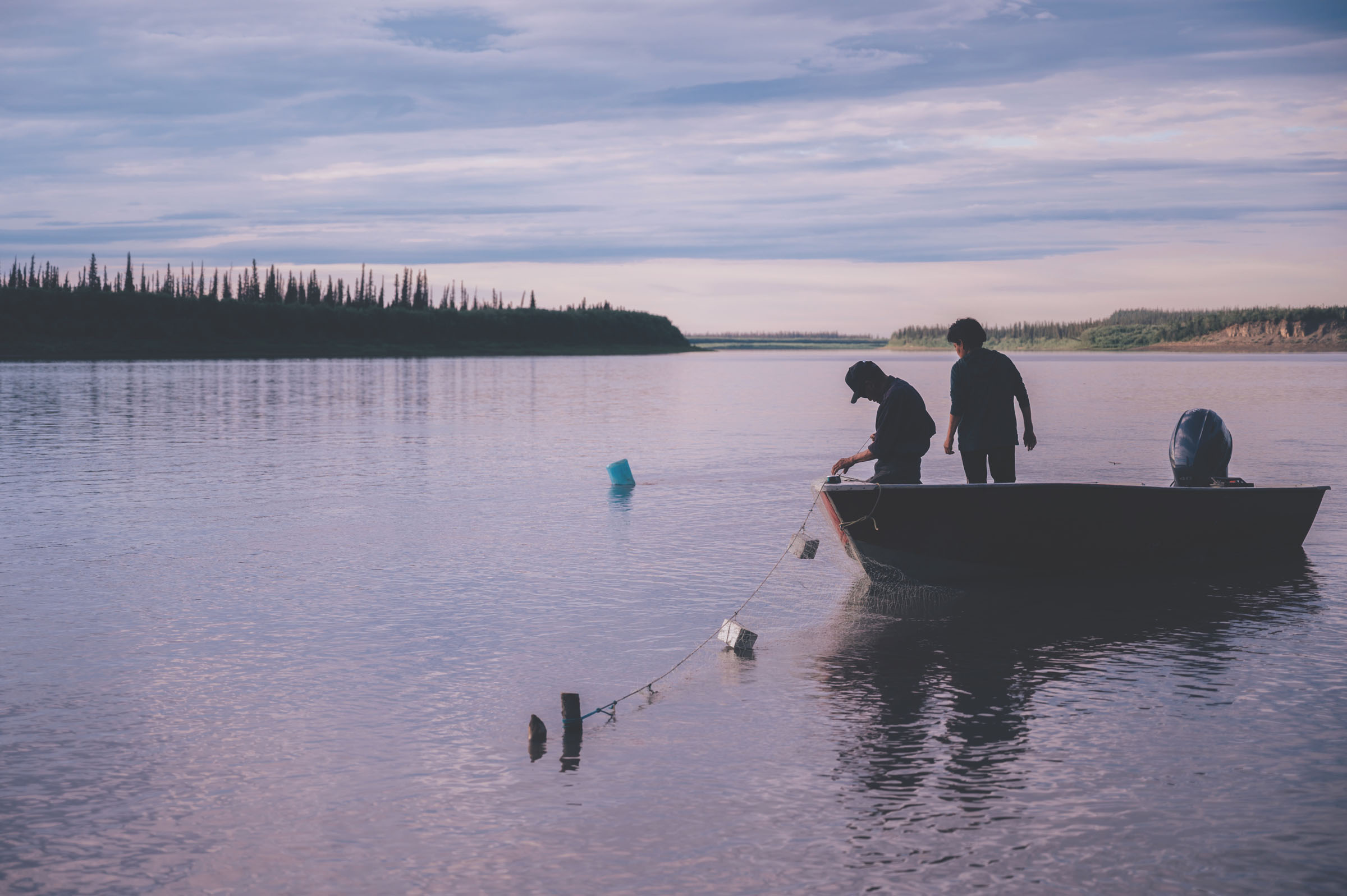
During the month of July, people begin moving to their camps along the Teetł’it Gwinjik (Peel River) to set their fishing nets to catch the Whitefish moving upriver. Today, the constant rise in temperature makes it a challenge to work with fish during the summer. People have to check their nets more frequently—every couple of hours—as the warmer waters cause the fish to drown more quickly. - 2020, Jidii nan niwhats’an ahtsii tthak ta’da’ch’uu. Everything the land gives us.
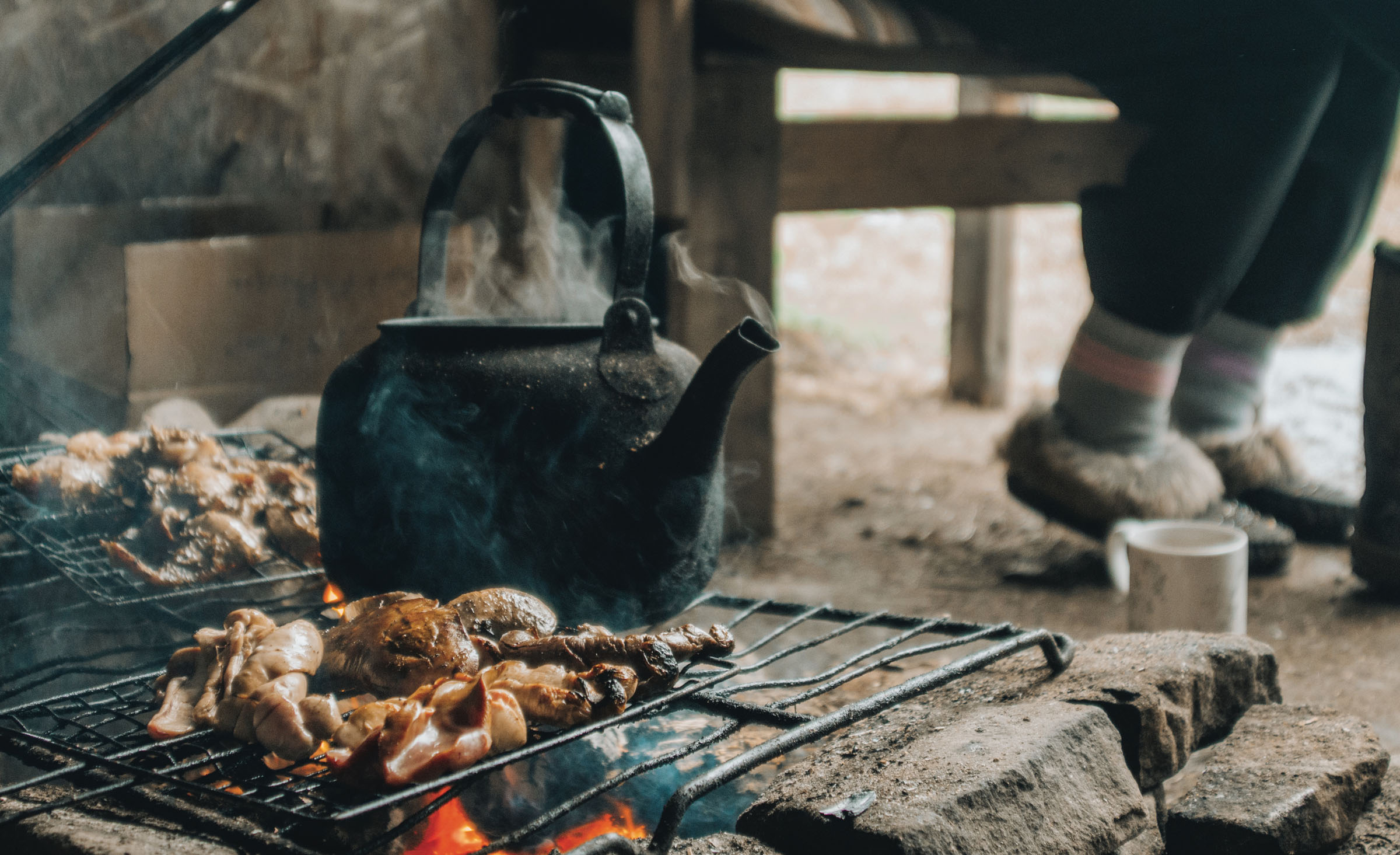
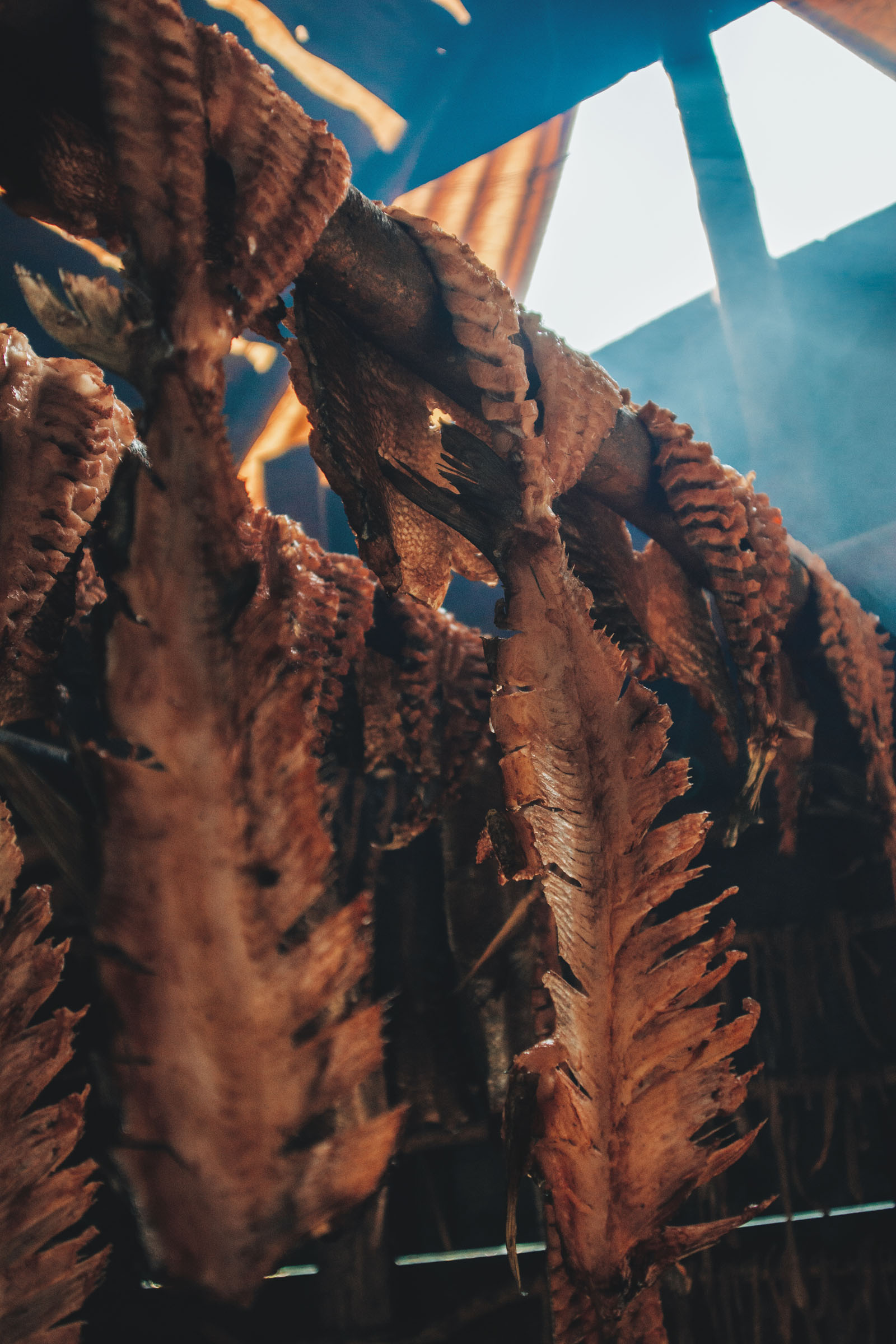
People build smokehouses within their camps so that they have a place to smoke fish in the summer. While most of the fish is cut and processed into uutsik (dryfish), the remaining parts are often cooked over k’ill (dry willow) or driftwood so that nothing is wasted. - 2020, Sreendit hee dinjii kat digakaii’k’it gwits’at nagadija. In the spring, people travel back to their camps.
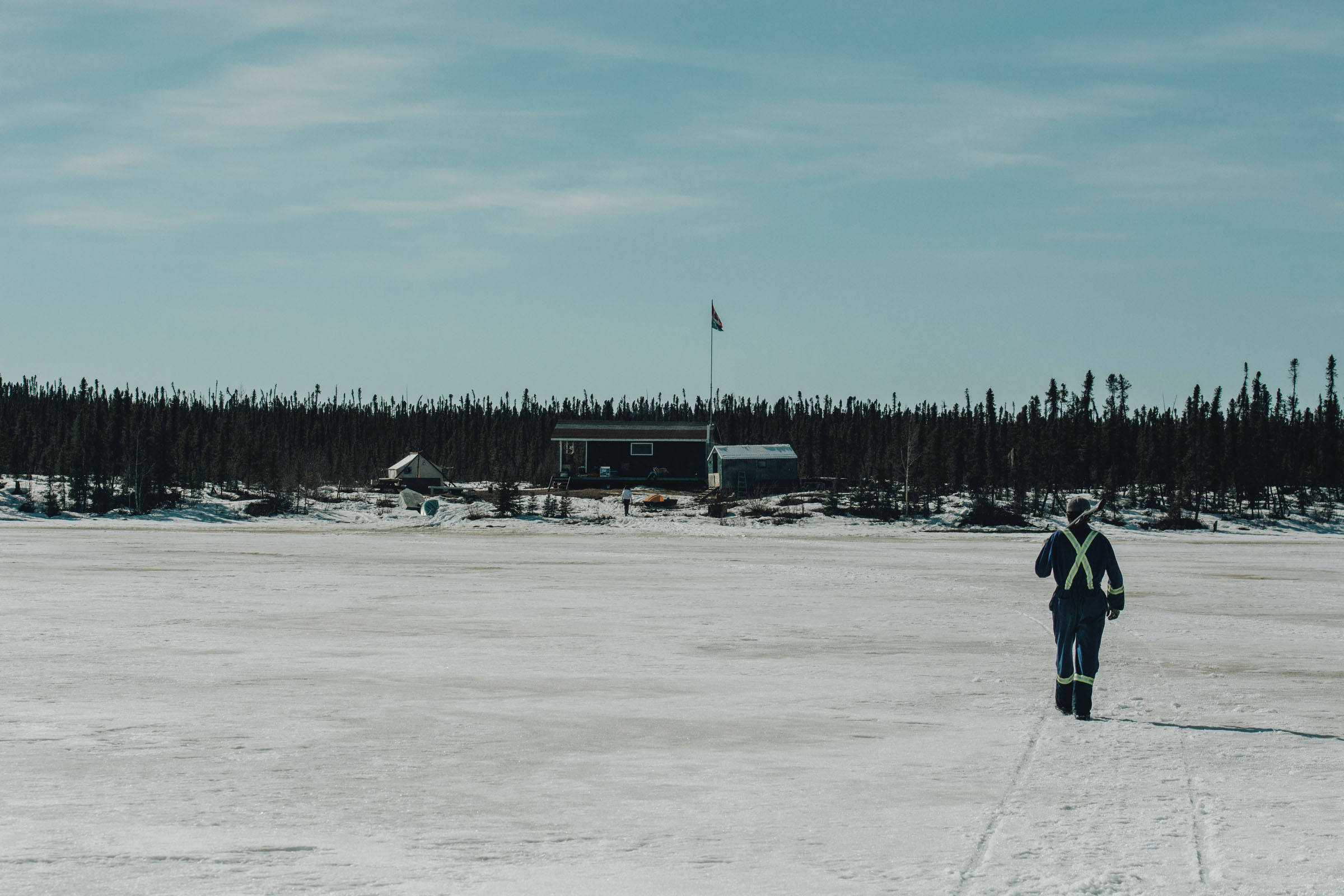
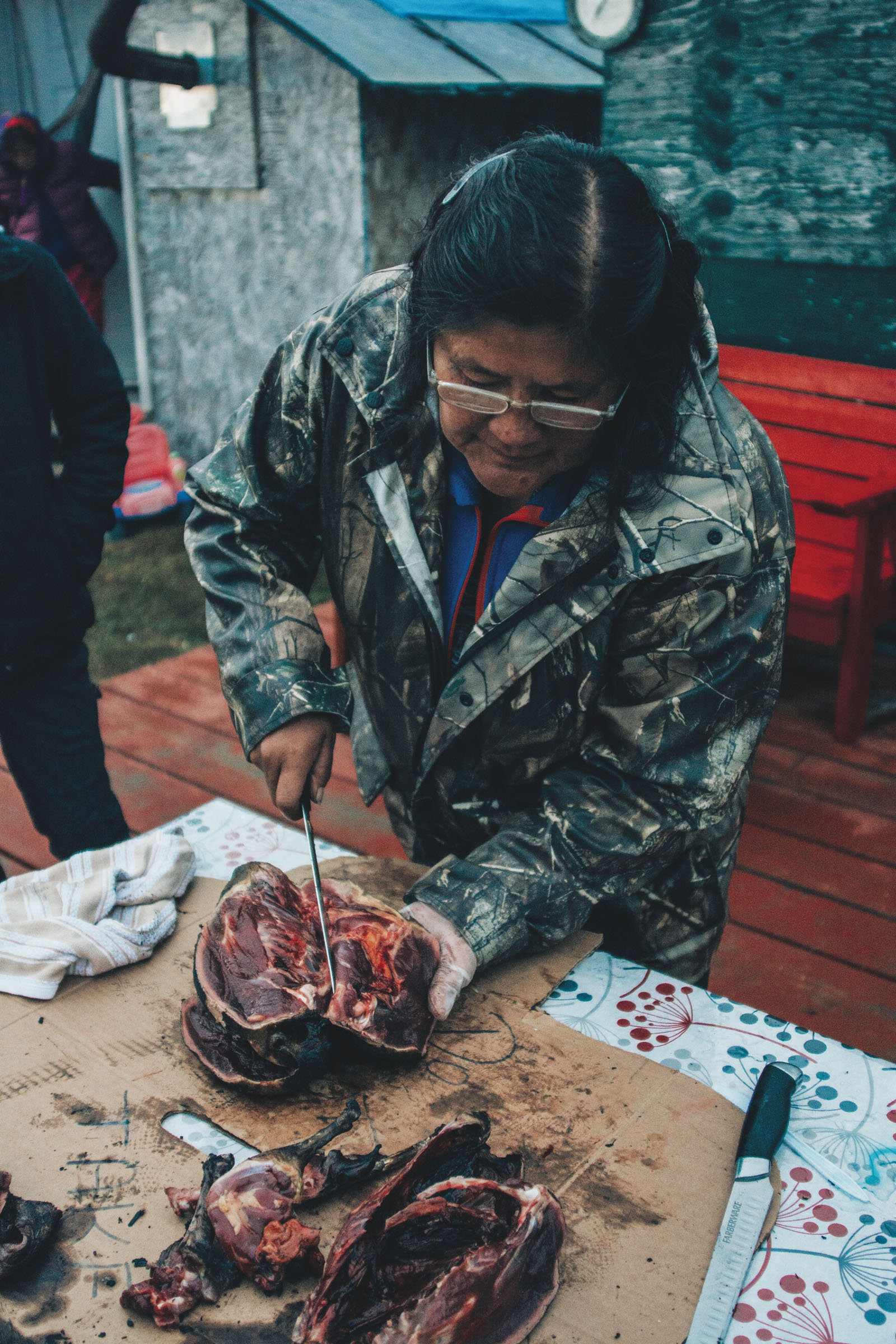
Today, some people still live off of or depend on the land, and cabins are built throughout the region by people with either logs or sourced lumber. Though not as prominent today, people used to travel to their camps before the spring break on the Teetł’it Gwinjik to spend a few weeks trapping muskrats and beavers. - 2019, Shootr’ih dats’an khadint’ii. My Auntie is cutting a duck.
Migratory birds like ducks and geese such as the Njaa (White-winged scoter), Neet’aii (Mallard), or Kheh (Canada Goose), are often hunted in the spring as they travel back north. Before the spring break up of the river ice, people often travel along the river, out to areas of open water or on the lakes throughout the land to hunt the birds where they themselves congregate to eat and to hunt. - 2019, Gwich’in shin hee uutsik gahtsii. The Gwich’in people use the summer season to make dryfish.
Fish camps often have a designated area where people cut fish within the camp; grass is collected to cover the tables to ensure that the area is kept clean. The fish caught are often cleaned and cut with precision into dryfish where the fish is flayed and cut into narrow lines, which help in the drying process, ensuring that it doesn’t spoil. Afterward it is placed under constant smoke for a few days. The end product is known as uutsik (dryfish). - 2021, October nat tan t’eh chihvyah chitr’ahchuh. In October, they set nets under the ice.
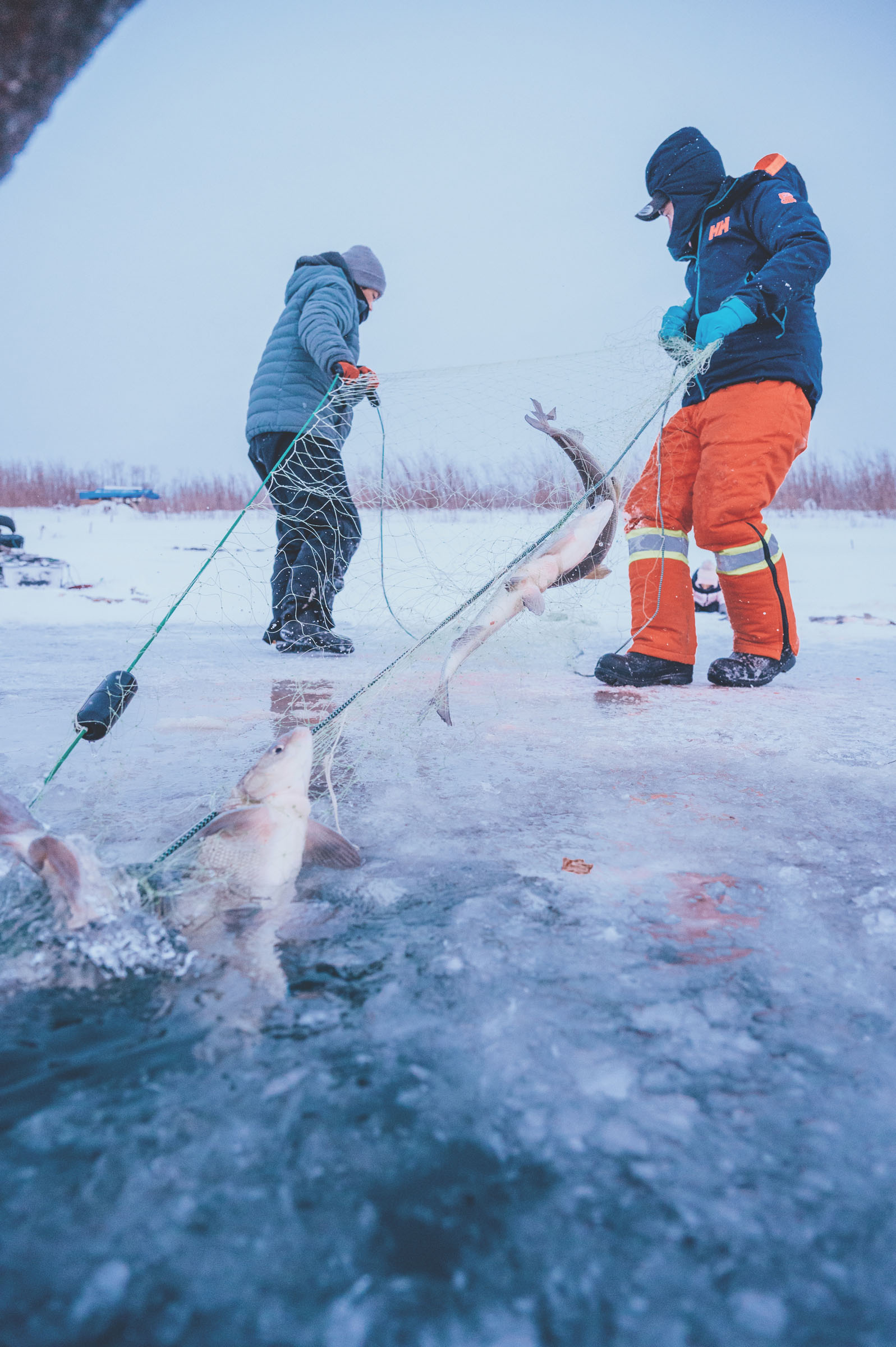
In the past, the river freeze up often occurred in mid-October; however freeze-up is sometimes remembered to occur at the end of September. Today the freeze up is occurring later due to climate change. After the river freezes over in November, people begin to set their nets under the ice as the Whitefish move downriver.
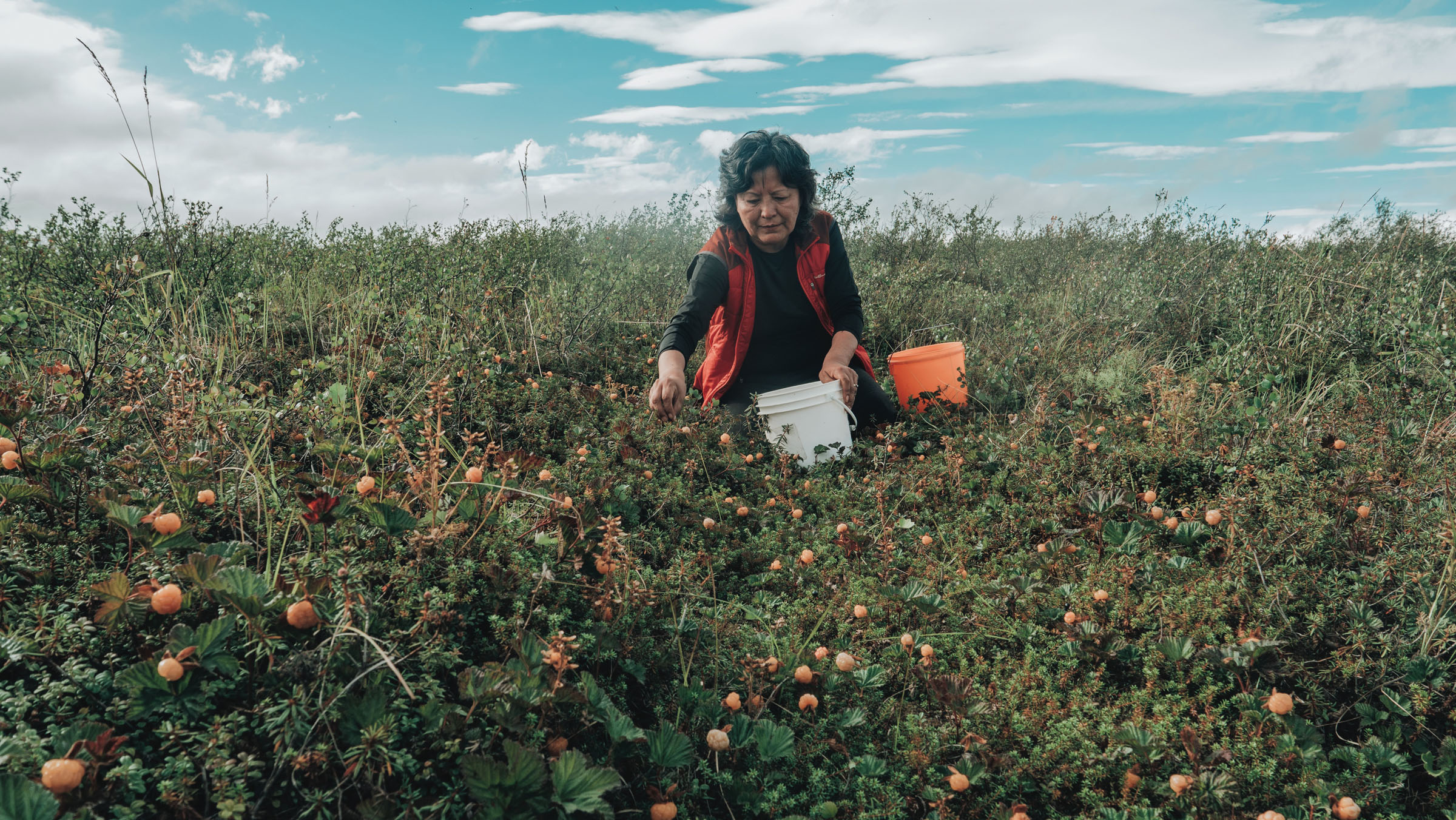
Though the fishing season has already begun in October and the fish have begun to move, people often have to wait for the river to freeze over. The fall river freeze-up tends to be unpredictable. Fishing nets are often held by wooden poles that are lodged in the ice, from where they are later pulled up to the surface to remove any caught fish. - 2020, Shin hee nakal trinatsii gwiinzii. In the summer, it’s good to pick nakal (cloudberry).
Later in the summer, after the rain comes in, various kinds of berries can be found growing on the land. People like my Auntie, pictured here, often travel outside of Teetł’it Zheh (Fort McPherson) along the Dempster Highway. They park their vehicles along the road before walking to nearby patches of berries. People tend to spend weeks collecting and securing enough berries to last them through the winter. - 2023, Khaiints’àn hee natł’at tri’natsii gwiinzii. In the fall, it is good to pick cranberries.
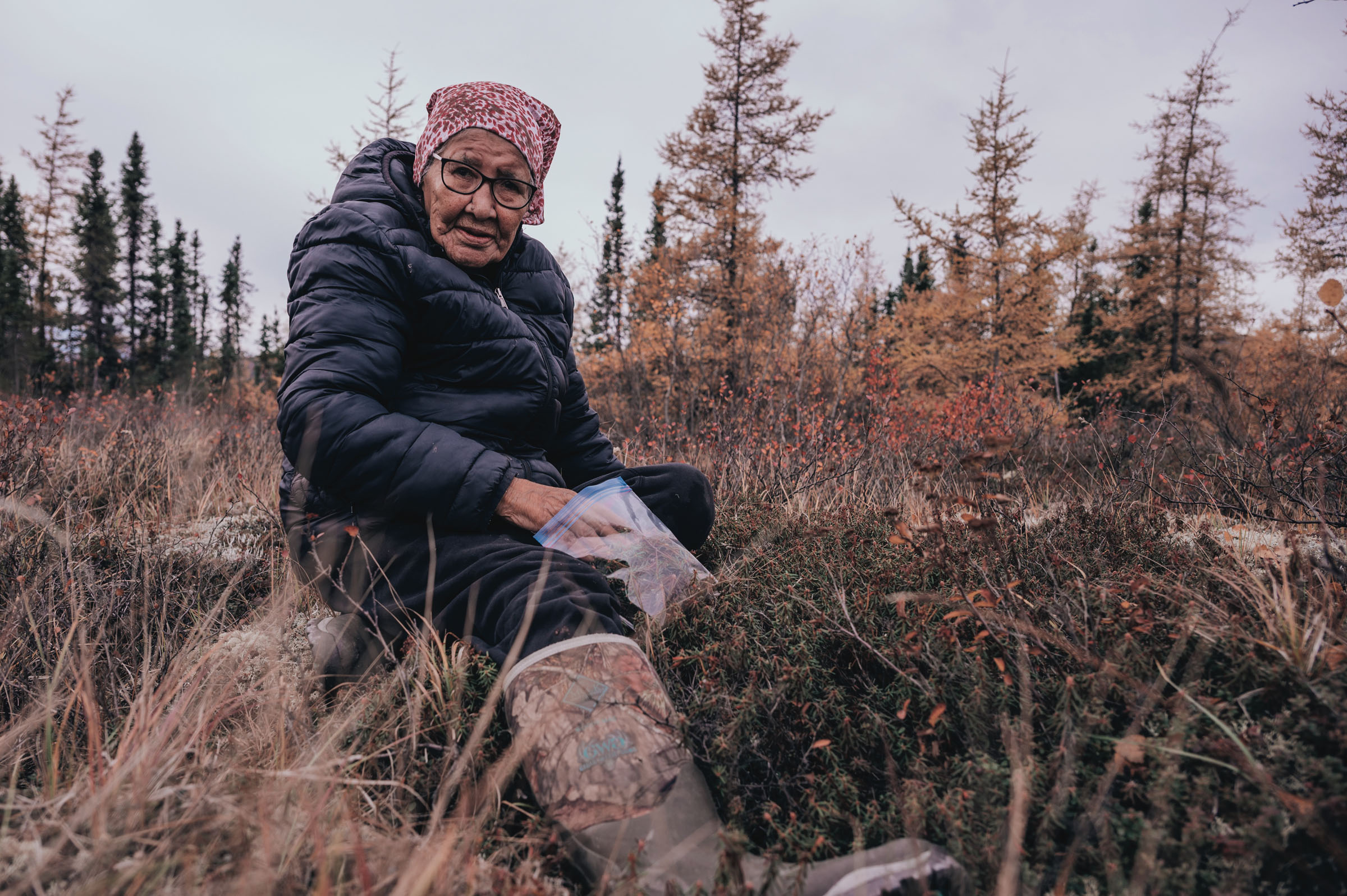
Come September, the fall weather begins to set in, and the temperature begins to drop slowly. Around this time—often towards the middle or close to the end of the month—the cranberries are ripe enough to be picked. September is when people spend their time collecting the berries. - 2022, Nan Niwhazheh ti’goonch’uu. The land is our home.
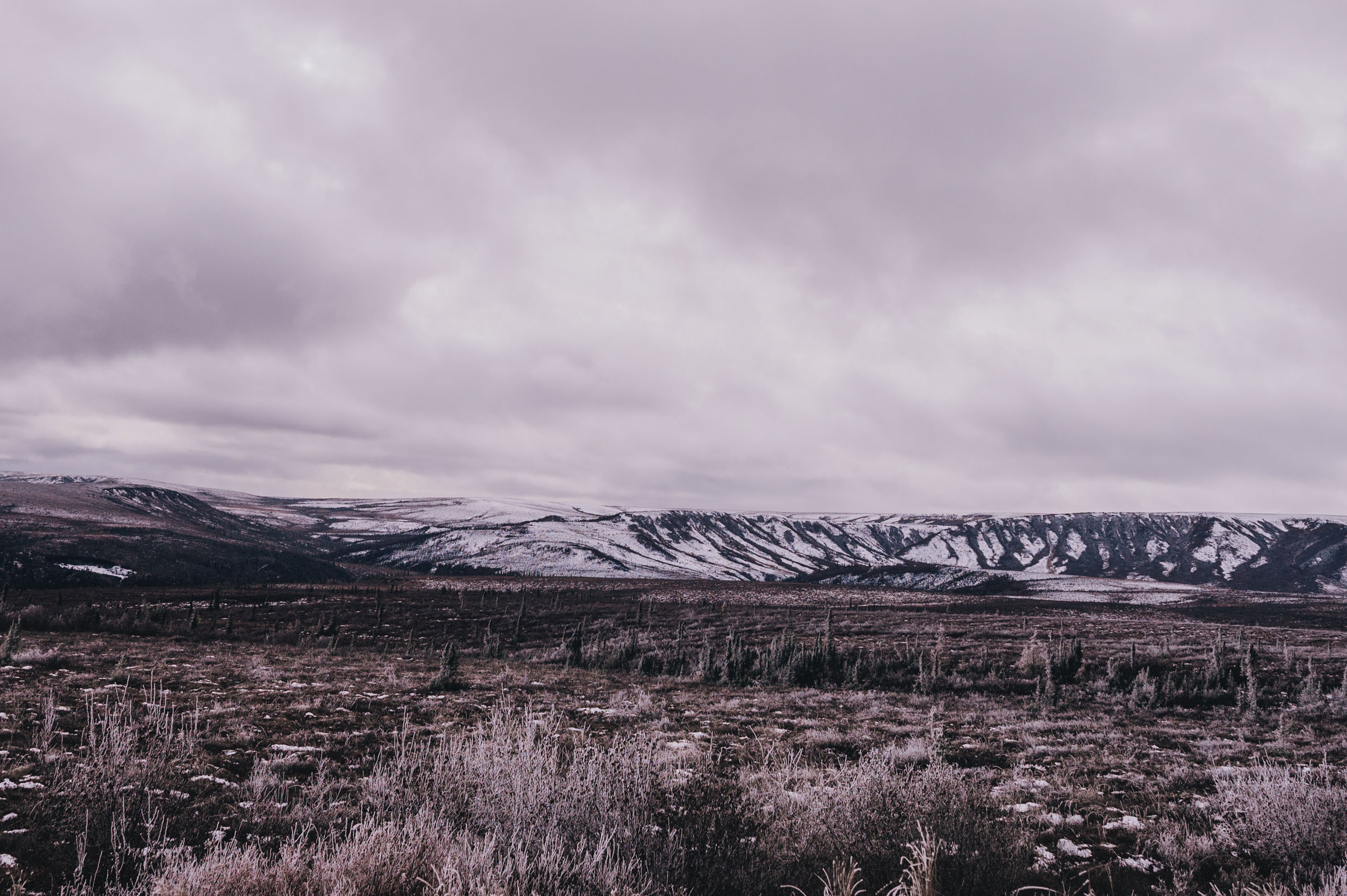
Taken along the Dempster highway, roughly 30 kilometers (18.6 miles) outside of Teetł’it Zheh, people still utilize the far reaches of the land to a great extent. The Gwich’in people have a close and what is often considered a spiritual relationship to the land. Their traditional knowledge spans countless generations; thus, they have survived here for thousands of years.
Excerpted form the book Arctic Practices: Design for a Changing World.
Purchase your copy here: