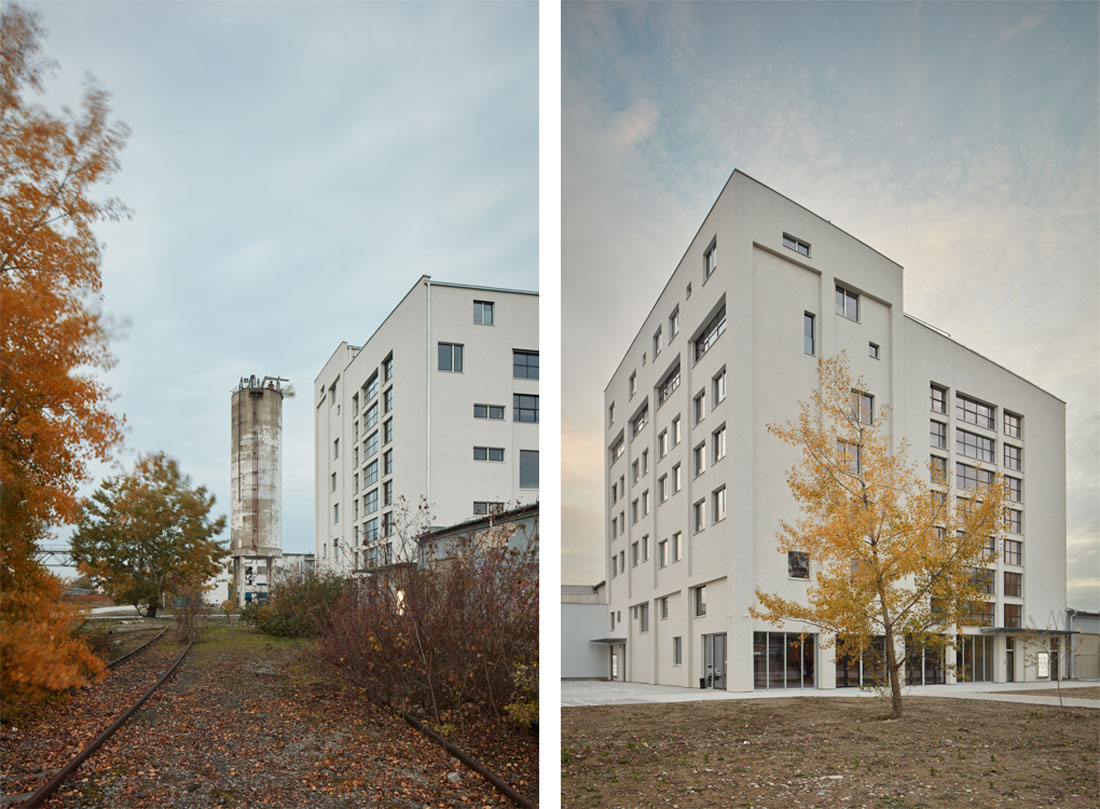
The Mlynica building is part of a large post-industrial area in Bratislava focused on light building materials. Beginning in the 1960s, porous prefabricated concrete blocks, slabs and panels were produced here. Production was halted in 1992. After privatization, the new owners sold off the complex and a gradual disintegration of the structures began.
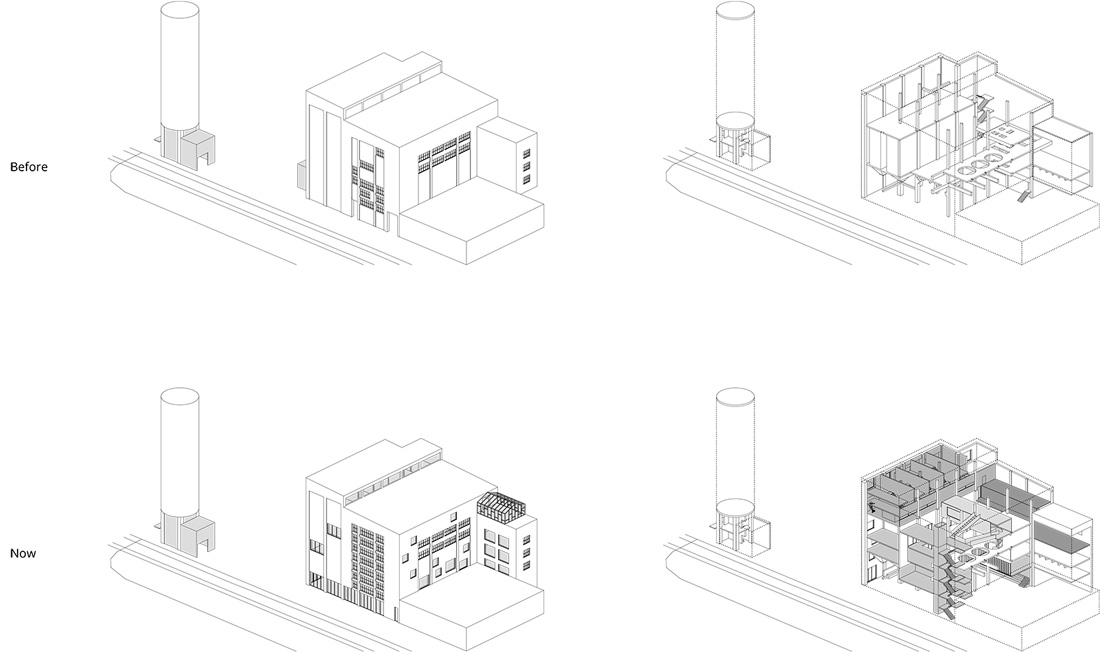
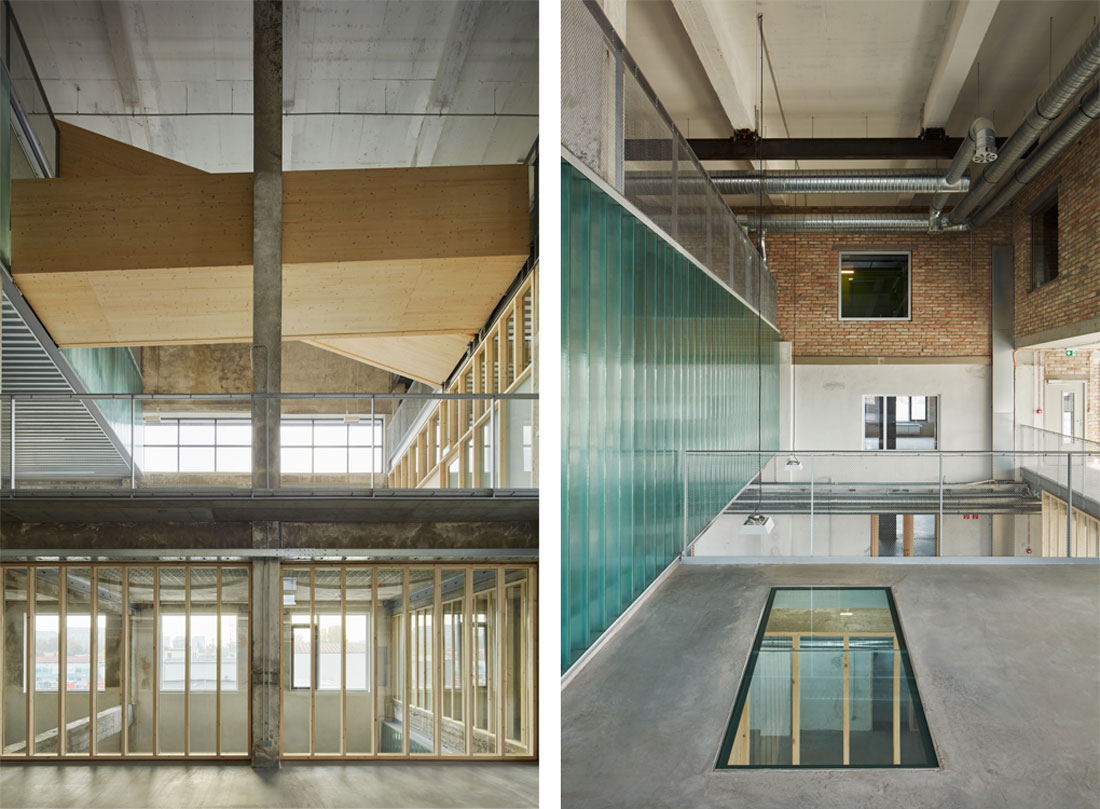
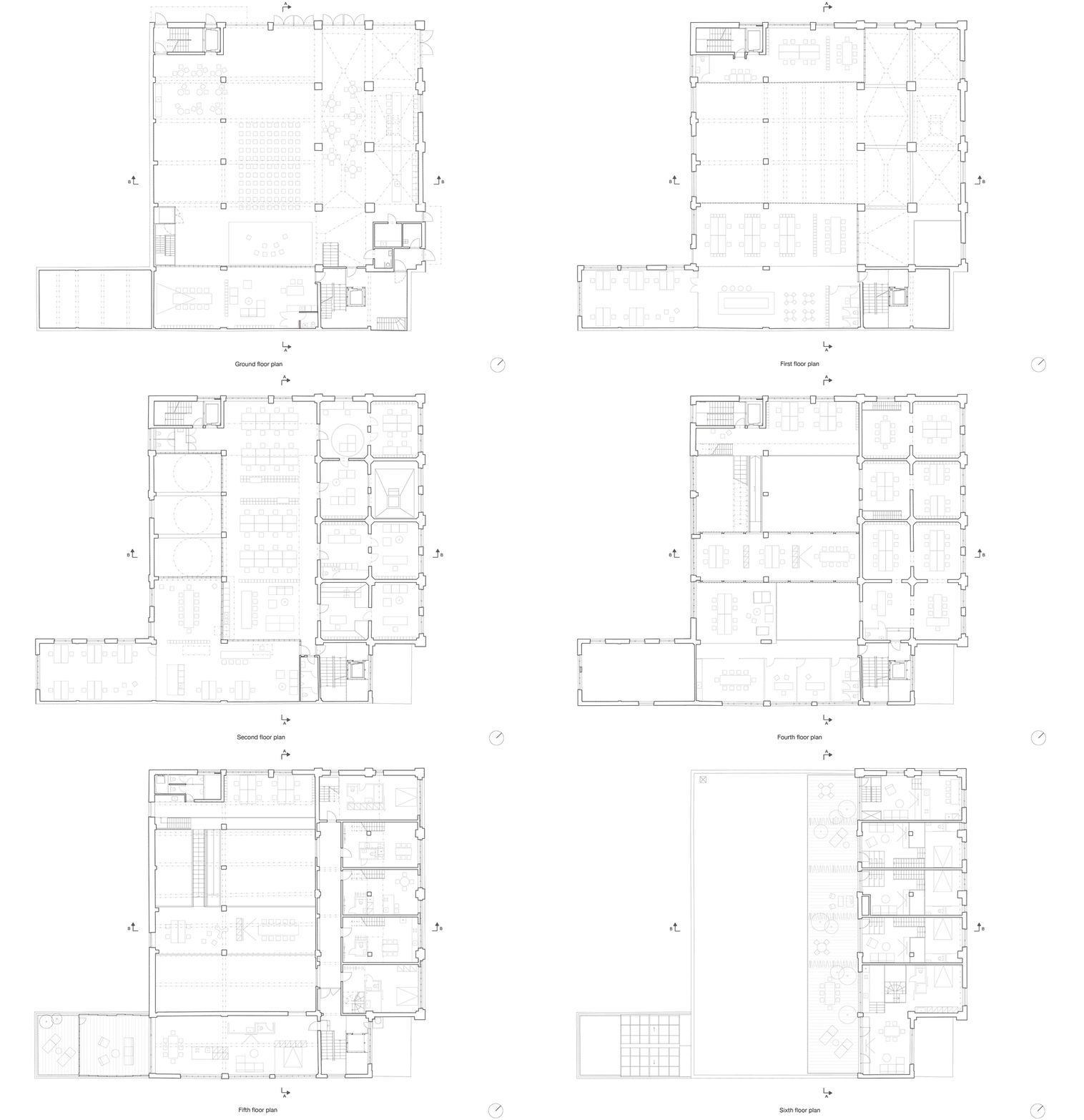
The architectural design builds on the structural logic of the original building. The reinforced concrete frame filled with a porous concrete masonry façade is retained, and the new program is inserted into the existing container. The façade is opened up purposefully in places where it aligns with the new layout, without compromising and respecting the load-bearing capacity of the existing perimeter structures. The new openings have a free and readable composition, as opposed to the original rational mesh of window openings typical of an industrial building.
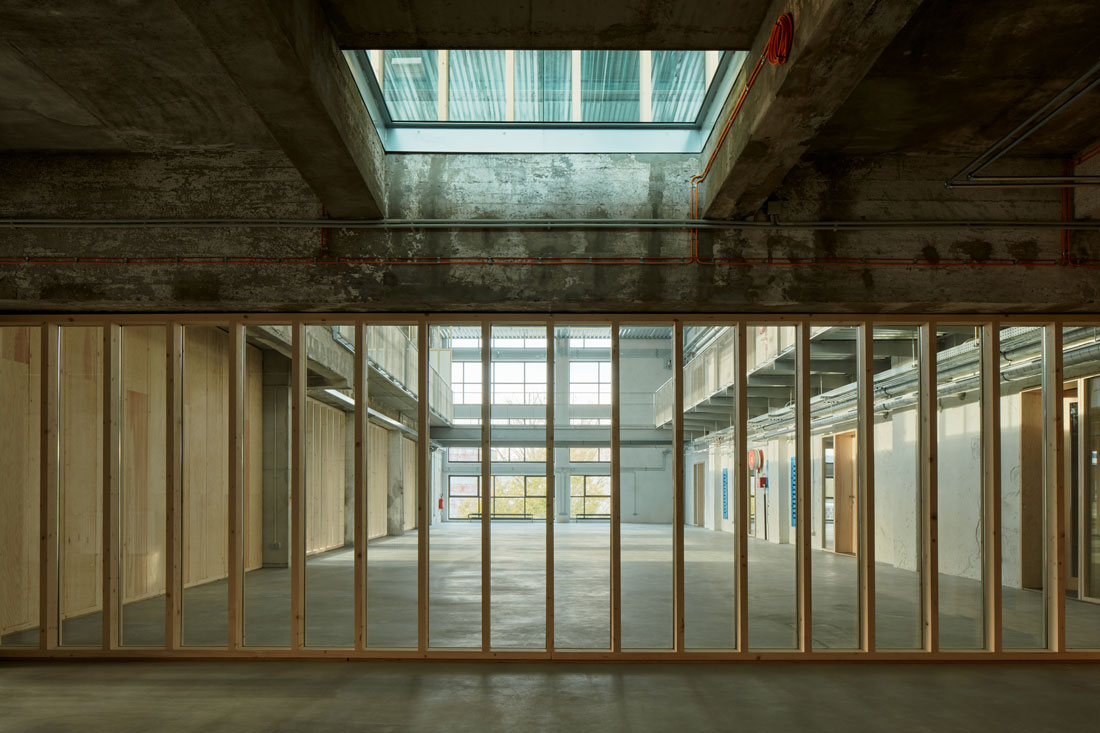
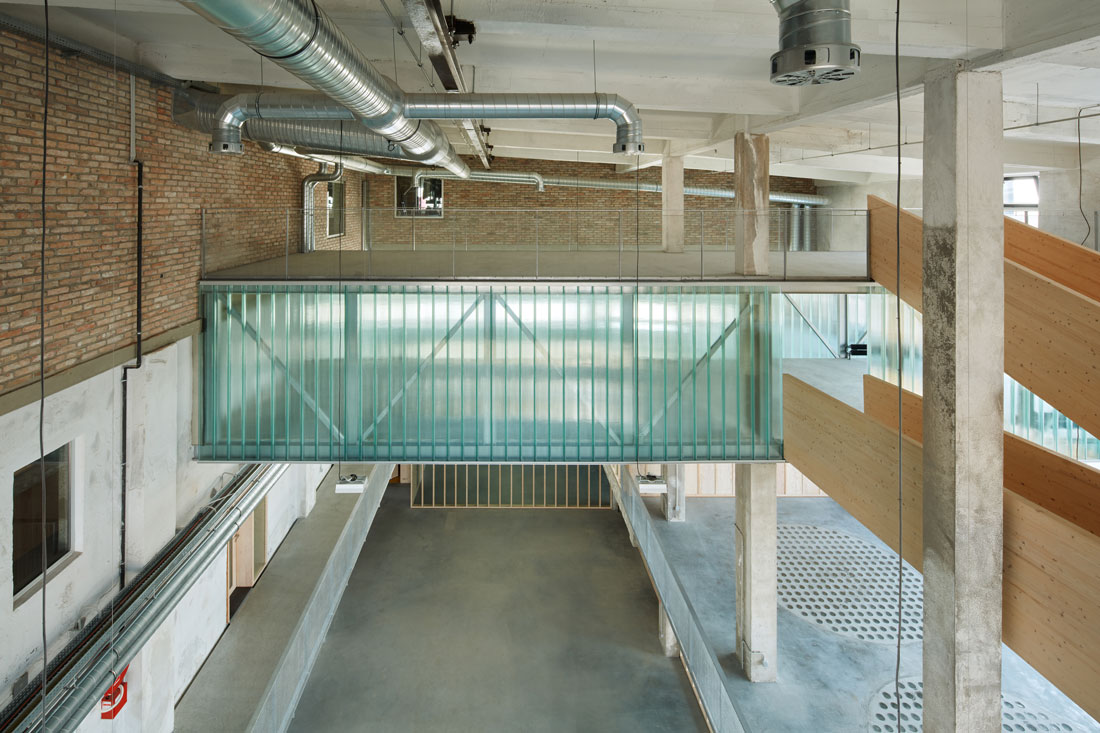
The purpose of the Mlynica building is vertically divided into three functional blocks. The individual parts of the new programme – event space, administrative premises, and apartments – are communicated via the central space of the former production hall.
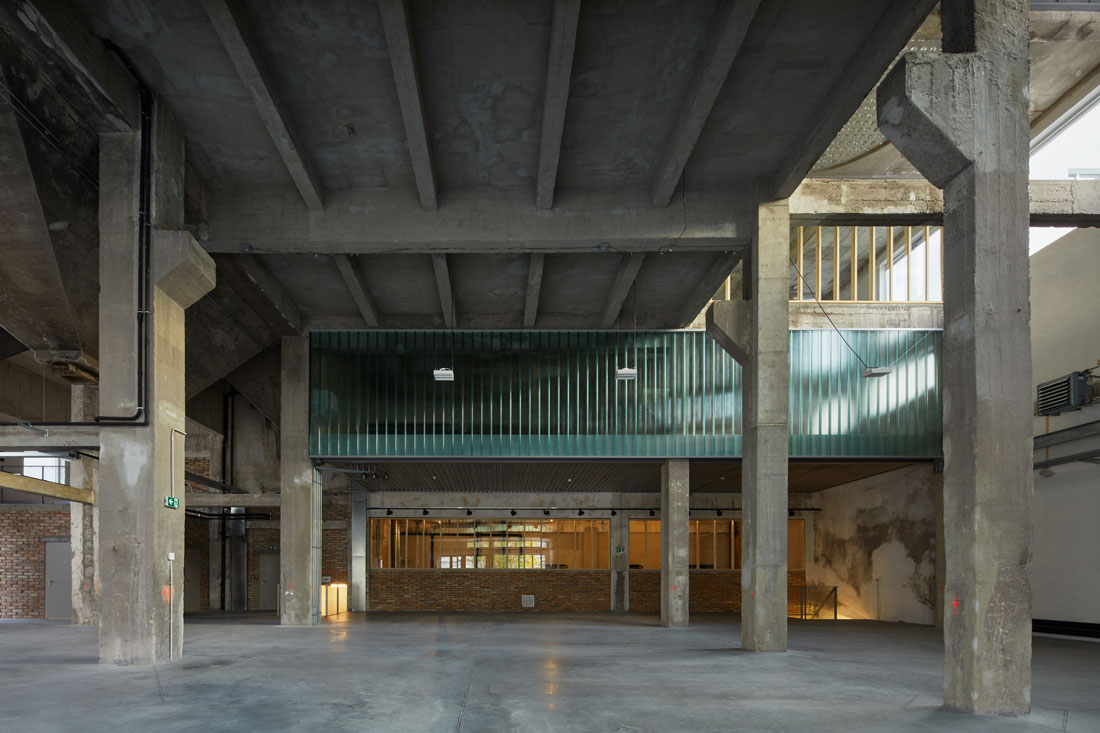
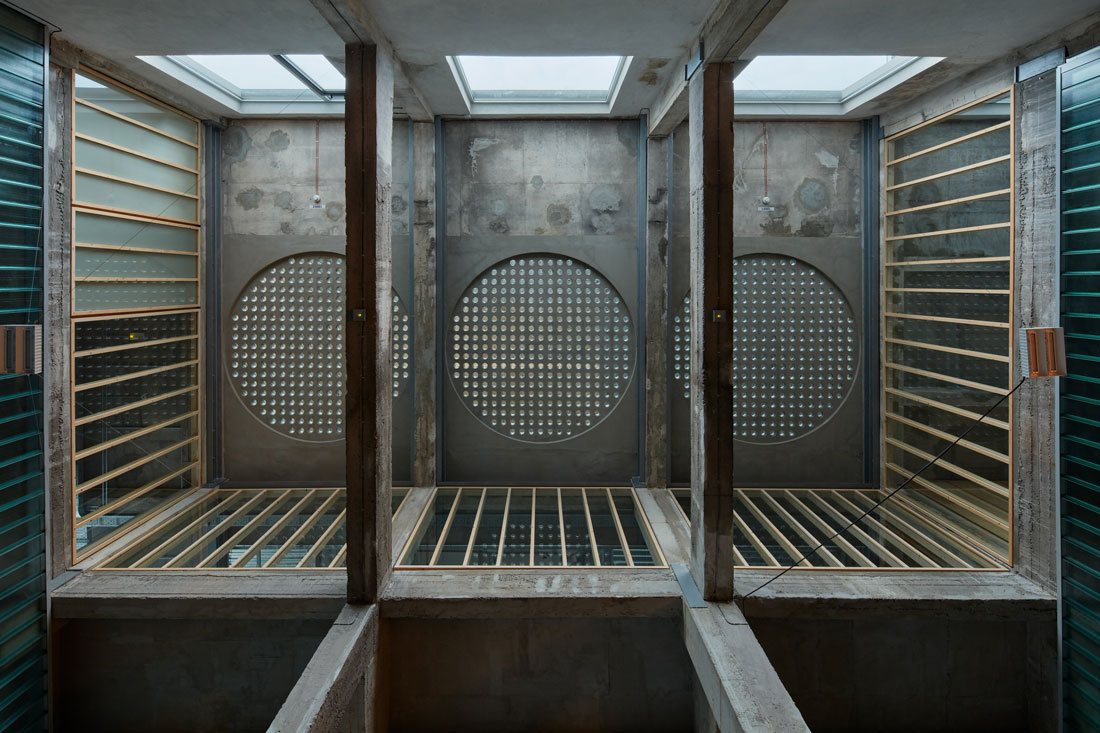
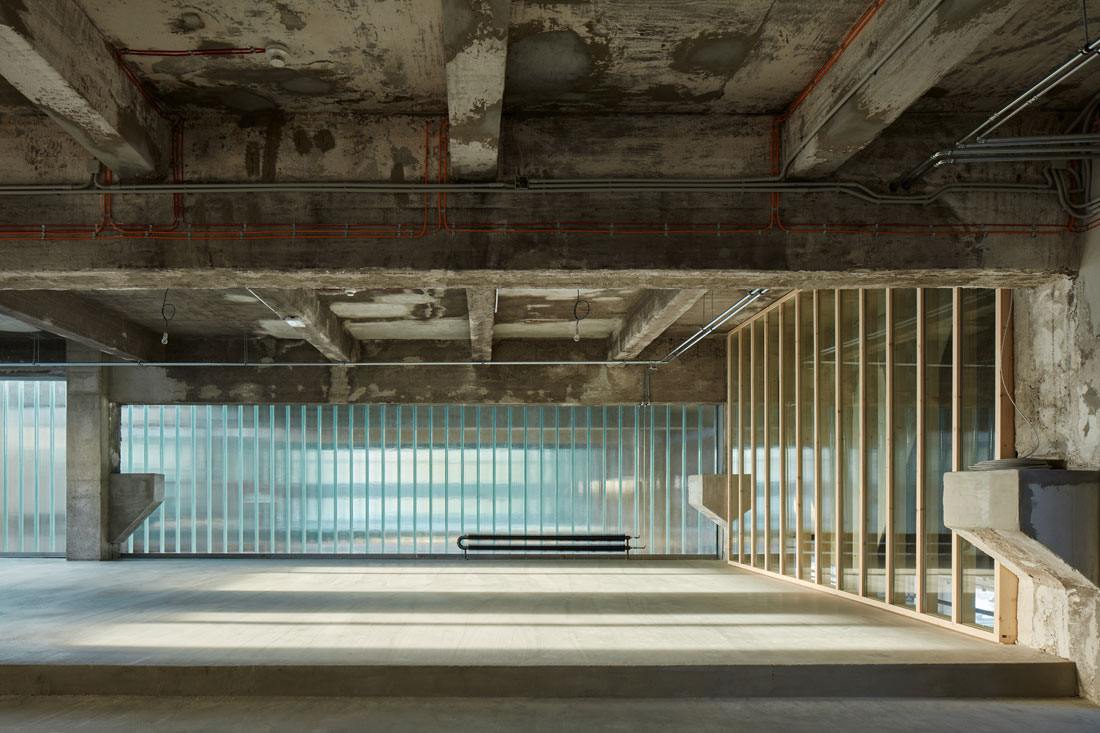
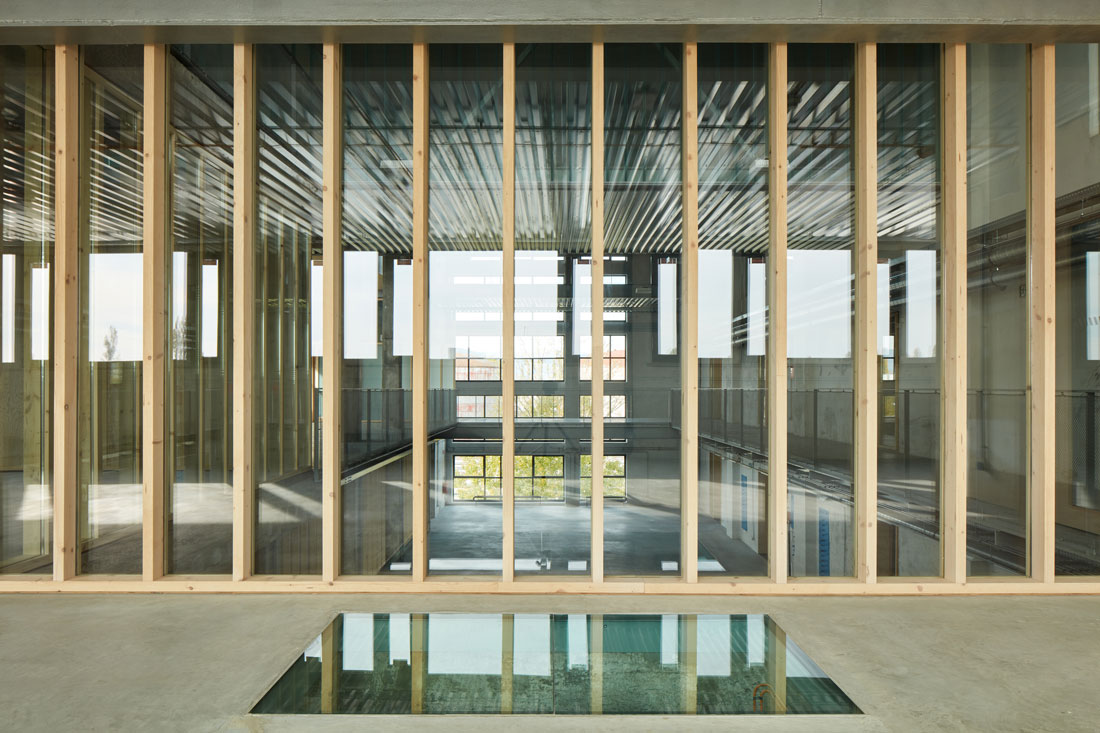
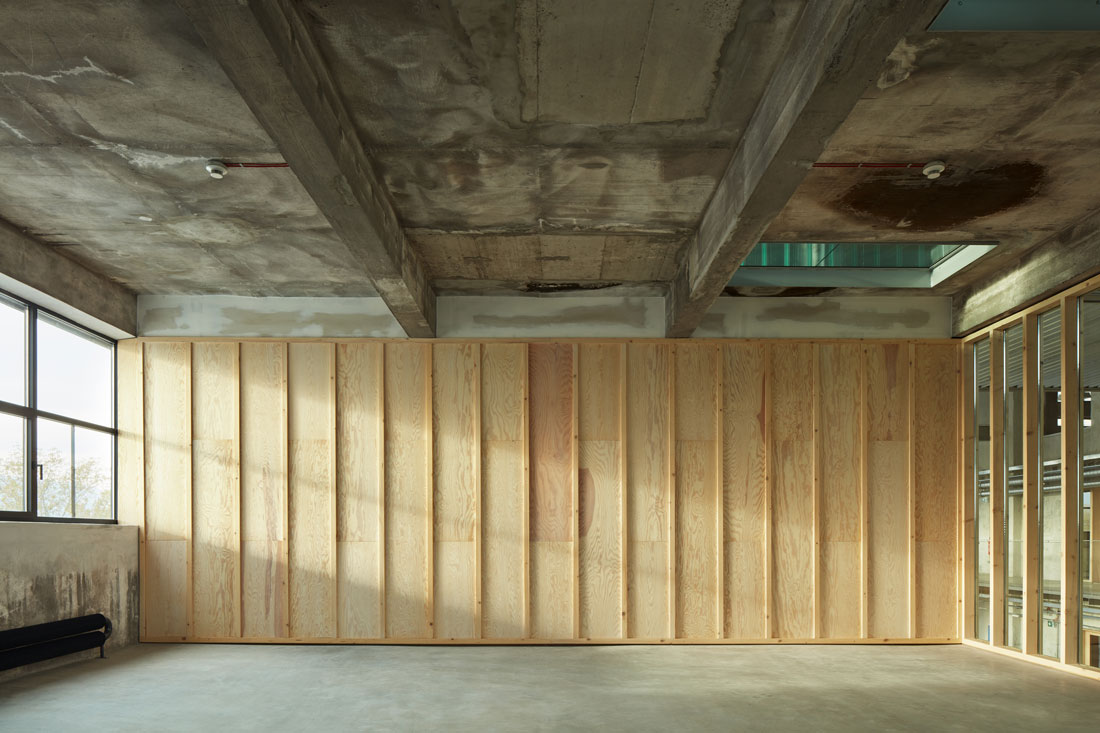
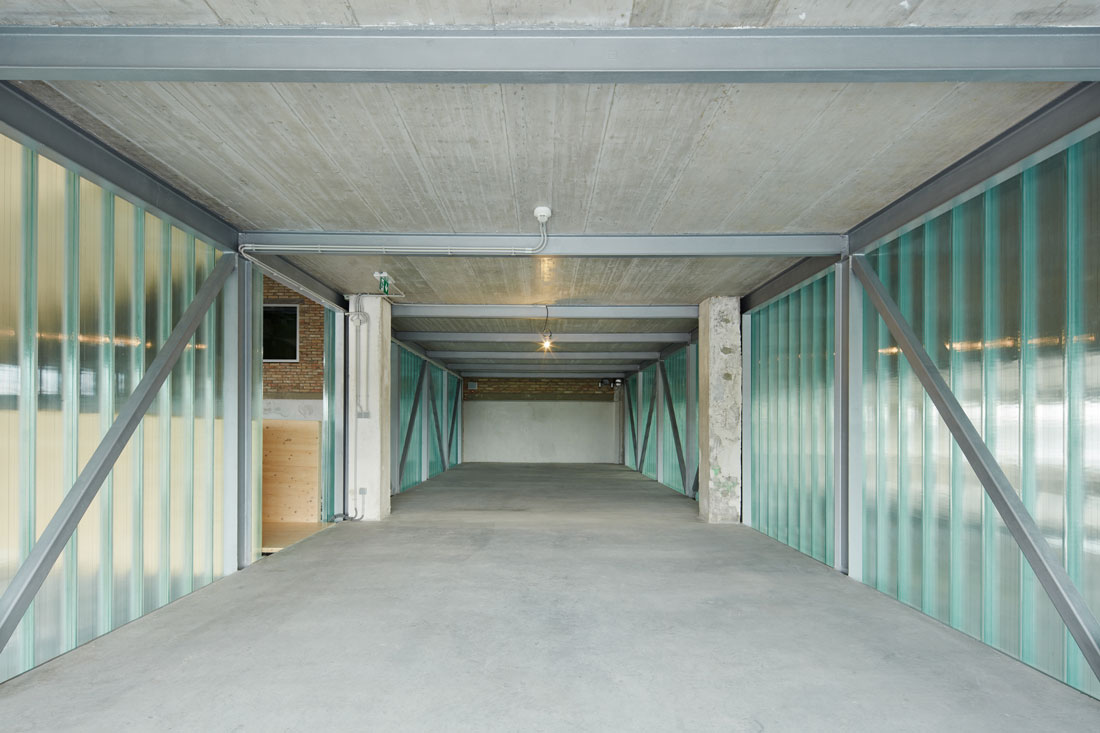
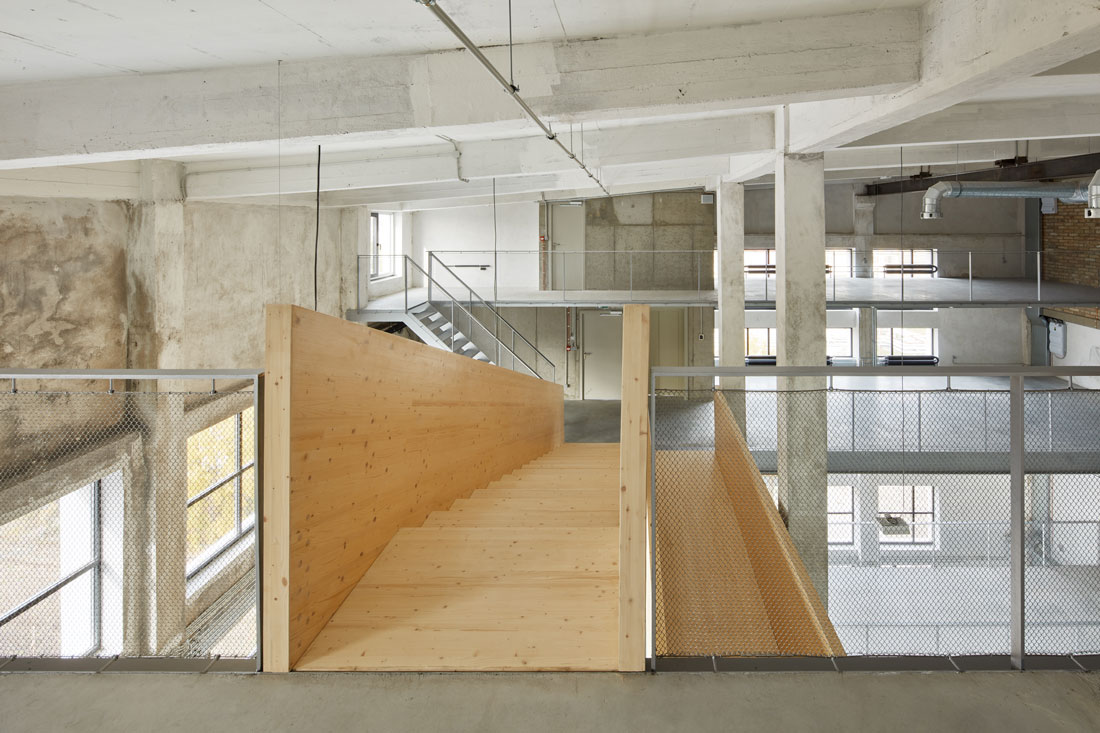
The rigid construction of the structural skeleton is complemented by transparent partitions in the new layout, soft timber infill panels, Profilit walls and exposed ducts. Three new floors for administration are created within the original concrete hoppers, which are made accessible from the central hall.
The design builds on the contrast between old and new, highlighting the quality of the original building. With this approach, it is necessary to get rid of unnecessary layers in order to emphasize the structural logic of the building and thus maximize the potential for its new use. The reconstruction transforms the former industrial complex, used solely for technical production, into a modern mixed-use building for cultural events, business, administration and, to a smaller extent, open-plan living.
Explores the roadmap for implementing BIM in Sant Feliu de Llobregat to enhance public administration…
Analyzes BIM adoption in North Macedonia and proposes a national roadmap to drive digital transformation,…
Architect, engineer and curator of the Biennale Architettura 2025, Carlo Ratti opened the IAAC Lecture…
In Ljubljana, the former Rog Factory has been transformed into Center Rog, a new hub…
Developed within the Resilient by Design (RBD) initiative, the South Bay Sponge proposes a resilience…