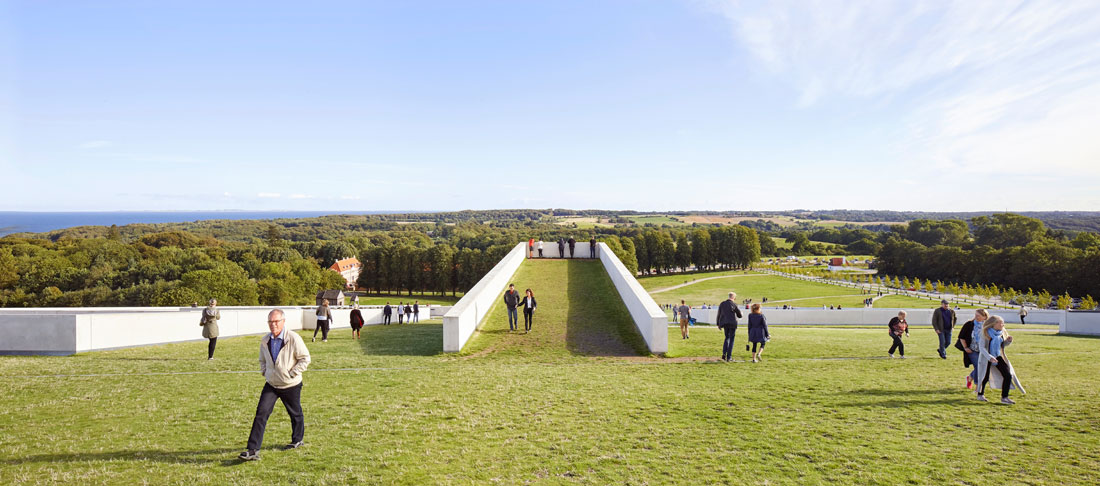
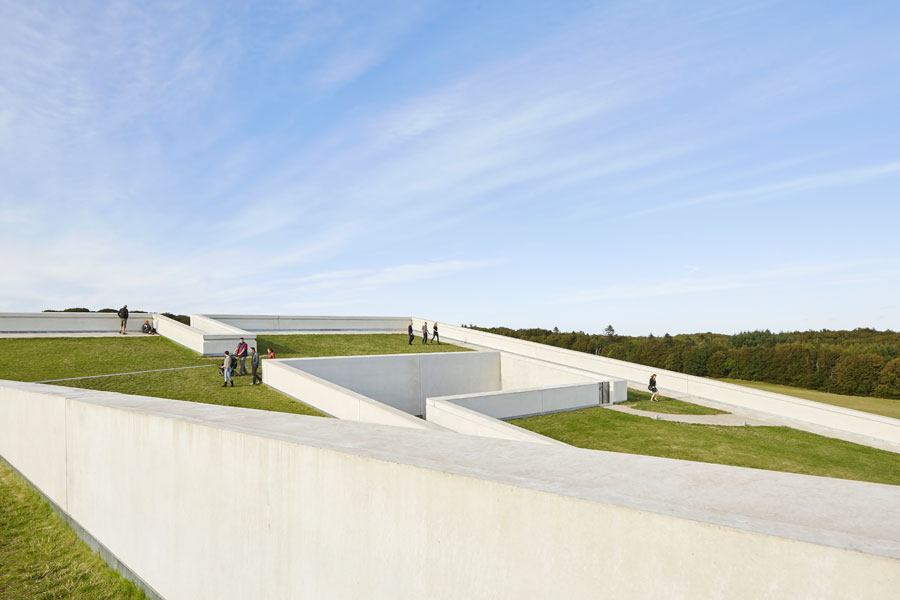
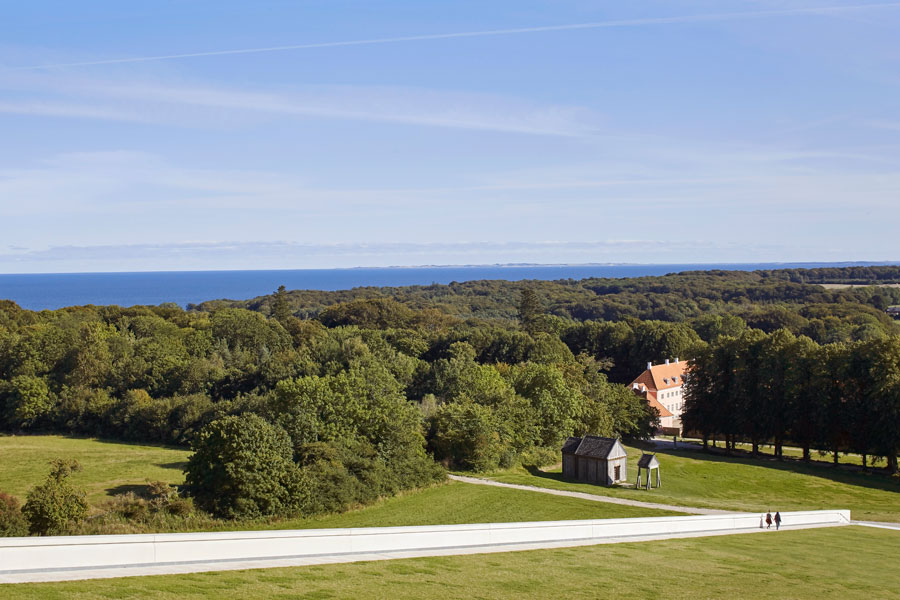
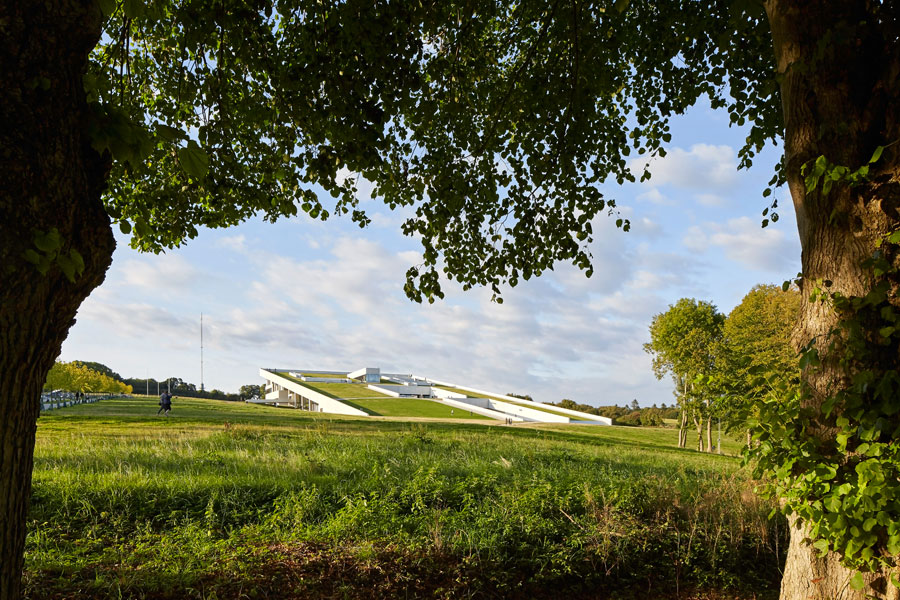
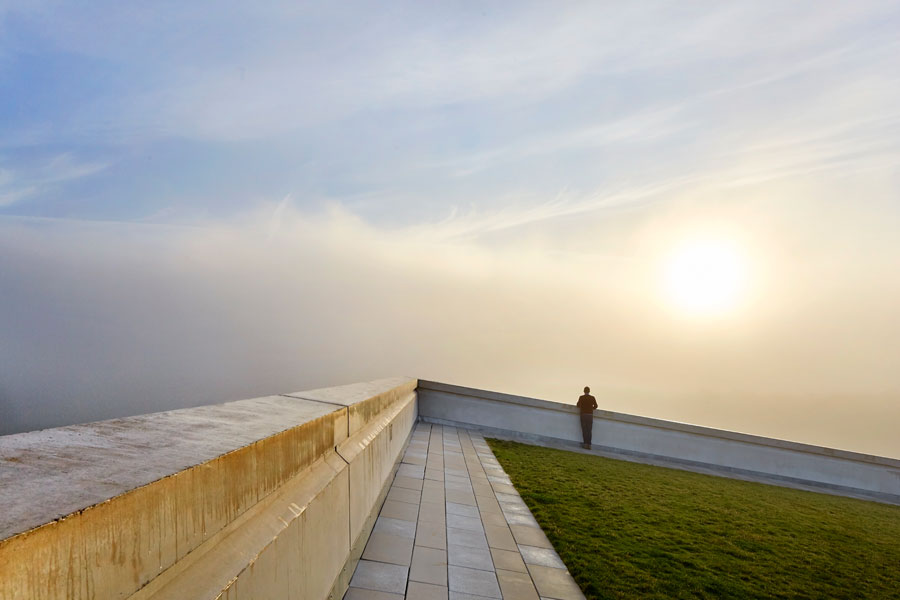
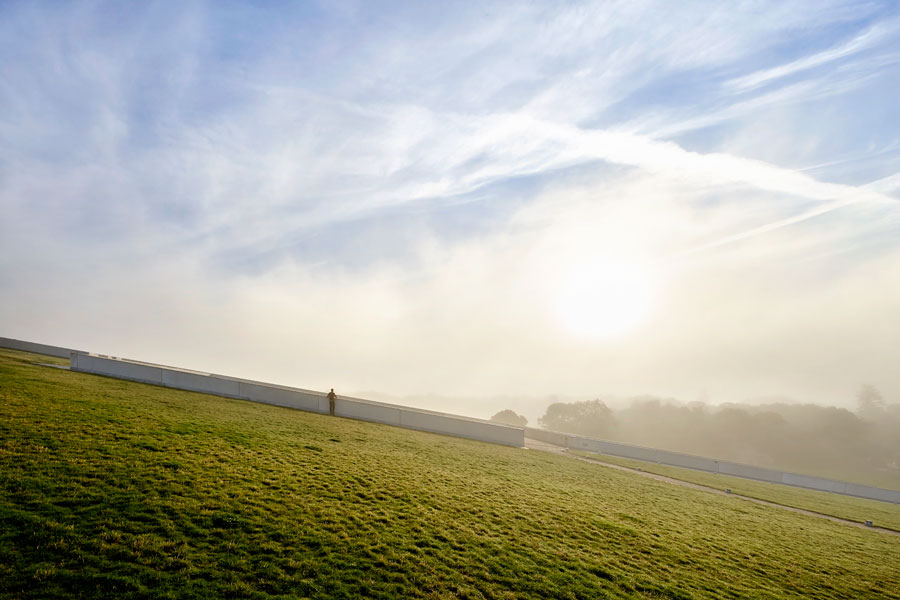
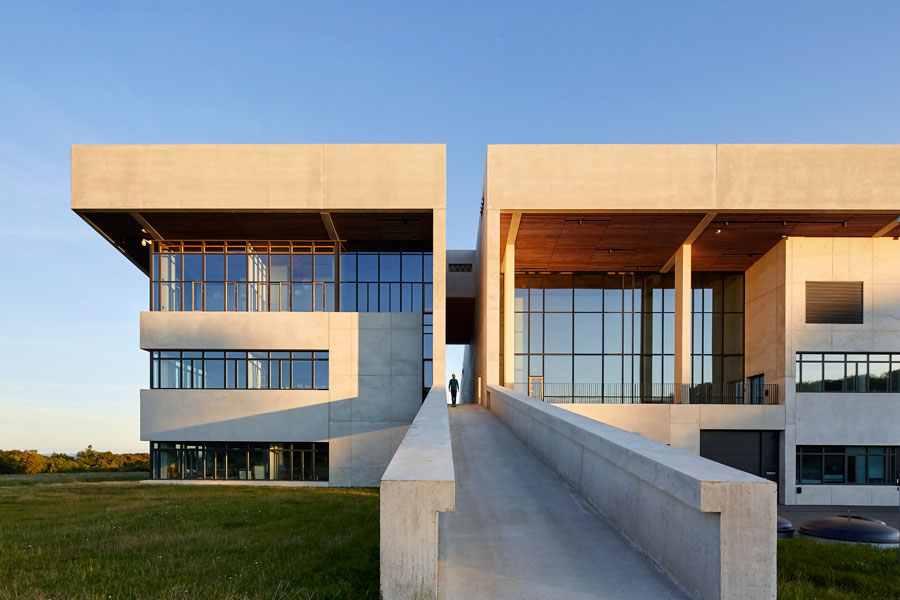
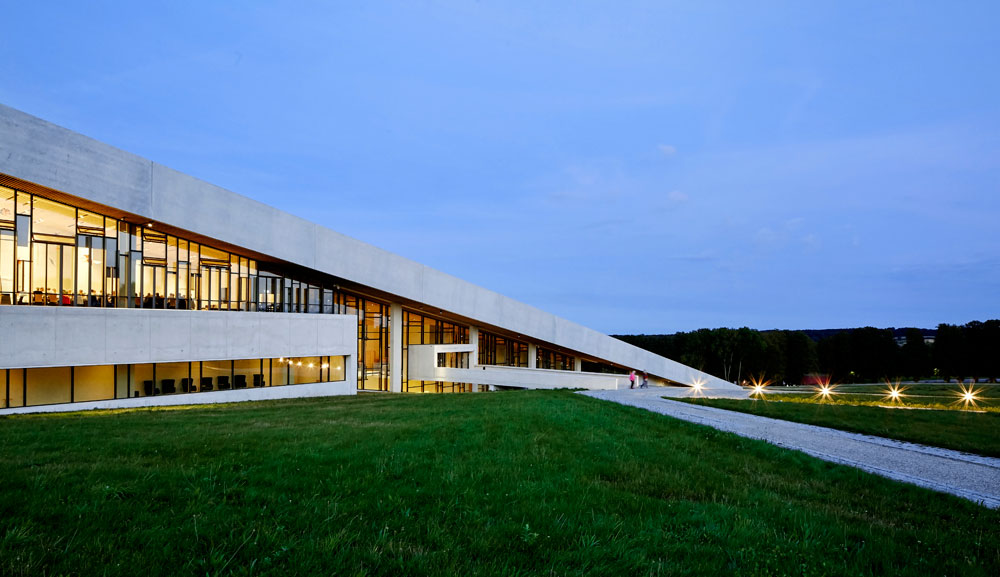
The new 16,000 m2 museum is uniquely located in the hilly landscape of Skåde south of Aarhus. With its sloping roof scape of grass, moss and flowers in bright colors the building will appear a powerful visual landmark perceptible even from the sea. The rectangular shaped roof plane seems to grow out of the landscape and during summer it will form an area for picnics, barbecues, lectures and traditional Midsummer Day’s bonfires.
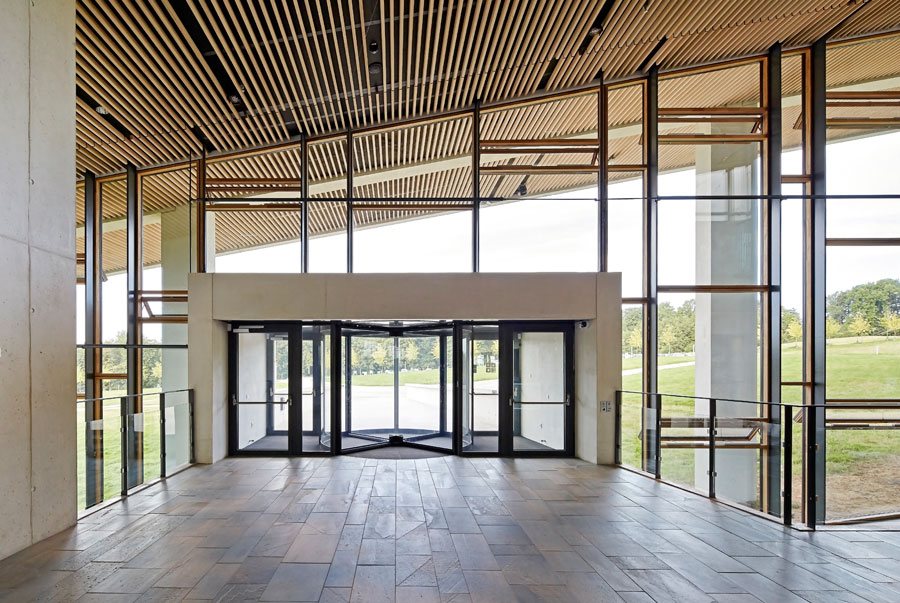
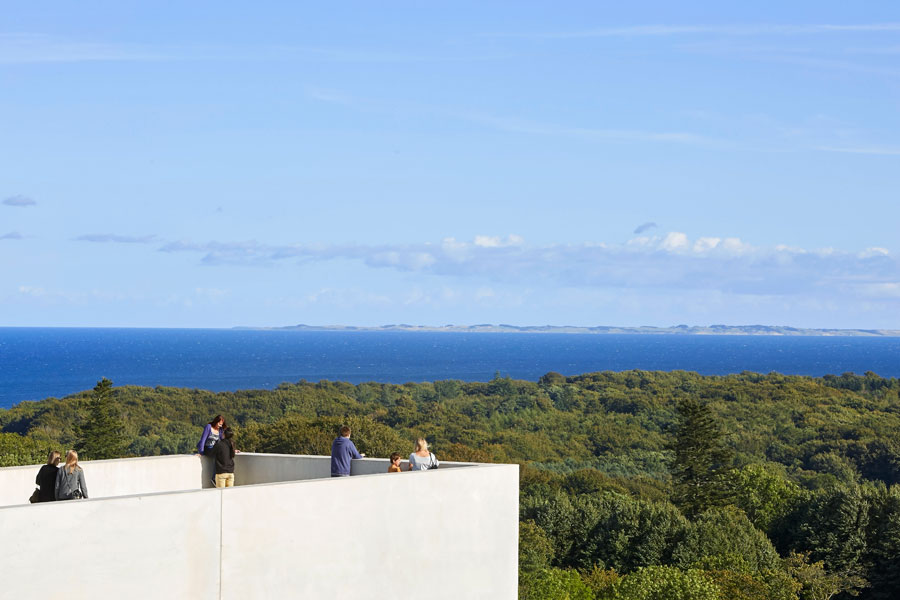
The heart of the building is the foyer where the ticket sales, the museum shop and the public café are situated. From here, one can enjoy the impressive view of the Aarhus Bay through great glass walls. Furthermore, from the foyer there is access to the large roof top terrace with outdoor service.
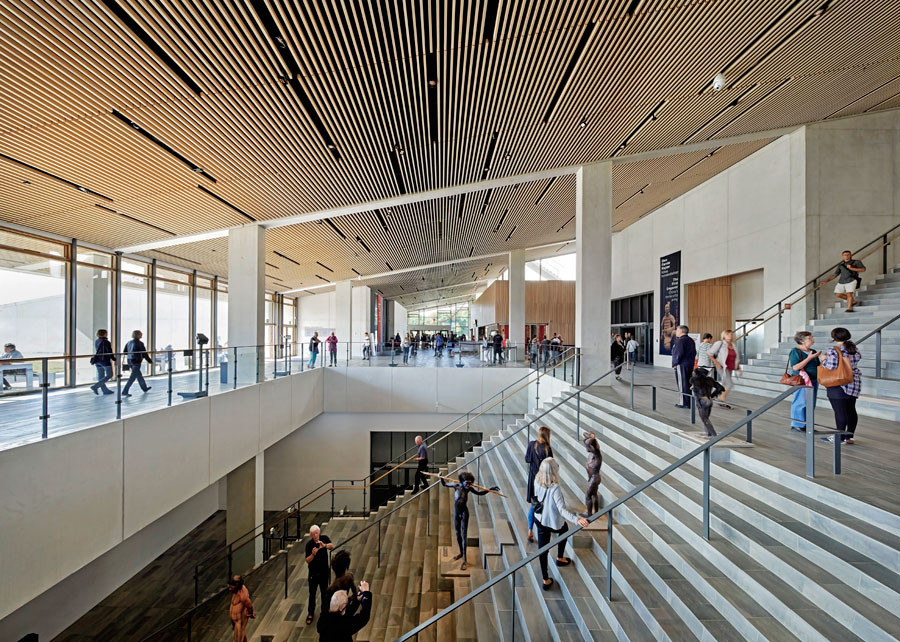
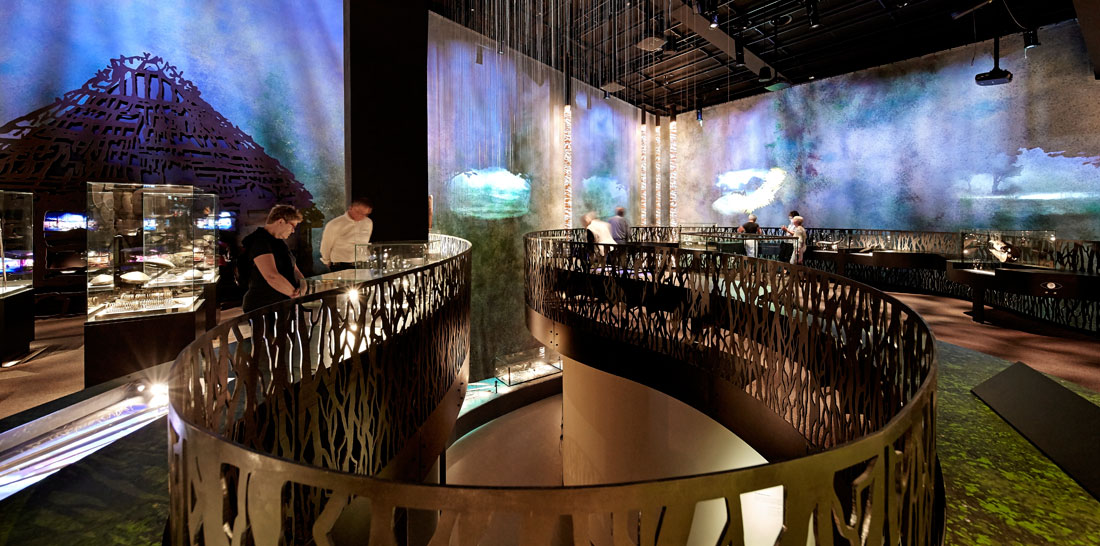
The interior of the building is designed like a varied terraced landscape inspired by archaeological excavations gradually unearthing the layers of history and exposing lost cities. The visitor can move through a vivid sequence of exhibitions and scientific experiments – like a traveler in time and space.
In the permanent exhibition, the visitors are invited to an eventful journey to Aarhus in the Viking age and out into the world with some of the most prominent, local personalities from that era.
Everything in the exhibition is new. Burial mounds and districts of towns, faces and people have been reconstructed and built for the new museum. The exhibition is the biggest in the museum and with a floor-to-ceiling hight of 12 meters it is possible to communicate the impressive collection of Moesgård on several levels. Thus the exhibition reflects the archaeological excavations which gradually unearth the layers of the history.
The special exhibit is placed in direct connection with the commodities court, which must be supervised 24 hours a-day as soon as the exhibit opens. High standards for logistics, safety and climate control is the be-all and end-all in order for the museum to attract large, international exhibitions like “The first Emperor – China’s Terracotta Army”, which will be on display at Moesgaard next summer. The new museum will be the first of its kind in Denmark to accommodate exhibitions of that caliber.
The exhibition hall can furthermore be utilized for many other purposes such as conferences, fairs, and fashion shows.
The overall sustainable strategy has been integrated in the architectural design. Fundamental elements such as the building’s geometry and orientation have been considered in order to maximize every square meter. The south-facing roof surface (roof facade) forms the calculated basis for an energy-efficient building, which achieves Energy Class 1 status.
The green roof of the museum contributes to decreasing the energy consumption of the building. The roof reduces the overall need for cooling due to decreased heat absorption. Furthermore, the overall amount of wastewater draining from the site is reduced.
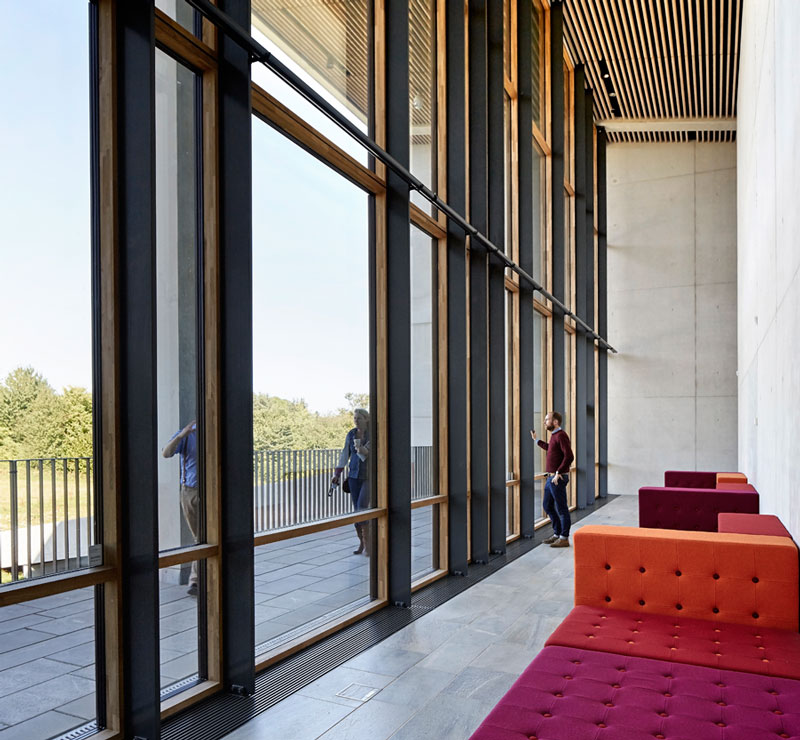
The roof slopes downwards to the south, protecting the objects on display from direct sunlight. Connected to each exhibition room, a glass-enclosed area functions as a break room – allowing visitors to enter, but preventing direct sunlight from reaching the objects on display. In these spaces, visitors can have a bright respite from the dark of the exhibition spaces and reorient to nature and sunlight.
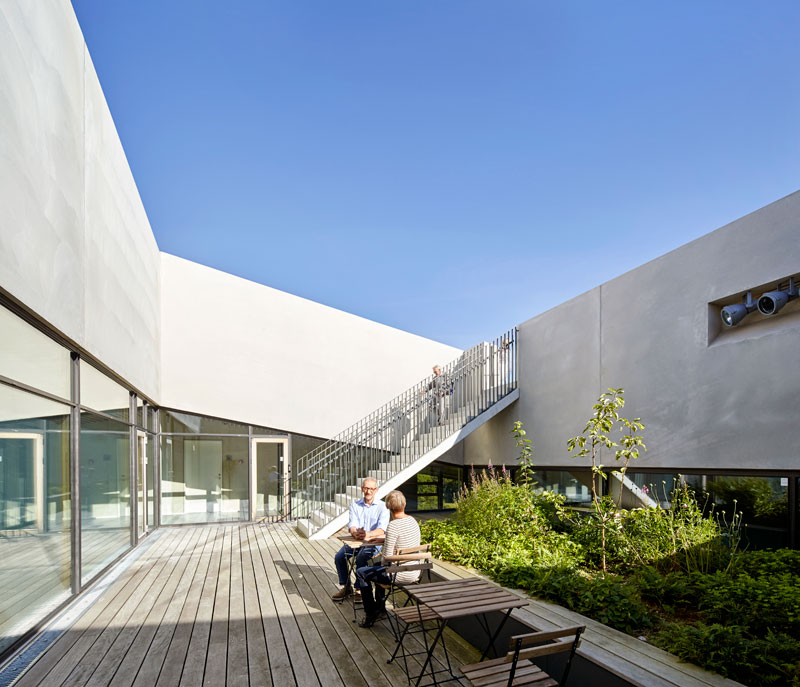
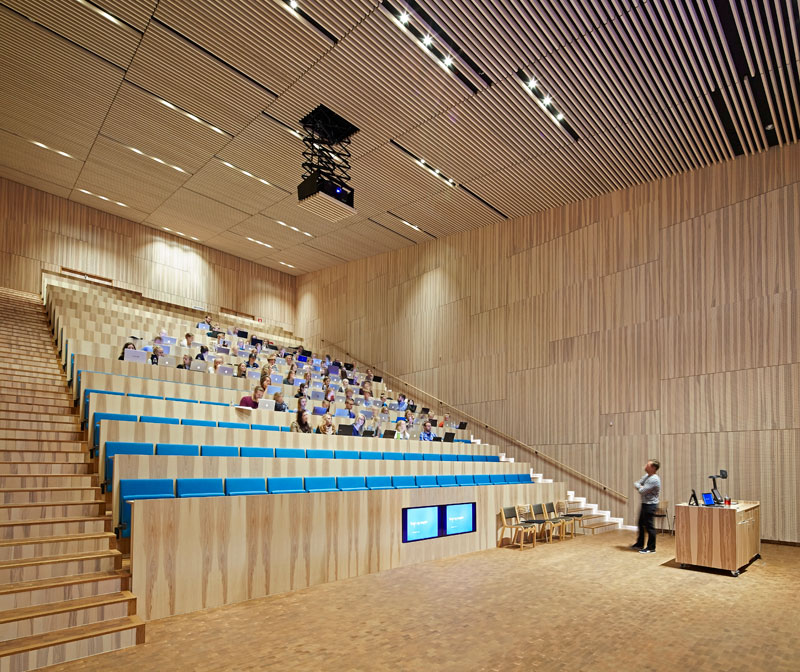
An optimal use of daylight in the remaining part of the museum has reduced the need for artificial lighting, decreasing overall energy consumption. Around the administrative and educational facilities-which are placed in the rising end of the building- small yards in the building volume has been placed allowing the daylight to penetrate the roof.
Visiting Moesgaard Museum from Henning Larsen Architects on Vimeo.
The materials of the building harmonize with the overall expression of the building and at the same time consider acoustics, economy, technical settings, maintenance, durability, color options and sustainability.
Digital Twin Platform for one of the largest urban regeneration projects in Europe Madrid Nuevo…
An actionable tool The challenge of UDTs is helping to provide high-quality built environments, more…
Introduction The digitalization of every single component of cities has become a commodity in recent…
What if city planners could test urban design scenarios before breaking ground? Utrecht’s Digital Twin…
Explores the roadmap for implementing BIM in Sant Feliu de Llobregat to enhance public administration…
Analyzes BIM adoption in North Macedonia and proposes a national roadmap to drive digital transformation,…